Fuente del Paseo de los Tristes: Granada's Historic Gem
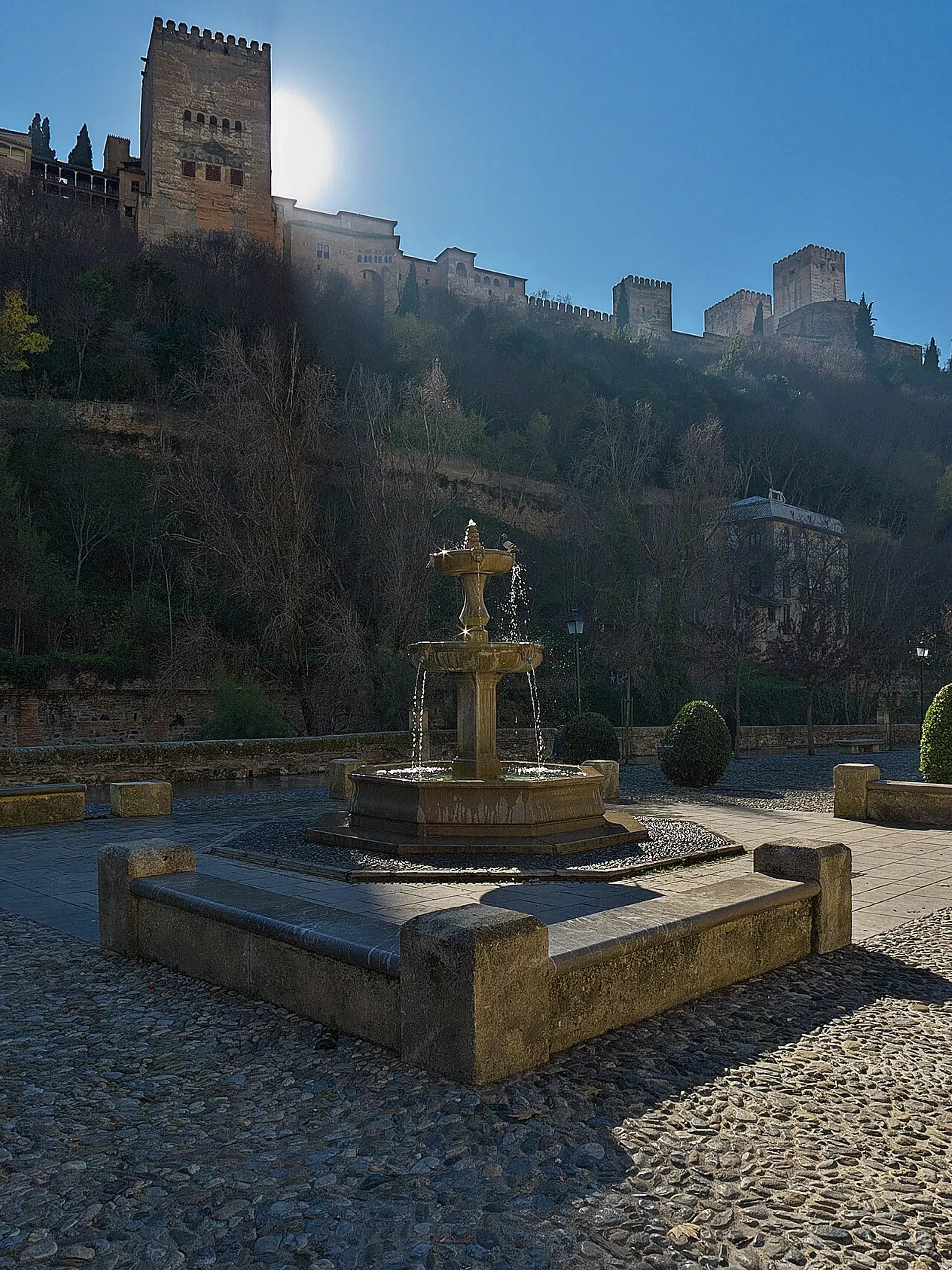
Nestled along the scenic Paseo de los Tristes, the Fuente del Paseo de los Tristes is a charming Baroque fountain that has been a fixture of Granada since the early 17th century. It stands beside the Darro River, offering picturesque views of the Alhambra and serving as a beloved landmark for both locals and visitors.
A Baroque Fountain from 1609
Constructed in 1609, the Fuente del Paseo de los Tristes was funded by the Granada city council. An inscription on the fountain itself credits its creation to the direction of Corregidor D. Mosén Rubí de Bracamonte Dávila. This historic structure features a Baroque design with an octagonal base crafted from Sierra Elvira marble. It has a two-level design with a square shaft and is crowned with a pomegranate, the enduring symbol of Granada.
The History of the "Promenade of the Sad Ones"
The fountain is an integral part of the street officially named Paseo del Padre Manjón, but popularly known as Paseo de los Tristes, or "Promenade of the Sad Ones." The promenade was established in 1609 on land cleared by a gunpowder workshop explosion. For centuries, it was a vibrant center of social life, hosting public celebrations like bullfights and cane shows.
The street's melancholic nickname originated in the 19th century when it became the primary route for funeral processions heading to the San José cemetery on Sabika hill. Mourners would often say their final farewells here before the procession made the difficult ascent. The official name honors Padre Manjón, a priest celebrated for founding schools for impoverished children in the Sacromonte district.
A Lively Destination Today
Despite its somber nickname, the Paseo de los Tristes is now one of Granada's most beautiful and bustling streets. It's a popular spot for leisurely strolls, offering iconic views of the Alhambra and the Sierra Nevada. The constant sound of water from the fountain and the adjacent Darro River adds to the ambiance. The area is lined with numerous bars and restaurants with outdoor seating, making it a favored place for a coffee or meal, especially in the late afternoon and evening when the views are most striking. The promenade also serves as a key route to the historic Albaicín and Sacromonte neighborhoods.
A Unique Survivor
The Fuente del Paseo de los Tristes holds a special distinction in Granada; it is the only 17th-century fountain in the city that remains in its original location. It stands as a testament to the area's rich history, from its time as a path known as Camino de la Alcazaba in the Muslim era to its current role as a vibrant social hub. The adjacent Darro River also has a story, its name deriving from the Latin 'Dauro,' meaning 'of gold,' as the precious metal was once found in its waters.
FAQ
Why is it called the Paseo de los Tristes?
The name, which means "Promenade of the Sad Ones," originated in the 19th century because it was the route for funeral processions traveling to the San José cemetery.
When was the Fuente del Paseo de los Tristes built?
The Baroque-style fountain was constructed in 1609, funded by the Granada city council.
What is the official name of the Paseo de los Tristes?
Its official name is Paseo del Padre Manjón, in honor of a priest who founded schools for impoverished children in the nearby Sacromonte neighborhood.
Is the fountain in its original location?
Yes, the Fuente del Paseo de los Tristes is unique as it is the only 17th-century fountain in Granada that has remained in its original location since its construction.