Iglesia de San Gil y Santa Ana: Granada's Mudejar Jewel
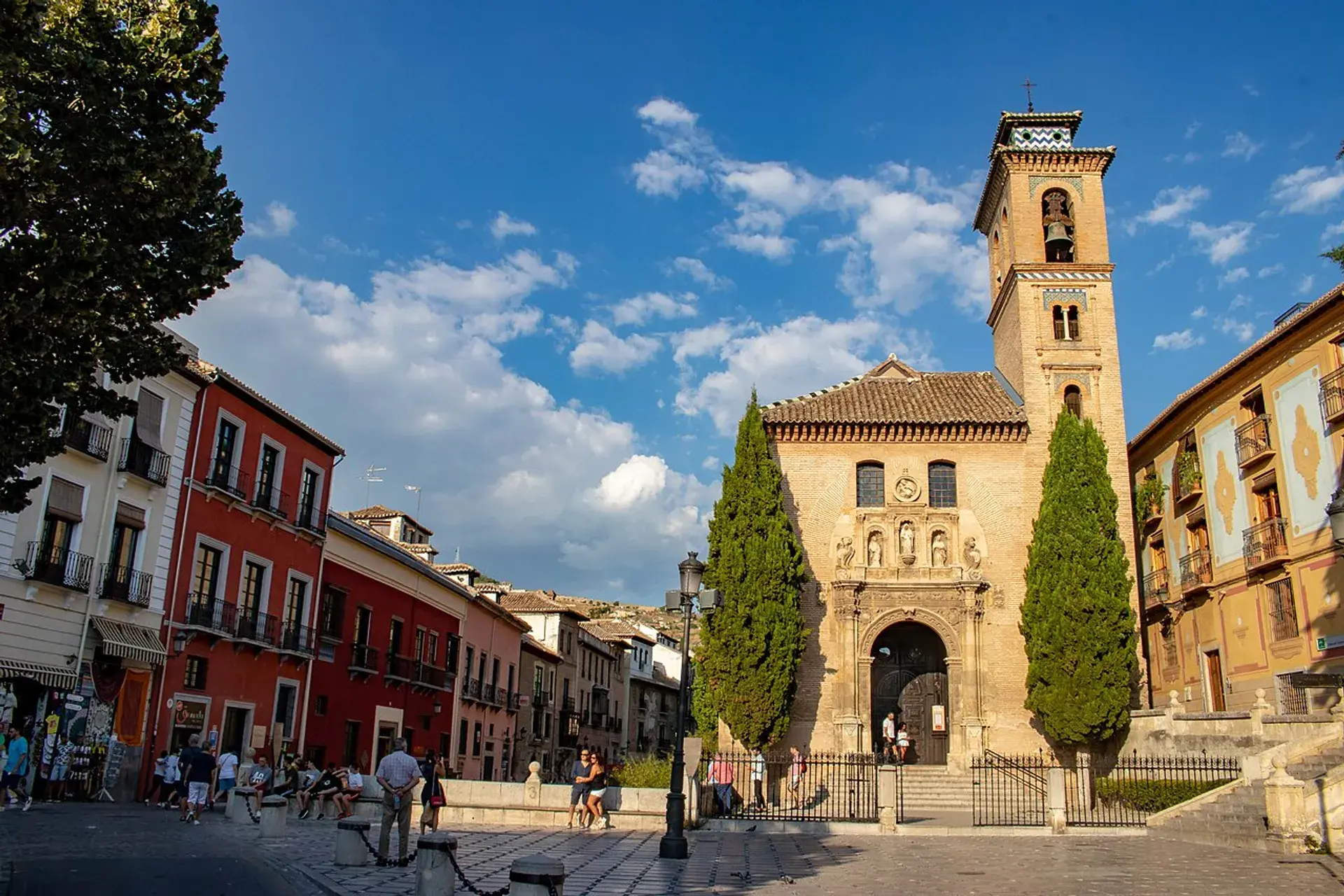
The Iglesia de San Gil y Santa Ana stands as a quintessential example of Granada's layered history, showcasing a remarkable blend of architectural styles. Declared an Asset of Cultural Interest in 1931, the church's story is one of transformation, reflecting the city's shift from Islamic to Christian rule.
From Mosque to Church: A Historic Transformation
The church's origins trace back to a plan initiated by Cardinal Pedro González de Mendoza in 1501 to Christianize Granada. This involved establishing new parishes, often on the sites of former mosques. The Iglesia de San Gil y Santa Ana was constructed on the grounds of the 11th-century Aljama Almanzora mosque, which had been founded by the Zirid King Badis.
An initial church was built in 1501, but the current structure was designed by the renowned architect Diego de Siloé and constructed between 1537 and 1548. The parish officially received its dual name, 'Iglesia de Santa Ana y de San Gil,' in 1948, after the original San Gil church was demolished in 1869 and Santa Ana absorbed its parish.
Architectural Masterpiece: Mudejar and Renaissance
The church is a celebrated fusion of Mudejar and Renaissance design. The magnificent Plateresque main facade is the work of Sebastián de Alcántara and his son, Juan. Inside, the Mudejar influence is clearly visible in the coffered ceilings.
A standout feature is the slender Mudejar tower, considered one of the finest in Spain. Built between 1561 and 1563 by Juan Castellar, it was constructed over the former mosque's minaret. Remarkably, a minaret from the old mosque is preserved on the roof of the main chapel, and another piece is housed in the Alhambra museum, offering a tangible link to the site's Islamic past.
A Place of Notable People and Events
The church holds connections to several significant historical figures. It was here that Mariana Pineda, a 19th-century liberal heroine, was married. The church is also said to preserve the remains of Juan Latino, an enslaved African who rose to become a celebrated humanist and professor at the University of Granada in the 16th century.
The celebrated poet Federico García Lorca was captivated by the church's tower, describing it as a "Tiny tower, more for doves than for bells, made with all the grace and ancient charm of Granada." The sacristy also holds treasures, including a chalice from 1568 by Francisco Téllez.
The Church in Modern Times
Today, the Iglesia de San Gil y Santa Ana remains an active Roman Catholic church, holding regular Masses. It is a highly sought-after wedding venue during the summer months and serves as the headquarters for two prominent Holy Week confraternities. Visitors can typically enter the church free of charge outside of service times.
FAQ
What is the architectural style of the Iglesia de San Gil y Santa Ana?
The church features a blend of Mudejar architecture, notable in its tower and interior coffering, and Renaissance elements, particularly in its Plateresque main facade.
Was the church built on the site of a mosque?
Yes, it was constructed on the site of the 11th-century Aljama Almanzora mosque as part of a plan to establish Christian parishes in Granada after the Reconquista.
Who are some famous people associated with this church?
The church is where 19th-century liberal heroine Mariana Pineda was married. It is also said to hold the remains of Juan Latino, a 16th-century humanist professor.
Can you visit the Iglesia de San Gil y Santa Ana?
Yes, access for visitors is free of charge, though it is typically restricted during Mass and other religious services.