Puerta de las Granadas: Alhambra's Renaissance Gateway
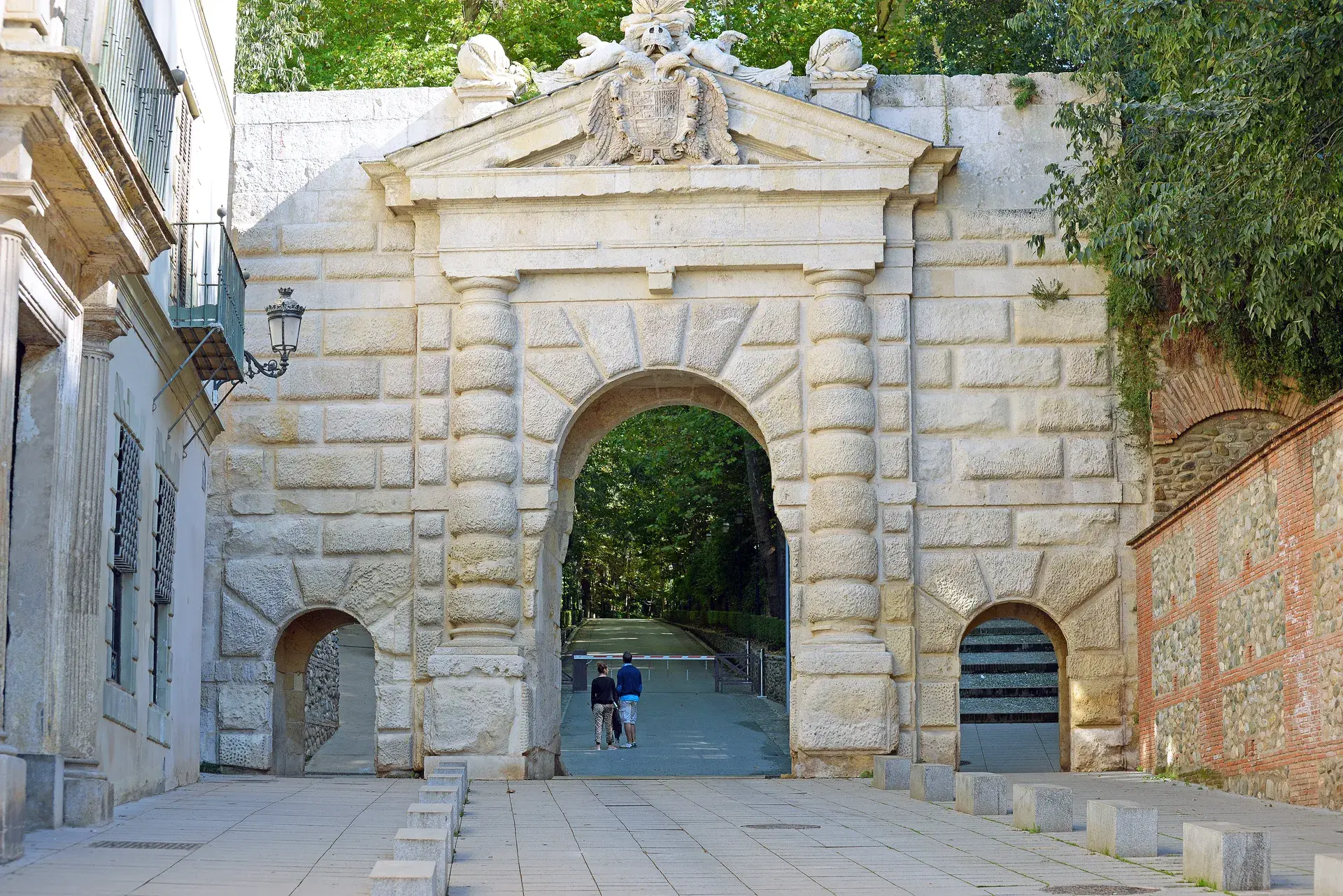
The Puerta de las Granadas is a grand, 16th-century stone archway that serves as a principal entrance to the woods of the Alhambra in Granada. Constructed around 1536, this Renaissance gate stands as a powerful symbol of the city's transformation under Emperor Charles V.
An Imperial Commission
The gate was commissioned by Emperor Charles V as part of a sweeping urban renewal program following his visit to Granada in 1526. The design was created by Pedro Machuca, the same architect responsible for the Palace of Charles V within the Alhambra, creating a unified imperial style. Inspired by Roman triumphal arches, the gate is built from ashlar masonry in a style sometimes described as Florentine rustic. It is adorned with the imperial coat of arms and allegorical figures of Peace and Abundance, reflecting the emperor's political ideology.
From Islamic Gate to Christian Symbol
The Puerta de las Granadas was strategically built on the site of an earlier Islamic gate, the 'Bib al-Buxar' or 'Puerta del Foso' (Gate of the Ditch). This former gate provided access to a cemetery on the Sabika hill, which was the reputed burial site of early Nasrid sultans. The replacement of the Islamic structure with a grand Renaissance arch was a deliberate statement of Christian power and the re-orientation of Granada towards European ideals after the Reconquista. On the right side of the current structure, remnants of the original Islamic arch are still discernible.
The Gate Through the Centuries
In the 16th century, with the planting of the Alameda walkway, the Puerta de las Granadas became the primary entrance to the Alhambra complex. Its iconic name, derived from the three carved pomegranates on its pediment, was not its original one. Until the 18th century, it was commonly known as the 'Puerta de los Gomérez.' In the early 20th century, a cartouche with a poem by Francisco Villaespesa dedicated to the Alhambra's founder was added to the rear facade.
The Puerta de las Granadas Today
Currently, the gate is a cherished landmark and the main pedestrian entrance to the Alhambra and its forests from the city center. It marks the top of the Cuesta de Gomérez, a popular route beginning in Plaza Nueva. Following an extensive restoration completed in 2010, vehicle access was restricted, solidifying its role as a gateway for pedestrians. Both locals and tourists pass through this historic arch to ascend to the monumental complex.
FAQ
When was the Puerta de las Granadas built?
The Puerta de las Granadas was constructed around 1536. It was commissioned by Emperor Charles V and designed by Pedro Machuca, the architect of the Palace of Charles V.
What was at the site of the Puerta de las Granadas before it was built?
The gate was built over an earlier Islamic entrance known as 'Bib al-Buxar' or 'Puerta del Foso' (Gate of the Ditch). This gate provided access to a cemetery on Sabika hill where early Nasrid sultans were believed to be buried.
Why is it called the Puerta de las Granadas?
The name, which means "Gate of the Pomegranates," comes from the three pomegranates carved on its pediment. However, until the 18th century, it was more commonly known as the 'Puerta de los Gomérez.'
Can you drive through the Puerta de las Granadas?
No, following a comprehensive restoration in 2010, vehicle access through the gate was largely restricted. It now serves as a principal pedestrian entrance to the Alhambra complex.