Fuente de Génova: Málaga’s Renaissance Fountain
Origins and Renaissance Artistry
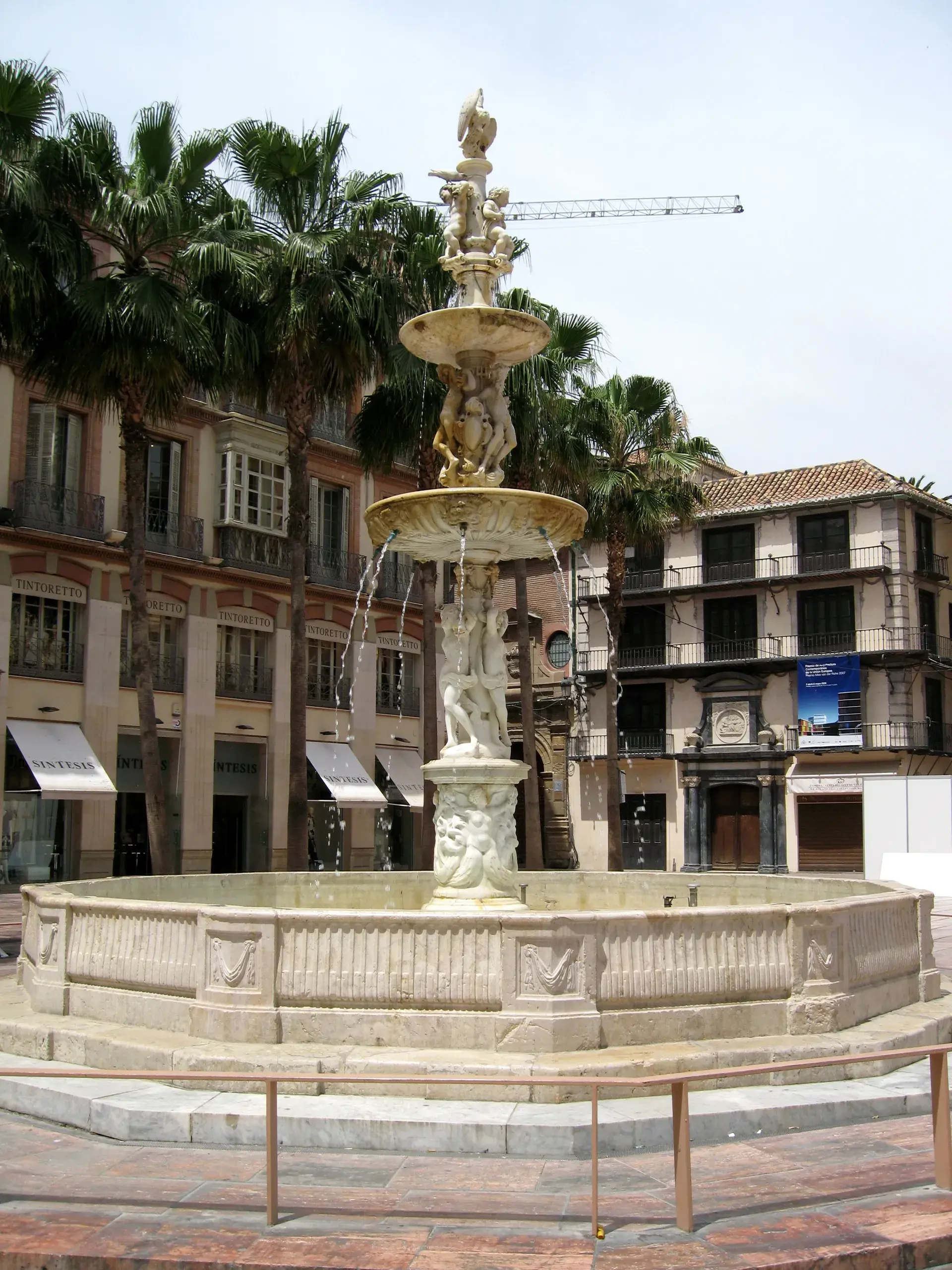
The Fuente de Génova, also known as the Fuente de Carlos V or Fuente de los Cisnes, stands in the Plaza de la Constitución in Málaga's historic center. Carved from Italian marble and attributed to 16th-century Genoese workshops, the Renaissance water monument is first documented in the square during the 1550s (around 1551–1554). It was originally installed to supply freshwater routed from the Almendral spring.
Over the centuries, prominent sculptors refined and expanded the fountain's composition. Between 1630 and 1633, sculptor José Micael Alfaro enriched the structure by adding intermediate sculpted figures, Graces, and dolphins beneath its eagle-shaped spout. Later, between 1790 and 1795, sculptor Miguel del Castillo designed and added the expansive 12-sided marble basin that frames the lower tiers.
The "Travelling Fountain" of Málaga
Although it now serves as a prominent landmark of the city center, the fountain spent nearly two centuries away from the Plaza de la Constitución. Urban redevelopments and shifting civic priorities led to a series of relocations that earned the monument a reputation as Málaga's travelling fountain.
In 1805, the structure was removed from the square and relocated to the Alameda Principal. It remained there until 1898, when it was shifted westward along the Alameda to clear space for Mariano Benlliure's monument honouring Manuel Domingo Larios, the 2nd Marquess of Larios. In 1924, the fountain was moved once again, this time into a pond within the Parque de Málaga. During its stay in the park, the fountain shared its waters with live swans, reinforcing its popular local moniker, Fuente de los Cisnes ("Fountain of the Swans"), an epithet also attributed to the stylized swan motifs sculpted into its lower tier.
Return to Plaza de la Constitución
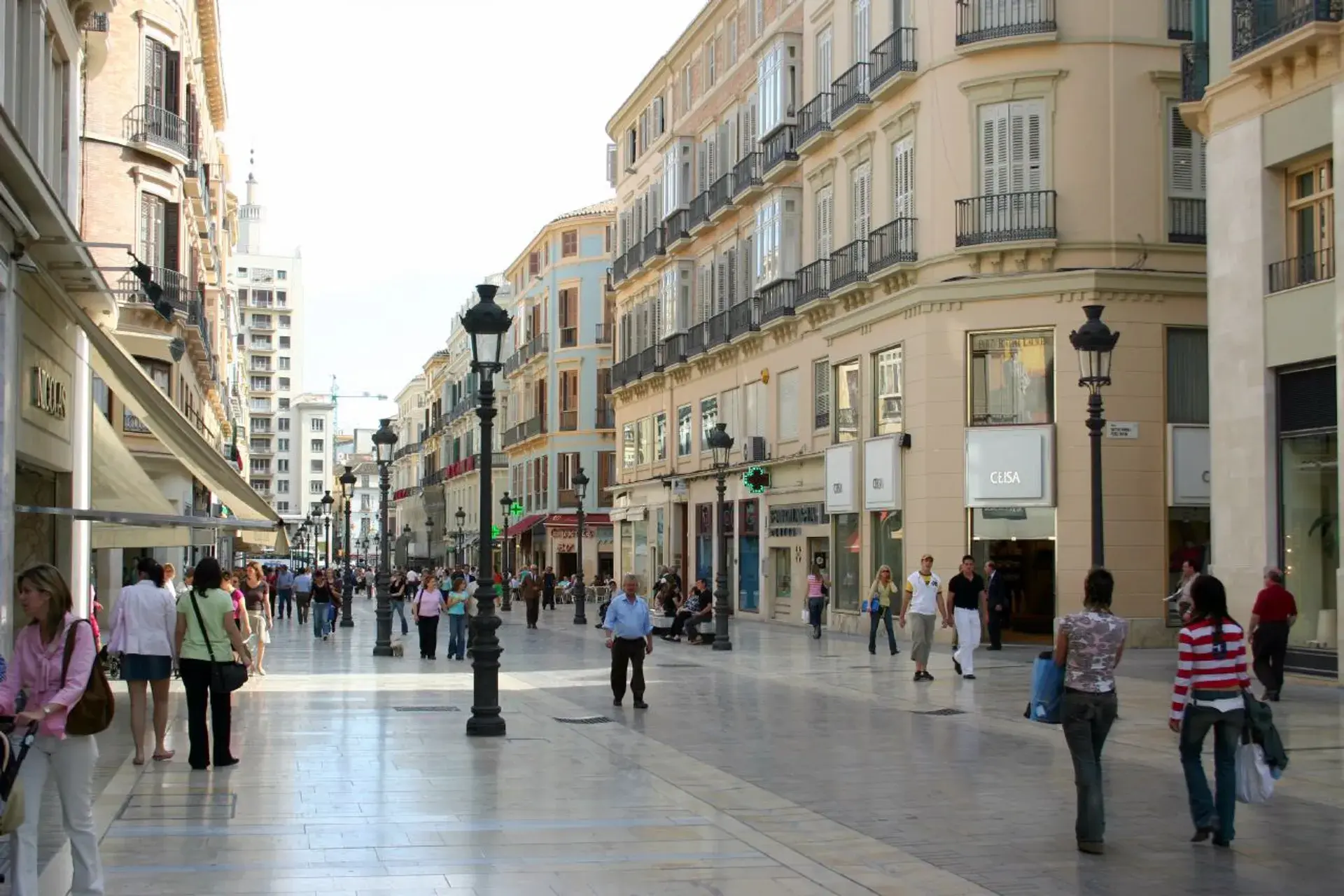
In late 2002, the fountain completed its long journey and was reinstalled in the Plaza de la Constitución as part of an extensive 2002–2003 urban renewal project that pedestrianized the square and Calle Marqués de Larios.
Rather than occupying the direct center of the square, the fountain was positioned deliberately off-center toward the western edge. This asymmetrical placement keeps the plaza open to accommodate Málaga's largest gatherings, including the official reviewing stands for Holy Week (Semana Santa) processions and festival stages during the annual August Feria de Málaga.
The Historic Square and Surrounding Details
Plaza de la Constitución anchors the northern terminus of Calle Larios and serves as a primary civic crossroads connecting Calle Granada and Calle Compañía with the older medieval and Renaissance quarters. Historically known as the Plaza Mayor or Plaza de las Cuatro Calles, the square housed the city hall until 1869, alongside the former prison and judicial courts, before receiving its current name in 1812 to commemorate the Constitution of Cádiz.
Surrounding the fountain, visitors encounter an understated modern monument embedded directly into the pedestrian surface. In 2004, large stainless-steel plates were installed flush with the stone paving. These metallic plaques reproduce the December 7, 1978 front pages of prominent Spanish newspapers—such as Sur, El País, and ABC—recording the approval of the democratic Spanish Constitution.
FAQ
Why is the Fuente de Génova known as Málaga's travelling fountain?
The fountain earned this title because it was moved multiple times across two centuries. Originally placed in the main square in the 1550s, it was relocated to the Alameda Principal in 1805, shifted again in 1898, moved to the Parque de Málaga in 1924, and finally returned to Plaza de la Constitución in late 2002.
What is the origin of the nickname Fuente de los Cisnes?
The name, meaning 'Fountain of the Swans,' refers either to the stylized swan motifs carved into the fountain's lower level or to the live swans that shared its basin during its decades installed in the Parque de Málaga pond.
Why is the fountain located off-center in Plaza de la Constitución?
During the 2002–2003 pedestrianization project, urban planners placed the fountain near the western perimeter to keep the central square clear for large public gatherings, including Holy Week viewing stands and August Feria events.