Monumento al Marqués de Larios: Málaga History
Design and Symbolism of the Monument
The Monumento al Marqués de Larios stands prominently at the intersection of the Alameda Principal and the southern entrance of Calle Marqués de Larios in Málaga. Unveiled on January 1, 1899, the work was crafted by the Valencian sculptor Mariano Benlliure using bronze and marble. It pays tribute to Manuel Domingo Larios y Larios, the 2nd Marquis of Larios, who was a key figure in late 19th-century urban and industrial developments in the city.
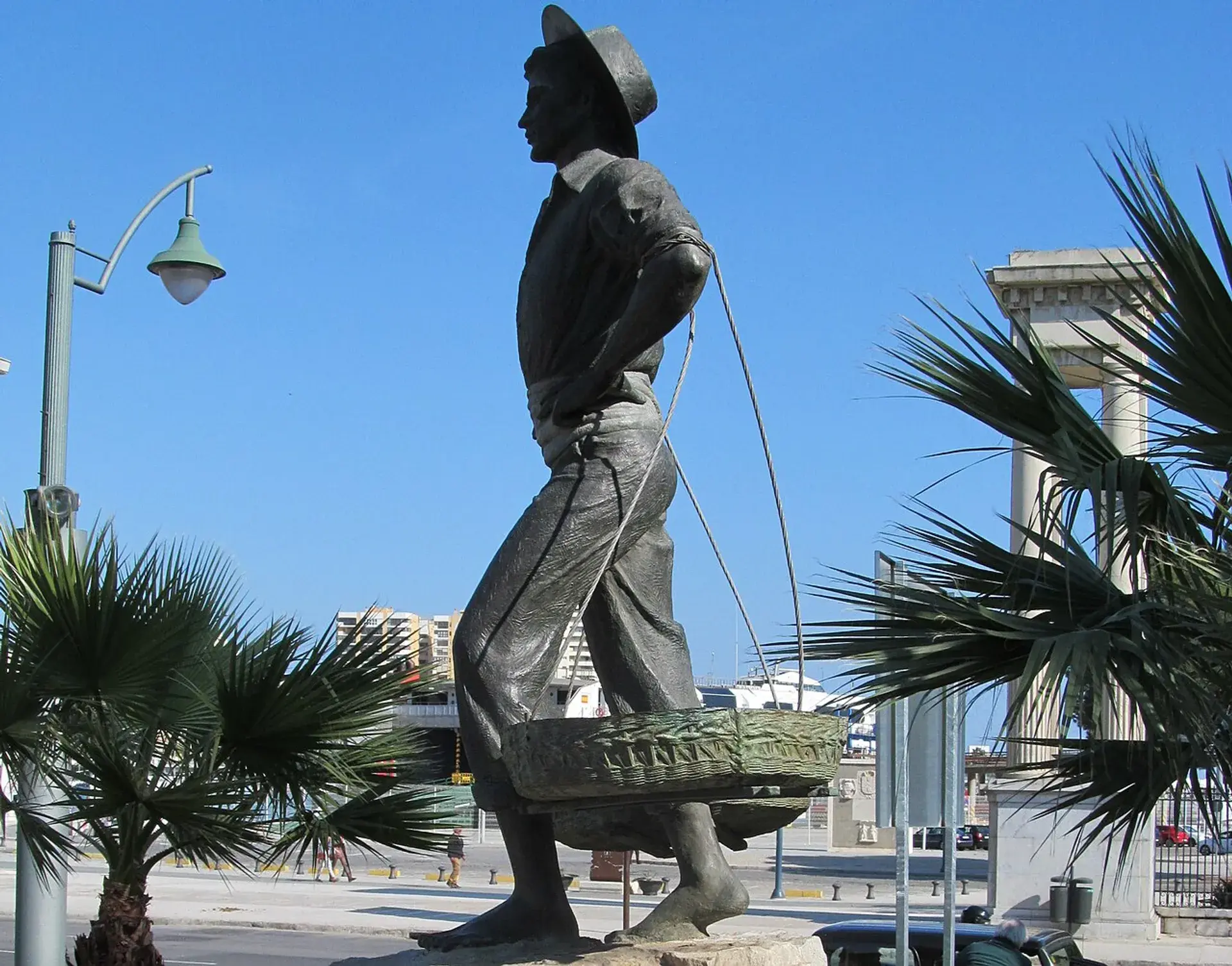
The monument features the Marquis positioned atop a high pedestal, flanked below by two allegorical bronze figures. On one side, the figure of Labour is depicted as a workman carrying a pickaxe and a hoe. On the other side stands a female figure representing Charity—also interpreted as "Grateful Málaga"—presenting a child toward the patron.
The Marquis and the Construction of Calle Larios
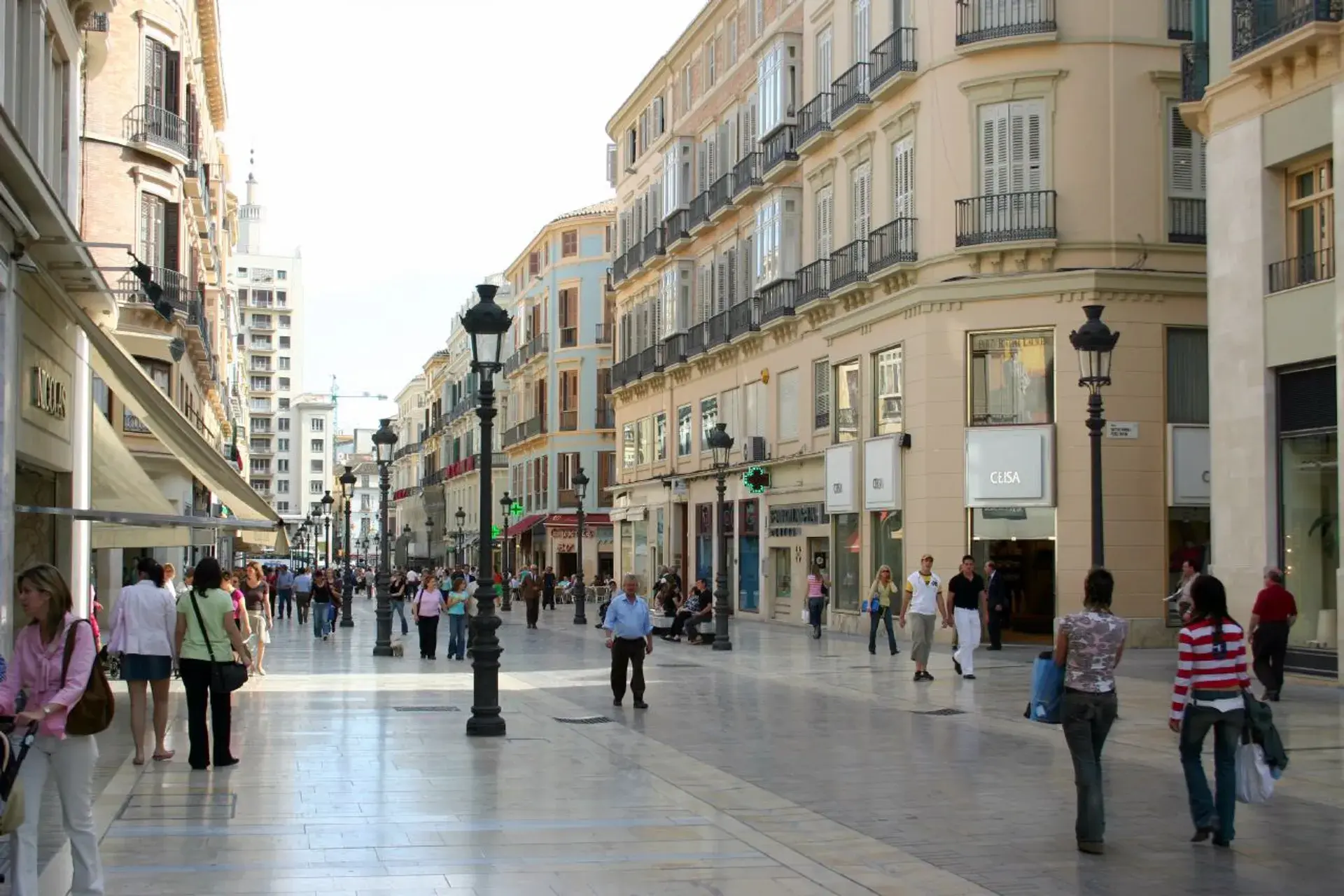
The commissioning of the monument reflects the major urban modernization that reshaped Málaga in the late 19th century. Prior to the avenue's construction, the corridor between the Mediterranean port and the Plaza de la Constitución consisted of a dense, unsanitary maze of narrow medieval alleys. City authorities sought to clear this labyrinth to introduce natural light and improve air circulation.
After a municipal share subscription failed to raise sufficient funding, the House of Larios assumed responsibility for the project in 1887. Under the supervision of lead architect Eduardo Strachan Viana-Cárdenas and contractor José Hidalgo Espildora, approximately 1,200 workers carried out the demolition of the alleyways and built the grand thoroughfare. The avenue officially opened on August 27, 1891, establishing a straight, symmetrical urban axis connecting the maritime front directly to the historic core.
Political Turmoil and the 1931 Upheaval
The monument became the center of dramatic political events during the 20th century. On April 14, 1931, following the proclamation of the Second Spanish Republic, a crowd toppled Benlliure's bronze statue of the Marquis from its marble pedestal. The statue was dragged through the city and thrown into the waters of Málaga's harbor.
During the Republican era, the thoroughfare was temporarily renamed Calle 14 de Abril, and the allegorical bronze statue of Labour was hoisted up to occupy the main pedestal. Following the Spanish Civil War, the statue of the Marquis was recovered from the harbor mud, repaired, and reinstalled in its original position atop the monument.
Modern Setting on the Alameda Principal
In recent years, the urban layout surrounding the monument has been incorporated into the pedestrianized configuration of the Alameda Principal, eliminating heavy vehicular rotaries and allowing visitors unobstructed access on foot.
Standing at the southern threshold of Calle Larios, the monument marks the primary pedestrian link bridging the port area with the interior historic district. The corridor remains aligned perpendicular to the sea, allowing Mediterranean breezes to flow past the sculpture and along the marble-paved avenue.
FAQ
Who created the Monumento al Marqués de Larios and when was it unveiled?
The monument was sculpted in bronze and marble by the Valencian sculptor Mariano Benlliure and was officially unveiled on January 1, 1899.
What do the figures on the monument represent?
The monument features Manuel Domingo Larios y Larios, the 2nd Marquis of Larios, atop a central pedestal. He is flanked by two allegorical figures: Labour, shown as a man with a pickaxe and hoe, and Charity (or "Grateful Málaga"), depicted as a woman presenting a child.
What happened to the statue of the Marquis in 1931?
On April 14, 1931, upon the proclamation of the Second Spanish Republic, the statue was toppled by a crowd, dragged through the streets, and cast into the port. It remained submerged in harbor mud until it was retrieved after the Spanish Civil War and restored to its pedestal.