Gothenburg Cathedral: Historic Neoclassical Landmark
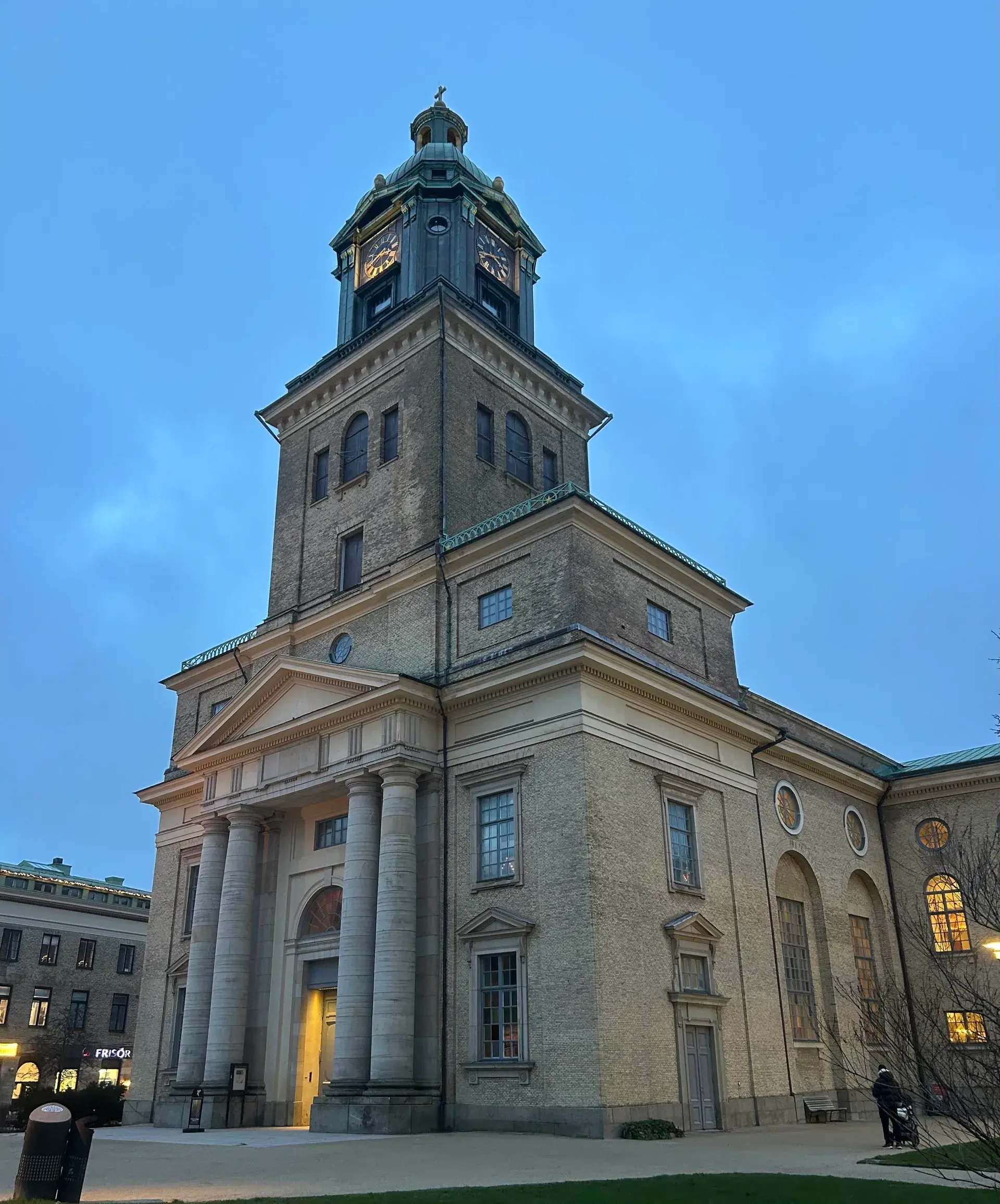
Observe the classical architecture of Gothenburg Cathedral from Kyrkogatan, standing as a tranquil landmark in the city center. Officially known as Gustavi domkyrka or Göteborgs domkyrka, this 19th-century cathedral was built directly upon the fire-scorched foundations of its predecessors. Situated within the Inom Vallgraven district, it serves as a historic centerpiece connecting Gothenburg's pedestrian avenues and modern shopping core.
A History Born from Fire
The site of the cathedral has hosted places of worship since the 1620s, beginning with a temporary wooden stave church. In 1633, a masonry church named after Sweden's founder-king Gustav II Adolf opened on the grounds. It was elevated to cathedral status in the 1660s but was destroyed in a massive city fire in 1721.
A second cathedral was constructed in the 18th century, only to be gutted by another catastrophic fire in 1802. The current structure was erected using the salvaged granite foundations and remaining brick footprint of those previous buildings. Before the surrounding churchyard was paved into a public square, an estimated 20,000 individuals were interred there, with over 3,000 buried directly beneath the church floor prior to the 1802 fire.
Neoclassical Architecture
The cornerstone for the present Neoclassical cathedral was laid in 1804. City architect Carl Wilhelm Carlberg designed the structure. Following his death in 1814, construction was completed by Justus Frederick Weinberg, and the building was consecrated on May 21, 1815. A second consecration took place in 1827 after the completion of the clock tower and its striking oxidized turquoise copper-clad roof.
The exterior presents a distinct mix of textures, featuring yellow brick walls accented by Scottish sandstone Doric entrance columns. Inside, the sanctuary is defined by soaring white barrel-vaulted ceilings, gold leaf moldings, and grey marble-look columns, creating a bright and airy atmosphere.
Surviving Relics and Modern Milestones
Despite its strict Neoclassical architecture, the cathedral houses several surviving Baroque relics that withstood the 1802 fire. These include an 18th-century grandfather clock and gilded wood angel statues carved in 1752.
The building also holds a unique place in Sweden's technological history. It was a pioneer in modern utilities, becoming the first church in the country to install central heating in 1852. The following year, it achieved another first for a Swedish church by installing gas lighting.
A Civic Landmark Today
Today, Gothenburg Cathedral remains an active Church of Sweden parish. It functions as the seat of the Bishop of Gothenburg and regularly hosts Lutheran services, organ recitals, and classical music concerts. The building stands as a free-entry spiritual refuge amidst the bustling commercial district of the city.
FAQ
When was Gothenburg Cathedral built?
The cornerstone for the current Gothenburg Cathedral was laid in 1804, and it was consecrated on May 21, 1815. A second consecration occurred in 1827 after the clock tower and copper roof were completed.
What is the architectural style of Gothenburg Cathedral?
The cathedral features Neoclassical (Empire) architecture, characterized by its yellow brick walls, Scottish sandstone Doric columns, and a bright interior with white barrel-vaulted ceilings.
What happened to the previous churches on the site of Gothenburg Cathedral?
Previous churches on the site were destroyed by devastating city fires. A 1633 masonry church burned down in 1721, and its 18th-century replacement was gutted by another major fire in 1802.
What survived the 1802 fire at Gothenburg Cathedral?
Despite the catastrophic fire, several Baroque relics survived, including an 18th-century grandfather clock and gilded wood angel statues carved in 1752, which are housed in the current cathedral.