Kronhuset & Kronhusbodarna: Gothenburg's Oldest Building
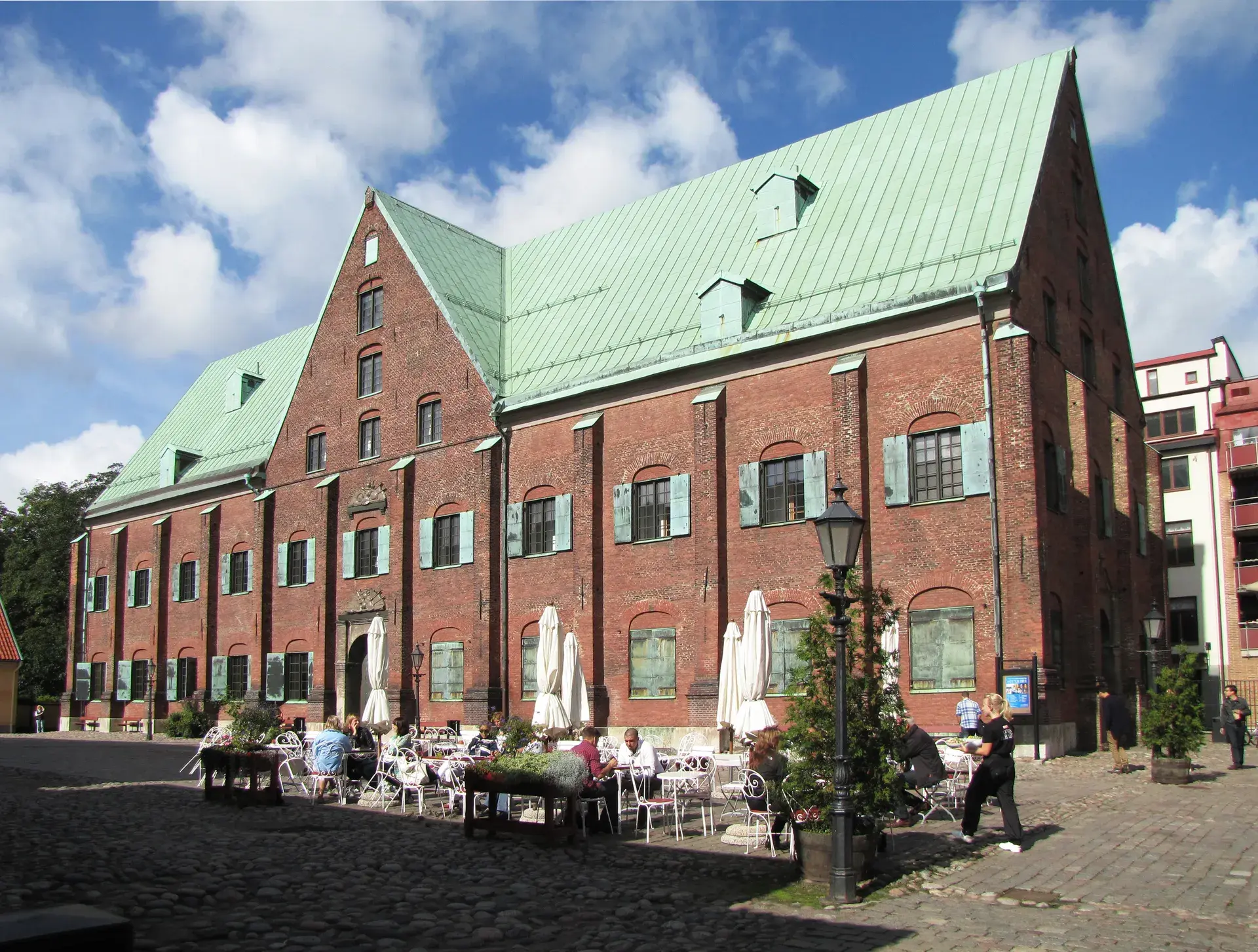
Admire the historic brick facade of Kronhuset and its surrounding yellow timber sheds, which stand as Gothenburg's oldest fully preserved secular buildings. Located near Gustaf Adolfs torg, the site connects the city's fortified military past with its modern civic identity.
A Military Fortress Turned Royal Parliament
Commissioned in the 1640s by the Swedish War Office, Kronhuset originally served as an artillery storehouse, arsenal, and grain store. The massive ground floor was constructed entirely without internal load-bearing pillars. This advanced 17th-century engineering choice was designed specifically to allow the easy maneuvering of heavy cannons and artillery wagons inside.
In January 1660, King Karl X Gustav convened the Swedish Parliament at the site, transforming the cleared ground floor into the Rikssal (Hall of State). Following the King's sudden death at a nearby palace, his four-year-old son was formally proclaimed King Karl XI inside Kronhuset on March 1, 1660. The ground floor later functioned as the permanent Garrison Chapel from 1680 until the late 19th century before being transferred to the City of Gothenburg in the 1920s.
17th-Century Dutch Architecture
Constructed between 1642 and 1654, Kronhuset is designed in a 17th-century Dutch architectural style attributed to Simon de la Vallée. The six-storey structure features Dutch brick on the ground floor and Swedish brick on the upper levels.
Before the structure was built, the plot served as Gothenburg's oldest cemetery. The building's thick brick walls proved highly resilient; despite devastating city fires in 1746 and 1758 that leveled the surrounding district and earlier timber sheds, Kronhuset survived largely unscathed. It was designated a state-protected historical landmark in 1968.
Modern Artisan Workshops at Kronhusbodarna
Today, Kronhuset is managed by the municipal property company Higab and serves as a center for cultural activities, creative events, and temporary exhibitions. The building is flanked by Kronhusbodarna, a series of 18th-century yellow timber sheds.
These sheds operate as active artisan workshops set against a quiet, cobblestone quarter. The historic buildings house ceramicists, glassmakers, and a traditional watchmaker. The scent of roasted coffee and fresh chocolate frequently drifts from the courtyard's traditional chocolatier and café, creating a vibrant atmosphere for visitors.
FAQ
What was Kronhuset originally used for?
Built between 1642 and 1654, Kronhuset was originally commissioned by the Swedish War Office to serve as an artillery storehouse, arsenal, and grain store.
Who was proclaimed King inside Kronhuset?
On March 1, 1660, four-year-old Karl XI was formally proclaimed King of Sweden inside Kronhuset's Hall of State following the sudden death of his father, King Karl X Gustav.
What can visitors find at Kronhusbodarna today?
The 18th-century yellow timber sheds of Kronhusbodarna now operate as active artisan workshops. The area features ceramicists, glassmakers, a traditional watchmaker, a chocolatier, and a café.