Barfüsserplatz: A Guide to Basel's Historic Square
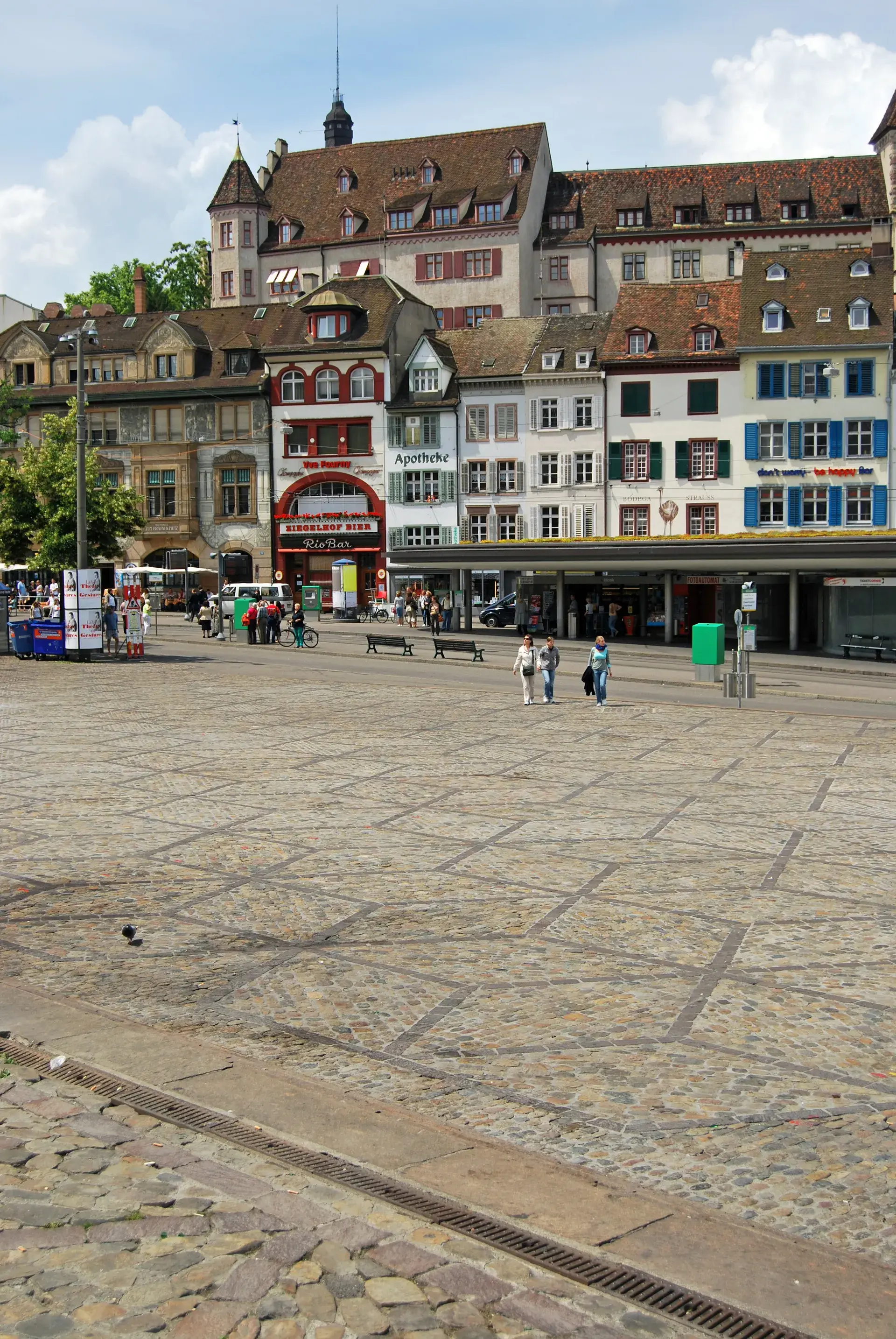
From a sanctuary for barefoot friars to an impromptu mountain of salt, the history of Basel's liveliest intersection is layered directly beneath its modern tram tracks. Locally known as "Barfi," Barfüsserplatz functions as a bustling transit hub and an essential navigation midpoint connecting the SBB train station, Marktplatz, and Cathedral Hill. Situated in a natural low basin created by the subterranean Birsig river valley, the square presents a vibrant mix of historic architecture and dense pedestrian foot traffic.
Monastic Origins and Urban Evolution
Barfüsserplatz translates to "Barefoot Square," a name derived from the Franciscan friars who arrived in Basel in 1231. In 1250, the friars were granted land along the inner city wall and the open Birsig riverbed to establish a monastery. Following the Protestant Reformation in 1529, the city council took control of the complex. The former monastic cemetery was transformed into an open public square, cementing its role in the daily life of Basel.
Over the centuries, the surrounding complex underwent numerous functional changes. While the main church served as a Protestant house of worship until 1794, other parts of the property were repurposed into a granary, schools, a hospital, and an asylum.
The Barfüsserkirche and Historical Museums
The square is dominated by the Gothic Barfüsserkirche, constructed between 1275 and 1309. This structure was built roughly two meters higher on gravel fill than its 1250s predecessor, and archeological remains of the first church are still visible in the lower basement levels. Between 1799 and 1815, after the church was decommissioned, the interior was utilized as a regional salt depot. During this period, approximately 300 tons of salt seeped into the stone and gravel floor.
In 1888, Basel lost a bid to house the Swiss National Museum to Zurich. In response, the city converted the Barfüsserkirche into its own municipal historical museum. Opening in 1894, the Historisches Museum Basel now houses significant artifacts, including the Cathedral Treasury and the famous Basel Dance of Death. Directly across the square, the Musikmuseum is located inside a converted 19th-century detention center, where historic instruments are displayed within former cell blocks.
A Center for Transit and Festivities
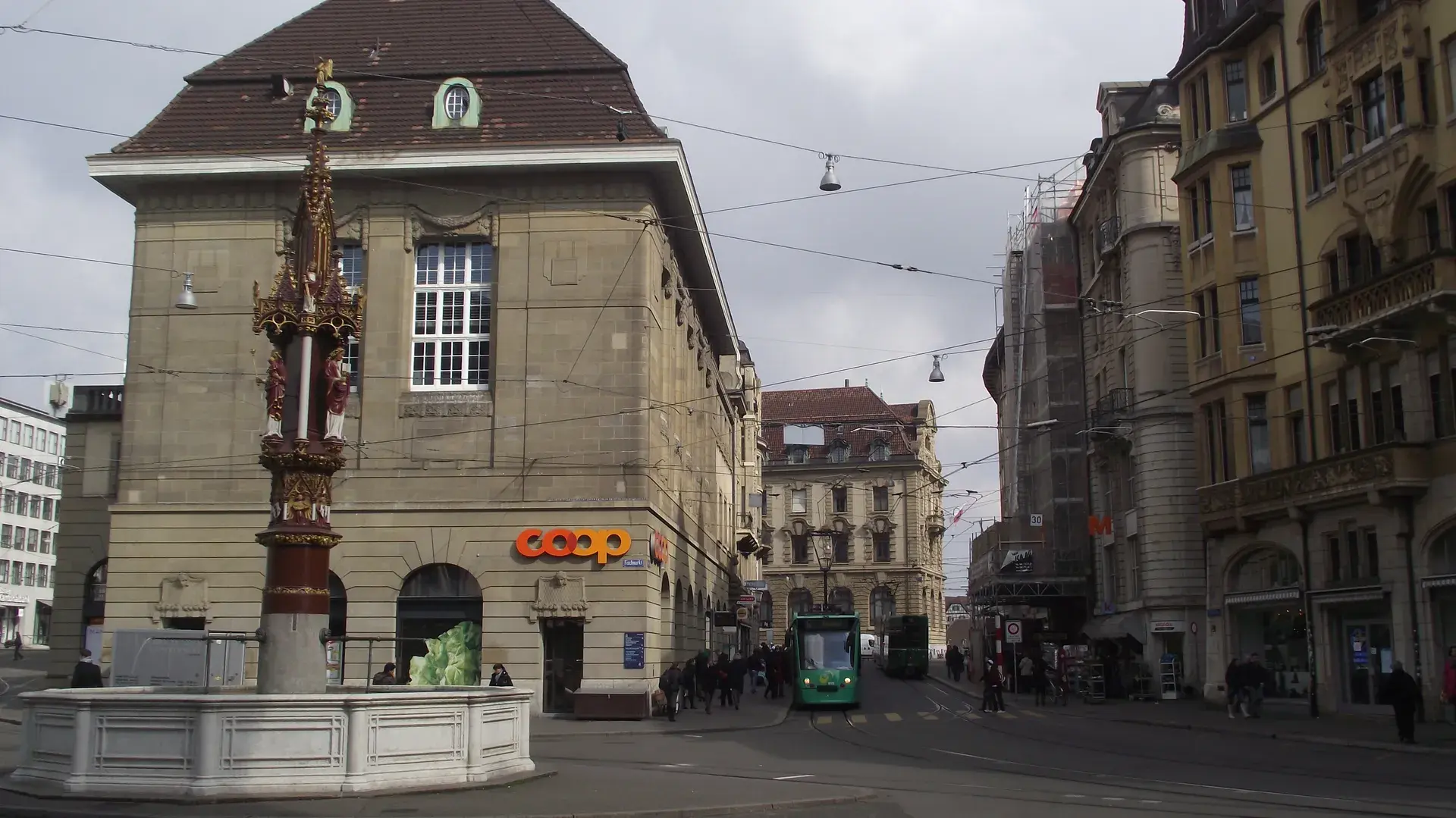
Today, Barfüsserplatz serves as a major pedestrian and tram transfer point connecting the upper and lower Old Town. The ambient noise of outdoor cafe dining and street musicians is frequently punctuated by the steady clatter, bell-rings, and wheel squeals of multi-directional green Basel trams crossing the track intersections.
Beyond daily transit, the square acts as a prominent event and market hub. Surrounded by cultural institutions like the neighboring Stadtcasino Basel, Barfüsserplatz regularly hosts open-air gatherings, stages of the Basel Autumn Fair, and the city's annual Christmas Market.
FAQ
How did Barfüsserplatz get its name?
Barfüsserplatz translates to "Barefoot Square." It is named after the Franciscan friars, known as "the barefoot ones," who were granted land on the site in 1250 to establish a monastery.
What is inside the Barfüsserkirche today?
Since 1894, the Barfüsserkirche has served as the main exhibition building for the Historisches Museum Basel. It houses historical artifacts including the Cathedral Treasury and the Basel Dance of Death.
What was the Barfüsserkirche used for before becoming a museum?
After serving as a Catholic monastery and later a Protestant house of worship until 1794, the church was decommissioned. Between 1799 and 1815, it was used as a regional salt depot, causing about 300 tons of salt to seep into its floors.