Basel Cathedral: History, Architecture & Guide
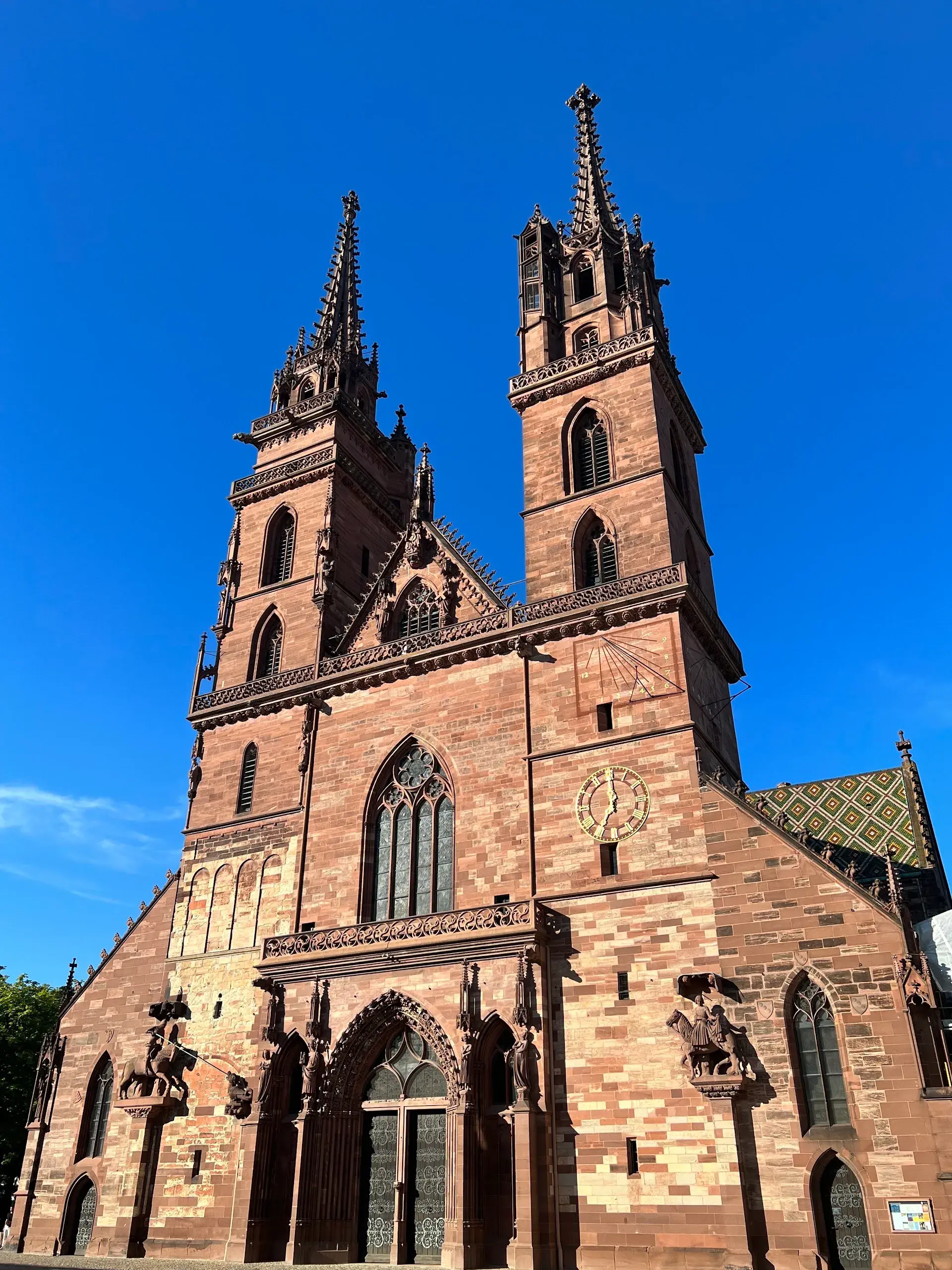
Situated on the Münsterhügel (Cathedral Hill) overlooking the Rhine River, Basel Cathedral stands as the historic heart of Basel's Old Town. Built from distinctive red Vosges sandstone and crowned with a multicolored, patterned glazed tile roof, the cathedral is a defining landmark in the city skyline.
A Blend of Romanesque and Gothic Design
Basel Cathedral showcases a striking transition between architectural eras. Originally consecrated in 1019 under Holy Roman Emperor Henry II and Empress Cunigunde, the structure features the late-12th-century Romanesque Gallus Portal. Much of the subsequent architecture reflects High and Late Gothic styles, characterized by the soaring St. George's and St. Martin's western spires.
The surrounding grounds enhance the architectural majesty. The site includes two medieval cloisters and the Pfalz, an elevated viewing terrace positioned at the rear of the cathedral. The Pfalz offers panoramic views of the Rhine bend, passenger ferries, and the distant Black Forest and Vosges hills.
The Great Earthquake of 1356
The cathedral's structural history was forever altered on October 18, 1356, by the strongest recorded historical earthquake north of the Alps. The seismic event destroyed the church's five original towers, the nave roof, and parts of the choir.
Reconstruction took place throughout the 14th and 15th centuries under master builders such as Johannes von Gmünd and Ulrich von Ensingen, who rebuilt only two of the towers. Structural evidence of the earthquake remains visible today, including masonry cracks secured by iron braces on the north side and visible reconstruction seams.
The Reformation and Erasmus of Rotterdam
During the 1529 Basel Reformation, the Catholic cathedral was subjected to iconoclasm, resulting in the removal of many interior images, altars, and statues. It was subsequently converted into the city's primary Evangelical-Reformed church, a status it maintains today.
Despite this Protestant conversion, the cathedral houses the tomb and memorial epitaph of Desiderius Erasmus of Rotterdam. The Renaissance humanist lived his final years in Basel and died in 1536. Notably, Erasmus never officially converted to Protestantism and remained loyal to the Catholic Church, making his burial inside the reformed cathedral a surprising historical exception.
Stone Elephants and Cloister Curiosities
The cathedral features several unusual artistic details hidden within its stonework. The Romanesque eastern exterior friezes display carvings of elephants. These representations were crafted by medieval stone masons who had never seen live specimens.
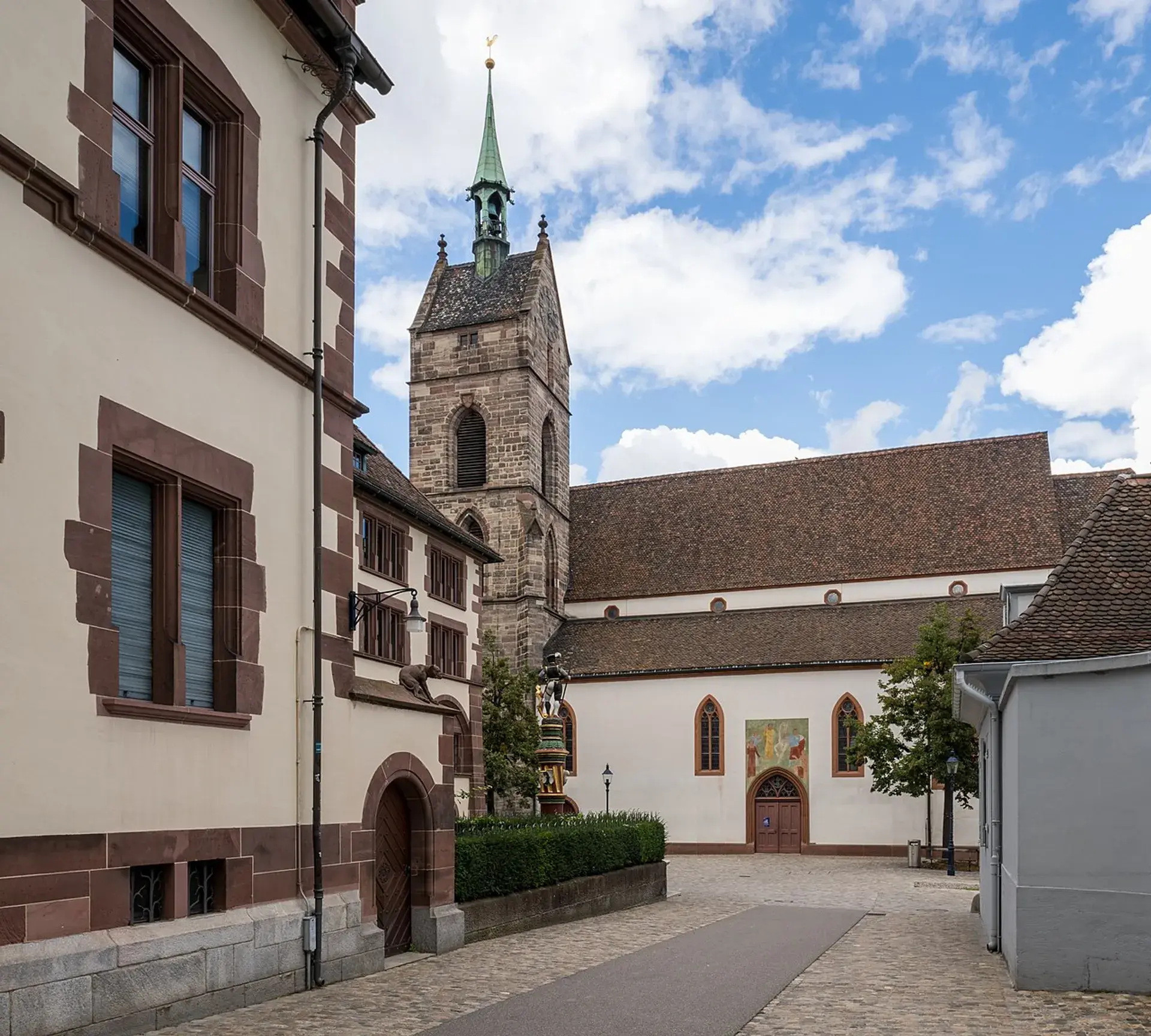
Nearby, the Gothic cloister contains unique ironwork and sculptural elements. Rather than strictly religious iconography, some of these carvings depict ordinary medieval market goods, including pumpkins and root vegetables.
Modern Use and City Context
Today, Basel Cathedral remains an active place of worship, functioning as the principal church of the Evangelical-Reformed Church of the Canton of Basel-Stadt. It holds regular weekly services and is open daily to the public.
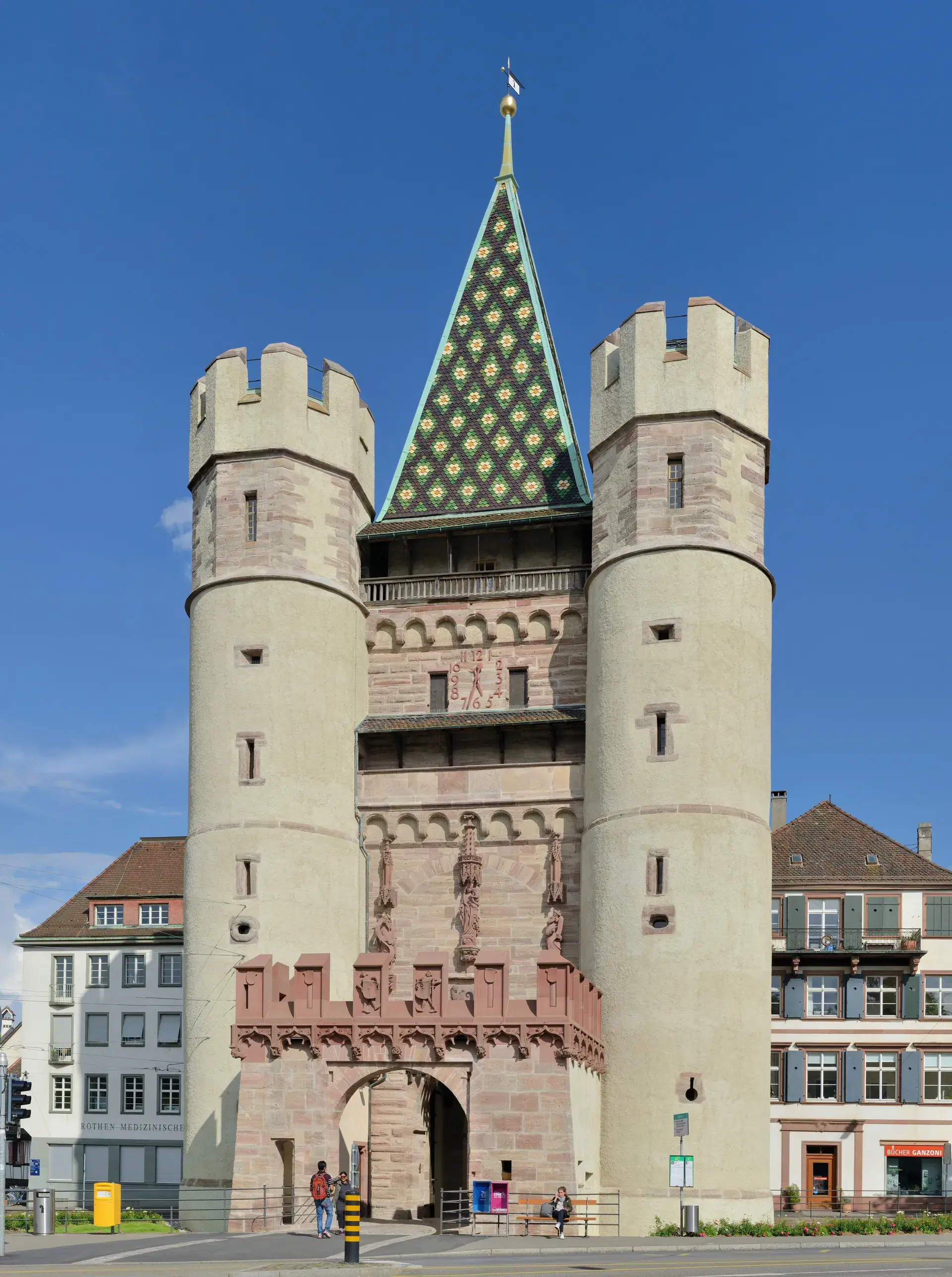
Beyond religious services, the cathedral and the surrounding Münsterplatz serve as a vibrant community hub. The venue hosts organ recitals, concerts, and the annual Basel Autumn Fair. As an essential anchor on the historic Old Town itinerary, the cathedral links the Rhine riverfront with notable civic landmarks like the Town Hall and the Spalentor.
FAQ
Is Basel Cathedral Catholic or Protestant?
Basel Cathedral is currently a Protestant place of worship. It was originally consecrated as a Catholic cathedral in 1019 but was converted into an Evangelical-Reformed church during the Basel Reformation in 1529.
Why does Basel Cathedral have only two towers?
The original cathedral had five towers, but they were destroyed in the devastating 1356 earthquake. During the subsequent 14th and 15th-century reconstruction, only two towers—St. George's and St. Martin's—were rebuilt.
Who is buried in Basel Cathedral?
The Dutch Renaissance humanist and theologian Desiderius Erasmus of Rotterdam is buried inside the cathedral. He was granted a memorial and tomb there after his death in 1536, despite remaining loyal to the Catholic Church.
Discover Basel like never before
Dive into Basel hidden stories and secret spots with Ciceru interactive tours.
Explore tour
Audioguide
Quizzes
Maps
Solo
Couples
Groups & families

© Photo by Abdurrahman Aksoy via Google Maps · Google Places