Basel Rathaus: The Bright-Red Town Hall at Marktplatz
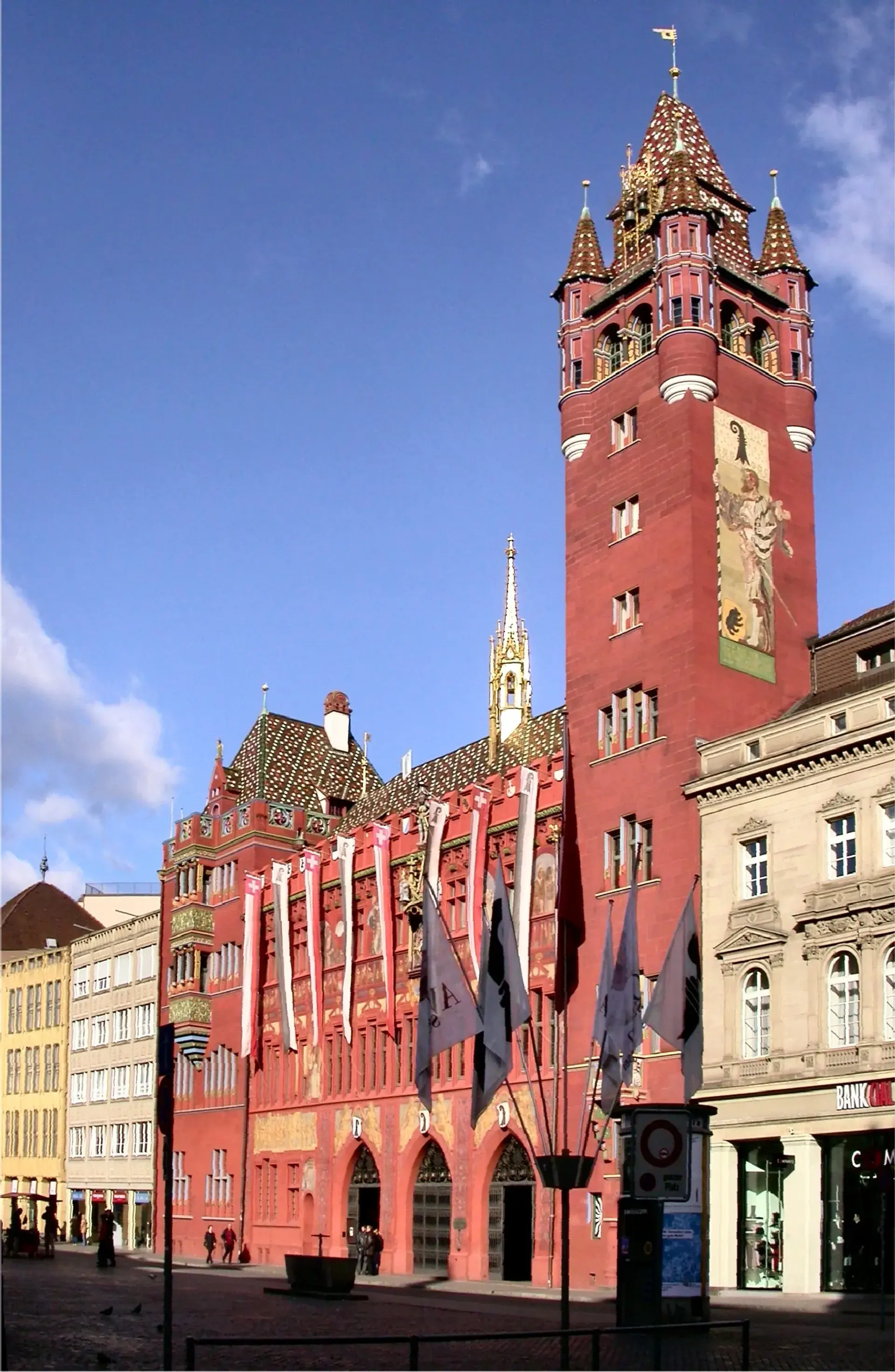
Standing bold in vermilion red sandstone, Basel's Rathaus, or Town Hall, anchors the Marktplatz as the political and visual center of the city. Built to celebrate a new national alliance, the vivid Late Gothic and Renaissance structure serves as the defining meeting point of the city's historic core, linking the Münsterhügel and the Rhine to major commercial arteries.
A Symbol of Swiss Independence
The site of the Marktplatz has functioned as Basel’s civic administrative center since 1290. After the catastrophic 1356 earthquake destroyed the original courthouse, it was temporarily replaced by the Palast der Herren. A major shift occurred in 1501 when Basel formally joined the Swiss Confederation as its eleventh member.
To project civic pride and celebrate this newfound independence, the city council commissioned the lavish red-sandstone hall. Built between 1504 and 1514, the central core of the Rathaus features battlements decorated with the coats of arms of the confederate cantons. The council chambers were subsequently added between 1517 and 1521 to complete the primary historic structure.
Architectural Marvels and Murals
The striking exterior and inner courtyard are covered in detailed murals. Between 1608 and 1611, Hans Bock the Elder painted the prominent frescoes on the facade and courtyard. Earlier, in 1521, Renaissance master Hans Holbein the Younger was commissioned to paint murals for the Great Council Chamber. While those original works are no longer in the building, surviving fragments are preserved at the Kunstmuseum Basel.
Inside the courtyard stands a 1580 statue sculpted by Hans Michel. It honors the Roman general Lucius Munatius Plancus as the founder of Basel. This claim was actually fabricated by 16th-century humanists seeking a link to Roman antiquity, as Plancus historically founded the nearby colony of Augusta Raurica in 44 BCE.
Despite the building's seamless medieval Gothic appearance, its ornate clock tower and the left wing were not part of the original construction. These structures are relatively modern additions, completed between 1898 and 1904.
The Civic and Commercial Heart Today
Today, the Rathaus remains the active seat of Canton Basel-Stadt's legislative branch, the Grosser Rat, and executive branch, the Regierungsrat. Inside the Grossratssaal, a historical mural by Emil Schill depicts the swearing of the confederate oath, notably utilizing contemporary local citizens as live models. The inner courtyard is freely accessible to pedestrians during daytime hours, while the historic council chambers can be viewed via official guided tours.
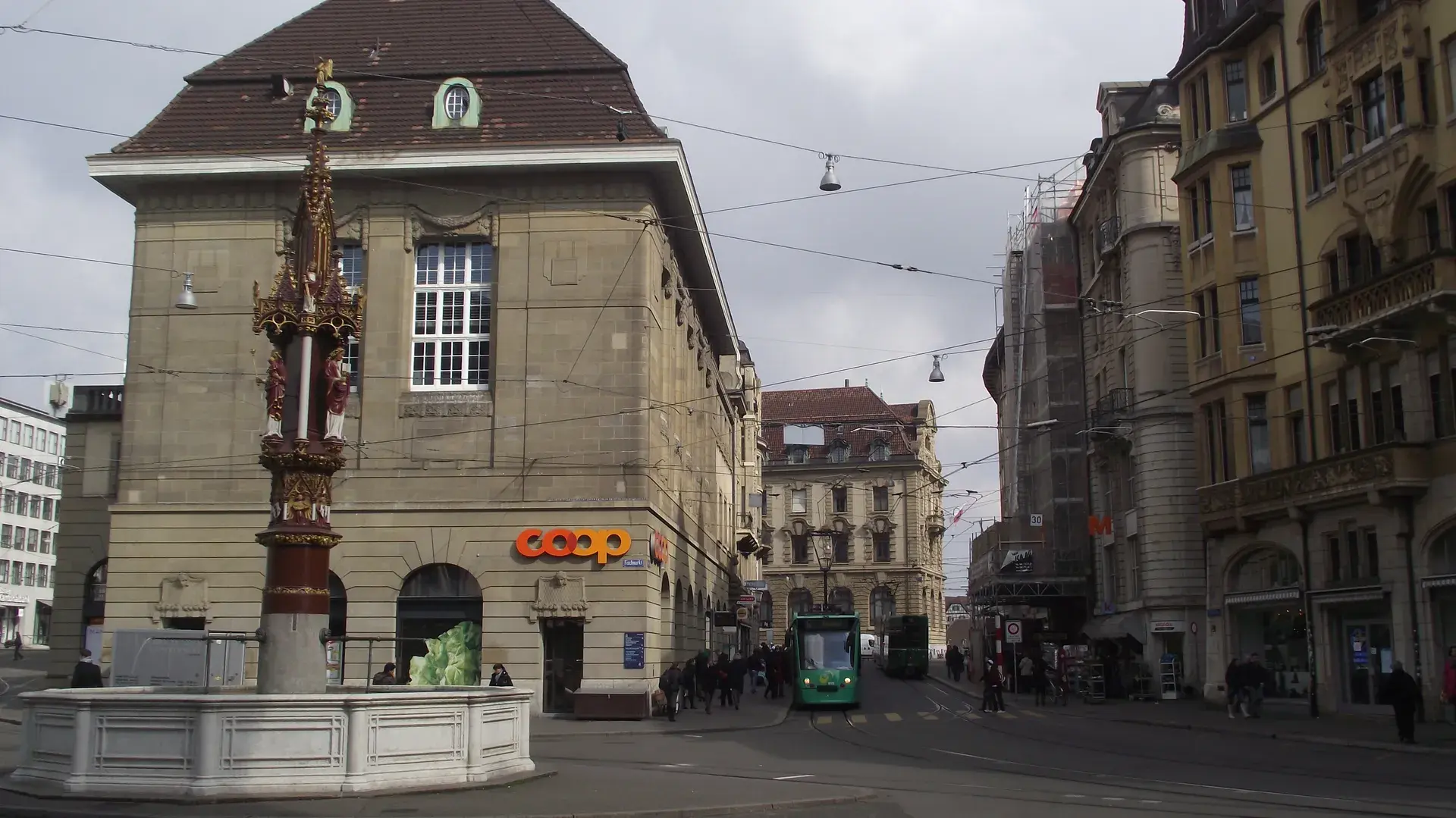
Outside the town hall, the Marktplatz buzzes with daily activity. On weekday and Saturday mornings, an open-air market fills the stone paving, offering regional produce, flowers, and local foods. The square is defined by its lively atmosphere, characterized by the calls of market vendors mixing with the clanging bells and distinctive rumble of green Basel BVB trams crossing the dense interchange.
FAQ
What is the red building in Basel's Marktplatz?
The bright red building is the Rathaus (Town Hall). It serves as the political center of Canton Basel-Stadt and was originally built between 1504 and 1514 from vivid red sandstone.
Can the public go inside the Basel Rathaus?
Yes, the inner courtyard is freely accessible to pedestrians during daytime hours. Access to the historic council chambers is available through official guided tours.
When is the market open at Basel Marktplatz?
An open-air market operates in the Marktplatz on Monday through Saturday mornings, selling fresh produce, flowers, and regional foods.