BärenPark Bern: History of the City's Famous Bears
Bern's connection to the bear goes far beyond flags and fountains. For over 500 years, the city has kept live bears as living heraldry. Marking the classic terminus of the central Old Town, the BärenPark serves as the physical embodiment of Bern's civic identity. Located at the eastern end of the historic center across the Nydeggbrücke, the park connects the city's live animal mascots to the heraldic bears depicted on architecture throughout the UNESCO World Heritage site.
The Origins of a Civic Mascot
According to chronicler Konrad Justinger, Duke Berthold V of Zähringen vowed to name his 1191 settlement after the first animal slain in a hunt. The creature was a bear, establishing the animal as the city's permanent heraldic symbol. Bern has kept live bears as civic mascots since 1513, when Bernese troops brought one back as a prize from the Battle of Novara. After occupying various locations across the city, the bears were permanently moved to the current riverside site in 1857.
From Concrete Pit to Natural Habitat
For over a century, the bears were housed in the historic 1857 concrete bear pit known as the Bärengraben. During the 19th and early 20th centuries, this pit was a notable attraction visited by prominent historical figures, including Albert Einstein, Vladimir Lenin, Alexandre Dumas, and the King of Siam. It was also the site of a bizarre incident in 1903, when an intoxicated convict fell into the pit overnight, surviving unconscious until a rescue the following morning.
Following decades of animal welfare criticism, 80 percent of Bernese voters approved funding in 2007 to replace the small concrete pits. Opened in October 2009, the modern BärenPark is an open, 5,000 to 6,000 square meter natural hillside enclosure.
Life in the BärenPark
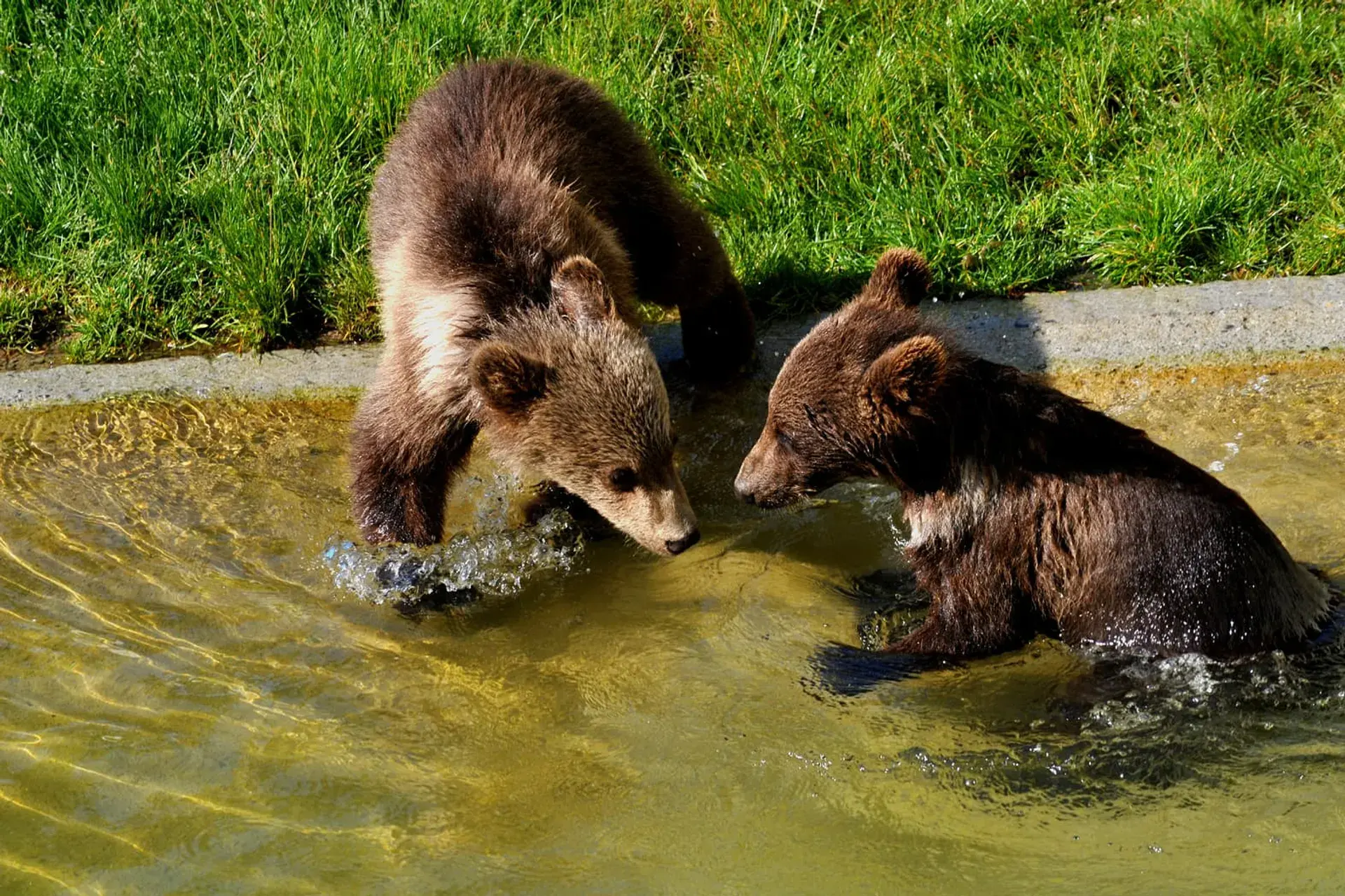
Operated by Tierpark Bern, the enclosure provides a sprawling natural habitat for the resident Eurasian brown bears. The animals, colloquially referred to by locals as "Mutzen," can be observed wading in water, digging, and scratching against heavy wooden trunks on the steep dirt banks. The scene is set against the backdrop of the rushing turquoise-green waters of the Aare River below. During the height of summer, zookeepers treat the bears to "bear ice cream"—frozen blocks of water filled with fruit and fish.
Preservation and Accessibility
The modern habitat preserves and integrates the site's history. The historic larger pit is connected to the hillside enclosure via a tunnel, allowing the bears access to both areas. Meanwhile, the smaller historical pit is open to the public and occasionally utilized for cultural events. The BärenPark is completely free to enter and remains open year-round. A free panoramic inclined elevator, installed in 2015, connects the street level directly to the riverside promenade, ensuring the steep topography remains accessible for all.
FAQ
Is BärenPark free to visit?
Yes, the BärenPark is open year-round and is completely free of charge.
Why does Bern have a bear park?
The bear has been the heraldic symbol of Bern since its founding in 1191, according to local legend. The city has kept live bears as civic mascots since 1513.
When did the modern BärenPark open?
The modern 5,000 to 6,000 square meter hillside enclosure opened in October 2009, following a 2007 vote to replace the historic 1857 concrete pits.
What happened to the old concrete bear pit?
The historic 1857 Bärengraben remains preserved on-site. The larger pit is connected to the new habitat via a tunnel for the bears, while the smaller pit is open to the public for cultural events.