Gerechtigkeitsgasse: Bern's Historic Justice Alley
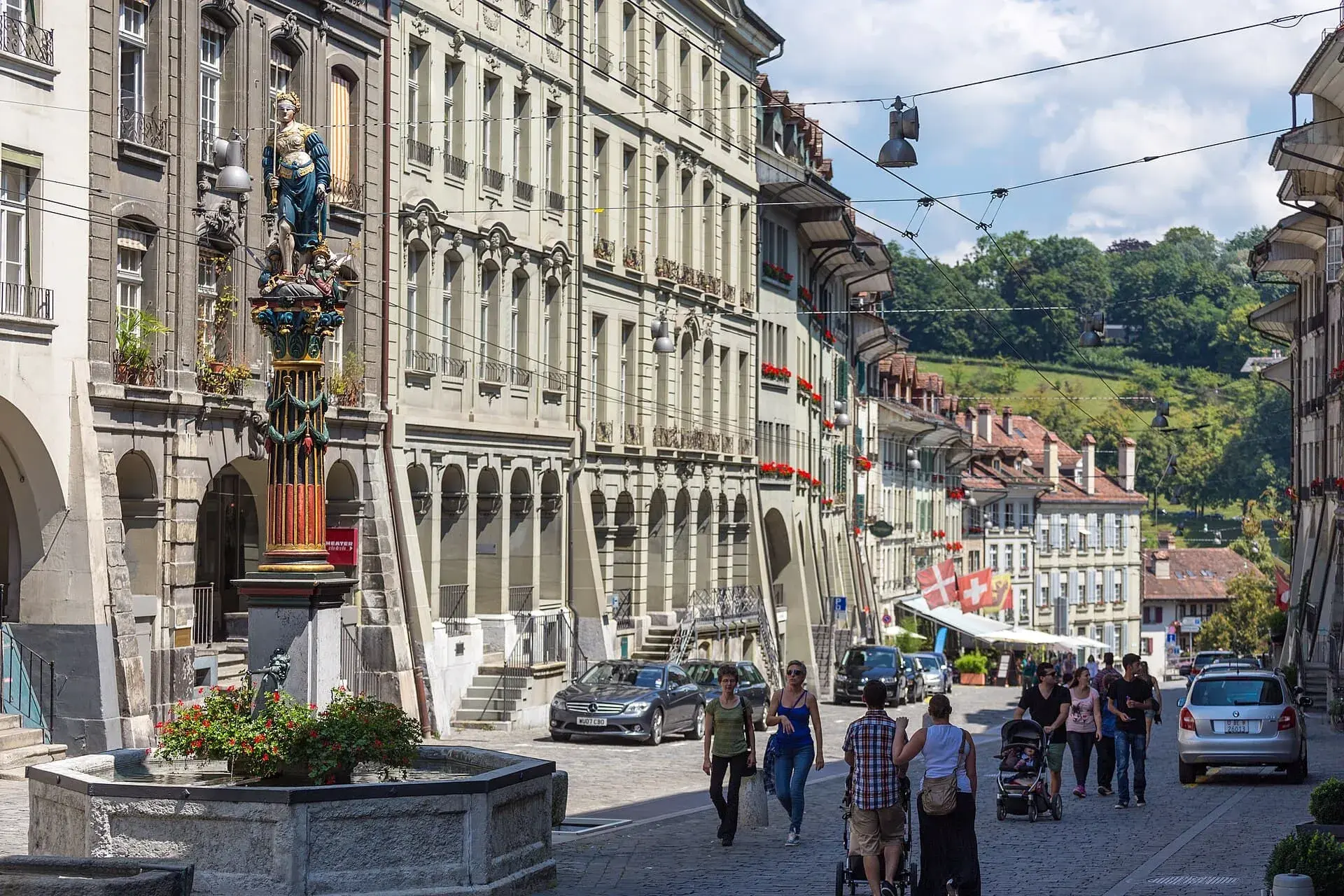
Gerechtigkeitsgasse is a 260-metre street forming the oldest eastern stretch of the central axis in Bern's Old City. Known for its continuous covered stone arcades and sandstone architecture, the thoroughfare serves as the eastern terminal section of Bern's classic spine, continuing the main route from the Zytglogge down toward the Nydeggbrücke and the Aare river.
A Medieval Marketplace
Laid out following Bern's founding in 1191, the street was the core of the original Zähringerstadt settlement. It was initially named Märitgasse (Market Alley) and functioned as medieval Bern's primary central marketplace. Originally spanning a width of roughly 26 metres, the roadway gradually narrowed to approximately 18 metres as the covered stone arcades were added to the buildings over time.
Following the Reformation, the main market stalls relocated westward. The street eventually took its current name, which translates to Justice Alley, in honor of its famous centerpiece fountain.
The Fountain of Justice
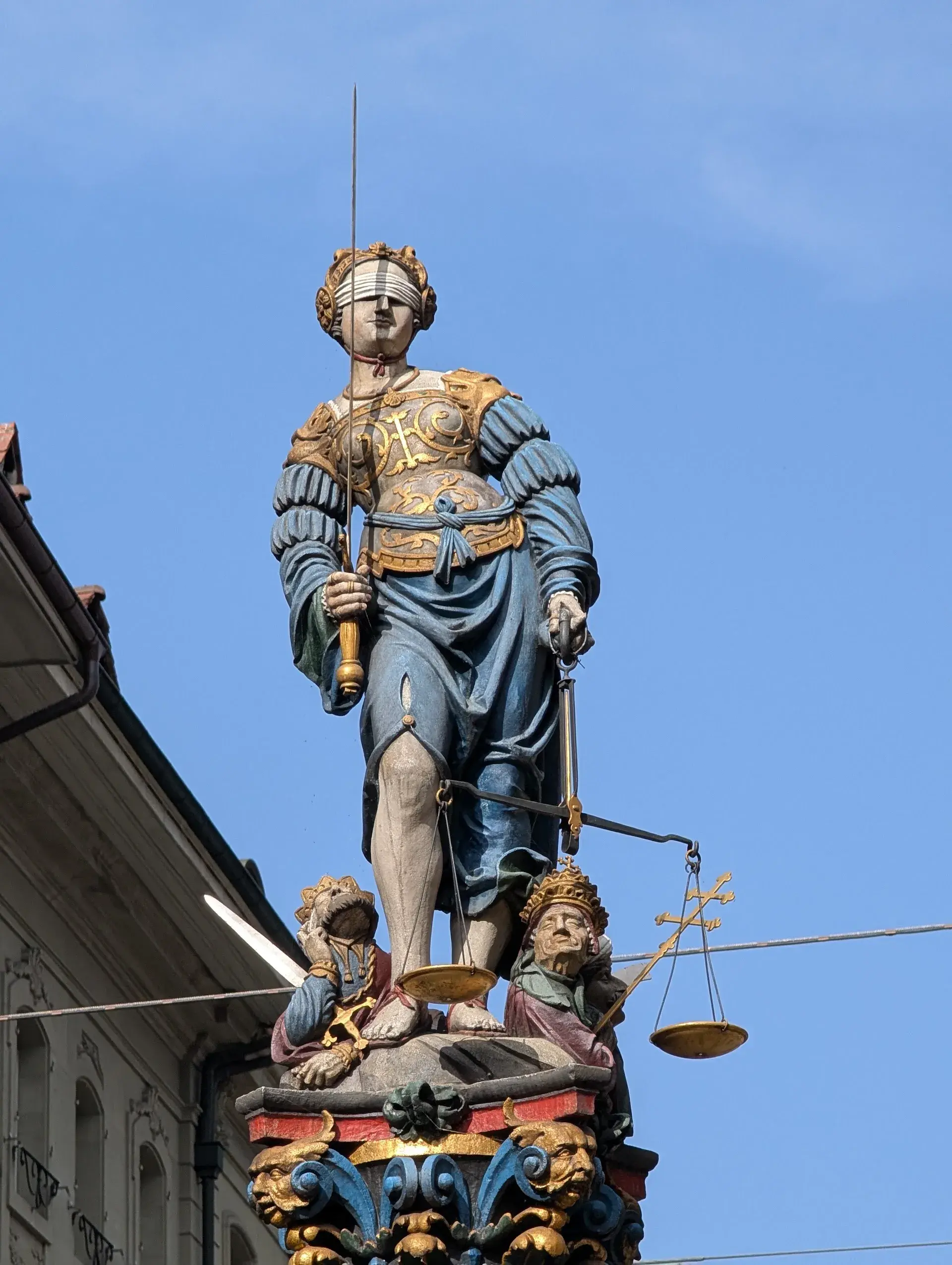
The Gerechtigkeitsbrunnen, or Fountain of Justice, is one of eleven preserved 16th-century Renaissance fountains built along Bern's main thoroughfares to display the civic wealth and moral standards of the Protestant republic. Constructed in 1543, the fountain features a polychrome sculpture attributed to Hans Gieng.
The statue portrays a blindfolded Lady Justice carrying a sword and balance scales. She stands triumphantly above four busts representing the 16th century's most powerful rulers: a pope, an emperor, a sultan, and a mayor. These figures represent theocracy, empire, autocracy, and republic, signifying that all terrestrial power is subject to universal law. Hans Gieng’s sculpture proved highly influential, serving as a model for other Swiss city-states well into the 17th century.
Vandalism and Preservation
The historic fountain has faced multiple destructive incidents over the centuries. During the 1798 French invasion of Bern, the bronze sword and scales disappeared and were not fully restored until the mid-19th century.
In October 1986, the original 1543 statue was pulled down and shattered by a political activist tied to the Jura separatist controversy. Conservators carefully reassembled the fragments using resin. Today, the reconstructed original is preserved indoors at the Bernisches Historisches Museum. The statue currently standing above the street's octagonal limestone basin is a 1988 replica, which underwent renovation in 2018.
Modern Street Life and Architecture
Today, Gerechtigkeitsgasse operates as a pedestrian and transit corridor, closed to regular private vehicles but served by the Bernmobil public bus line 12. The street is framed by molasse sandstone townhouses fronted by the continuous covered arcades, known locally as Lauben. These arcades house ground-level shops, art galleries, cafes, and restaurants. Among these historic buildings is House No. 7, the Goldener Adler (Golden Eagle), recorded from 1489 as Bern's oldest documented hostel and tavern.
The street also contains hidden historical infrastructure. Along the center of the cobblestone lane, metal street gratings reveal the historic medieval city stream, or Stadtbach, flowing underneath the pavement. Above ground, the historic fountain still serves a practical purpose, providing continuously flowing potable drinking water managed and tested by Energie Wasser Bern.
FAQ
What does the Fountain of Justice on Gerechtigkeitsgasse represent?
The 1543 sculpture features Lady Justice standing above the busts of a pope, emperor, sultan, and mayor. These figures represent theocracy, empire, autocracy, and republic, signifying that all earthly power is subject to universal law.
Is the Lady Justice statue on the street the original from 1543?
No, the statue currently on the street is a 1988 replica. The original 1543 statue was smashed by a political activist in 1986. It was subsequently reassembled with resin and is now housed indoors at the Bernisches Historisches Museum.
Can you drive on Gerechtigkeitsgasse?
Gerechtigkeitsgasse is closed to regular private automotive traffic. It operates primarily as a pedestrian corridor and a transit route for the public bus line 12.
What flows underneath Gerechtigkeitsgasse?
The historic medieval city stream, known as the Stadtbach, flows underneath the cobblestone pavement. It is visible through metal street gratings located along the center of the lane.
Gallery