Canterbury Cathedral: History, Martyrdom, and Architecture
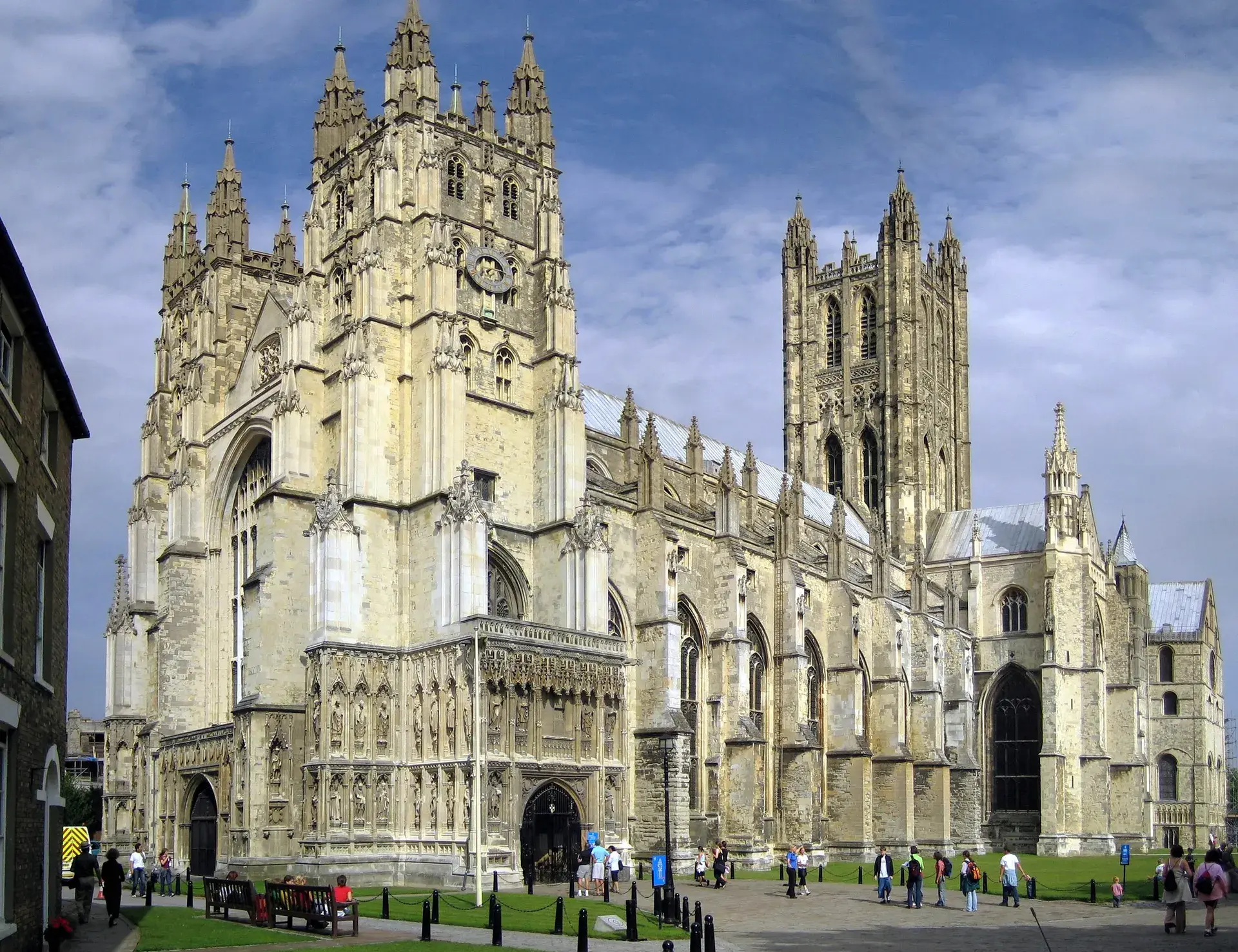
Canterbury Cathedral stands as a breathtaking masterpiece of English architecture, a tower of history where archbishops have presided and monarchs have walked for centuries. Formally known as the Cathedral and Metropolitical Church of Christ, Canterbury, this iconic structure represents 'England in stone,' its evolution mirroring the nation's own religious and political narrative.
Foundation and Architectural Styles
The cathedral's origins trace back to 597 AD when St. Augustine, sent by Pope Gregory the Great, established his seat in Canterbury to begin the conversion of the Anglo-Saxons. The original building was destroyed by fire in 1067. It was largely rebuilt in the Romanesque style between 1070 and 1077 under Archbishop Lanfranc.
Another major fire in 1174 prompted a significant rebuilding of the east end, this time in the emerging Gothic style, overseen by French master mason William of Sens. The nave and transepts were later replaced between the late 14th and late 15th centuries in the Perpendicular Gothic style. While the interior now appears as bare stone, recent restoration has uncovered traces of its medieval past, revealing that the walls were once vibrantly adorned with colorful paintings and intricate patterns.
The Martyrdom of Thomas Becket
The defining event in the cathedral's history was the murder of Archbishop Thomas Becket on December 29, 1170. Becket's persistent clashes with King Henry II over the rights and power of the church versus the state created immense tension. The king's frustrated outburst, "Who will rid me of this turbulent priest?" was interpreted as a royal command by four knights, who assassinated Becket within the cathedral walls.
Becket was canonized as a saint just three years later, in 1173. His tomb transformed Canterbury into one of medieval Europe's most important pilgrimage destinations, rivaling Rome and Jerusalem. In 1174, King Henry II himself performed a public penance at the site. In 1220, Becket's remains were moved to a magnificent new shrine in the Trinity Chapel, cementing the cathedral's status.
Reformation and Later History
The era of pilgrimage and veneration for Becket ended abruptly with the English Reformation. In 1538, King Henry VIII, declaring Becket a traitor, ordered the destruction of his glittering shrine. The Benedictine monastery associated with the cathedral was dissolved in 1540. The building suffered further damage from Puritan iconoclasts during the English Civil War in the 1640s. Centuries later, the cathedral miraculously survived heavy bombing during World War II, thanks to the dedicated efforts of 'fire watchers' who protected it.
The Cathedral Today
Today, Canterbury Cathedral is a living church with daily services and serves as the Mother Church of the worldwide Anglican Communion. It remains the seat of the Archbishop of Canterbury. As a UNESCO World Heritage Site, it continues to draw visitors and pilgrims from around the globe to explore its historic architecture, cloisters, and gardens.
The cathedral's archives and library hold vast and significant collections, including 8,000 charters dating back to the 8th century and a rare copy of Shakespeare's Second Folio from 1632. In a unique continuation of history, the crypt, which was granted to the Huguenot congregation in the late 16th century, is still used for their services.
FAQ
Why is Canterbury Cathedral so famous?
Canterbury Cathedral is famous primarily as the site of Archbishop Thomas Becket's martyrdom in 1170, which made it one of Europe's most important pilgrimage sites. It is also the Mother Church of the worldwide Anglican Communion.
When was Canterbury Cathedral founded?
Canterbury Cathedral was founded in 597 AD by St. Augustine, who was sent from Rome to convert the Anglo-Saxons and became the first Archbishop of Canterbury.
What happened to Thomas Becket's shrine?
The shrine of St. Thomas Becket was ordered to be destroyed in 1538 by King Henry VIII during the English Reformation. The king declared Becket a traitor, and the Benedictine monastery was dissolved in 1540.
Is Canterbury Cathedral a UNESCO World Heritage Site?
Yes, Canterbury Cathedral, along with St. Augustine's Abbey and St. Martin's Church, is recognized as a UNESCO World Heritage Site, highlighting its profound universal value and place in Christian history.