Geoffrey Chaucer Statue: Canterbury's Tribute to a Poet
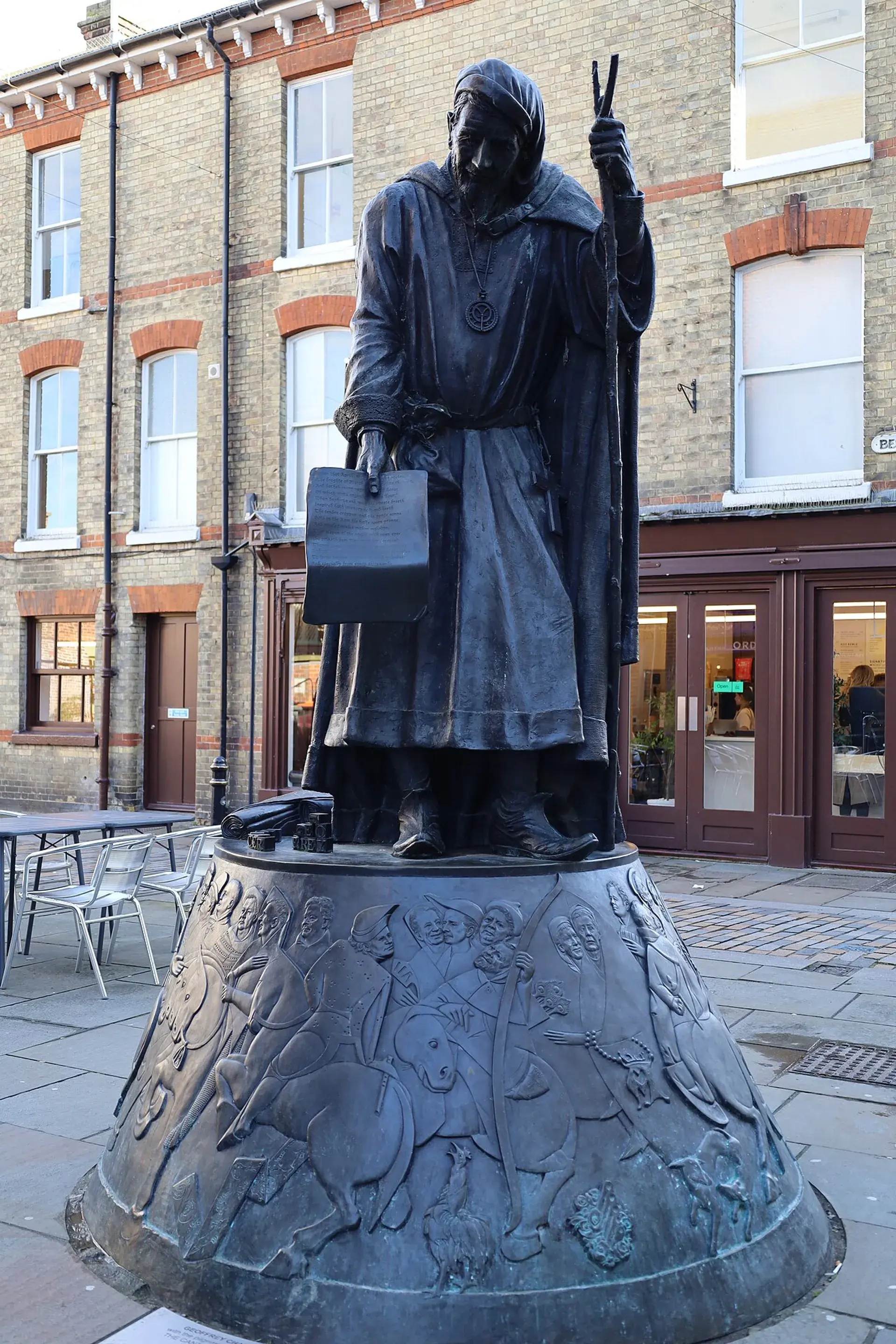
At the intersection of Best Lane and the High Street in Canterbury stands a larger-than-life tribute to one of English literature's most foundational figures. The Geoffrey Chaucer Statue, unveiled in 2016, honors the revered poet whose work, The Canterbury Tales, immortalized the journeys of pilgrims to this very city.
The Poet and His Pilgrimage
Geoffrey Chaucer (c. 1342-1400) was a distinguished courtier, diplomat, and civil servant who served under three English kings. While residing in Kent, where he served as a Justice of the Peace and Member of Parliament, he wrote his most famous work, The Canterbury Tales. This collection of 24 stories, written between 1387 and 1400, follows a diverse group of about 30 pilgrims traveling from London to the shrine of Saint Thomas Becket in Canterbury Cathedral.
Chaucer's decision to write in Middle English, the common language of the time, was a pivotal move that helped popularize English as a literary language over the dominant French and Latin. Interestingly, despite the work's title and premise, the pilgrims in the unfinished narrative never actually arrive in Canterbury; the story concludes as they approach the nearby village of Harbledown.
A Bronze Pilgrim on the High Street
Created by sculptor Sam Holland, the bronze statue depicts Chaucer as a pilgrim, facing the Eastbridge Hospital, a building that historically provided lodging for pilgrims. The statue rests on a seven-meter-long plinth, designed by Lynn O'Dowd, which showcases the 30 characters from his famous tales. Some of the faces on the plinth were modeled after local Canterbury residents, including actor Orlando Bloom, who appears as the 'Young Squire'.
Chaucer's Enduring Legacy
Chaucer's influence is deeply woven into the fabric of modern Canterbury. Beyond the statue, his name and the names of his characters adorn hotels, businesses, a college, and even streets like Wife of Bath Hill and Pardoner's Close. The Canterbury Tales visitor attraction offers an immersive experience of the pilgrimage, and the city's museum displays pilgrim badges and phials, artifacts mentioned in Chaucer's work.
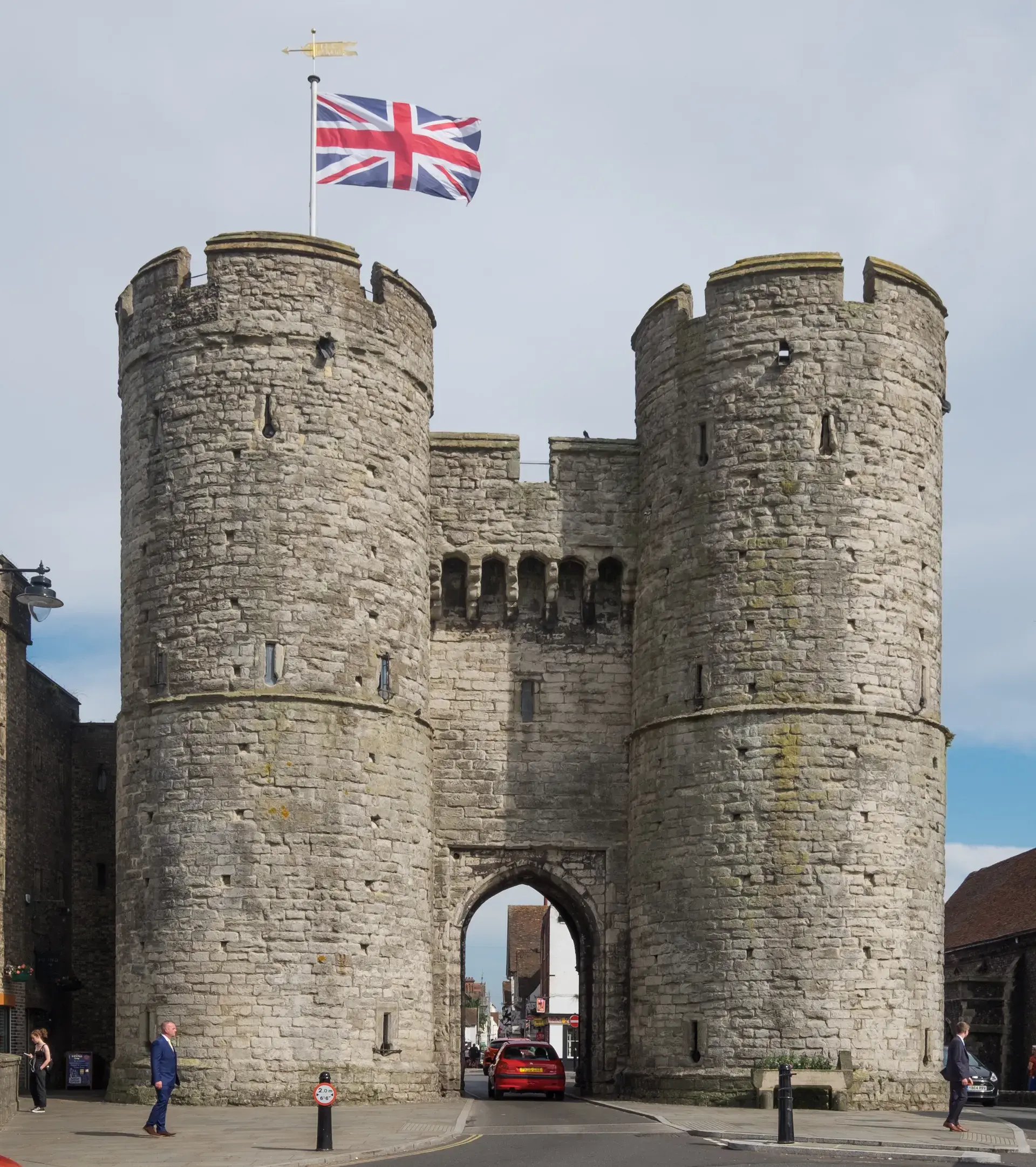
Chaucer was also a man of diverse skills. From 1389 to 1391, he served as Clerk of the King's Works, overseeing royal building projects, which may have included work on Canterbury's own Westgate Gatehouse. He also authored 'A Treatise on the Astrolabe' for his son, considered one of the earliest science books written in English.
FAQ
Who was Geoffrey Chaucer?
Geoffrey Chaucer (c. 1342-1400) was an English poet, courtier, diplomat, and civil servant, most famous for writing *The Canterbury Tales*. He was the first poet to be buried in what is now known as Poets' Corner in Westminster Abbey.
When was the Geoffrey Chaucer statue in Canterbury unveiled?
The bronze statue of Geoffrey Chaucer was unveiled in 2016 at the intersection of Best Lane and the High Street.
Do the pilgrims in *The Canterbury Tales* actually reach Canterbury?
No. In Chaucer's unfinished poem, the narrative concludes as the pilgrims are approaching Harbledown, just outside of Canterbury. They never reach their final destination within the text.
Why was Canterbury the destination in *The Canterbury Tales*?
Canterbury was a major pilgrimage site in the Middle Ages. Pilgrims traveled to Canterbury Cathedral to visit the shrine of Saint Thomas Becket, the Archbishop who was murdered there in 1170.