Christ Church Gate: Tudor Entrance to Canterbury Cathedral
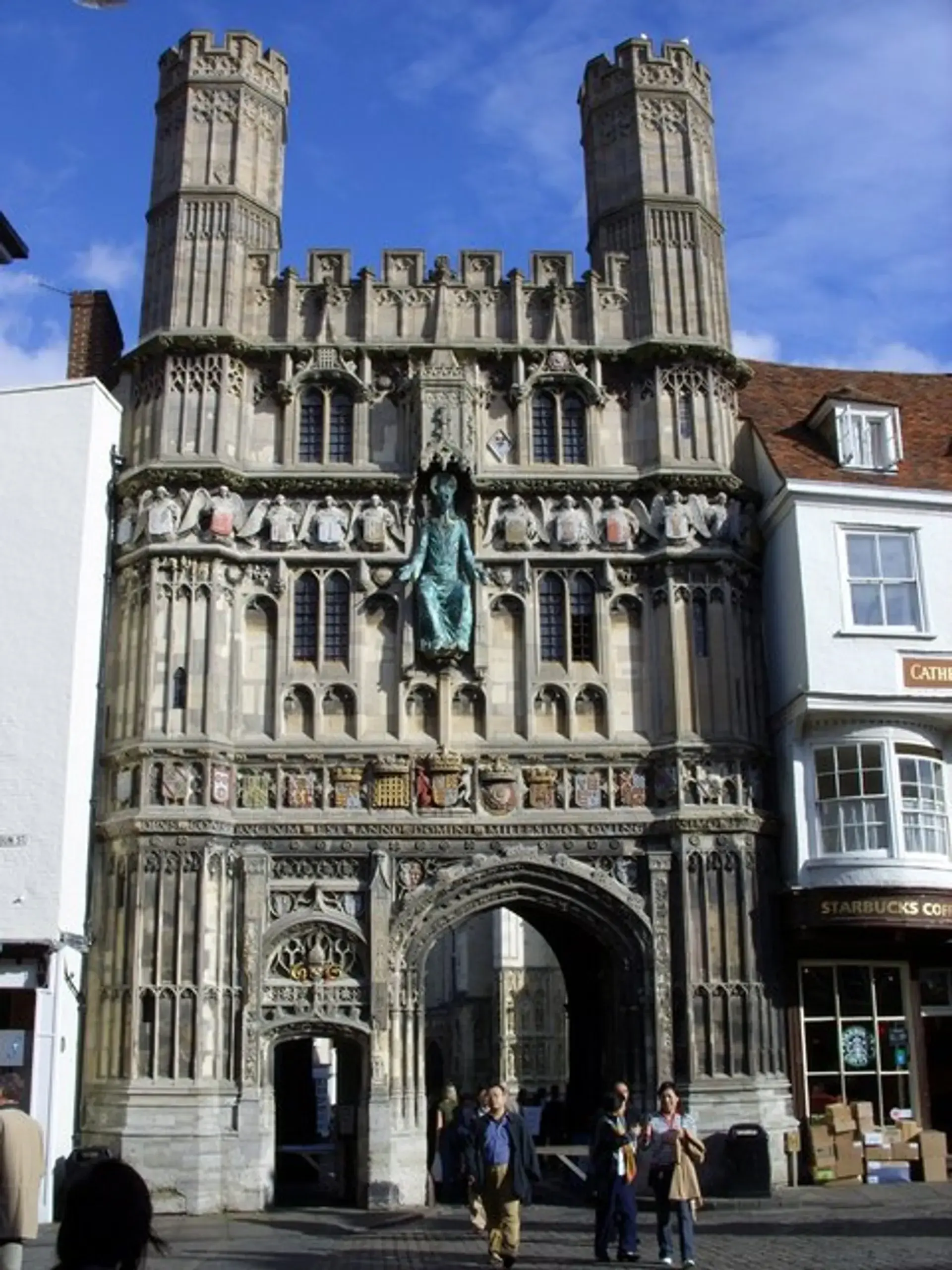
Stand before the magnificent Christ Church Gate, the ornate, towering entrance that has welcomed pilgrims and visitors to Canterbury Cathedral for centuries. This Grade I-listed structure serves as the main ceremonial entrance to the cathedral precinct and stands as a testament to over 500 years of English history, faith, and craftsmanship.
Tudor Origins and Royal Commemoration
Constructed between 1504 and 1521, Christ Church Gate was built to commemorate the marriage of Arthur, Prince of Wales, to Catherine of Aragon in 1502. Prince Arthur was the elder brother of the future King Henry VIII. The project was funded by Priors Goldstone and Goldwell. While official records note a construction period spanning several years, an inscription on the stonework itself marks the date 1517, creating a historical debate over its precise completion.
The gate is a masterful example of Tudor-Gothic and Perpendicular Gothic styles. Its vertical panels, pilasters, and capitals are considered some of the earliest examples of Renaissance architectural influence in England, showcasing the transition in artistic sensibilities during the period.
A History of Destruction and Restoration
The gate has weathered significant turmoil. During the English Civil War, its original statue of Christ was used for target practice by Parliamentary troops in 1642. The following year, Puritan iconoclast Richard Culmer led the destruction of the statue and the gate's original wooden doors. Following the Restoration of the Monarchy, Archbishop William Juxon commissioned the restoration of the gates in 1660.
Remarkably, the gate survived the Baedeker Raids of June 1942, a severe bombing campaign that destroyed over 800 buildings in Canterbury. Its resilience is a powerful symbol of the city's endurance.
Architectural Alterations
Christ Church Gate's appearance has changed over the centuries. In a surprising turn of events, the two original octagonal towers were demolished in 1803. The removal was ordered by Alderman James Simmons, who claimed they obstructed the view of the cathedral clock from his bank on High Street. The towers were not replaced until 1937, with funding from Dame Janet Stancomb-Wills.
The central statue of Christ, destroyed in the 17th century, was finally replaced with a new sculpture in 1990. More recently, the entire gate underwent extensive conservation and restoration work between 2018 and 2023, ensuring its preservation for future generations.
The Gate Today
Today, Christ Church Gate remains the primary ceremonial entrance for visitors to the Canterbury Cathedral precinct. It is one of the city's most photographed landmarks and a focal point in its historic core. While the gate itself is freely accessible to the public, entry into the cathedral grounds beyond it typically requires a ticket.
FAQ
When was Christ Church Gate built?
Christ Church Gate was constructed between 1504 and 1521. However, an inscription on the stonework itself reads 1517, leading to some historical debate about the exact year of completion.
Why was Christ Church Gate built?
The gate was built to commemorate the marriage of Arthur, Prince of Wales (the elder brother of King Henry VIII), to Catherine of Aragon in 1502.
Why were the original towers of Christ Church Gate removed?
In 1803, a local official named Alderman James Simmons had the gate's two original octagonal towers torn down because they blocked his view of the Canterbury Cathedral clock from his bank on High Street.
Is it free to visit Christ Church Gate?
Yes, viewing and passing through Christ Church Gate is free and accessible to the public. However, a ticket is typically required to enter the wider Canterbury Cathedral precinct and grounds.