St Augustine's Abbey: England's Christian Cradle
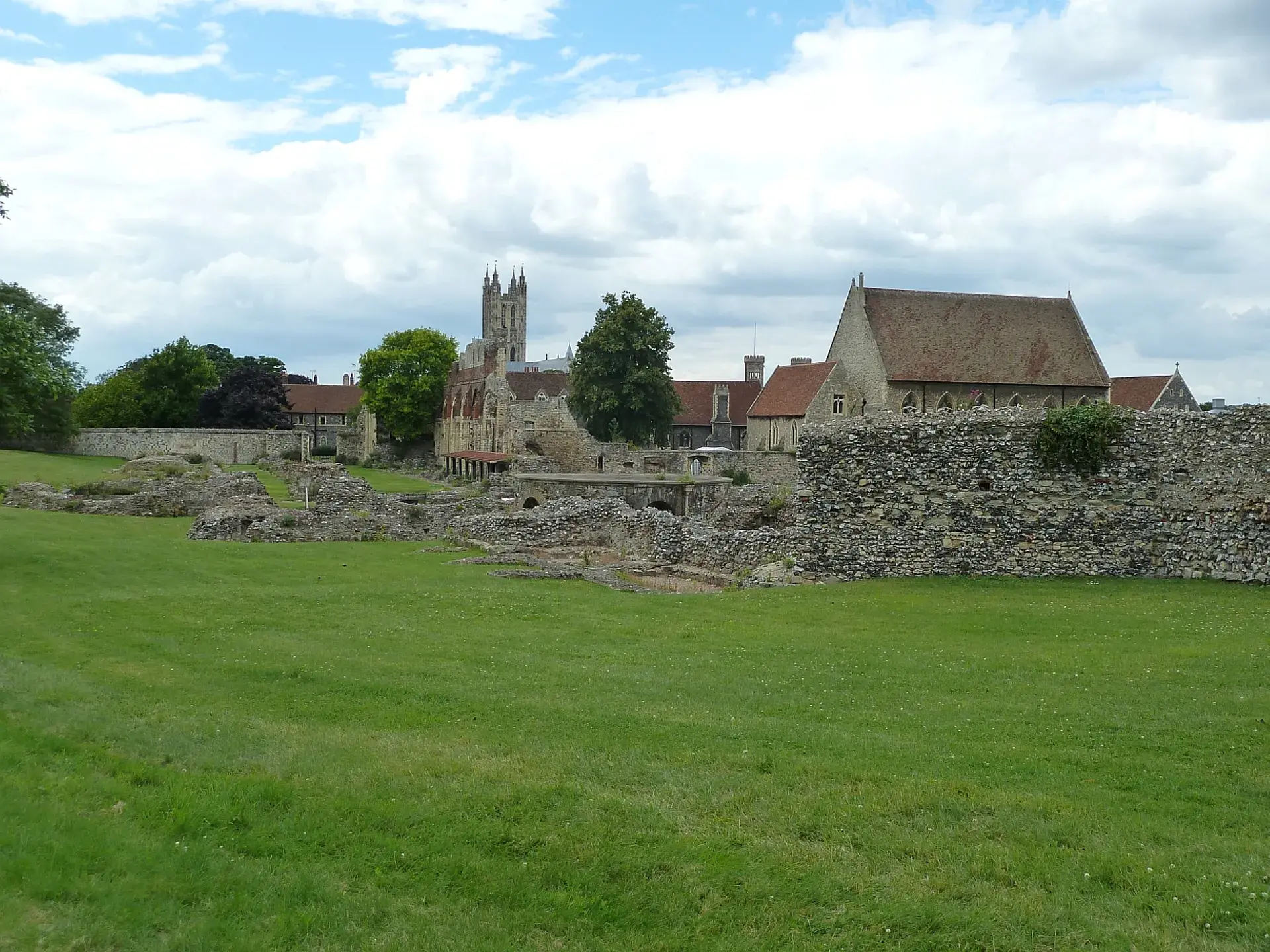
Witness the ancient grandeur of St Augustine's Abbey, where the evocative ruins of a Saxon church, established around 598 AD, silently narrate the dawn of Christianity in England. This pivotal site, now managed by English Heritage, forms a core part of the Canterbury UNESCO World Heritage Site, offering a profound connection to nearly 1,500 years of history.
A Royal and Religious Foundation
St Augustine's Abbey was founded by St Augustine, a Benedictine monk sent from Rome by Pope Gregory I on a mission to convert the Anglo-Saxons. Around 598 AD, King Æthelberht of Kent, influenced by his Christian wife Queen Bertha, granted Augustine land outside the city walls for a monastery. Initially intended as a home for monks and a burial place for Kentish kings and the Archbishops of Canterbury, its first structures were likely wooden. The main masonry church, dedicated to St Peter and St Paul, was consecrated in 613.
The abbey quickly grew into a major center for learning. A significant moment in its history occurred in 978 when Archbishop St Dunstan reformed the monastery and rededicated it to include St Augustine, cementing the name by which it is known today.
Architectural Evolution
The Norman Conquest ushered in a new era of construction. From 1070, the first Norman abbot, Scolland, began an extensive rebuilding project in the Romanesque style. This ambitious undertaking replaced the earlier Anglo-Saxon churches with a grand new abbey church stretching over 100 meters long. Later additions, such as the impressive Fyndon Gate, were constructed in the 14th century. In 1625, King Charles I and Queen Henrietta Maria even lodged at the gatehouse following their wedding.
Dissolution and Aftermath
After nearly a millennium of monastic life, the abbey's history took a dramatic turn. On July 30, 1538, during the Dissolution of the Monasteries, the last abbot, John Essex, and his 30 monks surrendered the abbey to King Henry VIII. Its assets were seized, its shrines destroyed, and its extensive library was dispersed.
Following its closure, parts of the abbey were converted into a royal palace starting in 1539, prepared for the arrival of Anne of Cleves. Over the subsequent centuries, the sacred grounds served a variety of secular purposes, including a poorhouse, a jail, and even a brewery and public house in the 18th century.
St Augustine's Abbey Today
Today, St Augustine's Abbey exists as preserved ruins open to the public. As a key component of a UNESCO World Heritage Site, alongside Canterbury Cathedral and St Martin's Church, it stands as a testament to the introduction of Christianity to southern England. Visitors can explore the extensive foundations and walls, gaining insight into its medieval design.
A museum on site details St Augustine's mission and displays artifacts recovered from the ruins. For a more immersive experience, virtual reality headsets are available to visualize the abbey as it appeared in the 16th century. While the ruins are managed by English Heritage, some former abbey buildings are now part of The King's School, Canterbury.
FAQ
When was St Augustine's Abbey founded?
St Augustine's Abbey was founded around 598 AD by St Augustine, a monk sent by Pope Gregory I to convert the Anglo-Saxons. King Æthelberht of Kent granted the land for its construction.
Why is St Augustine's Abbey a UNESCO World Heritage Site?
St Augustine's Abbey was designated a UNESCO World Heritage Site in 1988, along with Canterbury Cathedral and St Martin's Church. The designation recognizes their direct association with the re-establishment of Christianity in Anglo-Saxon England.
What happened to the abbey after its dissolution?
After its dissolution in 1538, parts of the abbey were converted into a royal palace for Henry VIII. In later centuries, the grounds were repurposed as a poorhouse, a jail, a brewery, and a public house before being preserved for their historical value.