The Animal Wall: Cardiff's Historic Stone Menagerie
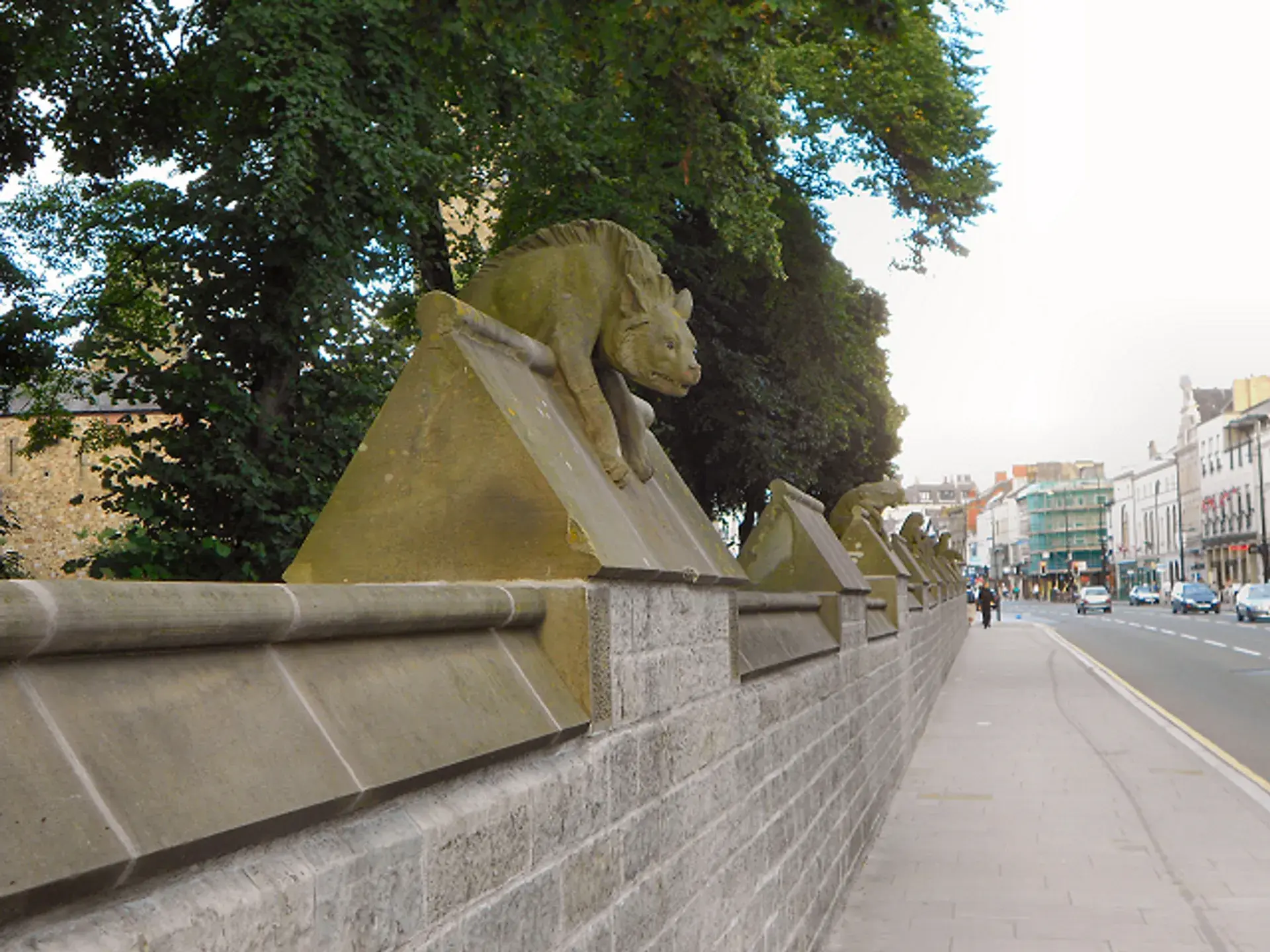
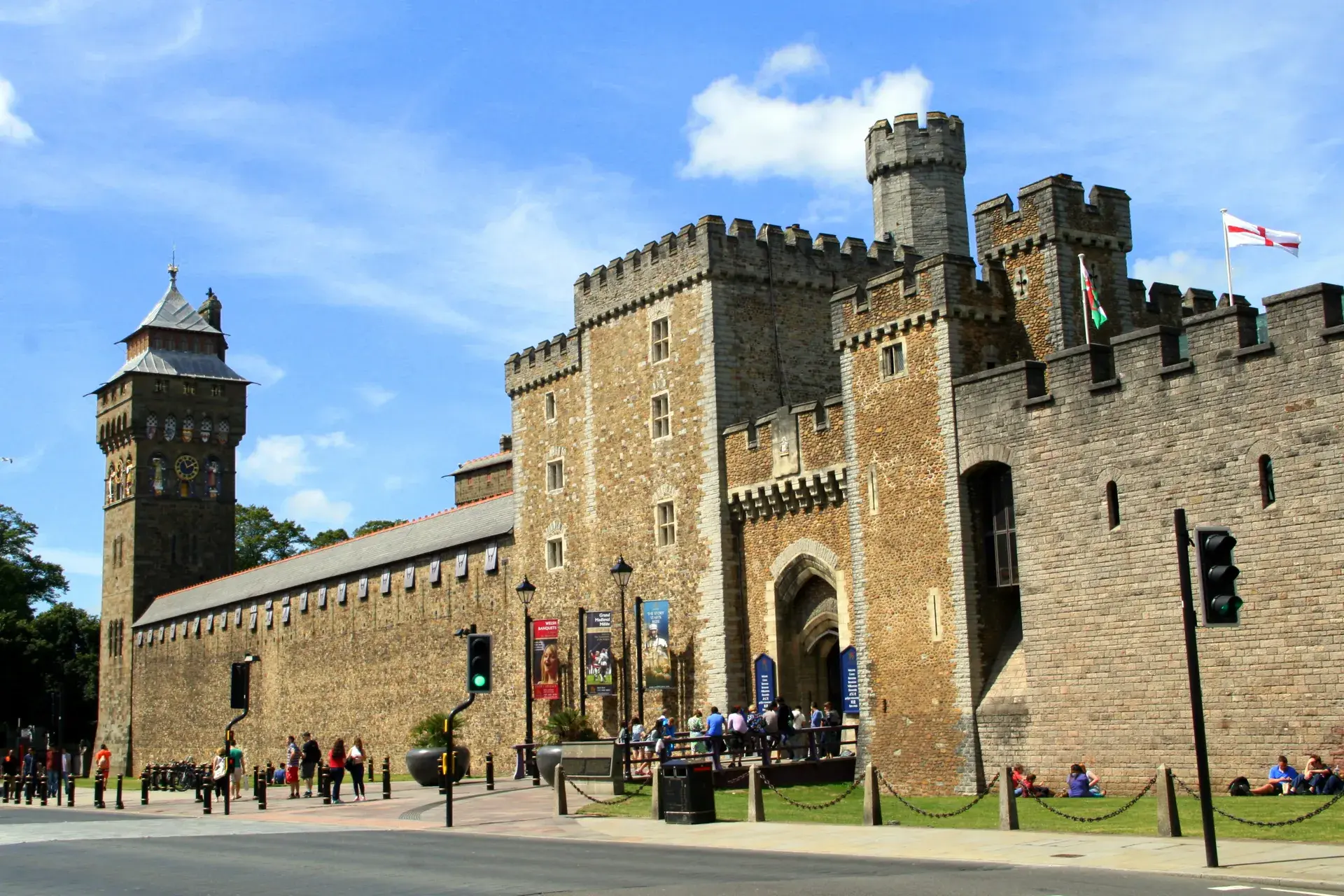
Admire the whimsical stone animal sculptures designed by William Burges in 1866 as they peer out from atop the historic wall bordering Bute Park. Situated on Castle Street, the Animal Wall serves as a transition point between Cardiff Castle's Victorian Gothic Clock Tower and the green expanse of Bute Park. It forms an unmistakable visual signature along the walking corridor that links the Castle Quarter to the River Taff.
A Victorian Menagerie on the Move
The Grade I listed limestone structure was originally conceived by Victorian Gothic Revival architect William Burges for John Crichton-Stuart, the 3rd Marquess of Bute. While Burges designed the wall in 1866 as part of his extensive reconstruction of Cardiff Castle, he passed away in 1881 before the animal carvings were realized. His assistant, William Frame, oversaw the initial construction and carving process.
Originally, the wall stood directly in front of the castle entrance along Castle Street. However, the arrival of the motor car led to increasing traffic congestion in the 1920s. To accommodate road-widening works along Castle and Duke Streets, the entire structure was dismantled and relocated approximately 50 meters west, where it now serves as a decorative boundary for Bute Park.
The Tale of Two Sculptors
The wall features a total of 15 stone animals, completed in two distinct phases. The first nine figures were sculpted by Thomas Nicholls of Lambeth between the late 1880s and 1891. These 19th-century originals are depicted in lively, theatrical poses, appearing to clamber over the wall copings. They are notable for their inset glass eyes, which glint at passers-by, and were originally painted in naturalistic colors.
Following the wall's relocation in the 1920s, the longer span required more figures. The 4th Marquess of Bute commissioned Scottish sculptor Alexander Carrick to carve six additional animals between 1928 and 1931. The two generations of carvings are easy to distinguish upon close inspection, as Carrick’s 1930s additions do not feature the signature glass eyes.
Curiosities and Restorations
The menagerie features a wide array of beasts, including a pair of baboons, a pelican, raccoons, a lynx, a vulture, a bear, a wolf, a hyena, a leopard, a beaver, a seal, and two lions holding heraldic shields. These creatures captured the local imagination so strongly that in 1933, the South Wales Echo published a serialized children's story by Dorothy Howard Rowlands. The fiction gave the stone figures names and personalities, such as "William the seal" and "Priscilla the pelican."
Today, the Animal Wall stands as a free, public heritage landmark accessible to pedestrians. It underwent a comprehensive restoration in 2010 and 2011 as part of the Bute Park Restoration Project. During this project, the stone anteater required a replacement nose, as the original had been repeatedly damaged and knocked off over the decades.
FAQ
How many animals are on the Animal Wall in Cardiff?
There are 15 stone animals perched on the wall. The first nine were sculpted by Thomas Nicholls between the late 1880s and 1891, and an additional six were carved by Alexander Carrick between 1928 and 1931.
Why do some of the statues on the Animal Wall lack glass eyes?
The original nine animals carved in the 19th century by Thomas Nicholls feature inset glass eyes. The six additional animals, carved in the late 1920s and early 1930s by Alexander Carrick to accommodate the extended wall, were not designed with glass eyes.
Where is the Animal Wall located?
The Animal Wall is located along Castle Street in the Cardiff city center, serving as a boundary between Cardiff Castle and the entrance grounds of Bute Park.