Cardiff Market: Historic Victorian Hall & Food Guide
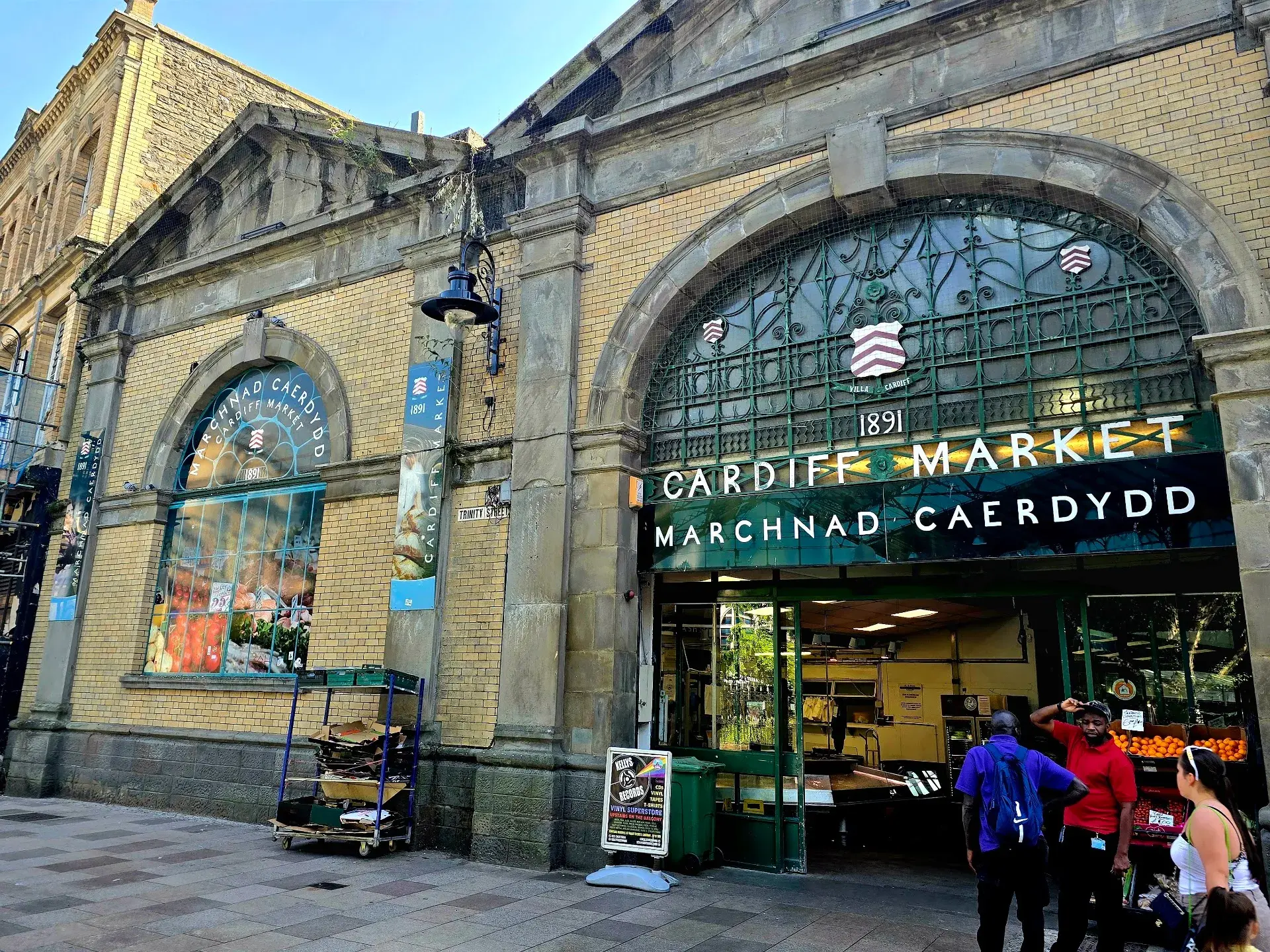
The bustling St Mary Street archway into Cardiff Market hides a dark past. Shoppers entering via the archway pass directly through the historical execution spot of the former Cardiff Gaol, where public hangings once took place. Today, this vibrant space provides a working-class culinary contrast to the aristocratic grandeur of nearby Cardiff Castle, anchoring the pedestrian core between the city’s 19th-century shopping arcades and St John the Baptist Church.
From County Gaol to Victorian Grandeur
Before commerce took over, the site housed the county and town prison from the 16th century until its closure in the late 19th century. The St Mary Street entrance marks the spot where working-class activist Dic Penderyn was executed in 1831 following the Merthyr Rising. A memorial plaque installed in 1980 commemorates the Welsh martyr, whose guilt was widely doubted.
As Cardiff’s coal economy boomed, the municipal corporation replaced the prison with a purpose-built commercial hub. Opened in May 1891 and designed by Cardiff Borough Surveyor William Harpur, the Grade II* listed structure features a massive wrought iron and glass vaulted roof, ground-floor aisles, and an interior wraparound balcony. A prominent clock, originating from 1910, hangs over the St Mary Street entrance.
Independent Traders and Culinary Traditions
Owned and managed by Cardiff Council, the market currently hosts over 60 independent businesses across its two trading floors. The hall maintains its traditional roots with greengrocers, butchers, and long-standing tenants like E. Ashton Fishmongers, which has traded on the site since 1866. In 2012, this historic stall drew national attention by putting a 20-foot, 550-pound thresher shark on public display.
These traditional stalls operate alongside modern culinary offerings, including artisan coffee shops, global street-food vendors, and independent bakeries. The sweet scent of cinnamon, sugar, and butter from sizzling Welsh cake griddles frequently fills the air, mixing with the aroma of freshly ground coffee and crushed ice from the fish counters. Beyond food, the market’s balcony is home to Kellys Records, an independent vinyl dealer that has traded there since 1969.
Architectural Restoration and Legacy
In its early decades, the upper balcony maintained a day-table tradition, where local home bakers and craftspeople could rent small tables for a single day to sell small batches directly to the public. Today, the building is undergoing a multi-million-pound restoration programme aimed at preserving its Victorian glazing, drainage, iron roof, and historic street entrances while creating dedicated communal balcony seating.
Natural daylight streams down through the high vaulted glass ceiling, illuminating the bustling aisles below. The acoustics of the Victorian hall capture the echoes of traders' calls, sizzling griddles, and foot traffic against the perimeter ironwork, creating an immersive atmosphere that reflects over a century of continuous municipal trade.
FAQ
When was Cardiff Market built?
Cardiff Market was opened in May 1891. Designed by Cardiff Borough Surveyor William Harpur, the Grade II* listed structure was built to replace the former Cardiff Gaol and older open-air trading facilities.
What is the history of the St Mary Street entrance at Cardiff Market?
The St Mary Street entrance stands on the former site of the Cardiff Gaol gallows. It is the exact location where working-class martyr Dic Penderyn was executed in 1831, an event commemorated by a plaque installed in 1980.
How many stalls are inside Cardiff Market?
Cardiff Market hosts over 60 independent businesses across two floors, ranging from traditional greengrocers and long-standing fishmongers to modern artisan coffee shops and stalls selling freshly baked Welsh cakes.
Discover Cardiff like never before
Dive into Cardiff hidden stories and secret spots with Ciceru interactive tours.
Explore tour
Audioguide
Quizzes
Maps
Solo
Couples
Groups & families

© Photo by Pi - Boleda via Google Maps · Google Places