Chester Cathedral: A Millennia of History in Stone
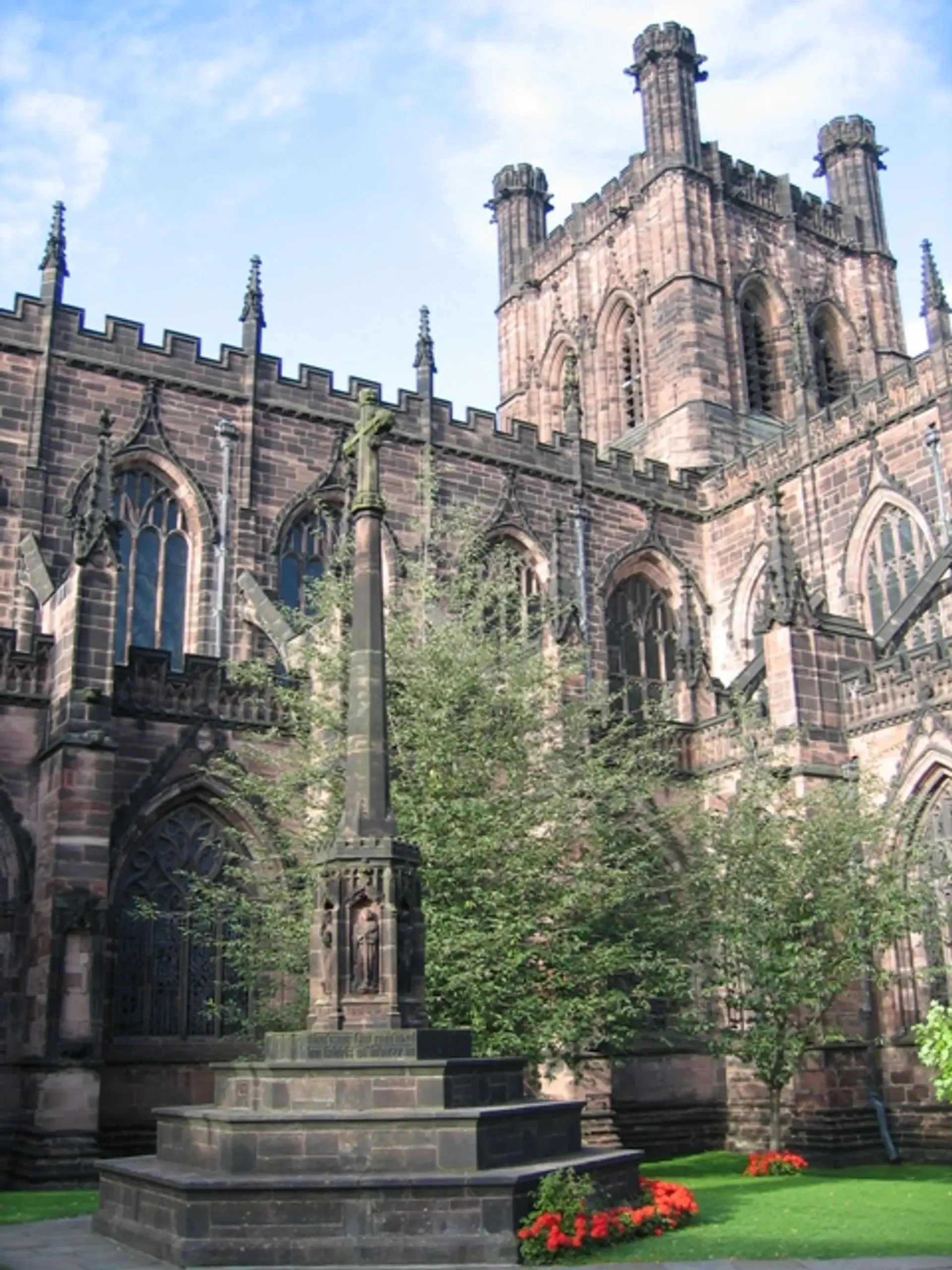
Gaze up at the magnificent medieval facade of Chester Cathedral, a monumental structure whose origins date to 1092 and whose towering presence has dominated the city's skyline for centuries. This Grade I listed building is a foundational landmark, encapsulating the multifaceted history of Chester through its very stones.
A Rich History Through Centuries
The site's spiritual history is deep, with legends suggesting a Christian basilica existed here during Roman times, followed by a Saxon chapel dedicated to St Werburgh. The relics of St Werburgh, who became the city's patron saint, were housed in a Saxon minster on this site. In 1057, Leofric, Earl of Mercia and husband of Lady Godiva, restored a collegiate church here.
A pivotal moment came in 1093 when Hugh Lupus, Earl of Chester, established a Benedictine abbey with the aid of St Anselm. The earliest surviving parts of the current structure date from this period. Hugh Lupus himself entered the monastery before his death and was buried there in 1101.
From Abbey to Cathedral
The flourishing Benedictine monastery came to an end during the Dissolution of the Monasteries. In 1538/1540, under the orders of King Henry VIII, the monastic community was disbanded and the shrine of St Werburgh was desecrated. However, the building was spared the widespread destruction faced by many similar institutions.
In 1541, the former abbey was re-founded as a Church of England cathedral, securing its survival. In a unique turn of events, the last abbot, Thomas Clarke, became the cathedral's first dean. The building later endured damage during the English Civil War when the city of Chester was besieged.
Architectural Evolution and Restoration
Chester Cathedral is a showcase of every major style of English medieval architecture, from Norman and Early English Gothic to Decorated and Perpendicular Gothic. Its primary building material is New Red Sandstone, which is known for its friability. This has necessitated significant restoration work over the centuries.
While the cathedral appears ancient, much of its exterior is a 19th-century Victorian re-imagining. Between 1868 and 1876, an extensive and sometimes controversial restoration was led by architect Sir George Gilbert Scott, who 'almost entirely re-cased' the exterior. Later, in the 20th century, a detached belfry designed by George Pace was added to the grounds.
Hidden Details and Intricate Carvings
The cathedral holds many fascinating details for the observant. The medieval choir stalls, dating from around 1380, feature intricately carved misericords. These carvings on the underside of the seats depict an array of creatures, from angels and dragons to whimsical creations like an elephant with horse's hooves, revealing the imagination of the medieval woodworkers.
Elsewhere, hidden curiosities await. In the Baptistry, an etched board for the ancient game Nine Men's Morris can be found. High on the left side of the nave is a mysterious carving of a chained diabolical figure known as the 'Chester Imp,' whose exact origin and purpose remain unknown.
The Cathedral Today
Today, Chester Cathedral serves as the seat of the Bishop of Chester and is a vibrant center for the Church of England, hosting regular services. Beyond its spiritual function, it is a major cultural hub and tourist attraction. The former monastic refectory now houses a café.
The cathedral is a venue for diverse events, including concerts, art exhibitions, and even falconry displays. Visitors can also undertake tower tours, climbing over 200 steps to the top of the 125-foot bell tower. On a clear day, the panoramic views extend across Chester to the Welsh hills.
FAQ
When was Chester Cathedral built?
While the site has Christian origins from the Roman era, the current structure began as a Benedictine abbey established in 1093. Its construction spans centuries, featuring elements from the 10th to the early 16th century and showcasing all major styles of English medieval architecture.
Why does the exterior of Chester Cathedral look newer than expected?
The cathedral's primary material, New Red Sandstone, is prone to weathering. A massive restoration project between 1868 and 1876, led by Sir George Gilbert Scott, 'almost entirely re-cased' the building, meaning much of the exterior stonework is from the Victorian era, not the Middle Ages.
What are the misericords in Chester Cathedral?
The misericords are intricate carvings on the undersides of the folding seats in the medieval choir stalls, dating to around 1380. They display the woodcarvers' artistry and imagination, featuring a host of creatures including angels, dragons, and fanciful beasts like an elephant with horse's hooves.
Can you climb the tower at Chester Cathedral?
Yes, visitors can take a tower tour. The climb consists of over 200 steps to the top of the 125-foot bell tower, which offers panoramic views of Chester, the surrounding countryside, and the Welsh hills on a clear day.