St John the Baptist Church: Chester's First Cathedral
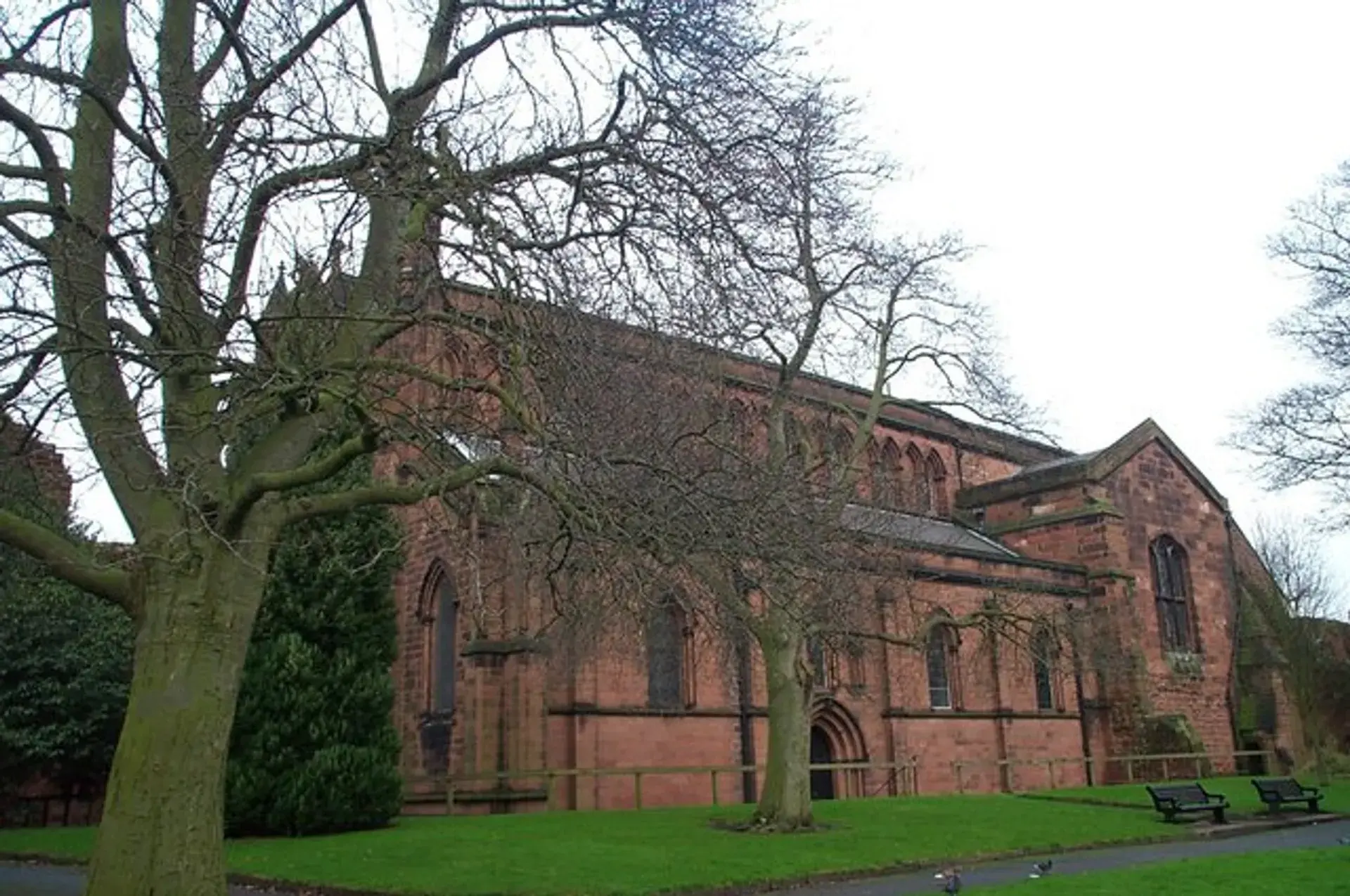
The Parish Church of St John the Baptist is a grand sandstone Anglican edifice in Chester, a site of worship with origins dating back to the 7th century. Located just outside the city walls on a cliff overlooking the River Dee, this magnificent church and its evocative ruins stand as a testament to centuries of English history, architecture, and faith.
A Royal and Ecclesiastical History
Reputedly founded in AD 689 by the Anglo-Saxon King Aethelred of Mercia, St John's has deep historical roots. A significant event occurred in AD 973 when King Edgar the Peaceful, after his coronation, held a royal council at the church, having been famously rowed up the River Dee by tributary kings. The church's status was elevated in 1075 when Bishop Peter de Leia moved his episcopal seat from Lichfield, making St John's the cathedral for West Mercia.
Although the bishop's see was transferred to Coventry by 1102, St John's retained a form of cathedral or co-cathedral status until the Reformation. In 1541, with the creation of the new Diocese of Chester, the bishop's seat was briefly at St John's before moving to the former Abbey of St Werburgh, which is now Chester Cathedral. St John's then became a parish church, a role it continues to fulfill today.
Architectural Grandeur and Structural Collapse
St John the Baptist is considered the finest example of 11th–12th century church architecture in Cheshire. Built primarily of sandstone, it showcases the significant transition from the robust Romanesque style to the more elegant Gothic. The building's history, however, is marked by a series of dramatic structural failures. The central tower collapsed in 1468, followed by the western towers in 1572 and 1574. The northwest tower was rebuilt but fell again in 1881. Major restoration work was undertaken in the 19th century by architects R. C. Hussey and John Douglas to preserve the historic structure.
From Civil War to Community Hub
During the English Civil War, the church's strategic location was utilized by Parliamentarian forces. In 1645, Roundhead troops garrisoned the church and used it as a gun platform to bombard the Royalist-held city during the Siege of Chester. Today, St John the Baptist is an active Church of England parish holding regular services. It also serves as a vibrant community hub, hosting a cafe, weekly recitals, orchestral concerts, and historical events that connect with its ancient past. The extensive ruins to the east of the church are a Scheduled Ancient Monument, open to the public and used for archaeological study.
Notable Features and Curiosities
Inside the church are numerous treasures. The organ was originally built for the coronation of Queen Victoria in 1838 and was transported from Westminster Abbey to Chester by canal barge. Other notable features include fragments of Anglo-Saxon stone crosses and a faint wall painting of St John the Baptist in the north aisle. Within the ruins of the western tower, a remarkable 11th-century coffin, carved from a single block of oak, is on display. It was discovered during a 19th-century grave digging. Many old gravestones from the churchyard have also been repurposed as paving stones for the footpaths around the church.
FAQ
Was St John's Church the original Chester Cathedral?
Yes, St John the Baptist Church served as the first cathedral for Chester from 1075. It retained co-cathedral status until 1541, when the see was permanently transferred to the current Chester Cathedral and St John's became a parish church.
What are the ruins next to St John's Church?
The ruins are the remains of the eastern and western parts of the original, larger Norman church. A history of structural collapses, including the central tower in 1468 and western towers in 1574 and 1881, left these sections in their ruined state. They are now a protected Scheduled Ancient Monument.
What is special about the organ in St John's Church?
The church's organ has a royal connection. It was originally built for the coronation of Queen Victoria in 1838 at Westminster Abbey and was later moved to Chester by canal barge.
Is St John the Baptist Church in Chester still active?
Yes, it is an active Church of England parish church with regular services. It also hosts concerts, recitals, a cafe, and historical events. The church and its adjacent ruins are open for the public to visit.