Philadelphia Alley: Charleston's Historic Passageway
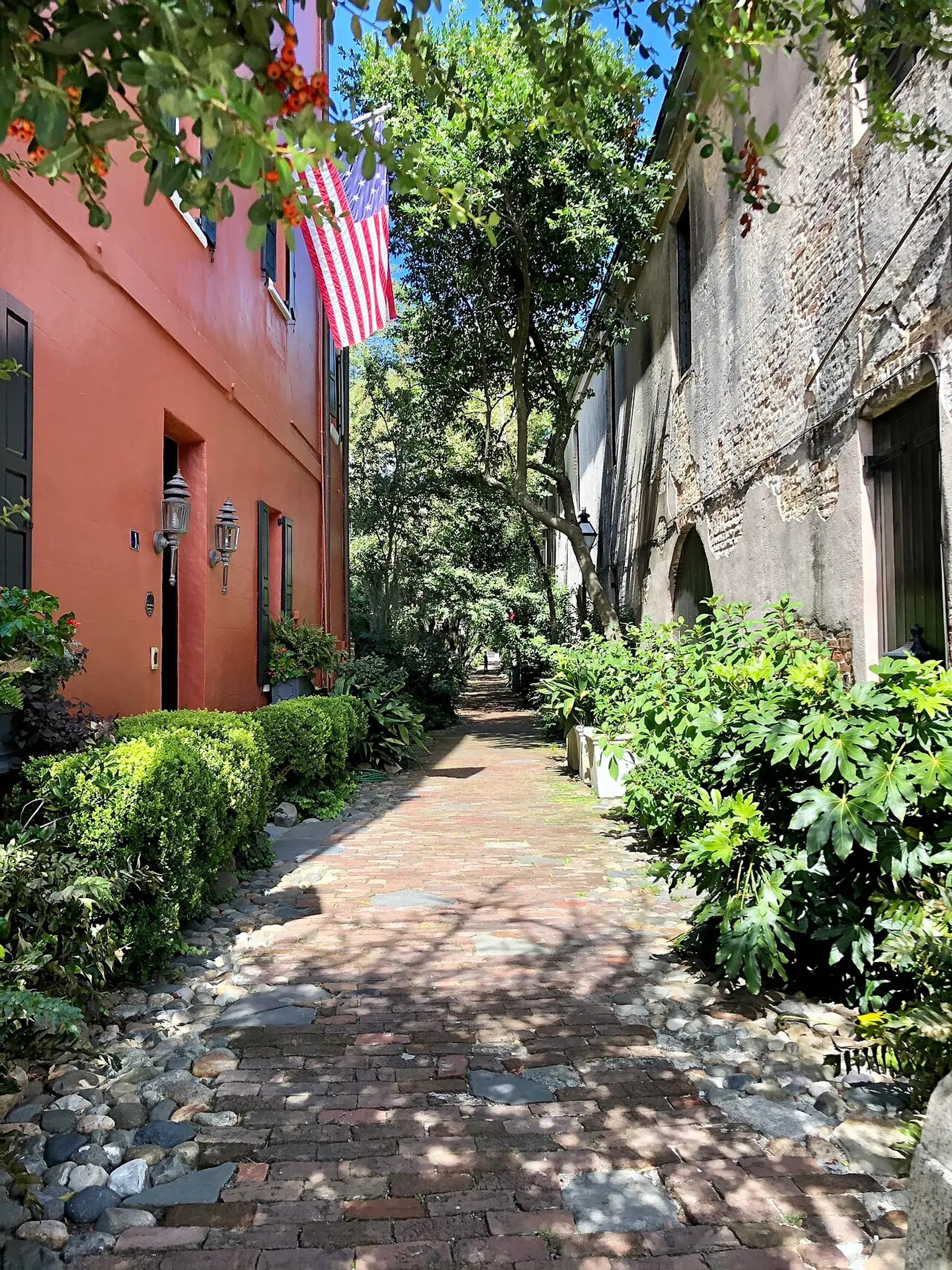
Philadelphia Alley is a tranquil, picturesque pedestrian passage that connects Queen and Cumberland Streets in Charleston, South Carolina. Flanked by historic brick walls and impeccably restored Colonial Revival residences, it offers a quiet escape for photographers and history enthusiasts.
From Private Court to Public Street
The alley's story begins in the mid-18th century when Scottish merchant Francis Kinloch purchased land and created a private court to access rental tenements behind his home. This passage was initially known as Kinloch's Court. It also earned the colloquial name "Cow Alley," likely because it served as a route for driving cattle to the Beef Market, which was located at the site of the present-day Charleston City Hall.
A Tale of Fire and Friendship
The area suffered from devastating fires in 1796 and again in 1810. Following the second fire, the city of Philadelphia provided generous financial assistance to aid Charleston's rebuilding efforts. In a gesture of gratitude, Charleston's City Council, influenced by figures like U.S. Supreme Court Justice William Johnson, officially renamed Kinloch's Court to Philadelphia Street in 1811.
A Legendary Dueling Ground
Over time, the alley gained a dark reputation as a dueling ground. Local legends claim numerous fatal encounters took place within the narrow passage. One well-documented incident occurred in 1786 when Dr. Joseph Brown Ladd, a young physician, was fatally shot in a duel with Ralph Isaacs III. It is also fabled that General William Moultrie once fought a sword duel in the alley.
Evolution and Modern Presence
Between 1838 and 1839, the passage was shortened by about sixty feet when Cumberland Street was widened. After decades of being known as Philadelphia Street, it was formally designated Philadelphia Alley in 1952. The alley's condition deteriorated over time, and a 1935 newspaper article noted that some Philadelphians requested their city's name be removed from the squalid lane. However, a beautification project in 2006 helped restore its charm. Today, it is a celebrated historical site and has even served as a filming location for Charleston native Darius Rucker's "Come Back Song" music video. Interestingly, a historical marker placed in the alley during a 21st-century restoration contains several factual errors and inconsistencies.
FAQ
Why is it called Philadelphia Alley?
It was renamed Philadelphia Street in 1811 as a gesture of thanks to the city of Philadelphia for providing financial aid to Charleston after devastating fires. It was officially designated Philadelphia Alley in 1952.
What was Philadelphia Alley's original name?
The passage was originally a private path known as Kinloch's Court, created by merchant Francis Kinloch in the mid-18th century. It also had an unofficial nickname, "Cow Alley."
Was Philadelphia Alley really used for duels?
Yes, the alley gained a reputation as a dueling ground. A well-known duel in 1786 resulted in the death of Dr. Joseph Brown Ladd. Other duels are part of the location's legend.
Is Philadelphia Alley open to the public?
Yes, Philadelphia Alley is a public pedestrian passage that connects Queen and Cumberland Streets in Charleston. It is a popular spot for photography and enjoying a quiet piece of the city's history.
Discover Charleston like never before
Dive into Charleston hidden stories and secret spots with Ciceru interactive tours.
Explore tour
Audioguide
Quizzes
Maps
Solo
Couples
Groups & families

© Warren LeMay from Covington, KY, United States | CC0