St. Philip's Church: Charleston's Oldest Congregation
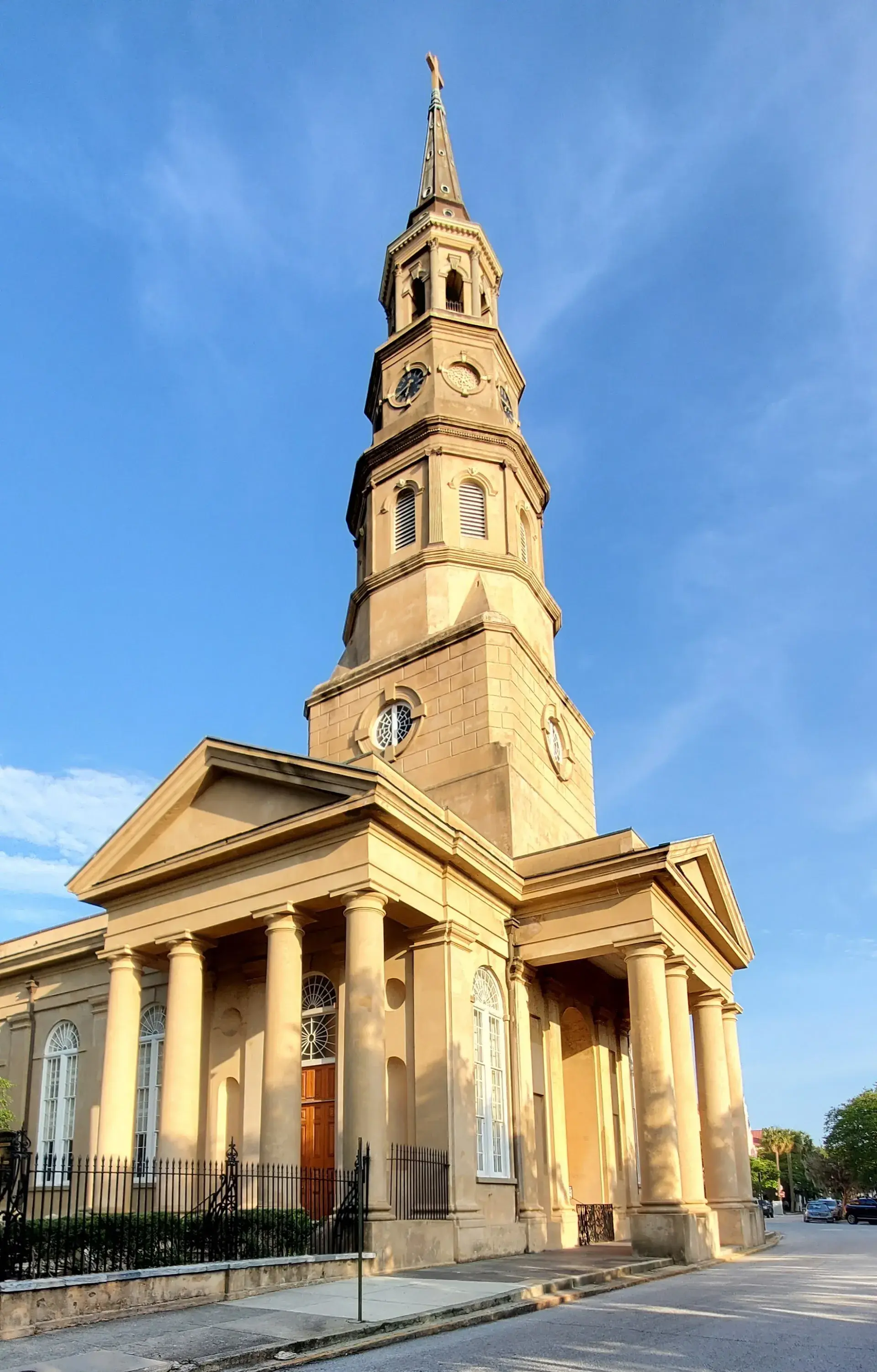
Gaze up at the iconic white steeple and grand porticoes of St. Philip's Church, marking the site of South Carolina's oldest congregation. Established in 1680, this National Historic Landmark is an enduring symbol of Charleston's resilience and historical continuity, having witnessed colonial expansion, wars, fires, and natural disasters.
A History of Three Churches
The current structure is the third to house the St. Philip's congregation, the oldest Anglican congregation south of Virginia. The first, a small wooden church, was built in 1681 on the site where St. Michael's Church now stands. A second, larger brick church was completed by 1723 at the present location on Church Street. This building was tragically destroyed by a fire in 1835.
The present-day church was constructed between 1835 and 1838 to a Greek Revival and Georgian design by architect Joseph Hyde. Its famous steeple, designed by Edward Brickell White in the Wren-Gibbs tradition, was added between 1848 and 1850. The steeple's prominence led to a unique feature in Charleston's cityscape; when the city sought to widen Church Street, the church vestry argued the steeple was "more ornamental than a mere street," resulting in the road curving around the tower.
A Witness to History
The church has played a significant role throughout Charleston's past. The second building was partially financed through duties on rum and enslaved Africans. In 1796, an enslaved man saved that same church from a fire by tearing burning shingles from the roof, an act for which he was granted his freedom.
During the Civil War, Confederate forces painted the steeple black to make it less of a target for Union artillery. The church also contributed its bells to the war effort, which were melted down to make cannon. The building sustained damage during the bombardment of Charleston and was later impacted by the 1886 earthquake. For over two decades, from 1893 to 1915, the steeple served a practical purpose as a navigational beacon, guiding ships into Charleston Harbor.
Historic Graveyards
St. Philip's graveyards are the final resting place for numerous figures of local and national importance. Among them is John C. Calhoun, a U.S. Vice President. During the Civil War, his remains were secretly moved to an unmarked grave to prevent desecration by Union troops, only to be returned after the war.
Other notable figures include Edward Rutledge, the youngest signer of the Declaration of Independence; Charles Pinckney, a signer of the U.S. Constitution; Colonel William Rhett, a colonial naval hero known for capturing the pirate Stede Bonnet; and Henrietta Johnston, the wife of an early rector who is recognized as the first recorded female artist in the American colonies.
The Church Today
St. Philip's Church remains an active parish in the Anglican Diocese of South Carolina. The sanctuary is generally open to visitors Monday through Thursday from 10:00 a.m. to 4:00 p.m. and on Fridays from 10:00 a.m. to 1:00 p.m., though hours are subject to change for services and events. The church and its historic graveyards are a frequent highlight of Charleston's walking tours, offering a tangible connection to the city's deep history.
FAQ
Who is buried at St. Philip's Church?
The historic graveyards of St. Philip's Church are the final resting place for many notable figures, including U.S. Vice President John C. Calhoun, Declaration of Independence signer Edward Rutledge, and U.S. Constitution signer Charles Pinckney.
How old is St. Philip's Church?
The congregation is the oldest in South Carolina, founded in 1680. The current church building was constructed between 1835 and 1838, making it the third structure to house the parish.
Can you visit St. Philip's Church?
Yes, the sanctuary is typically accessible to visitors on weekdays, though hours may vary due to church events. Its historic graveyards are also a popular destination for visitors and walking tours.
Why does Church Street curve around St. Philip's?
When the city planned to widen the street, the church successfully argued that its prominent steeple was "more ornamental than a mere street," which resulted in the road being designed to curve around the base of the tower.
Discover Charleston like never before
Dive into Charleston hidden stories and secret spots with Ciceru interactive tours.
Explore tour
Audioguide
Quizzes
Maps
Solo
Couples
Groups & families

© Photo by Karl Krueger via Google Maps · Google Places