Florence Beyond the Duomo: Lesser-Known Places
Last updated: September 2026
Introduction
Florence is often reduced to a short list of major-ticket sights. That list is useful, but it leaves out a different city of family homes, small convent refectories, collector museums, scientific displays and architectural traces. The places below are not presented as secret or empty. They earn their space because each has a specific story and a practical reason to add it to a Florence visit.
Some are only a small addition to time in the historic core. Others open for a few hours on selected days, require a telephone reservation or deserve a separate excursion. Those limitations are part of the information. Check the official pages shortly before visiting because several schedules changed during 2026.

Quick answer
- Start with Casa Martelli if you can reserve by telephone. For Renaissance painting, compare Sant’Apollonia, Chiostro dello Scalzo and San Salvi.
- For collectors and domestic life, choose Casa Martelli, Horne, Bardini or Salvatore Romano. For science, choose La Specola, noting the suspended wax route.
- For an architectural detail rather than a museum, look for the buchette del vino. Treat San Salvi as a separate excursion.
1. Museo di Casa Martelli
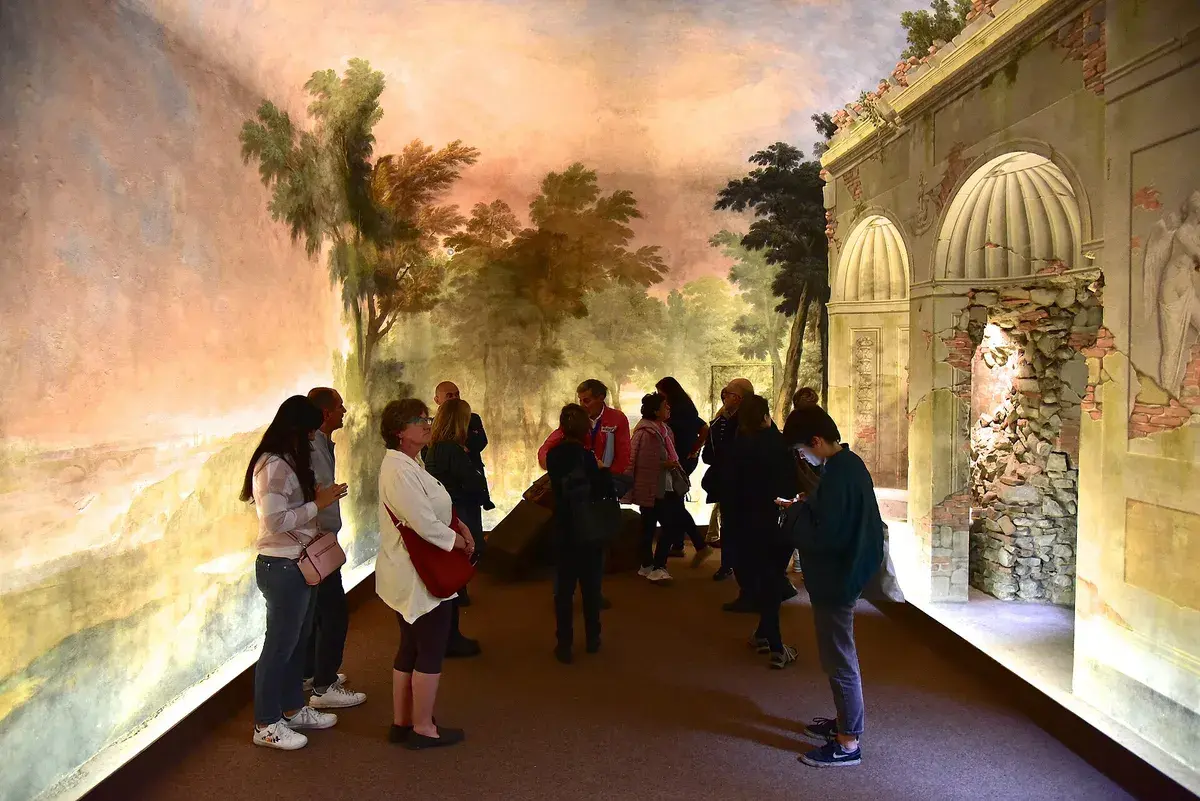
Casa Martelli is a preserved family home just north-west of the Duomo, on the San Lorenzo edge. Its value is not simply another collection of paintings. The building preserves the Martelli family’s domestic setting and collecting history, including period furnishings, a picture gallery, yellow and red salons, a chapel and a ballroom.
The museum provides a different way to read Florence: through the decisions of a family building a private collection and arranging a home around it. The ground-floor “stanze paese” are one of the concrete details that makes the visit more than a list of works.
The access rules are unusually important. Casa Martelli is currently open Tuesday 13:15 to 19:00 and Saturday 08:45 to 13:30. Admission is free, but telephone reservation is compulsory. Only the next two openings can be reserved, with a maximum of five people per booking. Visits are accompanied by museum staff and groups are capped at 15. FeelFlorence says the entrance and museum route are accessible, with a lift suitable for electric wheelchairs and an adapted toilet.
This is the strongest first recommendation for a visitor willing to plan one small appointment.
2. Cenacolo di Sant’Apollonia
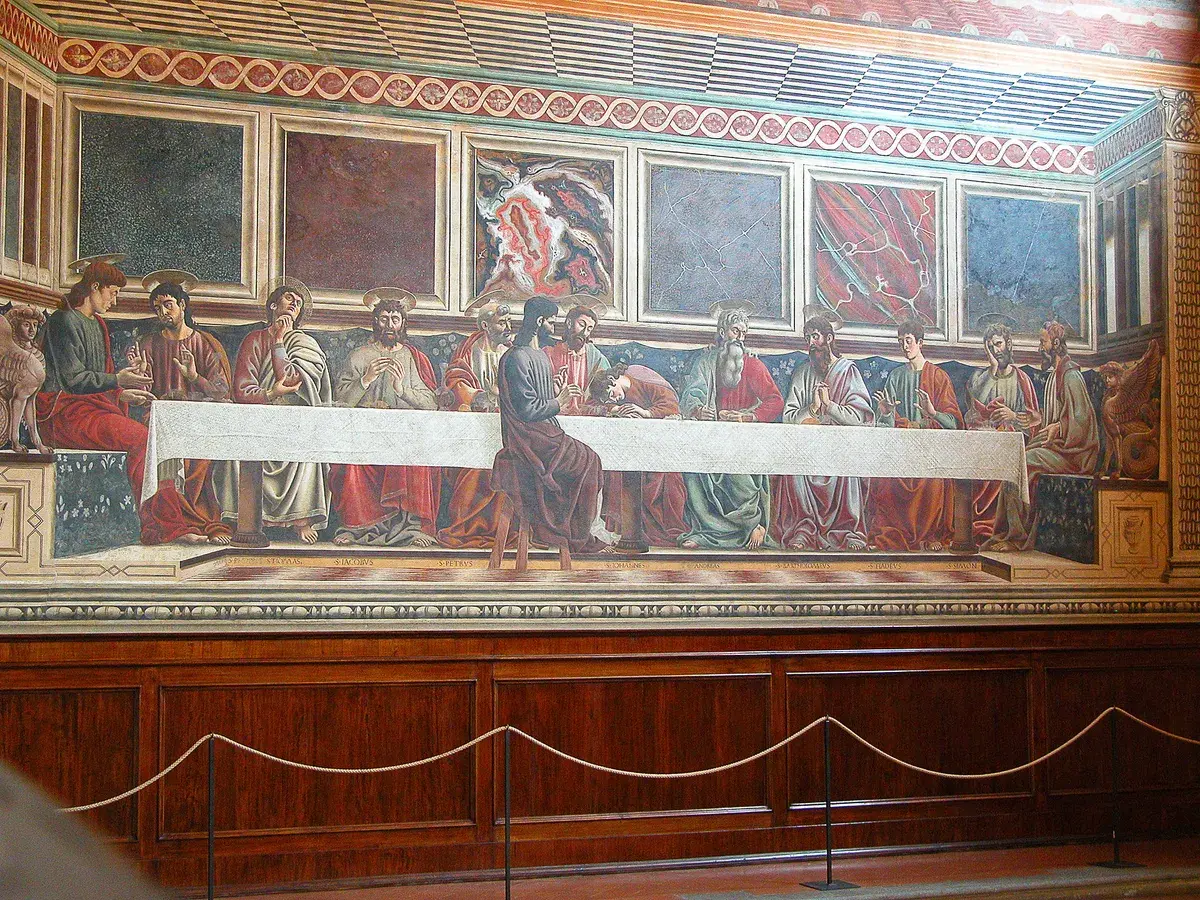
The former Benedictine convent of Sant’Apollonia sits north of the Duomo between the Mercato Centrale and San Marco areas. Andrea del Castagno painted the refectory wall in 1447, placing the Last Supper below the Resurrection, Crucifixion and Deposition.
The convent’s history gives the frescoes their setting. The nuns lived in clausura, so the work remained largely unknown outside the convent until the monastery was suppressed in the nineteenth century. A particularly useful detail appeared when the upper scenes were detached for conservation in 1953: preparatory red drawings, or sinopie, were revealed and are now displayed on the opposite wall.
Current access is Monday to Saturday and the first and third Sunday of each month, 08:30 to 13:50, with last entry at 13:20. Full admission is €5. The current venue information does not state compulsory individual booking. There is a 7 cm entrance step without a movable ramp, followed by an accessible interior and adapted toilet. Do not use crowd language that the sources cannot support. The practical distinction is its morning schedule and irregular Sunday pattern.
3. Chiostro dello Scalzo
The Chiostro dello Scalzo is a small cloister on Via Cavour. It belonged to the Compagnia dei Disciplinati di San Giovanni Battista, founded in 1376. The name refers to the confraternity’s cross-bearer walking barefoot during processions.
Andrea del Sarto painted the cycle of Saint John the Baptist between 1509 and 1526, with two scenes completed by Franciabigio while Andrea was in France. The whole entry can be understood through one visual fact: the cycle uses monochrome chiaroscuro instead of normal fresco colour. It is Renaissance painting that asks to be read as a sequence in a small setting, not consumed as a single famous image.
The current listing gives opening from 08:30 to 13:50, Monday to Saturday and the first and third Sunday, with €5 full admission. The family of state cenacoli has had timetable changes during 2026, so confirm the monthly pattern before publishing or visiting. The entrance and interior are largely accessible, but there is no visitor toilet. It is a good choice for a morning when San Marco-area plans do not need another major museum.
4. Museo Horne
Museo Horne occupies a small fifteenth-century palazzo near Santa Croce. Herbert Percy Horne, an English collector and scholar, furnished it with paintings, sculpture, ceramics, jewellery, furniture, textiles and everyday objects to evoke a Renaissance residence.
That domestic intention is the point. Instead of moving through a conventional chronological gallery, visitors see how a collector imagined a Florentine home and selected objects for it. The museum has no ordinary labels or information panels in its rooms; visitors use digital or printed material instead. This changes the pace of the visit and rewards attention to the setting.
Current hours are Monday, Tuesday and Thursday to Sunday, 10:00 to 14:00. Wednesday and public holidays are closed. Full admission is €8, with €6 reduced entry. The early closing time is the important planning fact. FeelFlorence says the whole museum is accessible using a lift, and lists LIS tours, tactile visits and adapted guided routes for different access needs.
Use Horne when a visitor wants a focused collection and a house rather than another large institution. Do not describe it as a place that tourists do not know.
5. Museo Stefano Bardini
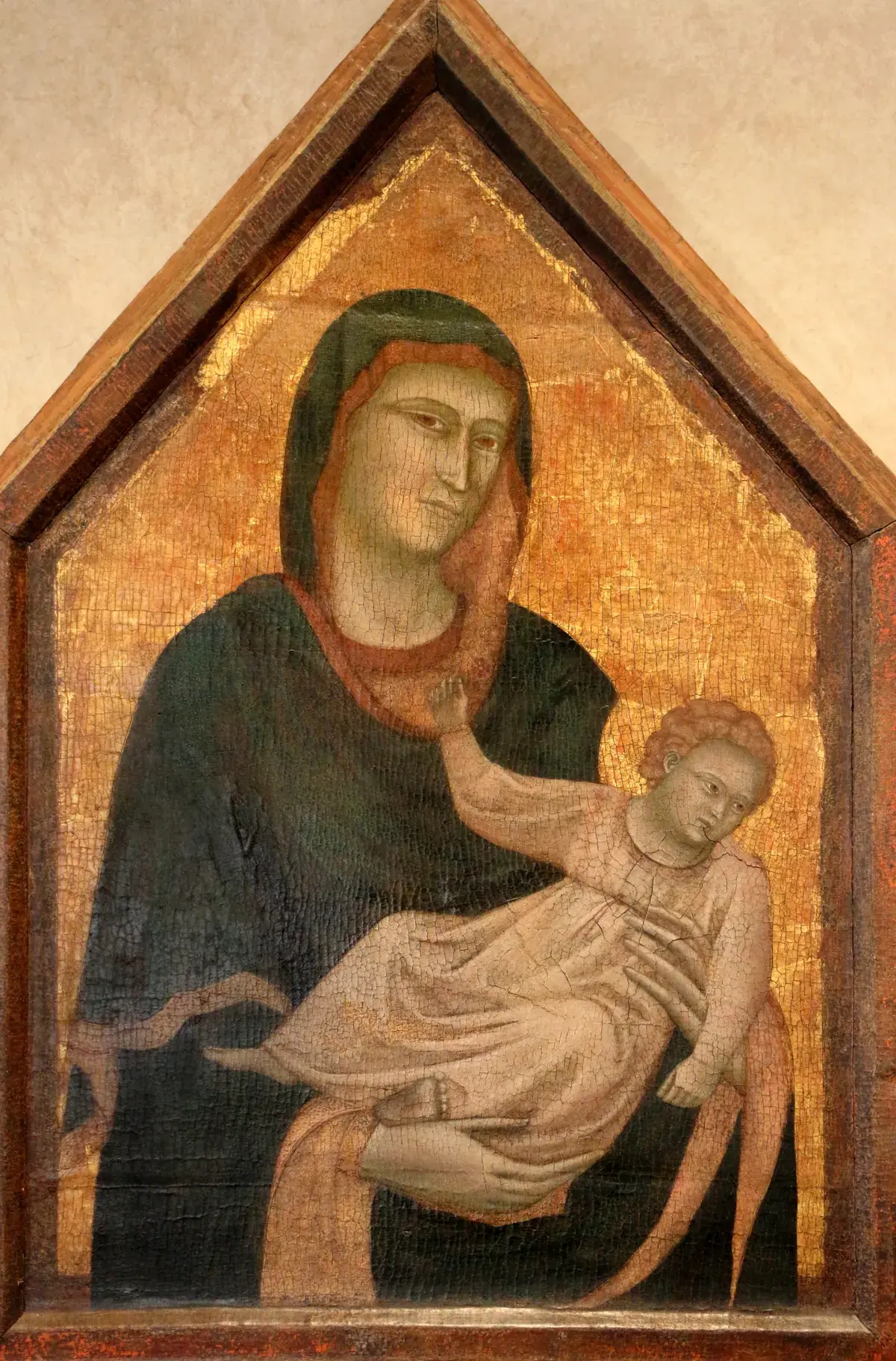
Museo Stefano Bardini is on Via dei Renai, near the river and San Niccolò. Stefano Bardini was one of Italy’s major antiquarian dealers. He turned his collection into a museum and left it to the City of Florence.
The useful lens is the dealer’s eye. The museum is not only a set of Renaissance objects; it shows how a late nineteenth- and early twentieth-century antiquarian selected, acquired and presented art. That makes the display itself part of the story and distinguishes Bardini from a straightforward artist-by-artist itinerary.
The museum currently opens Monday and Friday to Sunday, 11:00 to 17:00. It is closed Tuesday to Thursday. Full admission is €10, with €7 reduced entry for eligible visitors aged 18 to 25 and university students. The current page does not state compulsory individual booking. Temporary capacity rules are UNVERIFIED, and complete step-free access is also UNVERIFIED. The museum appears regularly in current alternative Florence coverage, so use the collector and dealer explanation rather than presenting it as a discovery claim.
6. Fondazione Salvatore Romano
Fondazione Salvatore Romano is in Piazza Santo Spirito. Salvatore Romano donated the collection to Florence in 1946. It combines sculpture, architectural fragments, detached frescoes and furniture from Roman antiquity to the seventeenth century.
The interest lies in the juxtaposition. This is not a standard gallery arranged around one famous painter. Architectural fragments and detached works sit together inside a historic setting, giving the visit a material and collecting focus. It is also a more precise reason to spend time in Santo Spirito than the general instruction to wander around the quarter.
The current weekly schedule is Monday and Saturday 10:00 to 17:00, and Sunday 13:00 to 17:00. It is closed Tuesday to Friday. Full admission is €5, with €3 reduced entry. A combined ticket with Cappella Brancacci is listed at €8 full and €5 reduced. No compulsory individual reservation is stated on the current page, while physical step-free access is UNVERIFIED.
Choose it when the opening days match your visit and you want a small collection with architectural texture.
7. La Specola
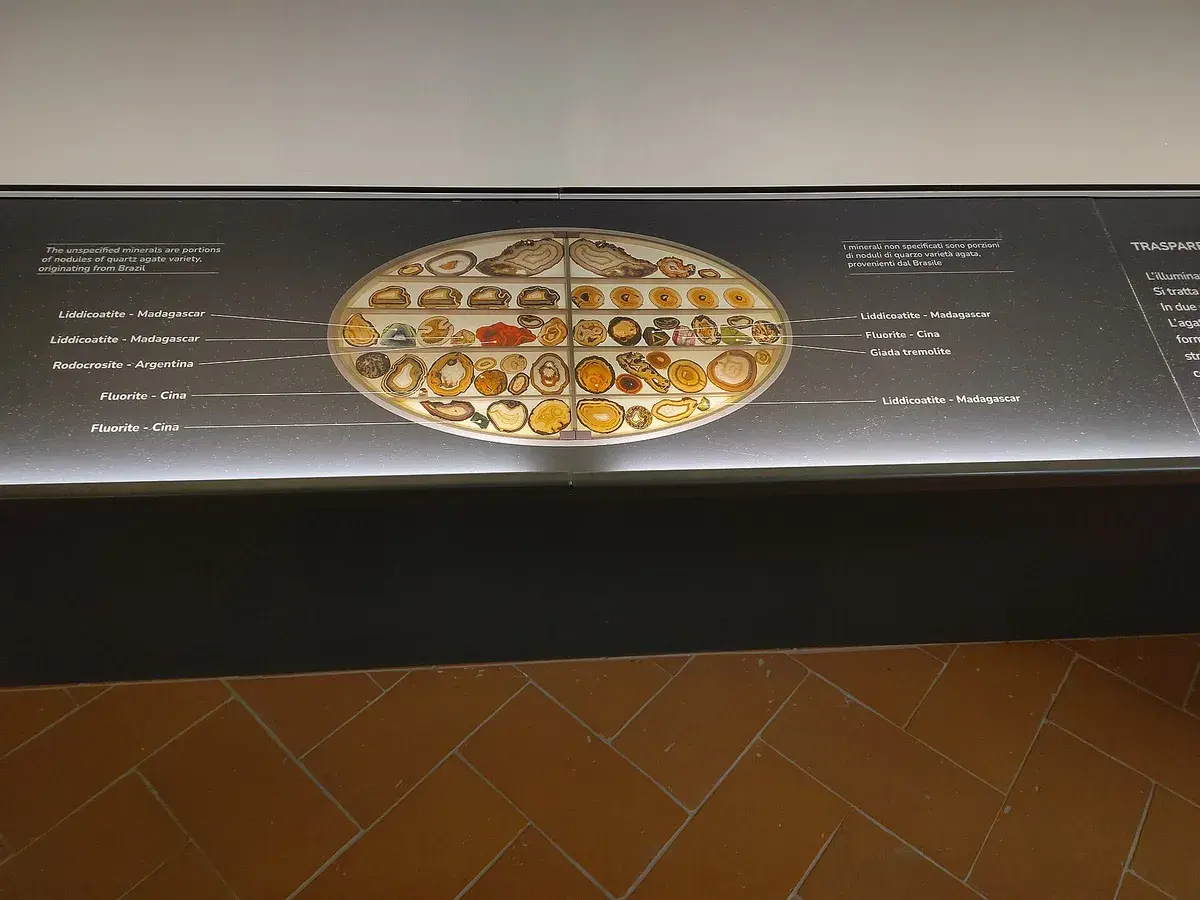
La Specola changes the subject completely. On Via Romana, near the Pitti side of the city, it presents Florence through natural history, collecting and scientific display rather than another church or palace.
There is a major September 2026 caveat. The historical anatomical wax route is temporarily suspended for extraordinary maintenance. The current visit covers zoology, mineralogy and educational models. Any article that sends visitors specifically to the waxes without mentioning the suspension is out of date.
Current access is Tuesday to Sunday, 09:00 to 17:00, with last entry at 16:00. Monday and several major holidays are closed. The tariff changed on 1 September 2026: €10 full and €5 reduced. The museum warns of high attendance and possible sell-outs and strongly recommends buying online or checking remaining capacity. This is the one place in the set where a crowd-related operational statement is supported directly by the venue.
Recheck the maintenance notice before visiting. La Specola is worth considering for a science-minded traveller, but its present offer must be described honestly rather than built around the most famous historical display.
8. Florence’s wine windows
The buchette del vino are small openings in palace façades that once enabled noble families to sell wine directly from their estates. They are best treated as an architectural detail distributed through the historic centre, not as a route or a list of bars.
FeelFlorence gives examples on Via Palchetti, Via del Trebbio, Via Santo Spirito, Via del Proconsolo, Via Ginori and Via Isola delle Stinche. The traditional opening was roughly 23 by 36 centimetres, enough to pass a straw-covered wine flask. The city’s tourism service currently says about 170 survive in the Comune di Firenze.
There is no universal ticket, booking system or opening schedule. Some windows have been reactivated commercially for wine or gelato, but service depends on the individual operator. Do not promise that a visitor can buy wine through any opening. Street conditions and individual premises also vary, so accessibility is UNVERIFIED at location level.
This is a compact way to notice the relationship between Florentine architecture, agricultural estates and everyday commerce without taking time away from a museum visit.
9. Cenacolo di Andrea del Sarto at San Salvi
San Salvi is the one deliberate excursion beyond the tight historic core. The former Vallombrosan monastery on Via di San Salvi 16 contains Andrea del Sarto’s Last Supper, commissioned in 1511 and completed in 1526, as well as sixteenth-century Florentine painting associated with artists including Pontormo, Franciabigio, Bachiacca and Plautilla Nelli.
One detail gives the fresco an entry point: above the Last Supper, Andrea inserted two figures leaning over a terrace and watching the meal below. It is a small act of painted spectatorship inside the composition.
The current schedule is Tuesday to Sunday, 08:30 to 13:50, with last entry at 13:20. Monday is closed. Full admission is €5, with a €2 eligible reduced ticket and a €15 seven-day Cenacoli combination. The current state-museum listing says individual booking is not required. The ticket office currently accepts electronic payments only. FeelFlorence says wheelchair access is limited to manual chairs using a stair lift, with an adapted toilet.
Do not fold San Salvi into a central Florence list as if it were a quick detour. Choose it when the art justifies a purposeful separate visit and the morning opening fits.
How to choose without turning the list into a route
- For collectors and domestic life: Casa Martelli, Horne, Bardini and Salvatore Romano.
- For Renaissance painting in small settings: Sant’Apollonia, Chiostro dello Scalzo and San Salvi.
- For a different subject: La Specola or the wine windows.
- For the most schedule-sensitive visit: Casa Martelli, Sant’Apollonia, Chiostro dello Scalzo and La Specola.
- For a central add-on: Casa Martelli, Sant’Apollonia, Horne and the wine windows are the most straightforward choices by location.
Florence beyond the major-ticket sights
Ciceru’s Florence catalogue lists one live self-guided city experience. This article serves a different purpose, and none of these places includes admission through Ciceru.
FAQ
Which place needs the most advance planning?
Casa Martelli. Admission is free but telephone reservation is compulsory, and only the next two openings can currently be reserved. La Specola also deserves advance attention because its museum warns about high attendance and sell-outs.
Before you go
- Check the official schedule for the exact date, especially for Casa Martelli, the cenacoli, Bardini and Salvatore Romano.
- Reserve Casa Martelli by telephone if it is a priority.
- Recheck La Specola’s maintenance notice, wax-route status, tariff and remaining capacity.
- Treat San Salvi as a separate excursion and confirm its electronic-payment condition.
- Do not plan a wine-window bar crawl around an assumed opening schedule.
- Use Ciceru’s current Florence product page for the independent city experience.