Kotor on Foot: 10 Stops from the Cruise Port
Last updated: September 2026
Intro
Kotor on Foot: 10 Stops from the Cruise Port
Last updated: September 2026
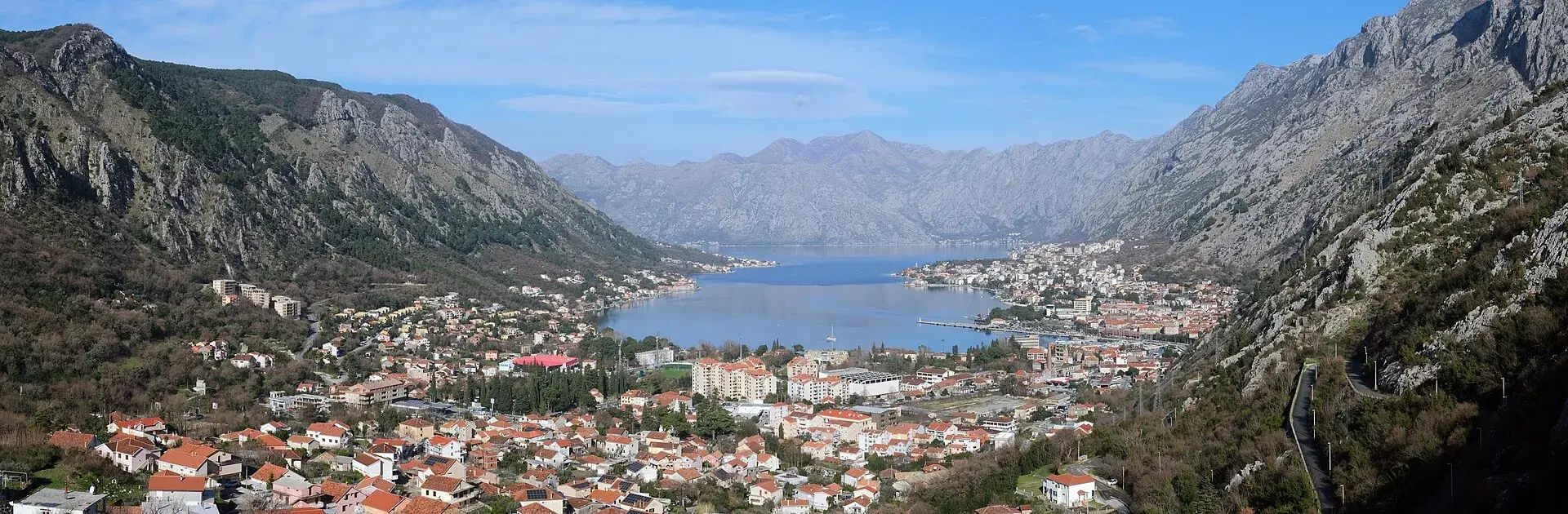
Kotor is easy to reach from a docked cruise ship, but the useful question is whether the fortress fits before your ship's all-aboard time. The Old Town is compact. San Giovanni is a separate climb of roughly 1,350 to 1,500 steps, with a paid entrance, exposed rock and a return journey that cannot be rushed safely.
This guide gives a walking order for the ten Ciceru stops, starts at the waterfront and treats the fortress as an optional branch. Information was checked on 1 September 2026.
For the city's context, see Ciceru's Kotor travel guide. The Ciceru Kotor tour page is the companion for the ten-stop concept and its quiz-led experience.

Quick overview
- Core Old Town order: waterfront, Sea Gate, Square of Arms and Clock Tower, Square of Flour and Cats, Saint Tryphon, Maritime Museum, Saint Luke, Saint Mary, North Gate and the Škurda.
- Old Town without paid interiors: allow 1.5 hours for a brisk visit and 2 hours as the safer budget.
- Old Town with a meaningful cathedral or museum interior: allow 2 to 2.5 hours.
- San Giovanni adds another 1.5 to 2.5 hours, including the climb, descent and stops.
- The fortress fee currently supported by the municipal tariff is €15 per person.
- The former free wall-gap shortcut from the Ladder of Kotor has been sealed in 2026. Do not plan to use it.
- Carry water and some euro cash.
The route and your time budget
The efficient order is a south-east to north sweep through the walled town. It avoids the live tour page's alphabetical presentation and avoids sending a visitor uphill to San Giovanni before entering the Old Town. The nine-place core is compact, with about 850 metres of movement in one independently published route. Dwell time, queues and interiors determine the elapsed visit.
From a docked ship, the waterfront to the Sea Gate is roughly 5 to 10 minutes on foot, depending on the berth. The Sea Gate to the Clock Tower is effectively one minute, and the remaining core stops are about one to two minutes apart. This is a practical order, not a promise that ten stops fit into 90 minutes indoors.
If your ship leaves at 17:00, a conservative last start for the San Giovanni climb is about 13:15. That calculation allows up to 60 minutes up, up to 60 minutes down, 15 minutes for pauses and recovery to the waterfront, and a 75-minute ship buffer. Treat it as a planning rule, not a guarantee. The ship's own all-aboard time overrides it. For a tendered call, start earlier because the transfer and queue can add roughly 10 to 20 minutes.
1. Arrival at Kotor waterfront
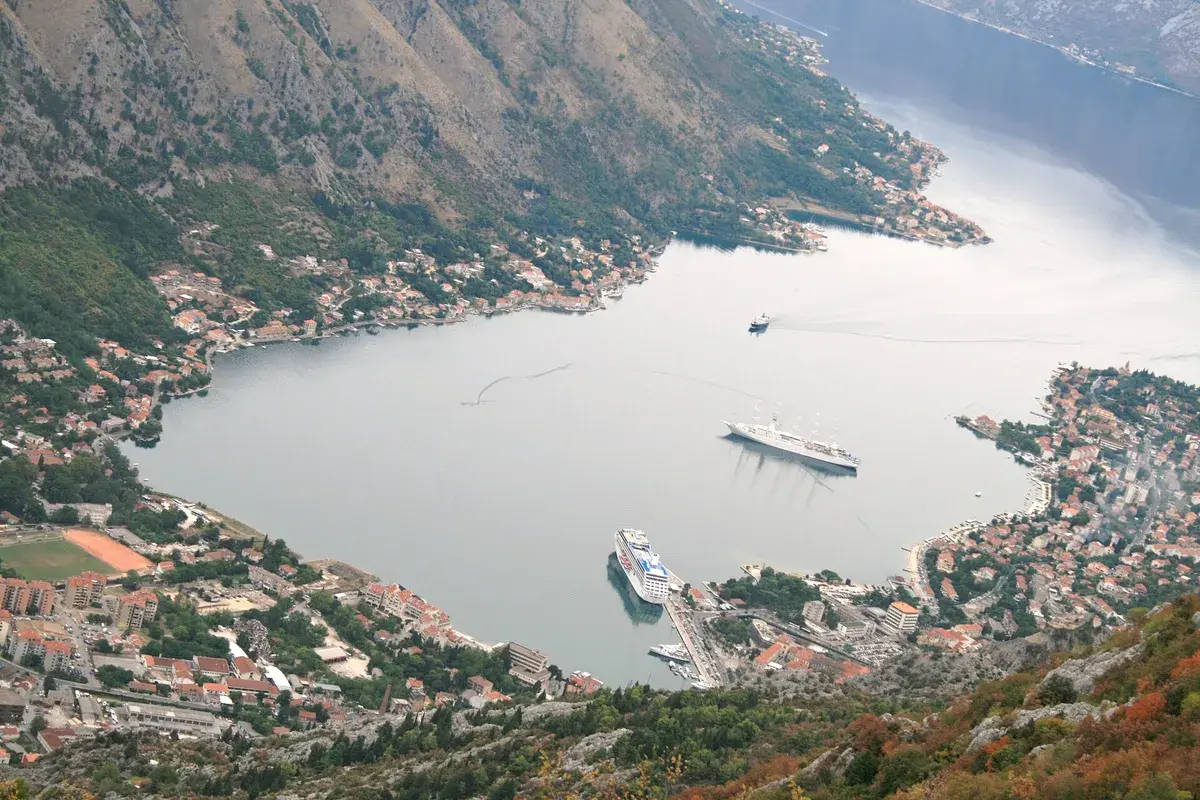
The tour starts beside the cruise-port waterfront, outside the Old Town walls. The published Ciceru start pin is 42.427112, 18.767373. From a docked ship, current cruise-port guidance puts the walk to the Old Town at roughly five to ten minutes, while a tendered arrival requires extra transfer time.
Check the ship's all-aboard time, note whether you are docked or tendered, and walk directly toward the Sea Gate. The port is close to the walls, but the final return queue is not predictable.
2. Sea Gate
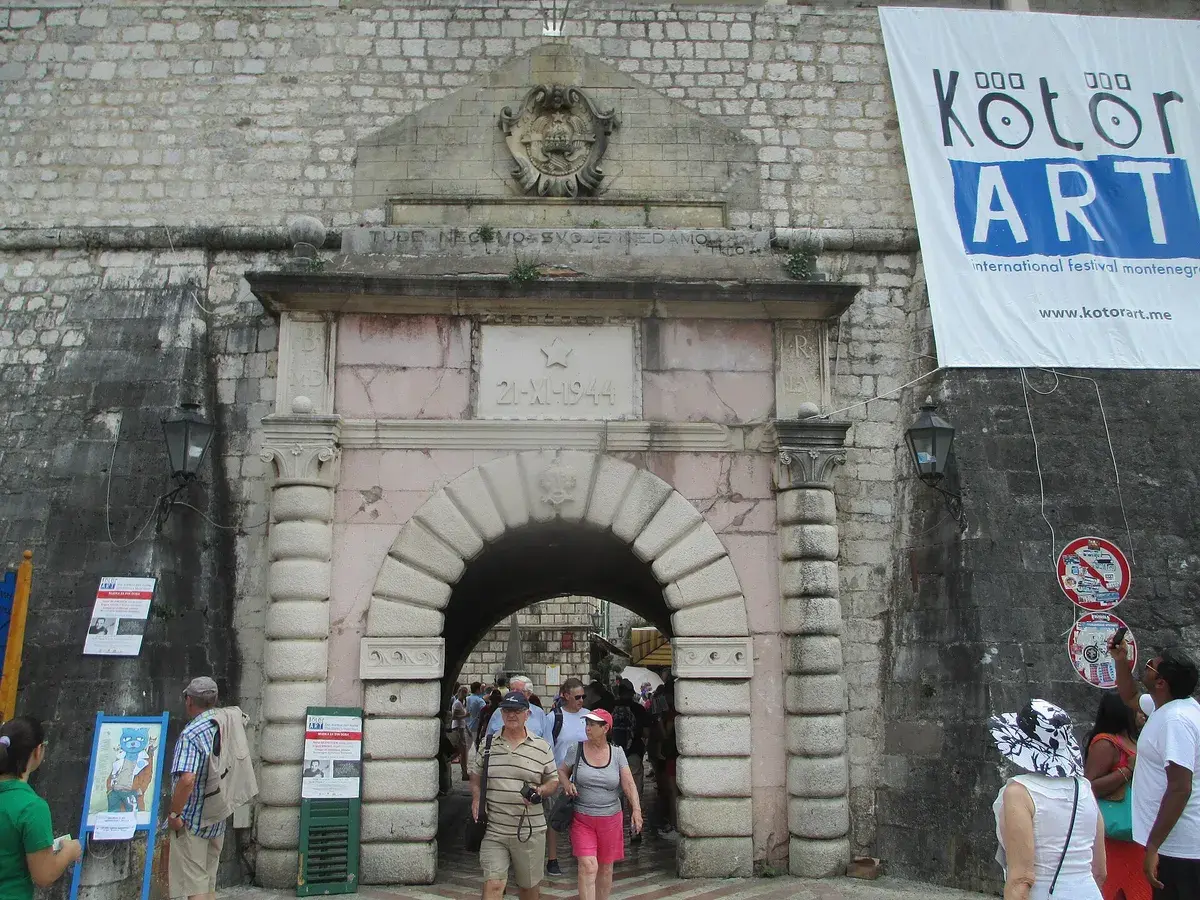
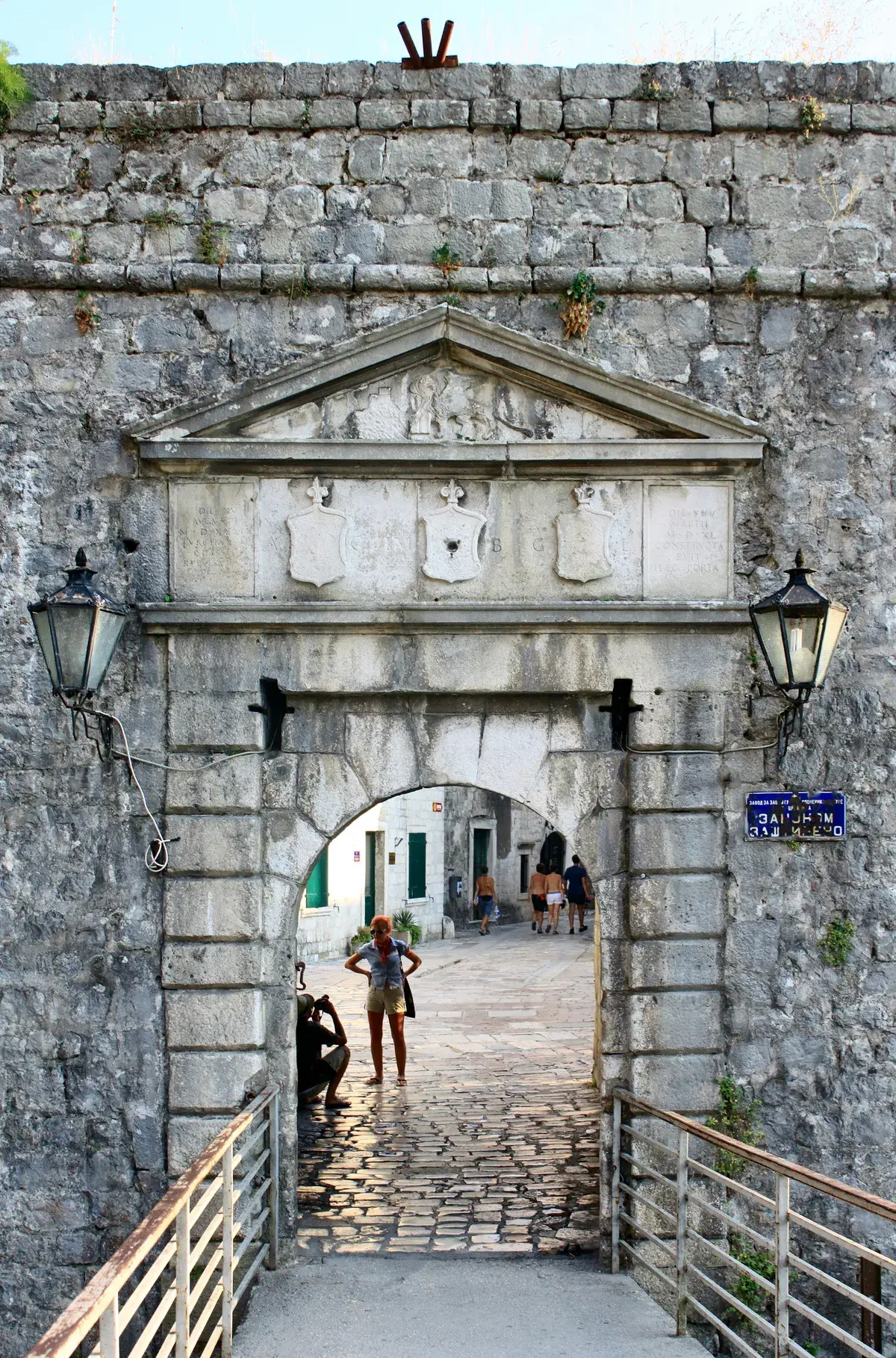
The Sea Gate is the main western entrance into the Old Town. It carries the date 1555, from Kotor's Venetian period. Kotor accepted Venetian protection in 1420 and remained within Venetian Albania until 1797. The winged Lion of Saint Mark identified Venetian rule.
Above the entrance, the post-war date 21-XI-1944 and a quotation associated with Tito mark Kotor's liberation in the Second World War. A repeated claim that a particular Venetian lion was physically removed from this exact gate after 1944 is not sufficiently verified here, so it is left out.
3. Square of Arms and the Clock Tower
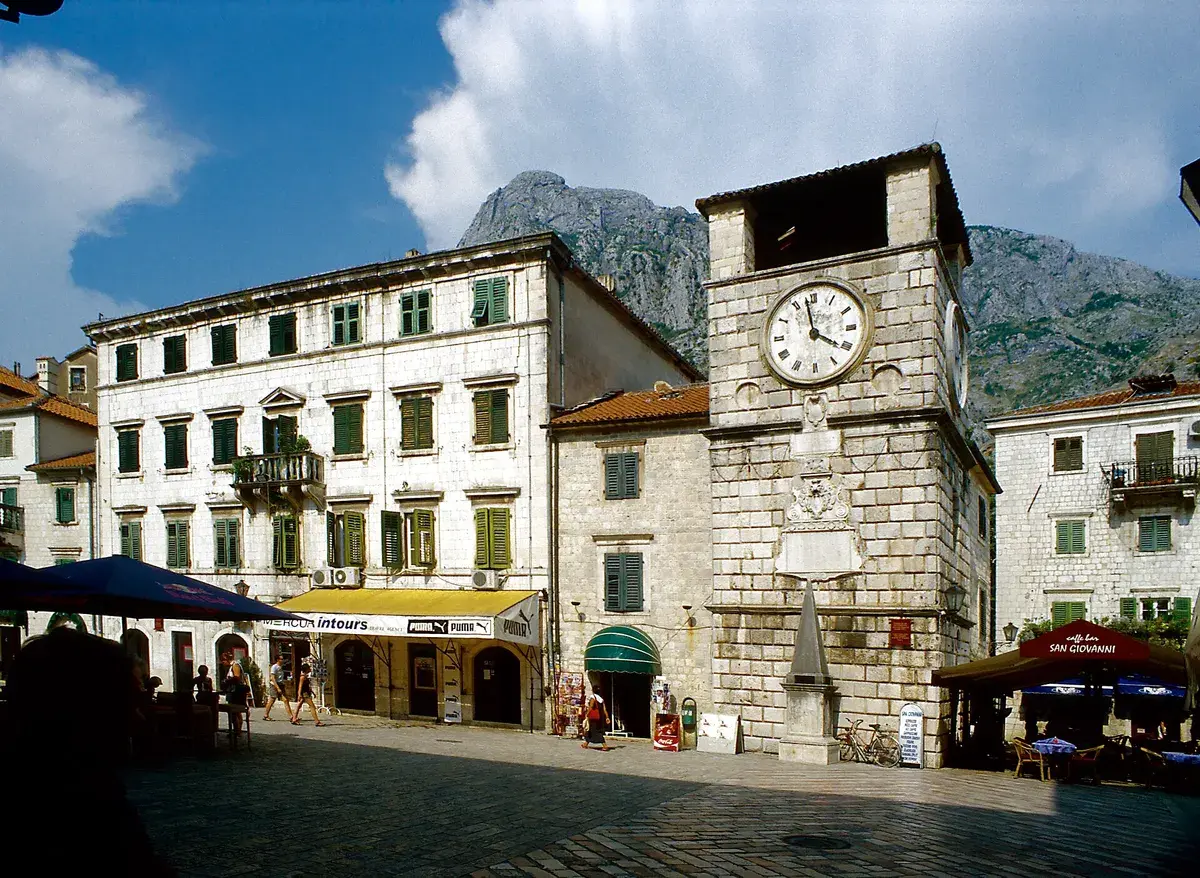
Immediately inside the Sea Gate, the Square of Arms is the first open urban space. The Clock Tower stands on its eastern side. Allow a minute of movement from the gate before deciding whether to stop.
4. Square of Flour and the Cats of Kotor
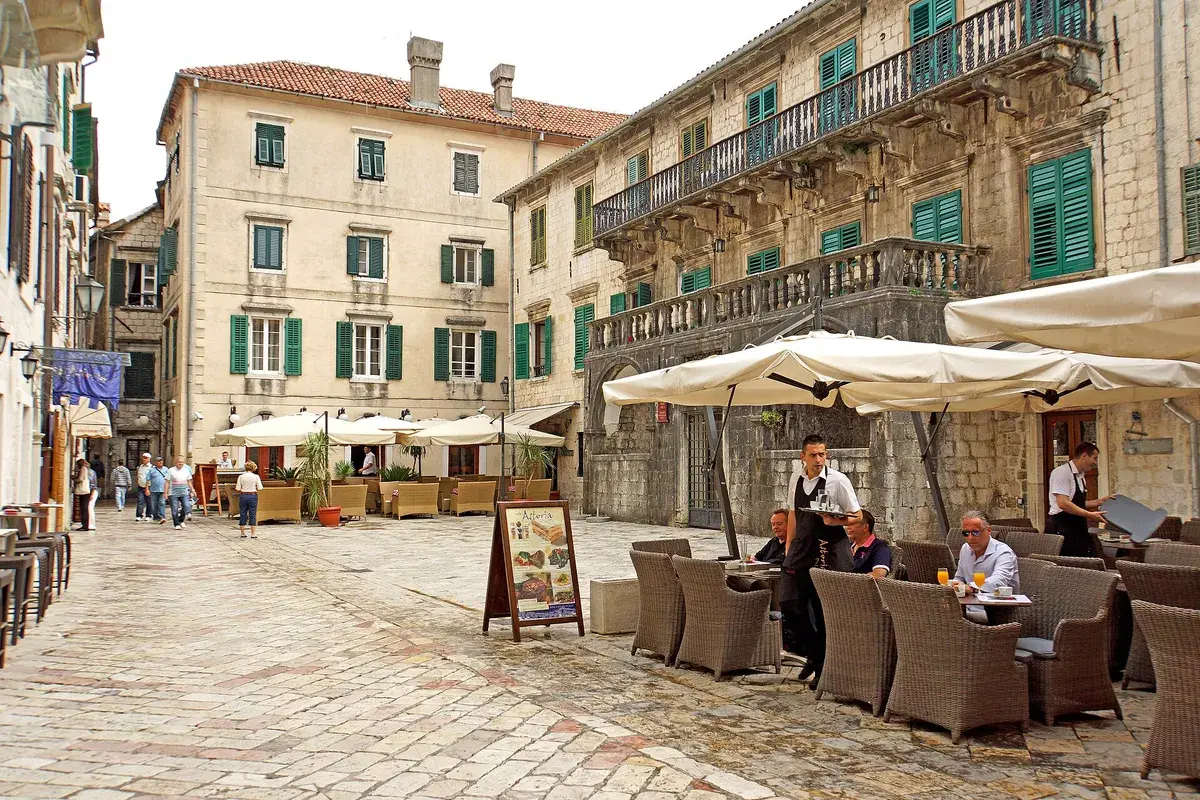
Trg od Brašna, the Square of Flour, lies a short walk north-east of the Clock Tower. Pima Palace sits on the square, which also belongs to the street identity of Kotor's cats.
The Old Town contains a small Cat Museum devoted to cat imagery and collectibles. Recent visitor listings commonly give a nominal €1 admission, but no first-party 2026 tariff was found, so do not treat that amount as fixed.
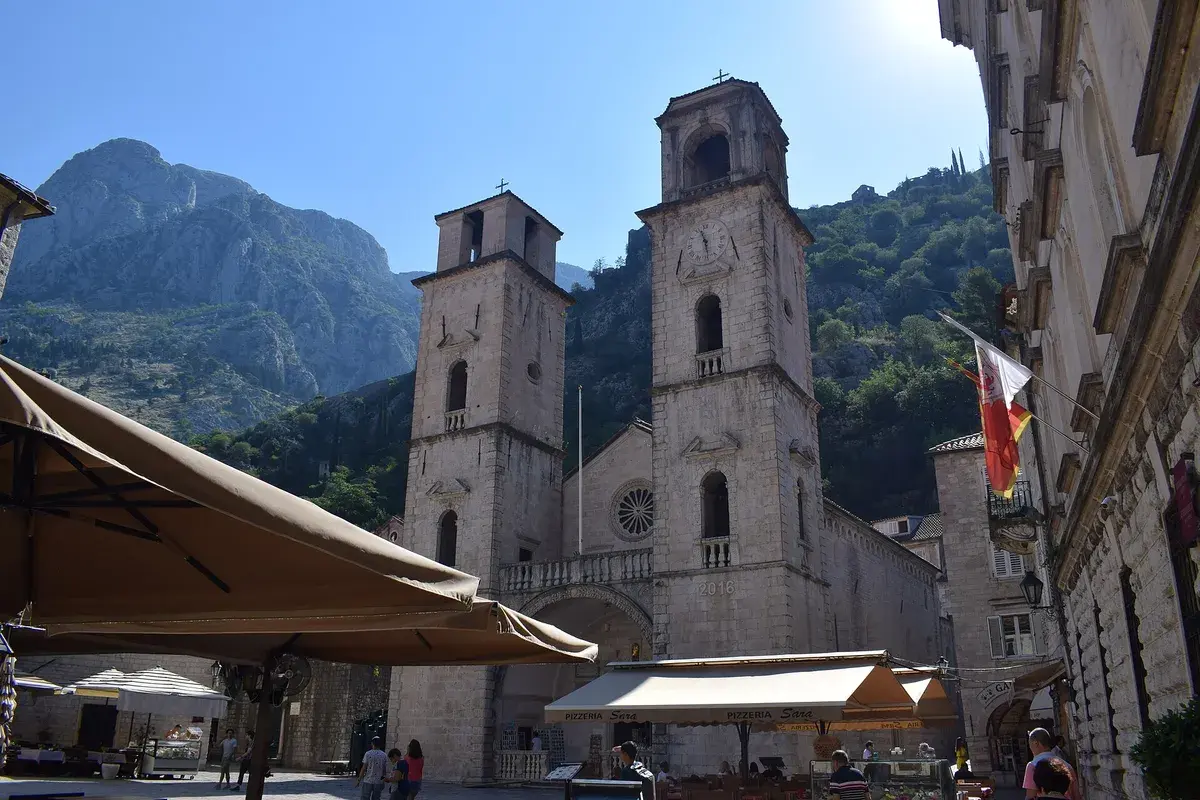
5. Cathedral of Saint Tryphon
Saint Tryphon was consecrated on 19 June 1166. The cathedral was severely damaged in the 1667 earthquake. Its original western façade and towers were lost and rebuilt, leaving the later Baroque-fronted appearance and unequal tower heights. The 1979 earthquake caused further heavy damage, followed by restoration.
The upper cathedral museum and treasury contain Saint Tryphon relics, reliquaries, liturgical metalwork, sculpture, textiles and fresco fragments. September 2026 ticket and hour reports conflict, so confirm price and entry conditions at the door. The treasury is a realistic interior addition only if the queue is short.
6. Maritime Museum
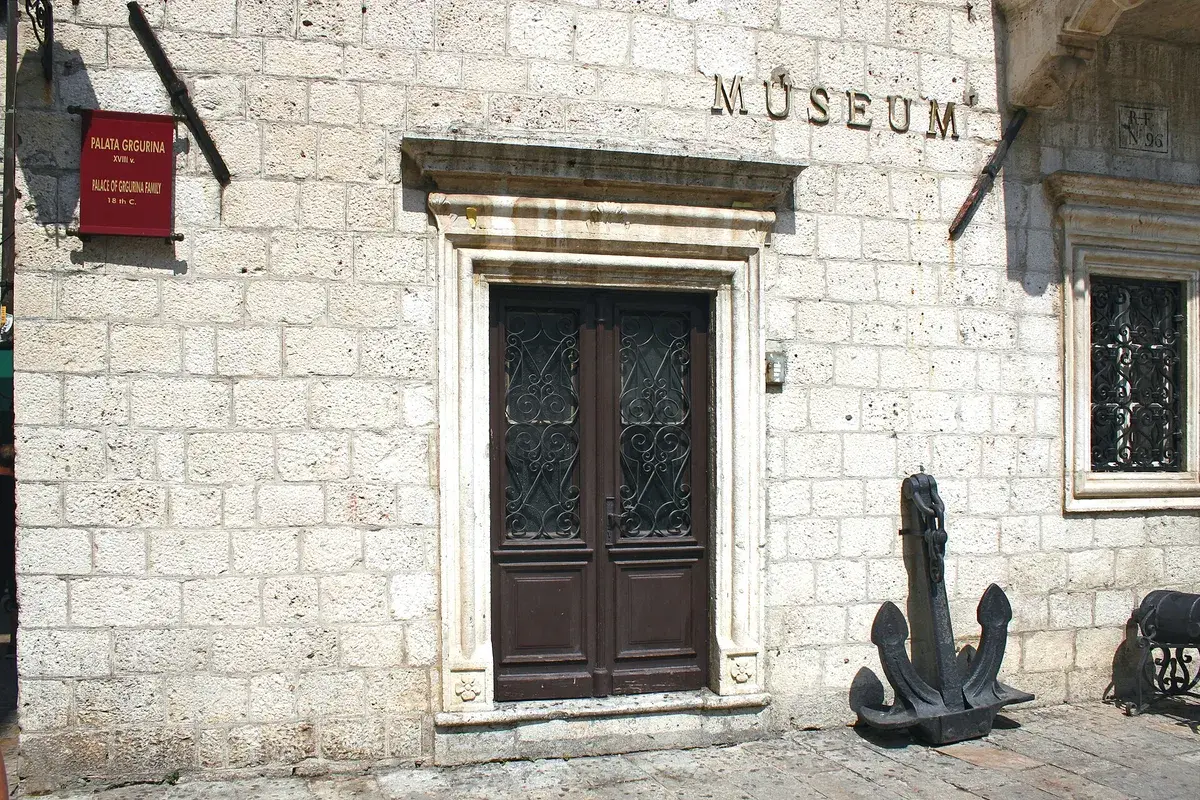
The Maritime Museum occupies Grgurina Palace, an early-18th-century Baroque building. Its collection grew from the Boka Navy brotherhood collection, founded around 1880, and the museum later moved into the palace. The building was significantly damaged in the 1979 earthquake and underwent conservation work in 1982 to 1984.
This is a museum about the maritime history of the Bay of Kotor, not a generic local collection. A 2025 museum announcement counts 488 historical-art objects. It suits a visitor who wants one substantial interior, but September hours and admission remain unverified.
7. Church of Saint Luke
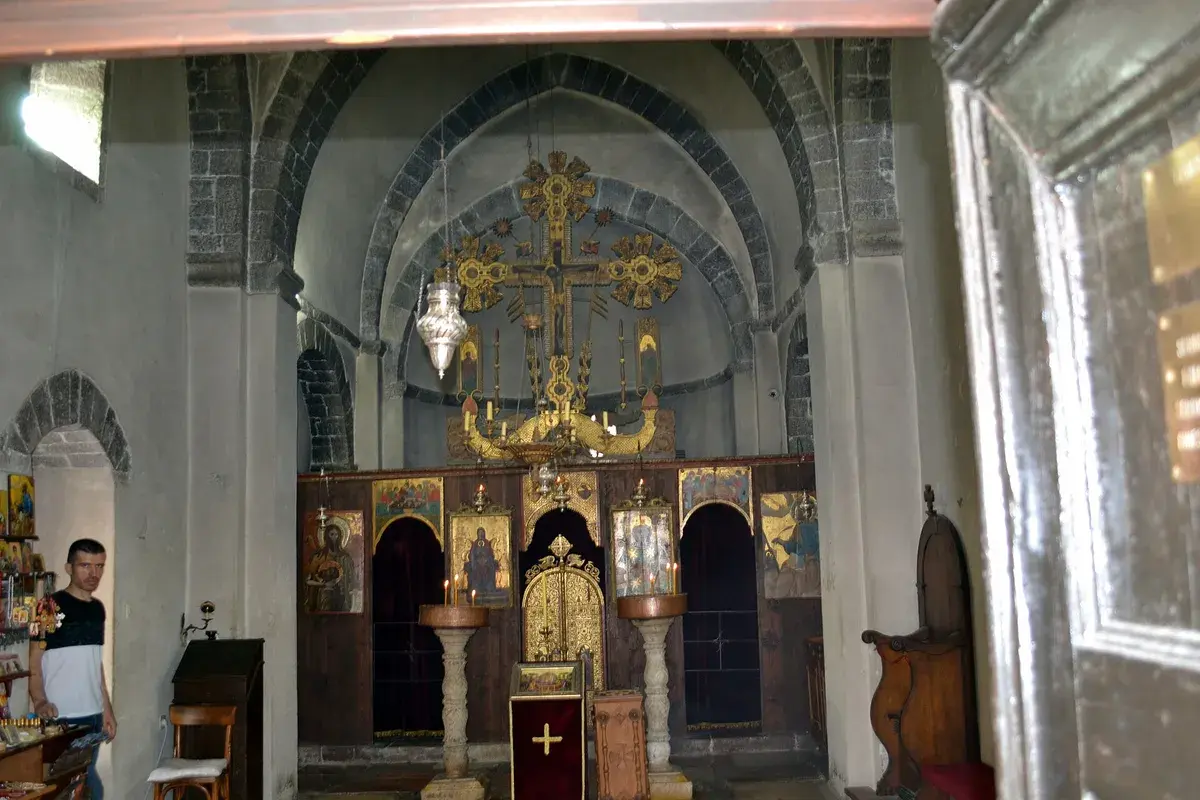
Saint Luke stands on Trg Svetog Luke, north of the Maritime Museum, as a short continuation of the core.
Treat the church as an exterior stop unless you have confirmed that it is open.
8. Collegiate Church of Saint Mary
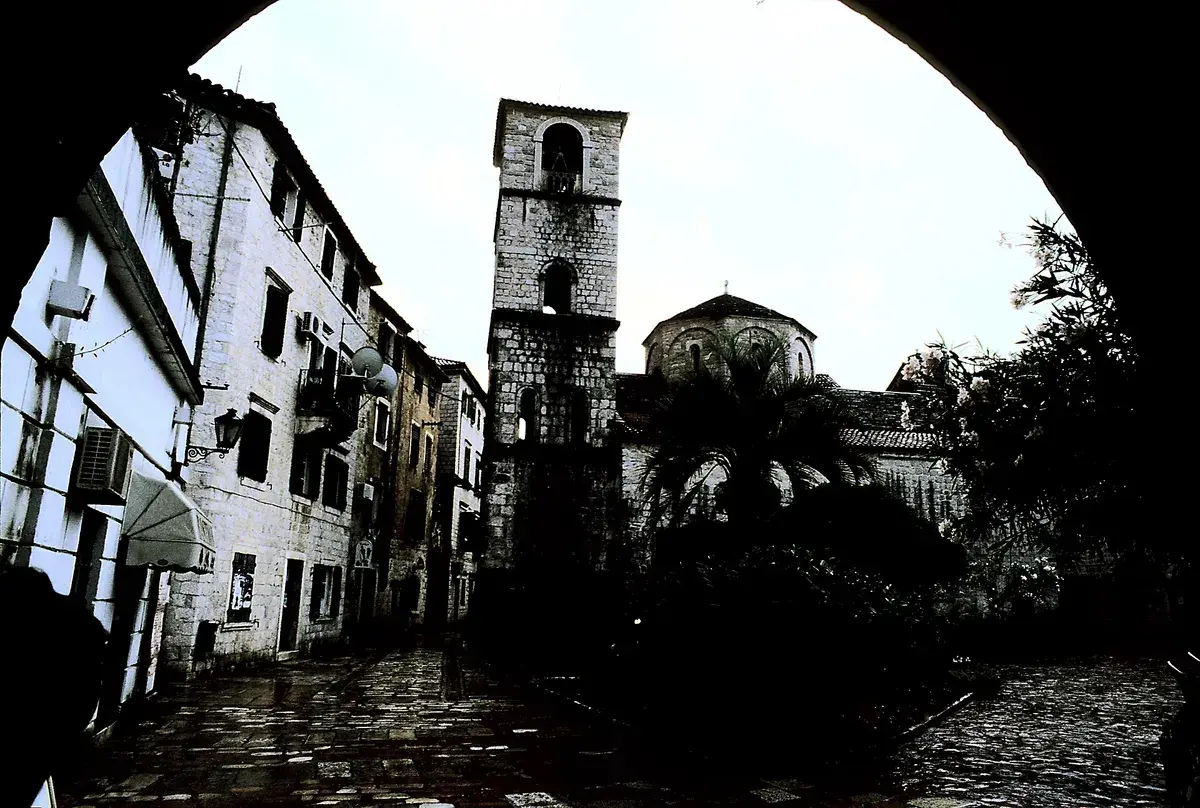
Saint Mary of the River lies close to the northern wall. It follows Saint Luke naturally and brings the route close to the River Gate.
Decide here whether San Giovanni is still realistic. If your remaining time is less than the full climb budget plus the ship buffer, continue to the North Gate and return toward the port.
9. North Gate and the Škurda
The North or River Gate opens beside the Škurda at the northern edge of the walled city. It is the natural end of the Old Town sweep before returning toward the Sea Gate or taking the optional fortress branch.
The often-repeated 1539 victory story is not sufficiently supported here, so it is left out.
10. Fortress of San Giovanni, only if the clock allows
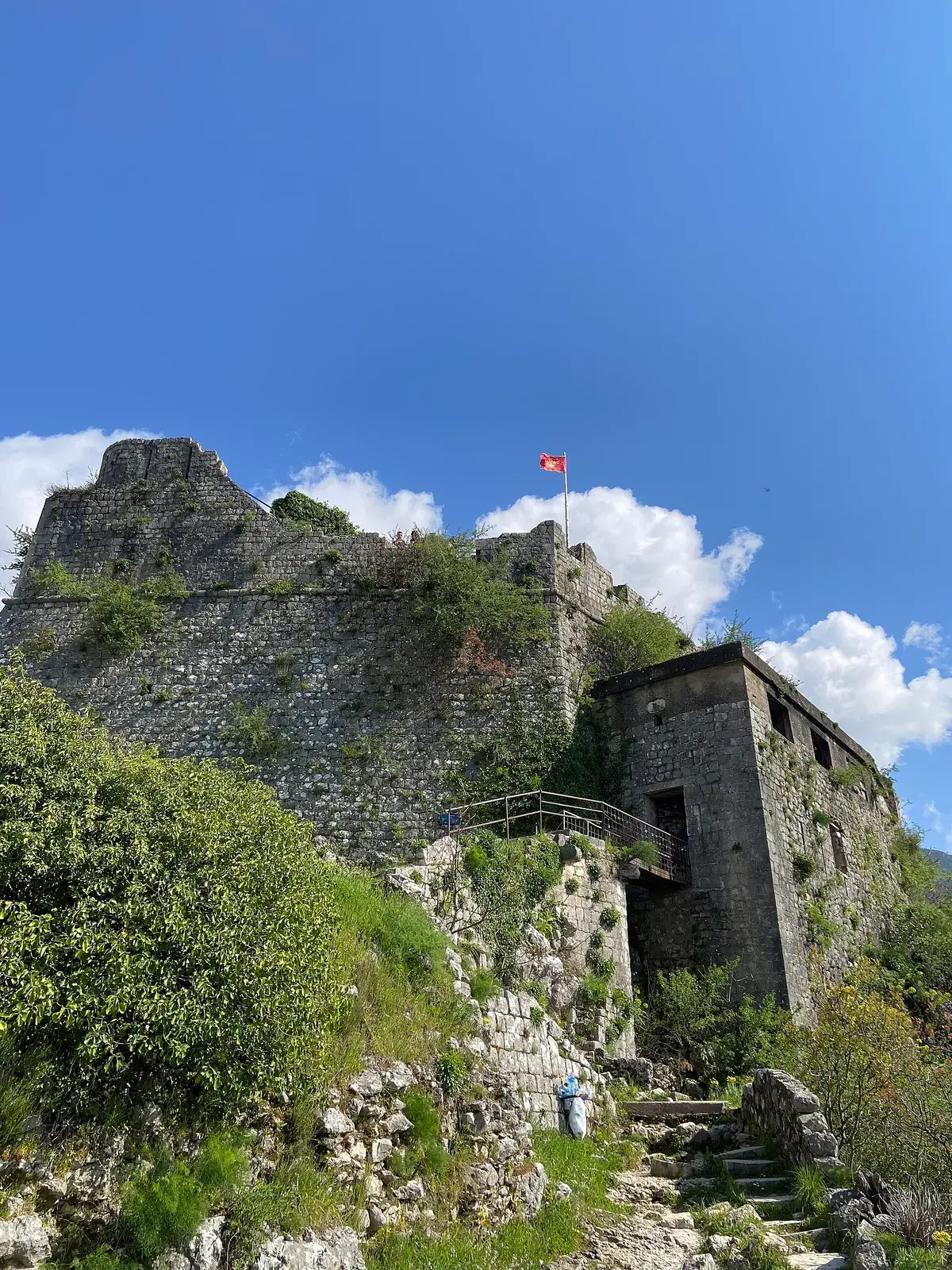
San Giovanni is not another quick stop. The upper fortress is roughly 250 to 280 metres above the Old Town, reached by about 1,350 to 1,500 steps and exposed rock. Plan 45 to 60 minutes up and down, with a total visit of roughly 1.5 to 2.5 hours including pauses and crowding. Carry water. There is no verified municipal drinking-water provision or reliable food facility at the top.
The municipal tariff currently supported by the official notice is €15 per person. The charged seasonal hours are 08:00 to 18:00 from 1 March to 30 April, 07:00 to 20:00 from 1 May to 30 September, and 08:00 to 17:00 from 1 October to 30 November. The notice names the Parilo entrance behind the Church of Blessed Ozana and Škaljarska pjaca. The exact winter free-access rule for December through February is not explicitly published in the current municipal notice, so do not promise that the climb is free out of season.
The Ladder of Kotor remains a separate mountain hiking trail, not a free entrance. The former wall opening used as a shortcut was reported sealed from May 2026 and filled with rocks in June. Do not climb closed masonry or describe the old gap as a legal route.
The exposed ascent is a poor choice in the hottest part of a July or August afternoon. Current guidance recommends an early start, water and a slower pace, while public-health guidance links exertion in heat to dehydration and heat illness. Exact Kotor monthly temperature normals were not sufficiently verified. If symptoms develop, turn back.
Cruise crowds, tickets and money
Kotor can receive several ships on one day. The 2026 schedule lists at least five vessels on 15 July. A separate 3 September listing names three ships with a combined potential capacity of roughly 6,800 passengers if full. That scale explains why the lanes and gates can change quickly.
On multi-ship summer days, 09:00 to 16:00 is the most useful congestion warning. Enter promptly after disembarkation, complete the compact lanes before coach groups peak, and treat indoor attractions as optional substitutions rather than mandatory additions. If the call starts late, keep San Giovanni out of the plan.
There is no reliable evidence of a current combined ticket covering Saint Tryphon and the Maritime Museum. The supported combination is the cathedral and its own treasury. Montenegro uses the euro. Carry cash even if you normally use a card, because card acceptance at the fortress, cathedral, Cat Museum and small vendors is not reliably published.
Frequently asked questions
Can I do Kotor Old Town and San Giovanni from a cruise ship?
Sometimes, but only when the call gives you roughly 3.5 to 4.5 hours from the port and you retain a 60 to 90 minute return buffer. The Old Town alone is dependable.
What is the last safe fortress start for a 17:00 sailing?
About 13:15 under the conservative calculation in this guide, and earlier for a tendered call or an earlier all-aboard time. It is not a guarantee.
Is the Ladder of Kotor a free way into the fortress?
No. It is a separate hiking trail. The former wall-gap connection to the paid fortifications was sealed in 2026.
Should I choose the cathedral or the Maritime Museum?
For two hours, choose one interior if the queue and opening status work. The cathedral treasury is compact. The Maritime Museum is more substantial and can consume the time needed for the Old Town circuit.
Before you go
Check your ship's all-aboard time, whether the call is docked or tendered, the fortress tariff and same-day access conditions. Start the Old Town core promptly, carry water and euro cash, and treat the fortress as conditional on time, heat and your ability to descend uneven steps. The €15 fortress fee, seasonal charged hours and sealed wall gap should be rechecked before the 2027 season. Cathedral and Maritime Museum prices and hours were still unverified on 1 September 2026.