Sarajevo on Foot: A Self-Guided Walking Route Through the Old City
Last updated: September 2026
Intro
Sarajevo on Foot: A Self-Guided Walking Route Through the Old City
Last updated: September 2026
Sarajevo is compact enough for an old-city walk, but the order matters. The current Ciceru tour starts at City Hall and contains a local zigzag. This version starts at Bistrik Railway Station and finishes at City Hall.
The route is about 2.4 km. The ten stops cover Austro-Hungarian, Ottoman and Jewish heritage, the Latin Bridge and the riverfront. The siege and the 1914 assassination are treated as documented history.

Quick overview
- Duration: About 1 hour 30 minutes to 1 hour 50 minutes with exterior viewing and short stops. Allow 2 hours 20 minutes to 2 hours 50 minutes if you enter two interiors.
- Distance: About 2.4 km of planned movement. The current Ciceru product rounds its route to 2 km.
- Walking time excluding stops: About 33 to 36 minutes.
- Stops: 10.
- Start: Bistrik Railway Station.
- End: Sarajevo City Hall, or Vijećnica.
- Price: The route is free from public space. Interior visits have separate admission and opening hours.
- Elevation: No verified total ascent is published. The start and some streets are not flat.
The same 10 stops also run as a self-guided tour inside the Ciceru app, with the story and a quiz question at each one, and a free 500 MB global eSIM so you are online the moment you land.
The route
The efficient order is Bistrik Railway Station, Ashkenazi Synagogue, Latin Bridge, Ferhadija Mosque, Gazi Husrev-beg Mosque, Morića Han, Baščaršija, Sebilj, Copperware Street and Sarajevo City Hall. It begins with the southern outlier, then moves north and east through the central cluster.
The current public Ciceru page lists 10 stops, 2 km and 2 hours, starting at City Hall. Its present order sends you from Gazi Husrev-beg Mosque to Latin Bridge, back to Ferhadija, then south-west to the synagogue and Bistrik. That is a local backtrack. Reverse the sequence below to follow the product order, or start at Bistrik for the shorter line.
The times separate movement from visits. Thirty-five minutes is the walking calculation, not the time spent reading, crossing roads or entering buildings.
Stop 1: Bistrik Railway Station
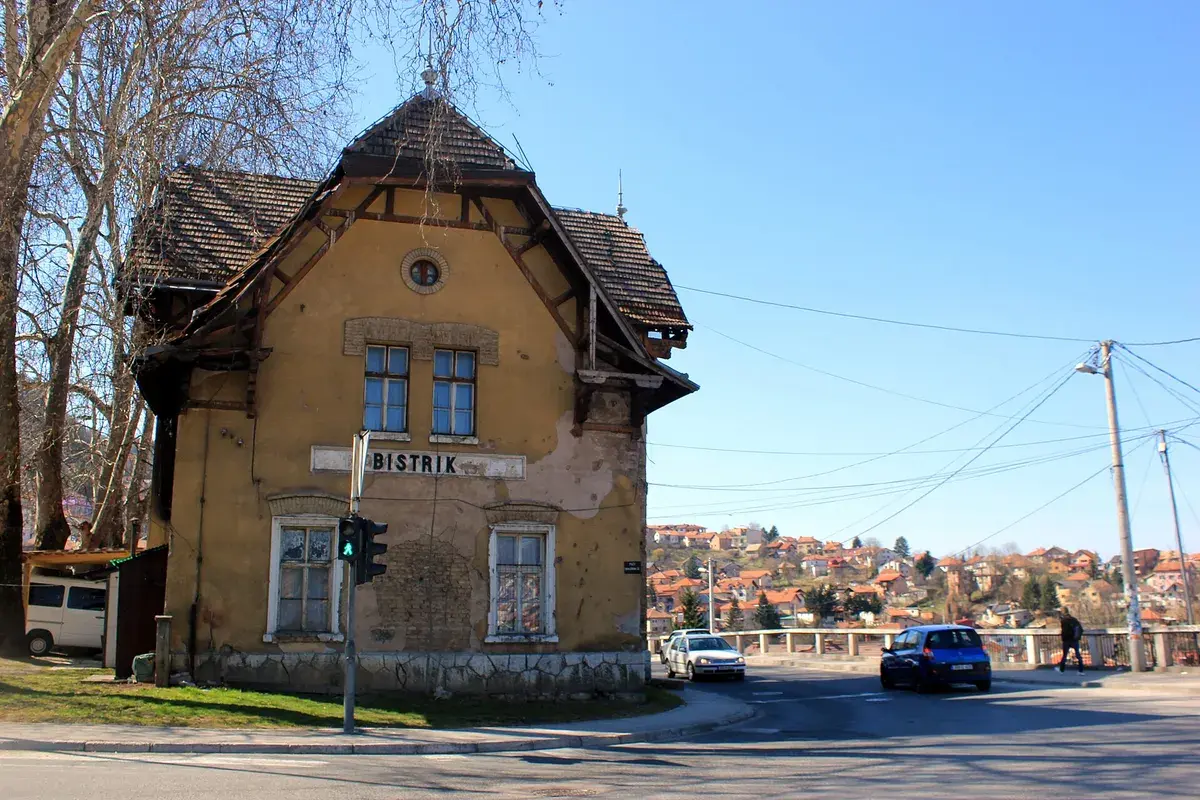
Bistrik Railway Station is the southern start and the route's only substantial outlier. It is a surviving part of Sarajevo's former railway infrastructure above the central river corridor.
Treat this as an exterior stop unless access is confirmed on the day. Plan about 0.9 km and 12 to 14 minutes to the next stop.
Stop 2: Ashkenazi Synagogue
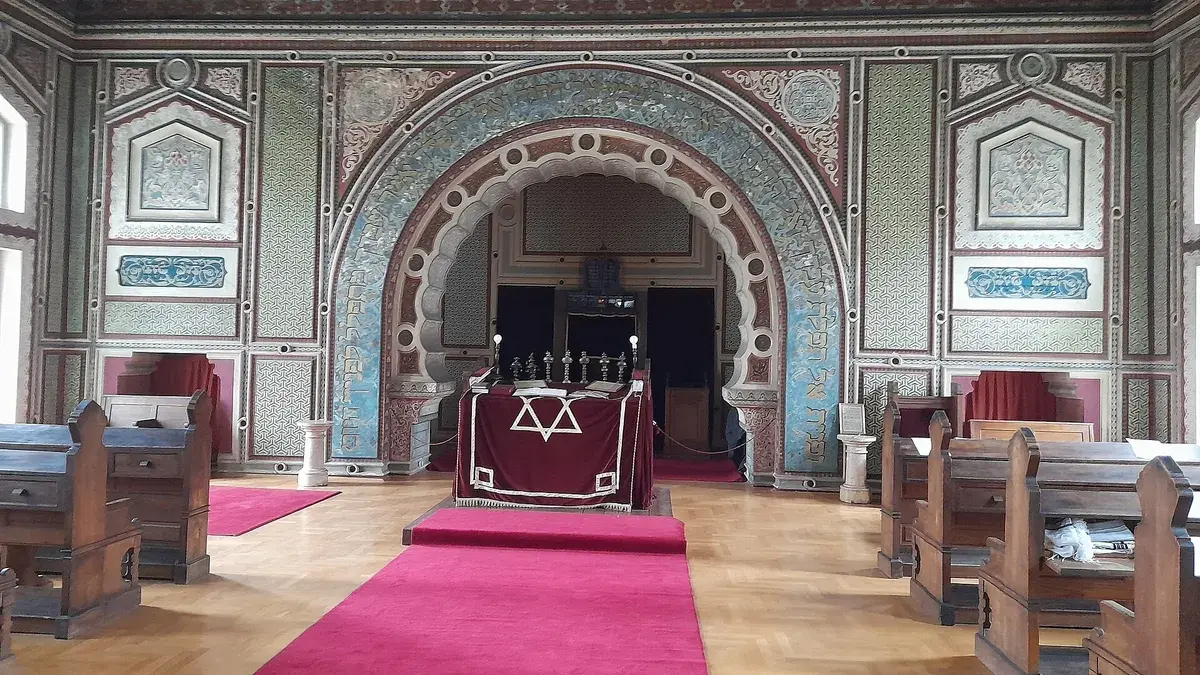
The Ashkenazi Synagogue stands south of the central bridge cluster, on the Miljacka. It adds Sarajevo's Jewish architectural record before the route enters the Ottoman and Austro-Hungarian centre.
Tourist interior access was not verified, so the reliable free visit is from the public street. Allow about 450 metres and 6 minutes to Latin Bridge.
Stop 3: Latin Bridge and the 1878–1918 museum
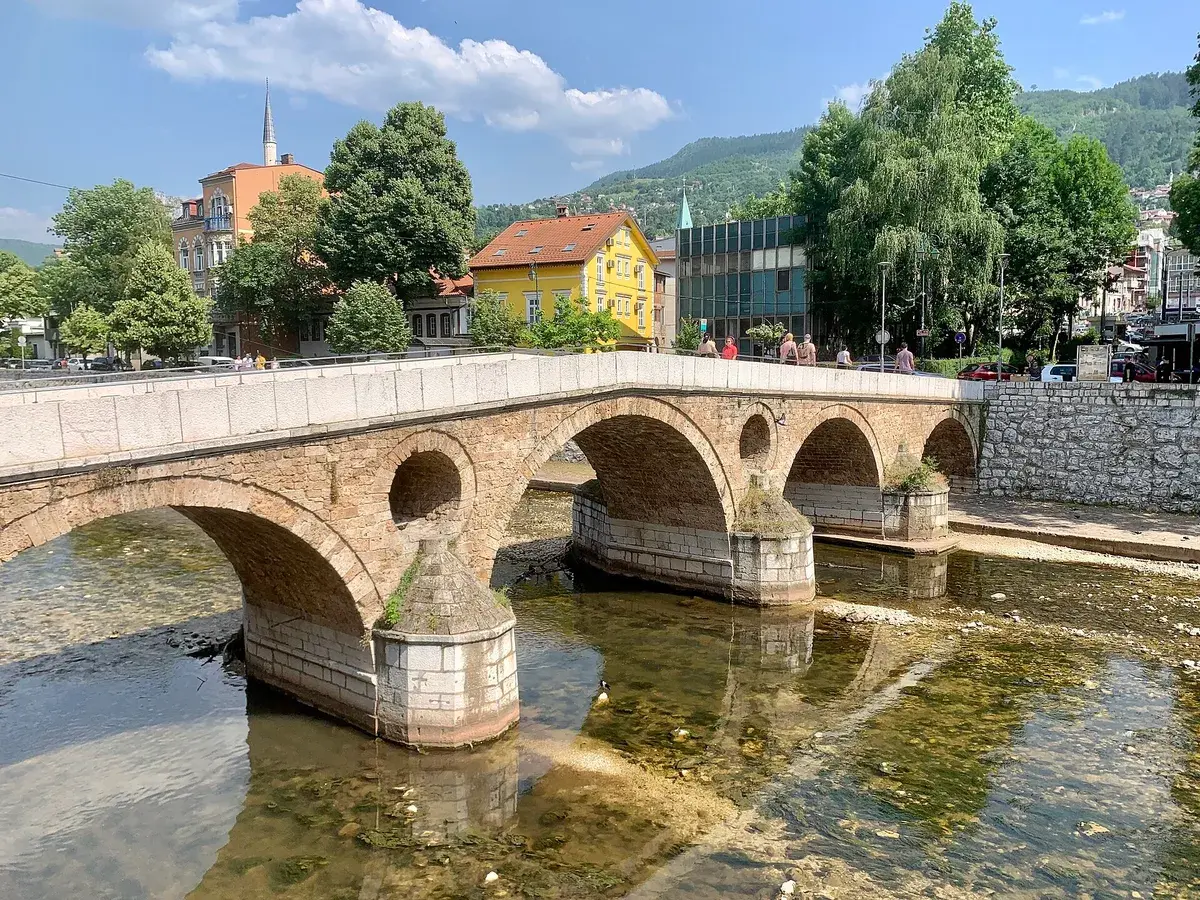
Latin Bridge is associated with Latinluk, Sarajevo's historic Catholic quarter. It was officially known as Principov most, or Princip Bridge, from 1918 to 1993. Latin Bridge was restored as the official name in 1993.
On 28 June 1914, Franz Ferdinand and Sophie were in Sarajevo during the announced motorcade. Nedeljko Čabrinović threw a bomb that injured people in the following vehicle. After a visit to City Hall, the return route changed, but the revised instruction was not properly transmitted. A vehicle turned into the previous planned street near the bridge, stopped and reversed. Gavrilo Princip was at the corner and fired two shots that fatally wounded Sophie and Franz Ferdinand.
The Museum of Sarajevo 1878–1918 is at the former Schiller shop, the assassination location. From May to October it is open 09:00 to 17:00 Monday to Friday and 10:00 to 15:00 Saturday, closed Sunday. From November to April, weekday hours are 10:00 to 16:00. Admission is 5 BAM for adults, 2 BAM for students, and 1 BAM for children and pensioners. The exterior is free.
Stop 4: Ferhadija Mosque and the Meeting of Cultures
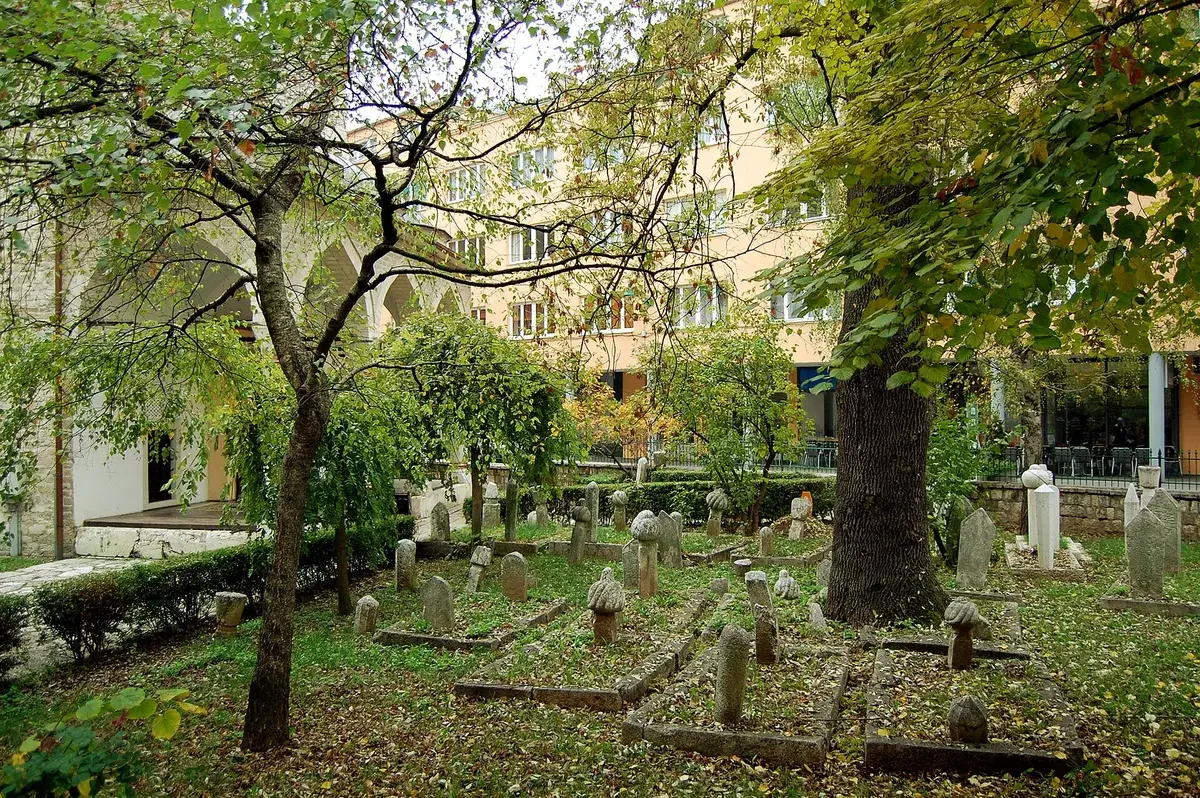
Ferhadija Mosque is an active mosque and protected historic monument. From Latin Bridge, it is about 250 metres and 3 to 4 minutes. Exterior viewing is free. A tourist admission price and visitor timetable were not verified.
Near the transition between Sarači and Ferhadija, beside the Gazi Husrev-beg Bezistan area, the Sarajevo Meeting of Cultures signalisation marks a modern architectural transition. Municipal material describes the east as Ottoman commercial fabric and the west as Austro-Hungarian urban development. It is not an old political border. For any mosque visit, wear appropriate clothing, remove your shoes when asked and do not enter during prayer.
Stop 5: Gazi Husrev-beg Mosque
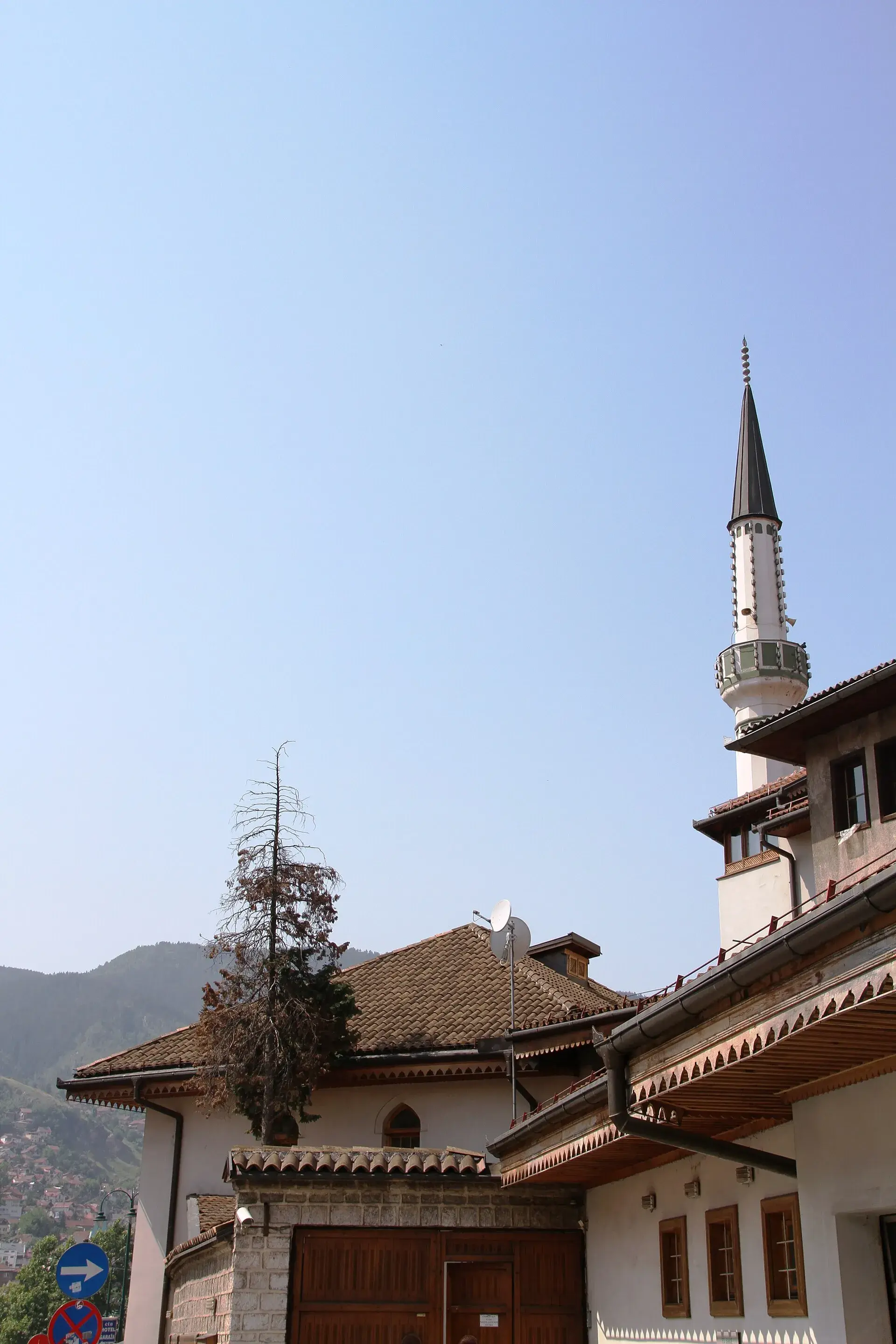
Gazi Husrev-beg Mosque was built in 1530 or 1531 as part of an endowed religious and social complex. Its clock tradition follows Islamic timekeeping, with sunset resetting the clock to 12.
The official tourist timetable is 09:00 to 12:00, 14:30 to 16:00 and 17:30 to 19:00 from 1 April to 31 October. During Ramadan it is 09:00 to 12:00 and 17:30 to 19:00. In winter, approximately 31 October to 1 April, the published visitor window is 09:00 to 11:00. Admission is 3 BAM. These are visitor windows, not continuous opening hours between the first and last time.
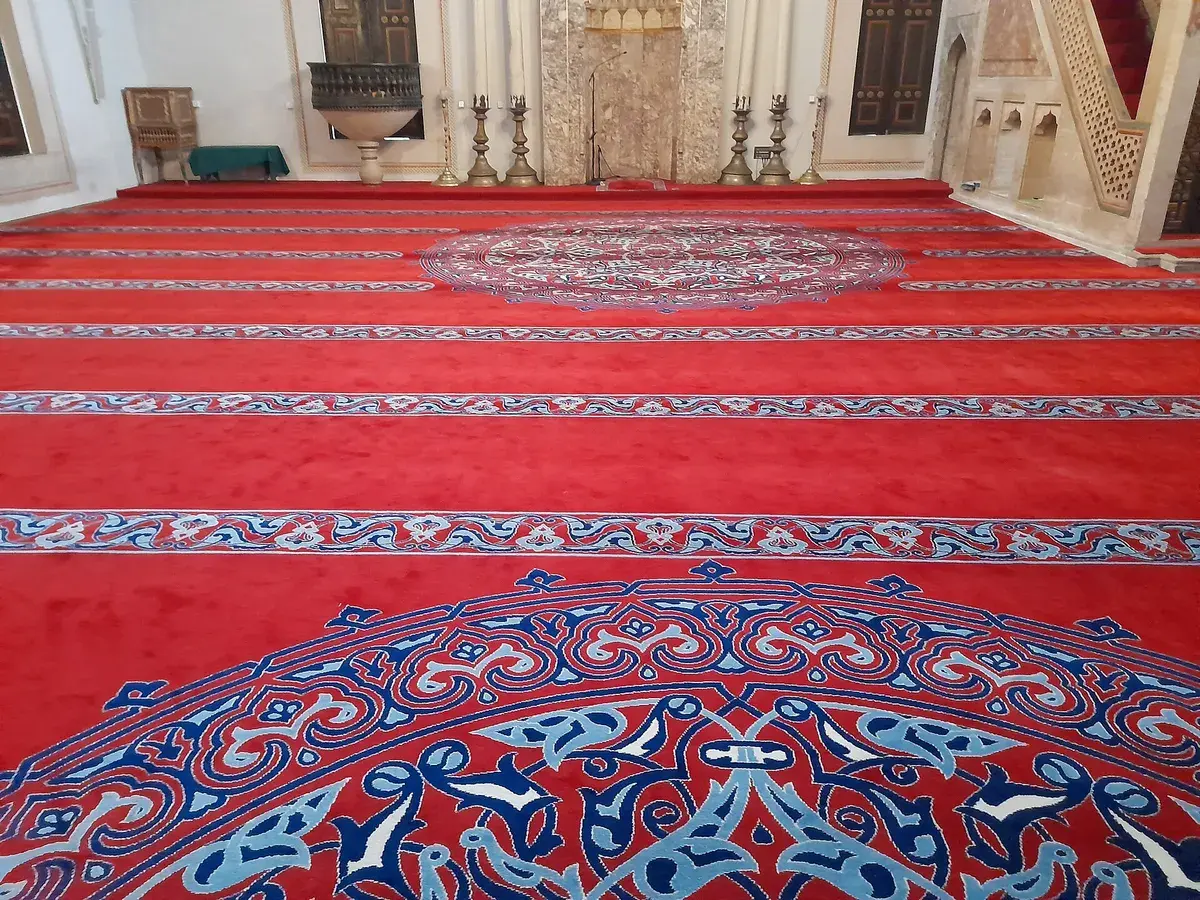
Stop 6: Morića Han
A han provided lodging and facilities for travellers and animals in the Ottoman commercial system. The Gazi Husrev-beg Waqf dates Morića Han to the late sixteenth or early seventeenth century and records capacity for about 300 travellers and 70 horses.
The building is now a commercial property of the waqf, not a working caravanserai hotel. The waqf reported roof-replacement funding in August 2026. No full closure notice was found, but access to every part is not guaranteed. There is no verified monument-wide visitor timetable. From Gazi Husrev-beg Mosque, it is about 140 metres and 2 minutes.
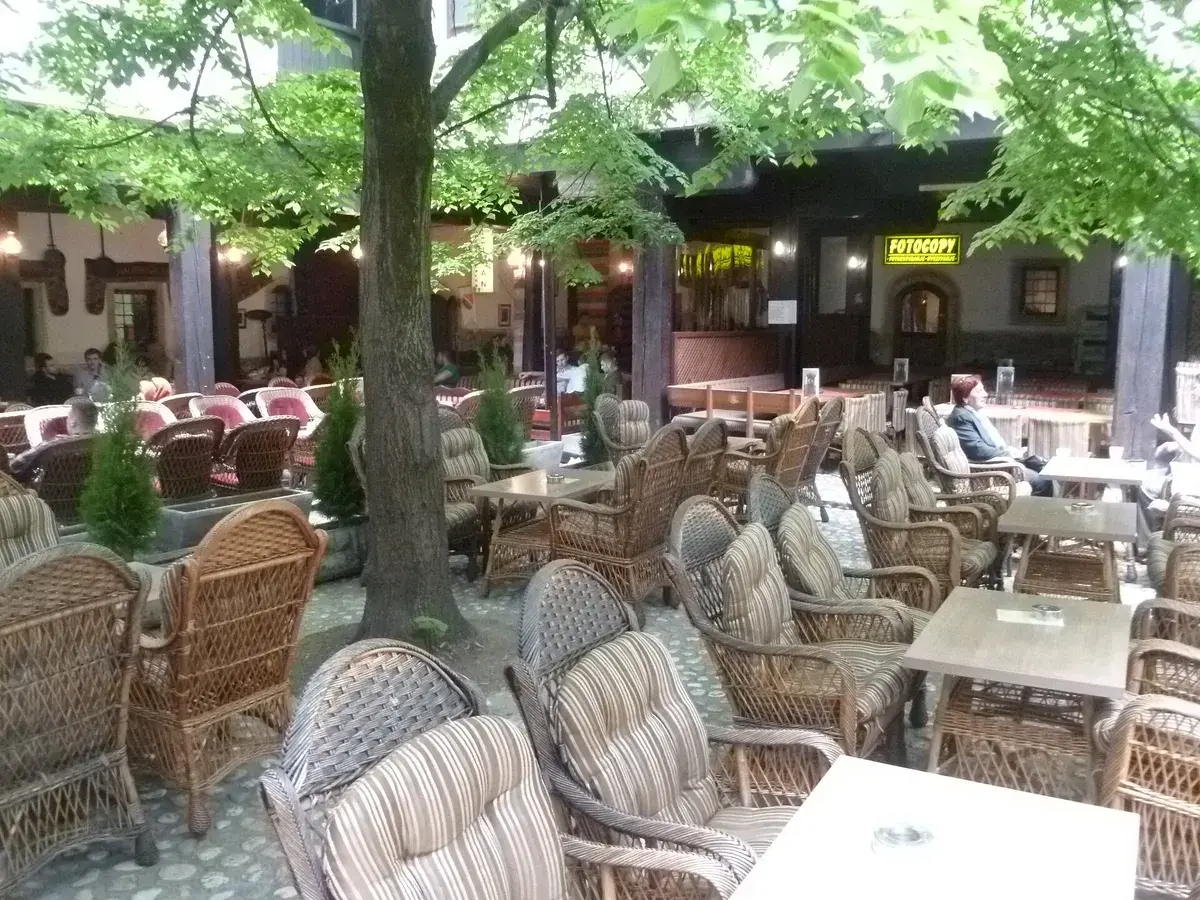
Stop 7: Baščaršija
Baščaršija is the historic market district around the central Ottoman commercial streets. It is a district stop rather than a single building. From Morića Han, allow about 120 metres and 2 minutes.
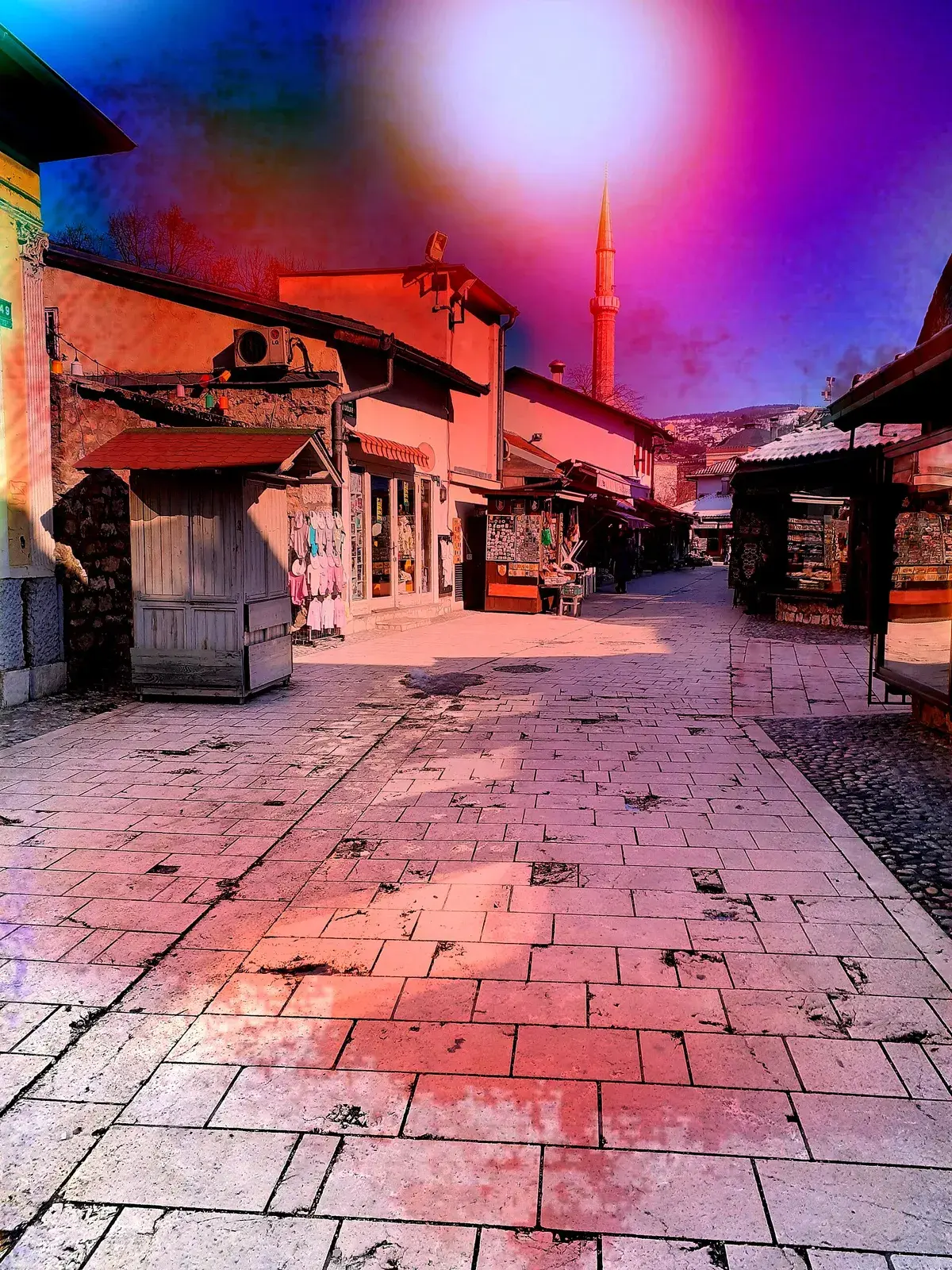
Stop 8: Sebilj
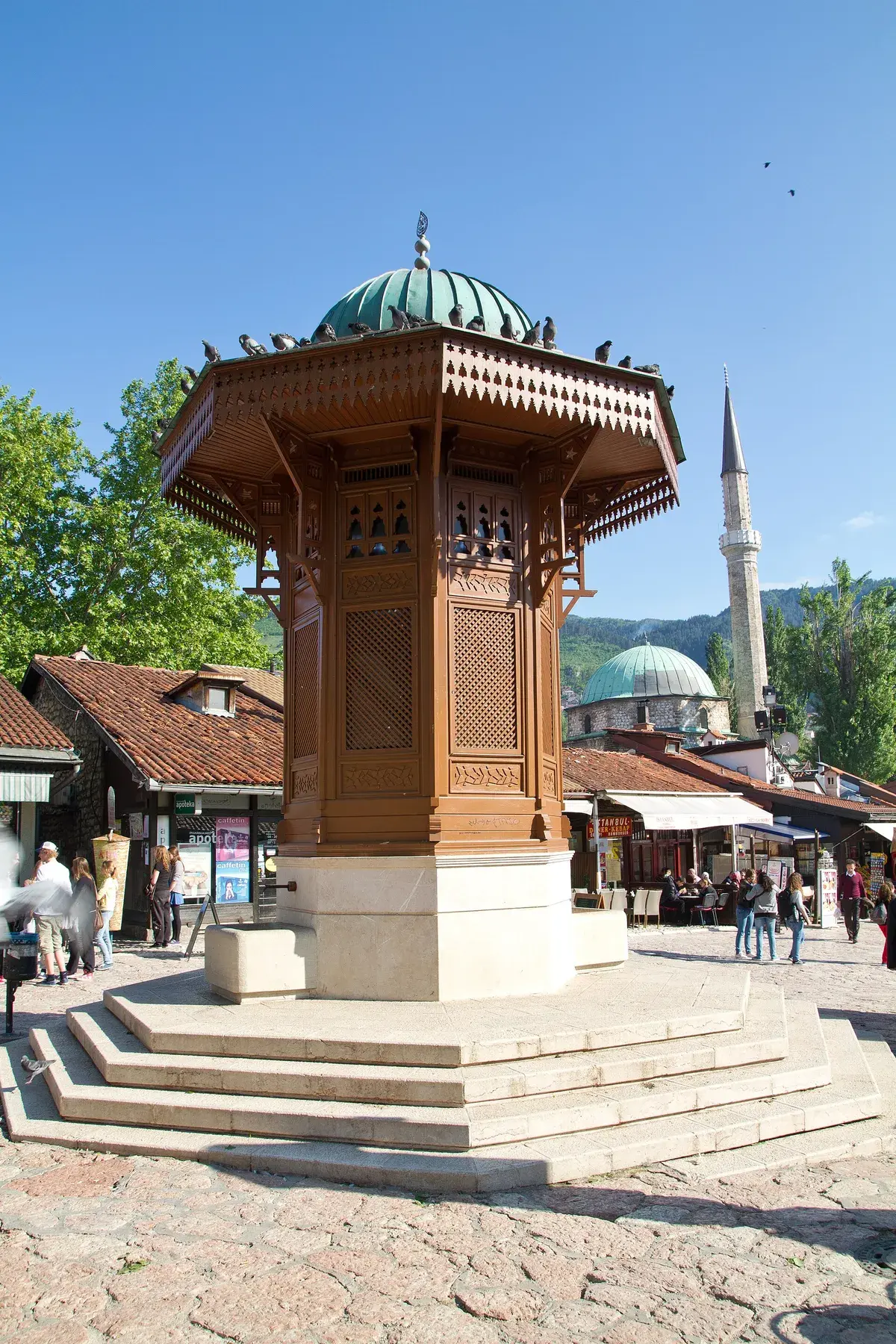
A sebil was a public water-distribution structure. Official Baščaršija heritage material records an earlier Sarajevo sebil commissioned by Mehmed-paša Kukavica in 1754 and destroyed in the fire of 1852. The current structure dates from 1891.
The architect attribution is disputed. The official heritage source says it was probably designed by Josip Vancaš, while many secondary sources attribute it to Alexander Wittek. This guide does not present either attribution as settled. The saying that drinking from Sebilj brings you back to Sarajevo is a legend.
Baščaršija and Sebilj occupy the same immediate market space. Allow about 1 minute.
Stop 9: Copperware Street
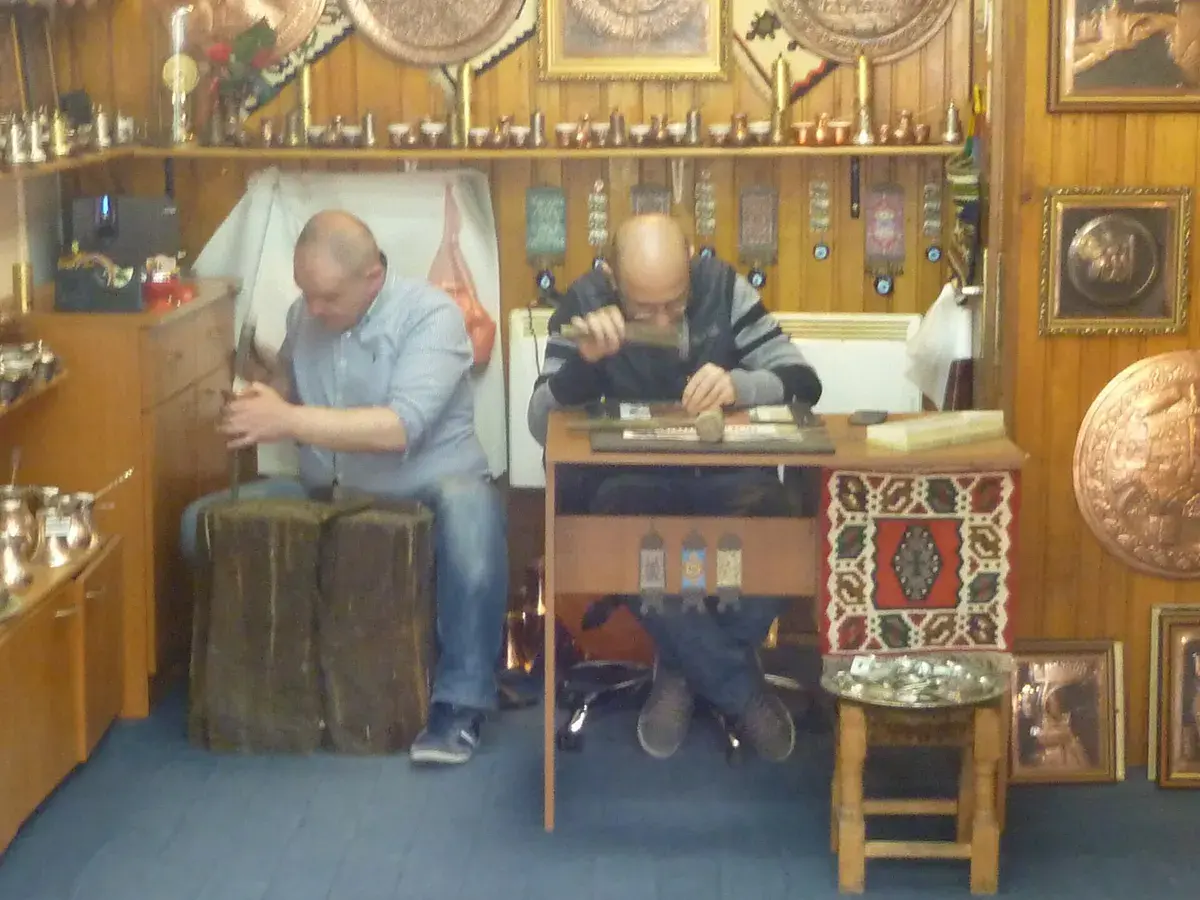
Kazandžiluk, or Copperware Street, is the craft street associated with Sarajevo's copperware trade. The street is part of the same old-market cluster rather than an isolated monument.
Individual shops set their own hours and prices. From Sebilj, the walk is about 80 metres and 1 minute. City Hall is about 250 metres and 3 to 4 minutes farther.
Stop 10: Sarajevo City Hall, Vijećnica
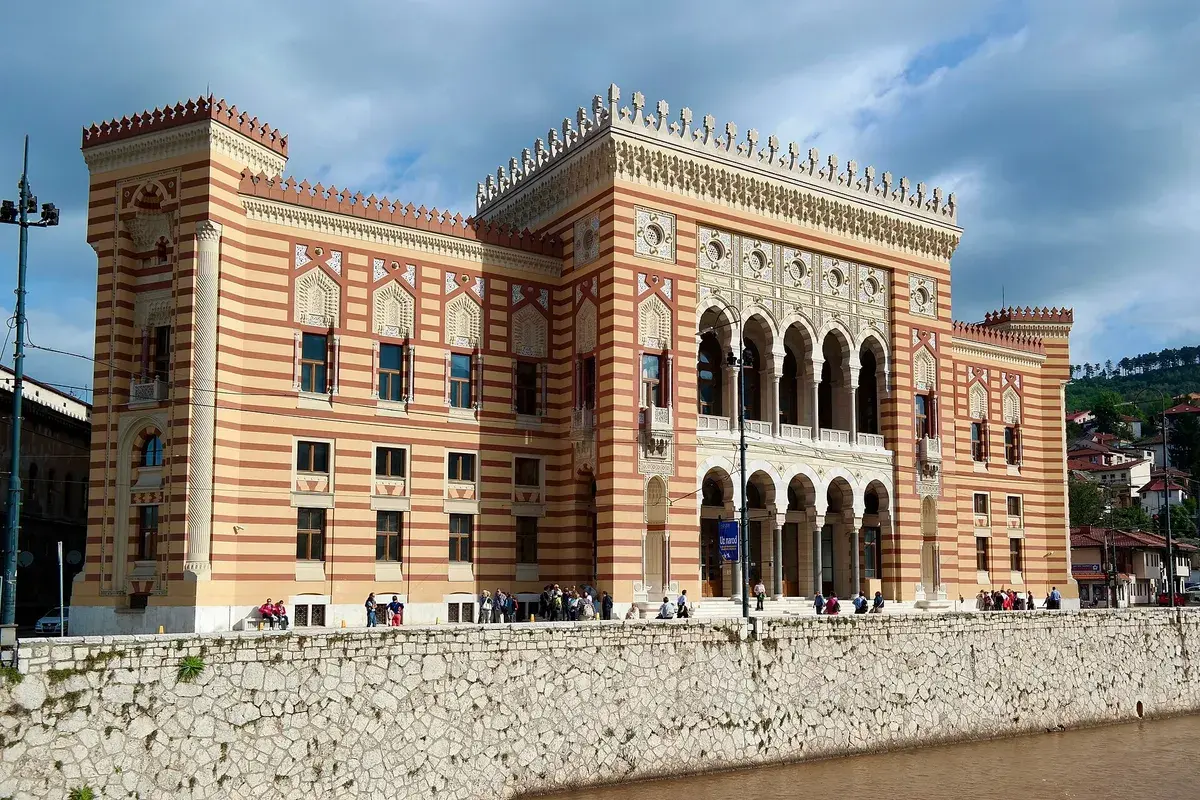
Sarajevo City Hall was built under Austro-Hungarian administration and opened on 20 April 1896. After the Second World War it became the home of the National and University Library of Bosnia and Herzegovina. On the night of 25 to 26 August 1992, it was struck by incendiary artillery projectiles and burned. The official City Hall history gives a loss of roughly two million library units. Reconstruction took place in phases from 1996 to 2014, and Vijećnica reopened on 9 May 2014.
Current opening hours are 09:00 to 17:00 daily. The last clearly published adult admission found was 10 BAM, with a reduced price of 5 BAM, but the operator page does not expose a public tariff. Treat it as a recent reference and recheck before entry. The exterior is free.
The siege lasted from 5 April 1992 to 29 February 1996 in the chronology used by Sarajevo-focused institutional and academic sources. Sarajevo Roses are mortar-impact scars preserved with red resin at places where people were killed during the siege. Do not treat them as decoration or a photo target. The legal record contains findings about specified campaigns and periods, while individual incidents and characterisations remain matters for the relevant historical and legal scholarship.
Tickets and practicalities
- BAM: Bosnia and Herzegovina uses the convertible mark, written locally as KM. Do not assume every venue accepts cards. The Tunnel of Hope is cash-only and outside this route.
- Water: July 2026 utility testing supports describing tap water on the normal public network as potable. Carry water in hot weather.
- Tunnel of Hope: This is a separate excursion, not an eleventh stop. The museum is independently reachable. From 1 April to 31 October it is open 08:30 to 17:00, last entry 16:30. From 1 November to 31 March it is open 09:00 to 16:00, last entry 15:30. Admission is 20 BAM, reduced/student 8 BAM, audio guide 3 BAM, and children under six free. The operator does not accept cards or foreign currencies. Exact bus branches were not verified, so do not hard-code a bus number.
- Tram: The central route does not require one. Current GRAS fares are 2.20 BAM for a single ride and 7.10 BAM for a day ticket.
- Heat: Sarajevo can have very hot summer afternoons. The Federal Hydrometeorological Institute forecast 38 to 40°C during a late-August 2026 heat event. Start early, plan shade and keep interior visits within their published windows.
Frequently asked questions
Is this route really free?
Yes, from public streets and exterior viewpoints. The Latin Bridge museum, City Hall and Gazi Husrev-beg Mosque charge the admissions above. Ferhadija's tourist entry terms are unverified.
Does the route pass a Sarajevo Rose?
Unverified. Academic material documents Roses on Ferhadija Street, but not a surviving marker directly on this ten-stop line. Do not promise one.
Can I visit the Tunnel of Hope without a tour?
Yes. It is a separate museum visit, not part of the central walk. Check the current connection and carry BAM because the operator is cash-only.
Do I need the Ciceru app to walk this route?
No. You can follow this page without it. The same 10 stops also run as a self-guided tour inside the Ciceru app, with the story and a quiz question at each one, and a free 500 MB global eSIM so you are online the moment you land.
Before you go
Start at Bistrik for the efficient geographic order, or reverse the list to finish away from the centre. Budget 35 minutes for movement, then add time for interiors. Recheck tariffs, conservation access, mosque windows and the Tunnel of Hope connection before leaving. For a longer trip plan, read Sarajevo without a car: five day trips by bus and train.