Stuttgart Self-Guided Walking Tour: 7 Stops in 70 Minutes
Last updated: August 2026
Intro
Most search results for a Stuttgart walking tour are really about two car museums, Mercedes-Benz and Porsche, both well outside the historic center this route covers. This page is different: seven stops through the old core in a bit over an hour, plus a short list of what to add if you have longer.
The route runs from a Renaissance castle courtyard through Schillerplatz, past a government palace, into a former Gestapo headquarters that citizens fought to save from demolition, through a museum inside a former king's home, across a public garden, and into a station still mid-rebuild in 2026. It ends at the Hauptbahnhof, ready for your next train.
Quick overview
Duration: 65 to 70 minutes, walking the full route, exteriors and courtyard only
Distance: about 1.9 km
Walking time excluding stops: 27 to 29 minutes
Stops: 7
Start: Altes Schloss / Landesmuseum Württemberg, entrance at Schillerplatz 6
End: Stuttgart Hauptbahnhof, Arnulf-Klett-Platz 2
Price: free to walk
Elevation: under 20 metres of change, flat within Stuttgart's central valley (the Kessel)
The same seven stops also run as a self-guided tour inside the Ciceru app, with the story and a quiz question at each one, and a free 500 MB global eSIM so you are online the moment you land.
The route
At first glance, this order looks like it backtracks: from Neues Schloss you head south to Hotel Silber and StadtPalais, then swing north again to Oberer Schlossgarten.
It does not, and no other guide to Stuttgart addresses this directly. With Altes Schloss as the start and the Hauptbahnhof as the end, Hotel Silber and StadtPalais form a southeast arc that rises naturally back toward the garden and the station. Reordering them would mean crossing the same busy road, Konrad-Adenauer-Straße, twice instead of once, for no measurable gain. These two stops are not "on the way" to the station; they are the deliberate detour that makes this a historic walk rather than a stroll between two squares.
Stop order: Altes Schloss, Schillerplatz, Neues Schloss, Hotel Silber, Wilhelmspalais (StadtPalais), Oberer Schlossgarten, Stuttgart Hauptbahnhof.
Stop 1: Altes Schloss
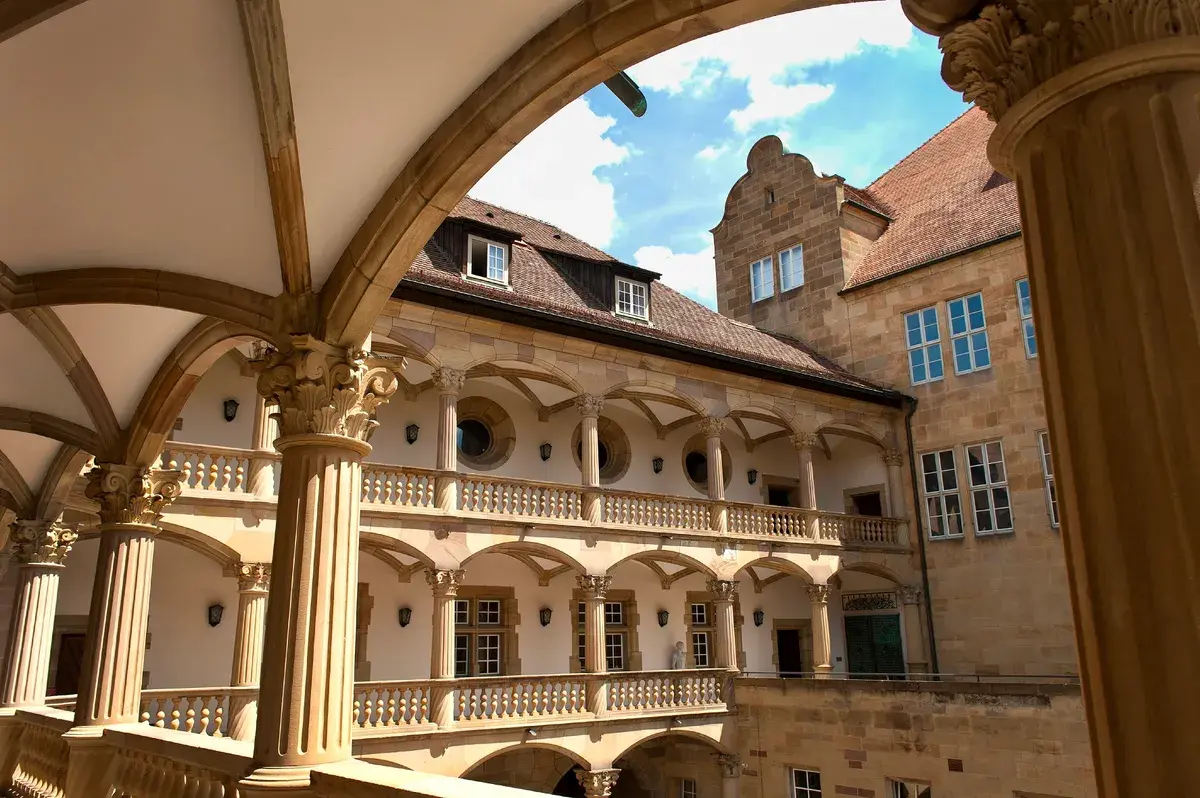
Schillerplatz 6. Walk into the Renaissance courtyard, the Arkadenhof, free and without a ticket. Herzog Christoph rebuilt the old fortress into a residence here between the 1550s and 1570s, with master builders Aberlin Tretsch and Blasius Berwart. The bronze rider at the center is Eberhard im Bart, first Duke of Württemberg, cast by Ludwig von Hofer in 1859. Bombs destroyed about two-thirds of the courtyard in 1944; architect Paul Schmitthenner rebuilt it by 1971, not as an exact copy. The Landesmuseum Württemberg inside costs €8 adult, €6 reduced, free under 18, Tuesday to Sunday 11:00 to 17:00, closed Monday except holidays.
Stop 2: Schillerplatz
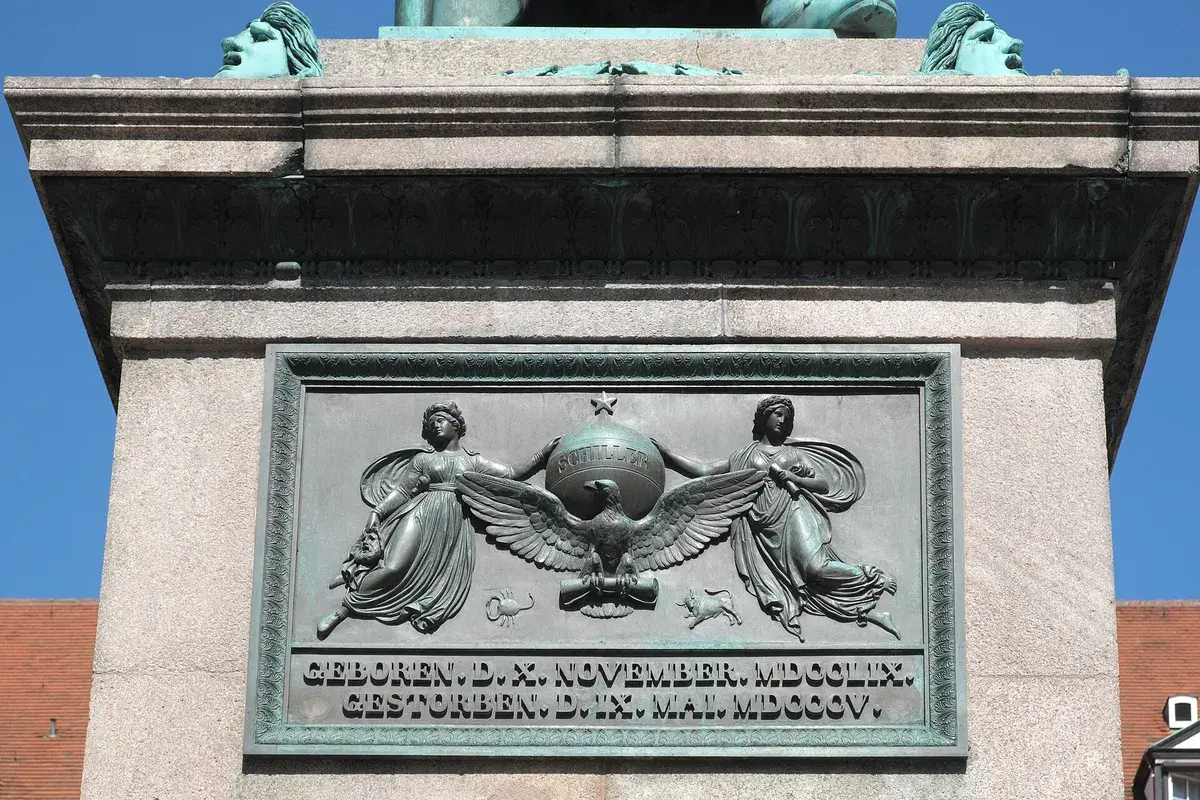
Free. No hours, no ticket. The square takes its name from the bronze statue of Friedrich Schiller, sculpted by Bertel Thorvaldsen and unveiled in 1839, when about 30,000 people turned out in a city of fewer than 40,000 residents. Schiller studied nearby at the Hohe Carlsschule, once sited behind the Neues Schloss, under the same duke whose ancestor's statue you just saw at the Altes Schloss. Cobblestones here are uneven, as the Landesmuseum warns for the whole area. From November 25 to December 23, 2026, the Christmas market spreads across this square too.
Stop 3: Neues Schloss
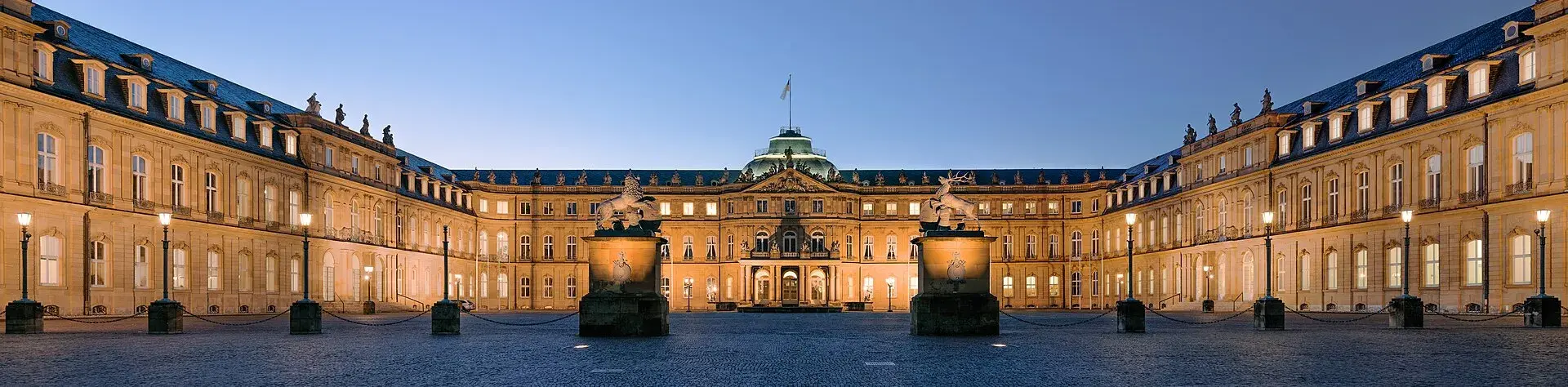
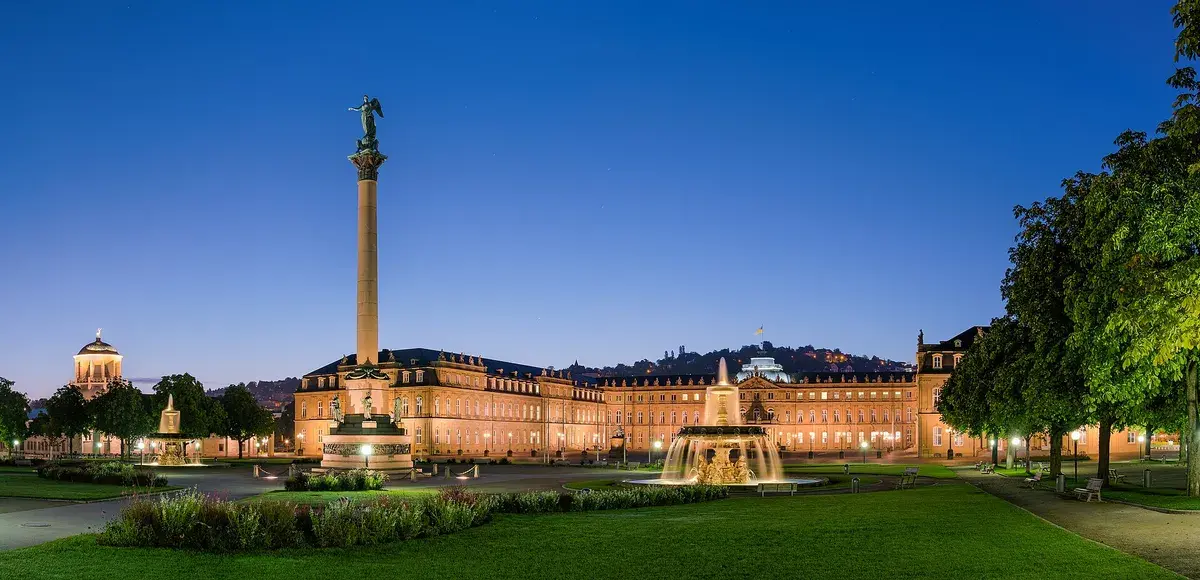
Schlossplatz 4. This is not a museum. The palace houses Baden-Württemberg's Finanzministerium and its economics ministry, and has no regular visiting hours. Occasional Sonderführungen are announced separately; none were scheduled as of late August 2026. For a walker, the point is the Ehrenhof and the facade, reachable at street level from Schlossplatz. What you see is largely a rebuild: gutted by war, the palace stood as a shell until the Landtag voted in 1957 to reconstruct rather than demolish it. Work ran 1958 to 1964, and only part of the Corps de Logis interior returned to Baroque form; the rest became government offices.
Stop 4: Hotel Silber
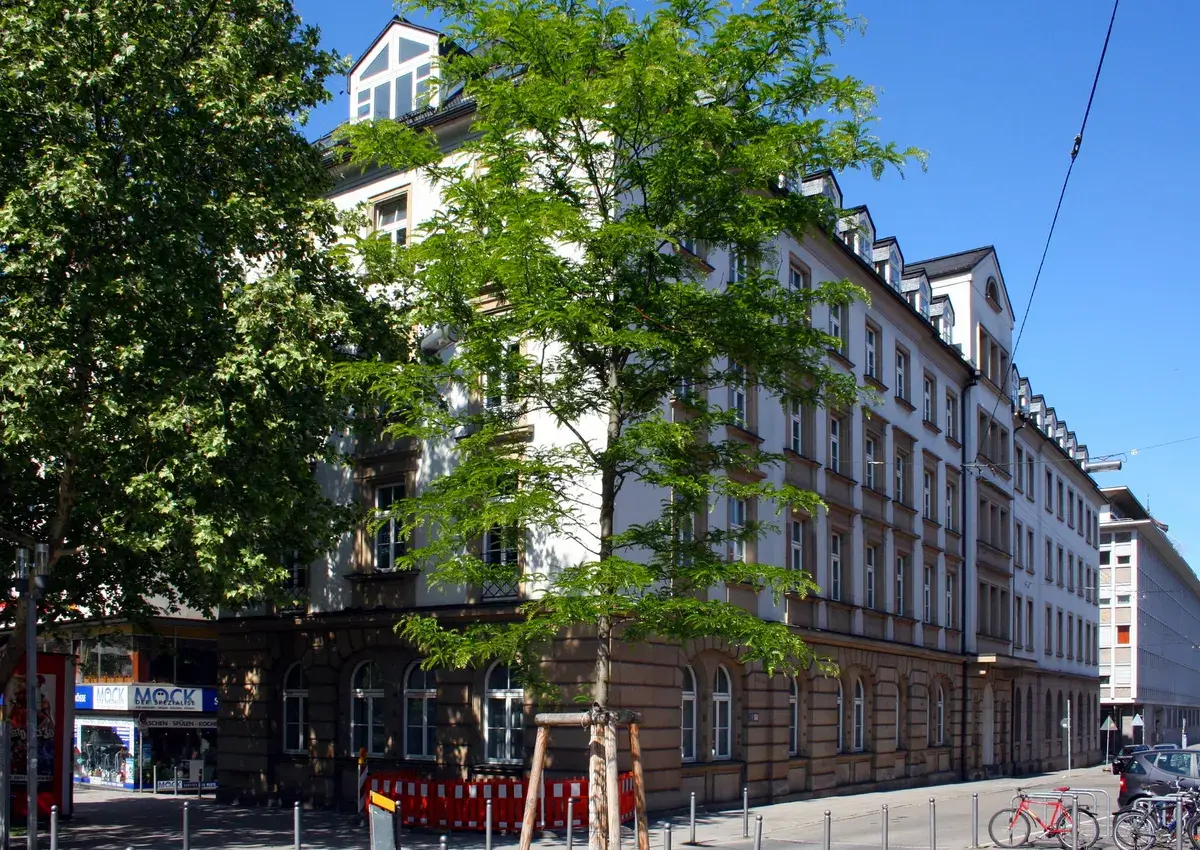
Dorotheenstraße 10. This was the Gestapo headquarters for Württemberg and Hohenzollern, used exclusively by the Gestapo from 1936 to direct surveillance, persecution of political opponents and minorities, forced labor, and deportation of Jews. Bombs destroyed the west wing in 1944; police returned after the war, used the basement cells for detention until 1948, and stayed until 1984.
It survives because citizens fought for it. A 2008 Bürgerinitiative blocked a demolition plan and grew into the Initiative Lern- und Gedenkort Hotel Silber, registered in 2012. The memorial opened December 3, 2018.
Free entry, Tuesday to Sunday 10:00 to 18:00, Wednesday to 21:00, closed Monday, and closed New Year's Day, Good Friday, Dec 24, 25, 31. Audioguide in German, English and French, €2.
Stop 5: Wilhelmspalais (StadtPalais, Museum für Stuttgart)
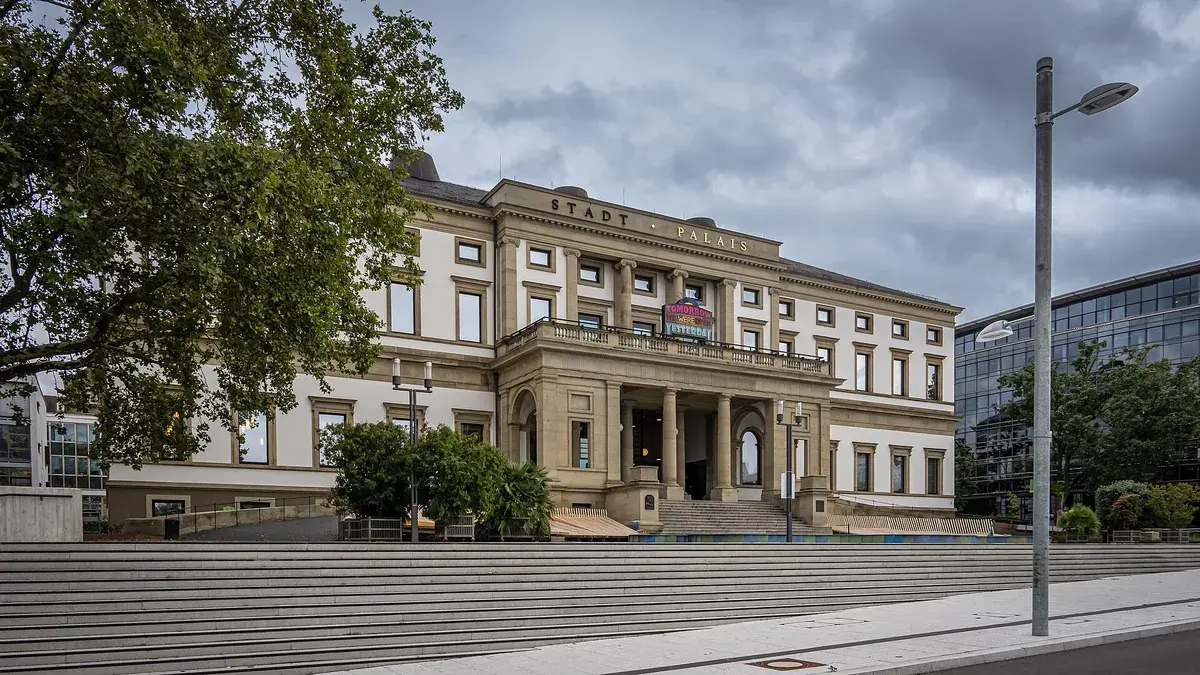
Konrad-Adenauer-Straße 2. Wilhelm II of Württemberg, not the Prussian Kaiser of the same name, lived here with his wife Charlotte from 1887. Revolutionaries entered the palace on November 9, 1918; he left Stuttgart and abdicated on November 30, living afterward as a private citizen. The building later served as the city library from 1965 to 2011, then reopened in 2018 as StadtPalais, Stuttgart's museum of city history. The permanent exhibition, Stuttgarter Stadtgeschichten, is free, Tuesday to Sunday 10:00 to 18:00, with free temporary shows Friday evenings, 18:00 to 21:00. A step-free entrance is at Urbanstraße 7.
Stop 6: Oberer Schlossgarten
Stop 6: Oberer Schlossgarten
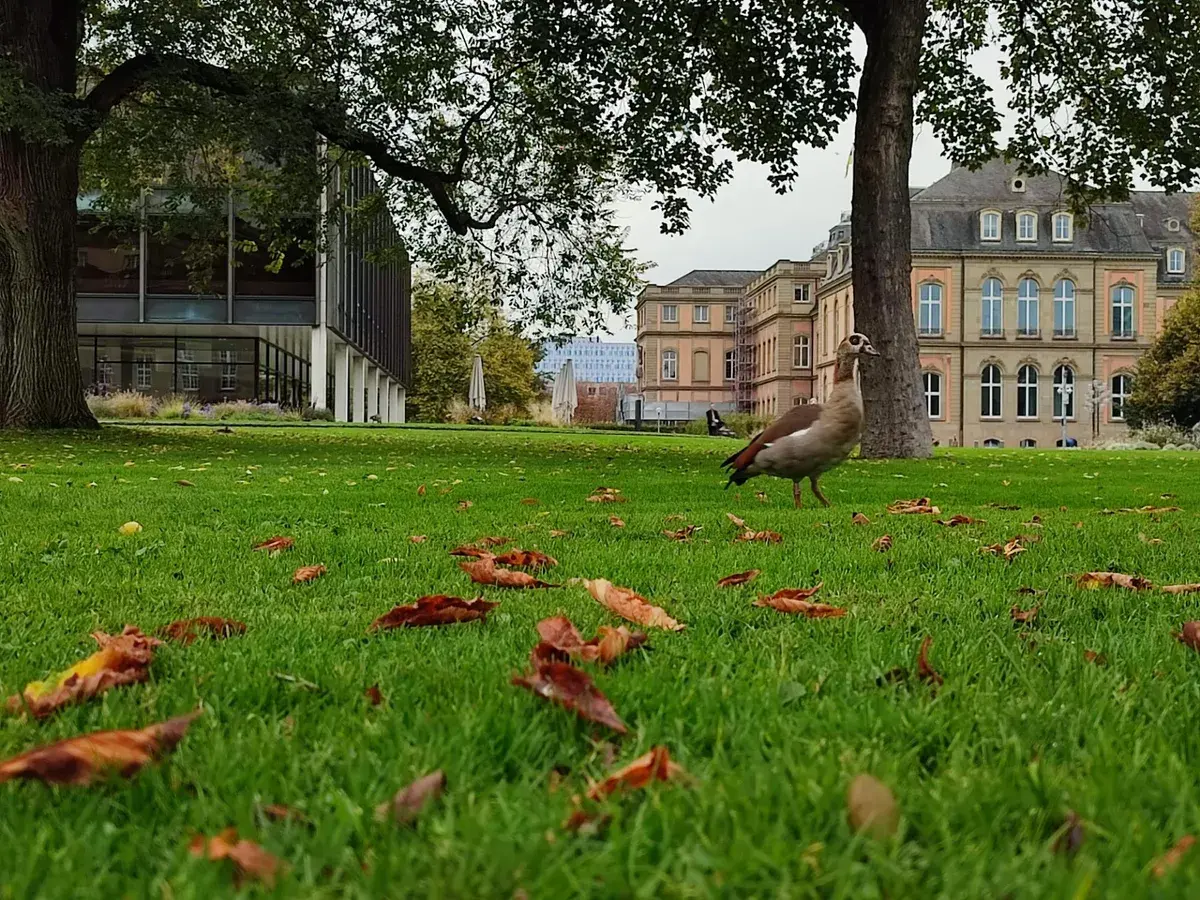
Free. No ticket, no posted hours. This is the upper stretch of Stuttgart's central park, between the Neues Schloss, the opera house and the Landtag. One correction: the tree-felling and police clashes of September 30, 2010, the Stuttgart 21 day called Schwarzer Donnerstag, happened in the Mittlerer Schlossgarten further north, not here. More than 100 people were injured, and the day later triggered a Landtag inquiry into the police operation; what it proves about political responsibility is still argued, and that argument belongs to others. In 2026, fencing and detours near the Staatsgalerie still shape footpaths at the garden's edge.
Stop 7: Stuttgart Hauptbahnhof
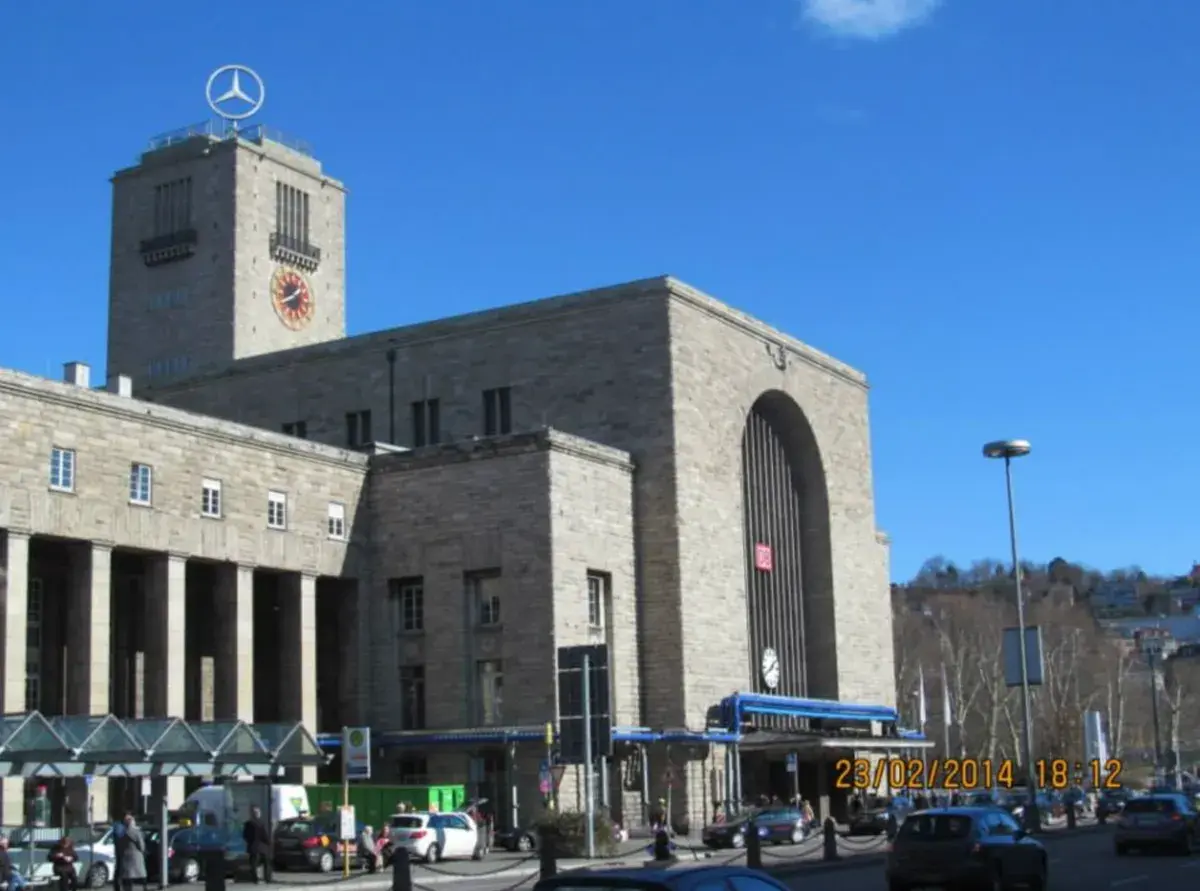
Arnulf-Klett-Platz 2. In late 2026 you meet Stuttgart 21 head-on: a live construction site around Paul Bonatz's station building, not a restored Bonatzbau. Deutsche Bahn's June 2026 plan pushes the direct walkway through the Bonatzbau to December 2027, with shops and services arriving in 2028. The Mercedes star that rotated above the tower from 1952 is currently off it, due back in 2027. The stop is still worth two minutes: it is the honest way to end the walk, and the station offers free public access, DB information around the clock, and coin-operated lockers, small €3, large €5.
Tickets and practicalities
Getting there: the Landesmuseum puts the walk from Hauptbahnhof to Schlossplatz at about 10 minutes; budget 12 to 15 minutes in 2026, given the station's detours.
- Best time to start: Tuesday to Friday from 11:00, when the Landesmuseum, Hotel Silber and StadtPalais are all open. Monday closes the Landesmuseum and Hotel Silber.
- Going inside: add 20 to 30 minutes per museum, or 90 to 110 minutes total with a proper Hotel Silber visit.
- Avoid November 25 to December 23, 2026 if you want to hold to the hour: the Weihnachtsmarkt spreads across Schillerplatz and the Altes Schloss forecourt.
- Terrain: flat. The obstacles are uneven cobblestones near the Altes Schloss and construction detours near the Staatsgalerie and the station.
- Main crossing: Hotel Silber to StadtPalais crosses Charlottenplatz and the B14, a major road; use the signaled crossings.
- Luggage lockers at the Hauptbahnhof: coin-operated, small €3, large €5, available around the clock.
Frequently asked questions
Is one hour really enough for this walk? In the strictest sense, yes, if you skip every interior and do not linger. A more honest number is 65 to 70 minutes, once you account for reading Schiller's plinth and the station's current detours.
Can you go inside Neues Schloss? No, not on a normal visit. It is a working government building with no public visiting hours. The operator announces occasional Sonderführungen separately, and none were scheduled as of August 2026.
Do I need the Ciceru app to walk this route? No. Everything above is enough to walk it from your phone. The same seven stops also run as a self-guided tour inside the app, with the story and a quiz at each stop, plus the free 500 MB eSIM.
Before you go
Seven stops, about 1.9 km, a bit over an hour, ending at a station still rebuilding itself.
Walk it as written and Hotel Silber gets the space its history requires, without turning the rest of central Stuttgart into an afterthought. If you have longer, the Stiftskirche and the Stuttgarter Markthalle sit close enough to this route to add for free, and the Staatsgalerie is worth a separate afternoon of its own.