The food lover’s guide to authentic paella in Barcelona (updated for 2025–2026)
Most paella in Barcelona is bad. Here’s where to find the real thing.
The 10 seconds summary
Barcelona is full of pans of yellow rice designed for tourists. Real paella here is thinner, darker, deeply savoury, cooked in stock that took hours to build, and finished with a bottom layer that crackles into socarrat. And it rarely costs €12. This guide gives you the truth: the genuine rice traditions found in Barcelona today, the restaurants that respect them, and the traps to avoid.


The truth about paella in Barcelona
Barcelona is not Valencia, and most paella cooked in the city isn’t paella at all. Many restaurants rely on shortcuts: frozen seafood, pre-cooked rice, artificial colouring, or mass-produced stock. But the city has a serious rice culture rooted in:
- Catalonia’s own arrossos tradition
- Migration from Valencia
- The seafood of Barceloneta
- Modern chefs elevating rice to tasting-menu level
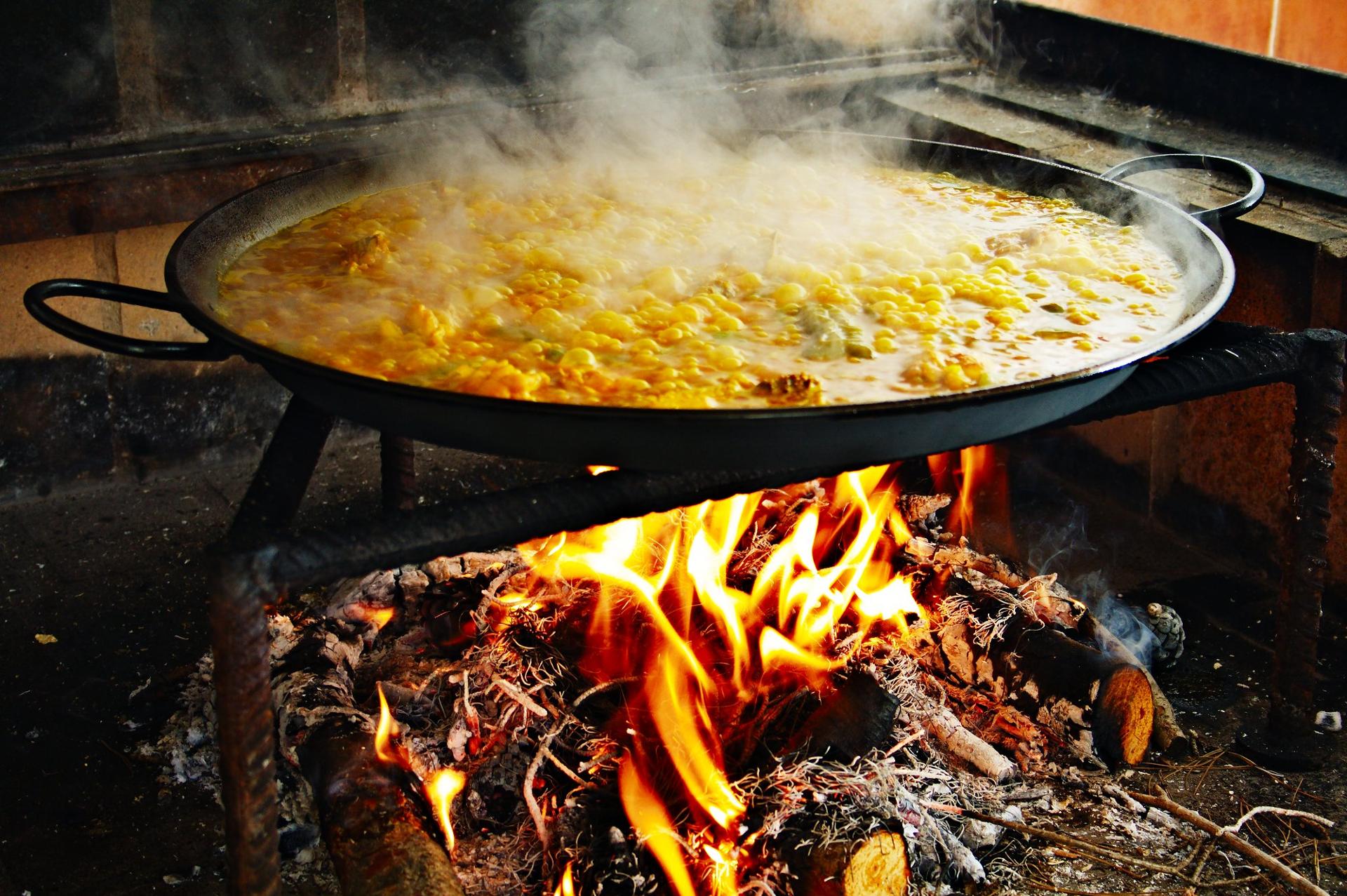
According to paella experts, the non-negotiables are clear:
➜ a thin layer of rice, never mound-like➜ real fumet or caldo cooked from fish bones or chicken
➜ ingredients cooked separately, not all dumped in the pan
➜ socarrat, the toasted bottom crust that forms naturally
If a restaurant can’t meet these basics, it’s not worth your time or your stomach.
The five essential paella styles in Barcelona
Barcelona doesn’t have “one” paella tradition — it has five, each worth discovering. This structure keeps the list short but lets you choose depending on mood and neighbourhood.
Barceloneta seafood institutions
This is where Barcelona’s rice identity really lives: by the water, powered by fresh seafood, long traditions, and pre-tourism recipes.
La Mar Salada (Barceloneta)
Family-run, technique-driven, and famous for arròs de peix and seasonal seafood. Their broths are slow-built and deeply aromatic. (€20–€28)
Cheriff (Barceloneta)
A 1950s tavern serving huge pans of lobster rice and classic seafood paella. Not pretty, not modern — just correct. (€18–€24)
➜ When to choose this style: When you want the closest thing Barcelona has to “heritage rice.”

Modern creative paella (chefs rewriting the rules)
These places keep the pan but bend the tradition — using tasting-menu techniques, seasonal ingredients, and bold flavours.
CruiX (Eixample)
Playful, inventive, and still respectful of rice fundamentals. Expect crunchy textures, emulsions, and unexpected toppings. (€22–€30)
Cadaqués (Born)
Wood-fired rice cooked in heavy casseroles, smoky and deeply Catalan. Inspired by the Empordà coastline. (€20–€27)
➜ When to choose this style: When you want creativity without sacrificing the soul of the dish.
Market-to-table Catalan rice
These restaurants rely heavily on fresh market produce and Catalan broths, resulting in lighter, more aromatic paellas.
Casa Amàlia (next to Mercat de la Concepció)
A paella house grounded in market ingredients. Their arròs de calamar and vegetable-forward rices stand out. (€17–€23)
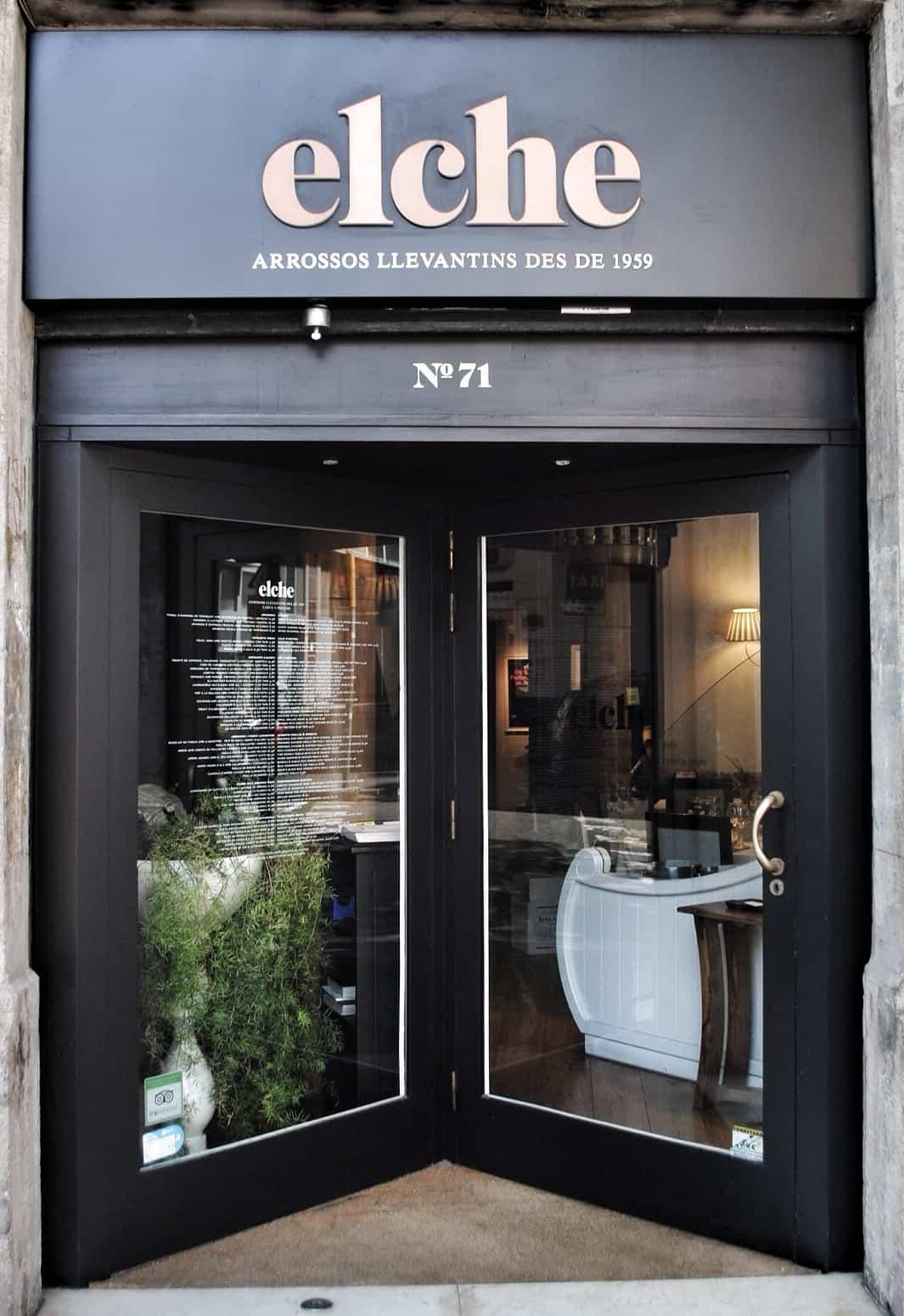
Elche (Poble Sec)
A classic of Barcelona rice-making since 1959. Famous for arròs negre and Valencian-style paella. (€18–€25)
➜ When to choose this style: If you want classic paella executed with Catalan restraint and precision.
Old-school Valencian technique in Barcelona
The closest thing you can get to Valencian authenticity without getting on a train.
L’Arrosseria Xàtiva (Gràcia / Les Corts)
Highly respected in rice circles for their stock and cooking technique. They serve dozens of varieties — seafood, mountain rice, vegetarian, and proper Valencian paella. (€19–€26)
El Noi d’Alcoi (Sarrià)
A compact, unpretentious spot run by Valencians, with faithful traditional recipes and generous portions. (€18–€24)
➜ When to choose this style: When you want the most “by-the-book” paella in Barcelona.

The neighbourhood gem
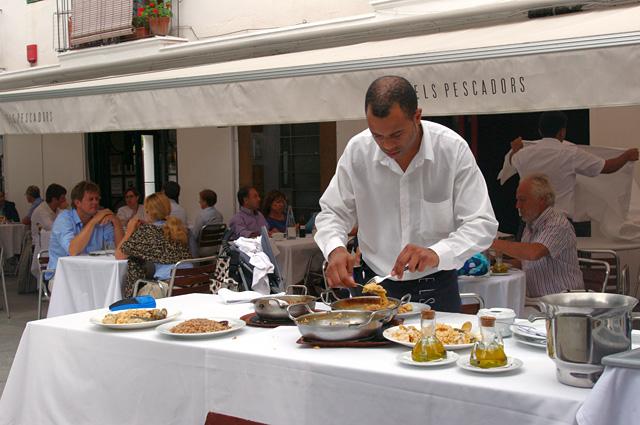
Els Pescadors (Poblenou)
In a quiet fisherman’s square, this restaurant serves some of the city’s best cazuela-style rices: brothy, aromatic, and deeply rooted in Catalan coastal cooking. (€20–€28)
➜ When to choose this style: When you want an atmospheric meal in one of Barcelona’s most charming old squares.
How to order and eat paella like a local
Most visitors unknowingly sabotage their own meal. Here’s what locals (and serious chefs) actually do:
➜ Order paella at lunch, never dinner
Proper rice takes time; most good kitchens only make it at midday.
➜ Share one pan for the table
Rice is cooked per pan, not per person. Individual portions are a red flag.
➜ Respect the thin layer
Authentic paella is never thick. If it looks like risotto, it's wrong.
➜ Listen for the bottom crackle
The sound of socarrat forming is the sign you’ve found a serious kitchen.
➜ Don’t mix seafood shells into the rice
Valencian and Catalan paella traditions keep the rice clean; garnish sits on top.
Tourist traps: the red flags to avoid
Based on the research, these are the most reliable indicators of bad paella in Barcelona:
🚫 A host calling you in from the street
Good restaurants never do this.
🚫 Paella in under 20 minutes
Real paella takes 25–45 minutes.
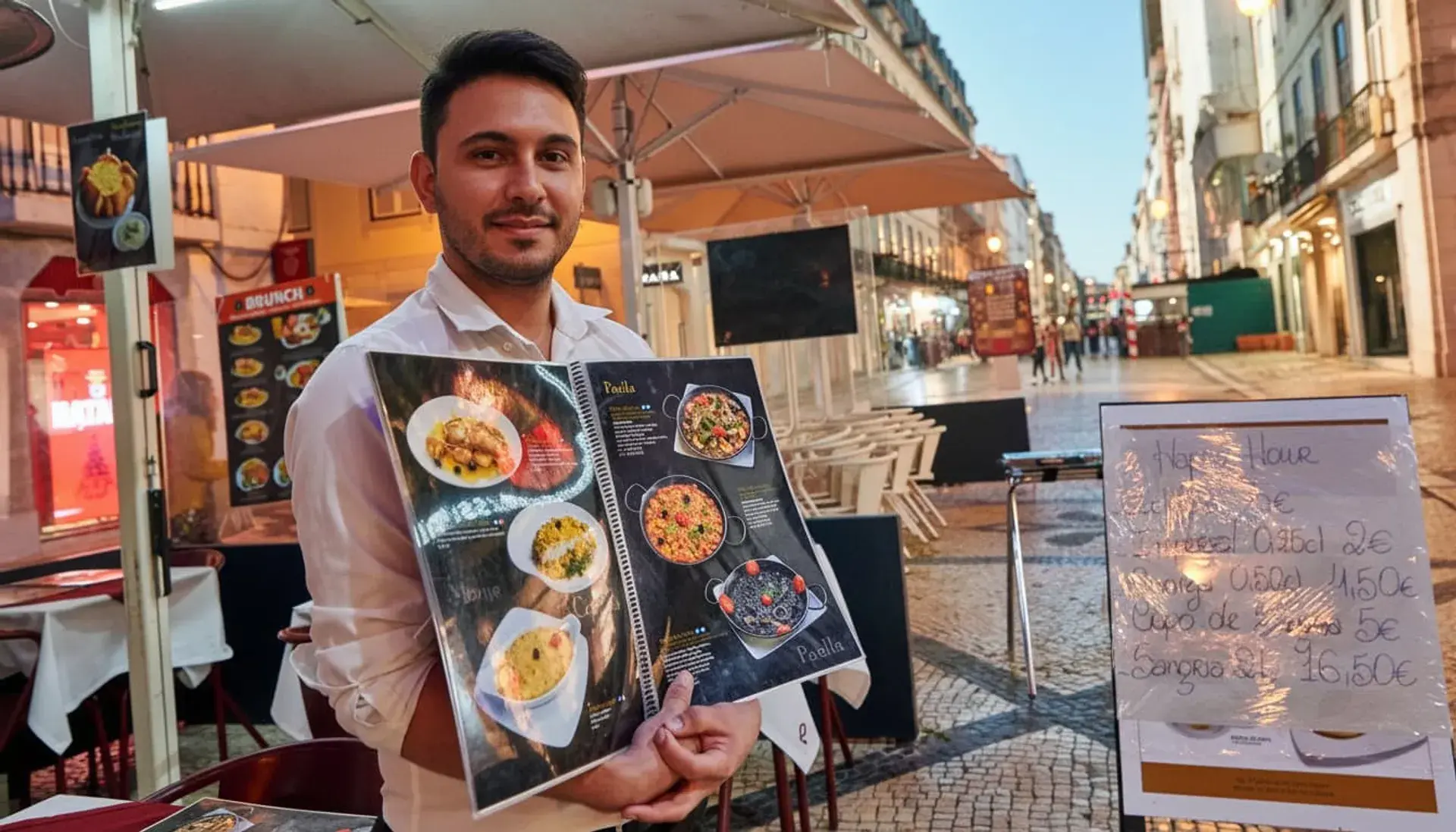
🚫 Paella pictures on boards outside
Especially around La Rambla, Plaça Reial, Marina Port Vell, and parts of Barceloneta — tourist zones notorious for pre-frozen rice.
🚫 “Mixed paella” with chorizo
A British invention, not Spanish. Chorizo should never appear in Barcelona paella.
🚫 Giant pans displayed outdoors
Often not edible, used purely for decoration.
If you see two or more of these signs: abort mission.
Solo diners: where to go if you're eating alone
Barcelona’s best paella spots are built for groups — but three restaurants welcome solo eaters comfortably:
- Casa Amàlia — friendly service, half-pans available certain days.
- CruiX — bar seating, tapas + rice make a perfect solo combo.
- Xàtiva (Les Corts) — staff are used to business travellers dining alone.
Discover Barcelona’s food stories with Ciceru
If you want to go beyond the dish and understand how migration, markets, and Catalan tradition shaped Barcelona’s rice culture, our self-guided Ciceru tour ties food to the streets that invented it. Walk, listen, taste — no schedules, no groups, just the city and its stories.