Turin in One Day: A Practical City Break
Last updated: September 2026
Introduction: the honest case for Turin
Turin is a good one-day city break when you want museums, arcades, cafés, chocolate, royal history and a centre that does not require a complicated transfer from the station. It is less convincing if your ideal day is a rapid sequence of instantly recognisable exterior monuments.
The city rewards a little context. Turin was the first capital of unified Italy, and its central streets still connect Savoy residences, civic squares, parliamentary history, nineteenth-century cafés and later national institutions. The result is cumulative rather than theatrical. You understand the city by moving between Piazza San Carlo, Piazza Castello, Via Po and the covered galleries, then choosing one interior that deserves your time.
The practical case is strong. Porta Nuova sits beside the historic centre, and Turismo Torino describes the principal central sights as lying within a few kilometres. Turin's approximately 18 kilometres of arcades also make walking more forgiving in rain, sun and summer heat.

Quick answer: who should choose it?
Choose Turin if you want:
- One serious museum, followed by a walk through squares and arcades.
- A city with a clear political and royal history rather than only a monument checklist.
- Bicerin, giandujotto, tramezzini, vermouth and Piedmontese food.
- A manageable centre where you can arrive by train and start exploring on foot.
- A slower city break with real indoor alternatives for bad weather.
Choose another destination if you want:
- Six or seven major landmarks that can all be understood from outside.
- A completely spontaneous museum day with no timed reservations.
- A compact visit built around one single postcard sight.
“Underrated” is a useful question here, not an objective fact. Turin is not empty, and it is not automatically cheap. Its value depends on whether museums, architecture and café culture are what you wanted from Italy in the first place.
A useful one-day plan
Morning: arrive, orient yourself and choose one museum
If you arrive at Porta Nuova, walk through Via Roma toward Piazza San Carlo. The Museo Egizio estimates the walk from the station at 10 to 15 minutes. From Porta Susa, the same museum estimates 20 to 25 minutes, and the metro offers an easy alternative.
The broadest first-time choice is the Museo Egizio. Its current full-price ticket is €18, sold online for a timed entry, and the museum estimates an average visit of about two hours. Current hours are Monday 09:00 to 14:00, Tuesday to Friday 09:00 to 18:30, Saturday 09:00 to 20:00, and Sunday 09:00 to 18:30. Last entry is one hour before closing.
Book before you set the rest of the day. The museum says tickets are non-refundable, and late arrival can mean losing the reserved slot. Its normal cloakroom is suspended during renovation, with limited lockers available, so do not arrive with a suitcase or large trolley.
If Egyptian collections are not your priority, make one of these your morning anchor instead:
- Museo Nazionale del Risorgimento Italiano for Italian unification and political history. It costs €12 and is open Tuesday to Sunday, 10:00 to 18:00, with last admission at 17:00.
- Musei Reali for the Savoy court, armoury, chapel, galleries and gardens. The combined ticket is €15, and the visitor route is roughly 3 kilometres, so it is a substantial choice rather than a quick palace visit.
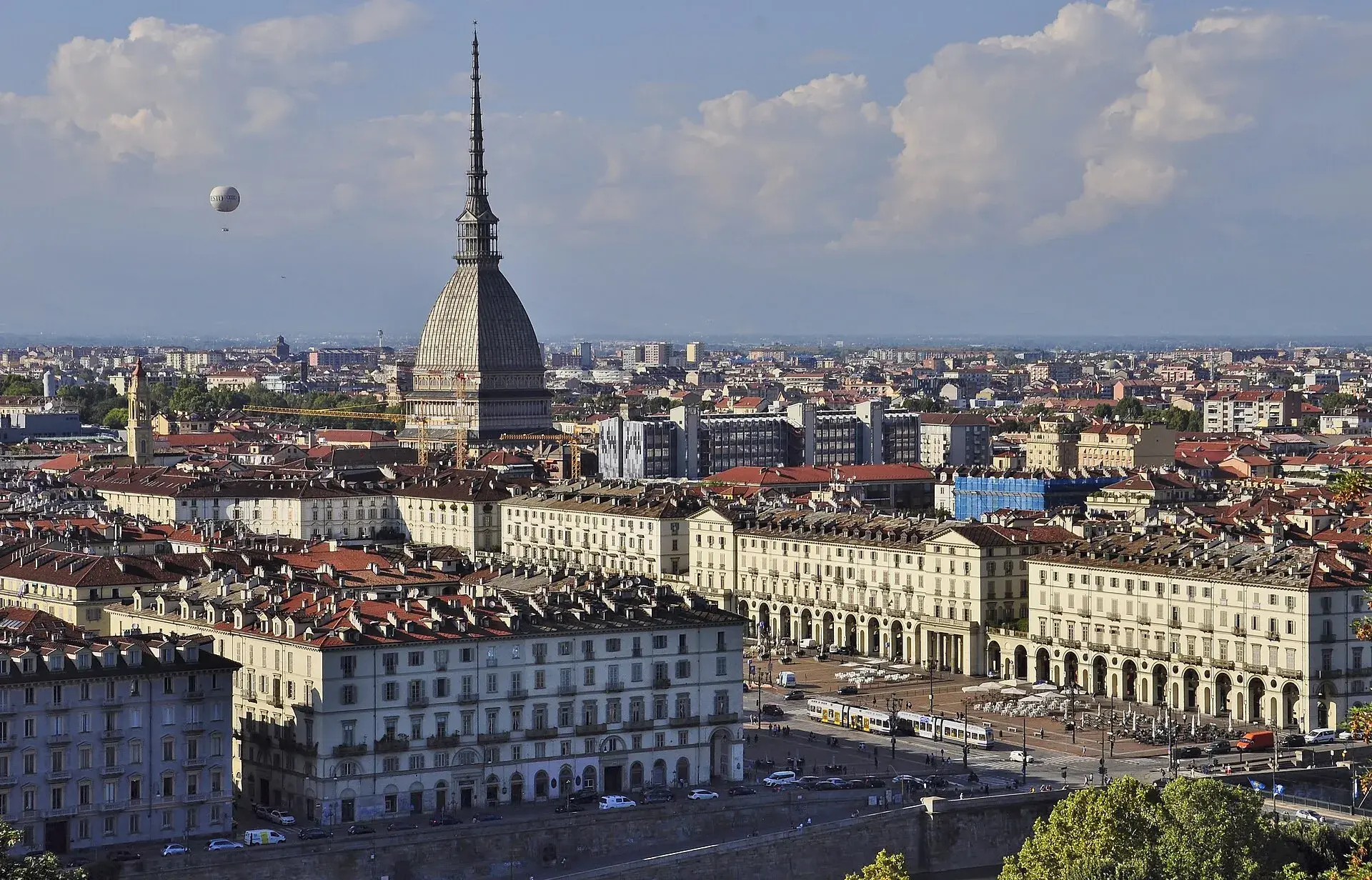
- Museo Nazionale del Cinema and the Mole Antonelliana for cinema history and the panoramic lift. The museum is €18, the lift is €9, and a combined ticket is €23. Tuesday is the regular closing day.
Do not schedule two major museums before lunch. The day will look efficient on paper and feel like a timetable in practice.
Lunch and early afternoon: make the centre do the work
Use the area between Piazza Carignano, Piazza Castello and Piazza San Carlo as the hinge of the day. It lets you combine food, civic history and covered walking without a separate transfer.
For a quick, local story, Caffè Mulassano on Piazza Castello is associated with the early history of the tramezzino. Turismo Torino's account dates the café's version of the sandwich to 1926 and notes that the tiny café occupies about 31 square metres. For a slower stop, Caffè Al Bicerin on Piazza della Consolata dates to 1763 and is identified by Turismo Torino as the birthplace of the drink.
Bicerin combines coffee, chocolate and cream. It is not simply another name for coffee, and a giandujotto is not just generic chocolate. Turismo Torino links the formal appearance of the giandujotto to 1865 and a workshop in Piazza San Carlo, using Piedmont hazelnuts with cocoa and sugar.
For a proper meal, look for agnolotti del plin or vitello tonnato. These are more useful Turin choices than a vague instruction to “try Italian food”. If your priority is a café and chocolate day, keep lunch lighter and let the local specialities appear at different points rather than ordering everything at once.
Afternoon: squares, galleries and one optional interior
Start at Piazza Castello and move east along Via Po toward Piazza Vittorio Veneto. The walk connects the political centre with the Mole area and uses the arcade network that is one of Turin's defining pieces of urban infrastructure.
If the morning was spent at the Museo Egizio, keep this block mostly outside. Add Palazzo Madama only if you want a shorter second interior. It is open Monday and Wednesday to Sunday, 10:00 to 18:00, with Tuesday closed. The current full admission is €10 and reduced admission is €8. Weekend booking is recommended.
If you chose the Cinema Museum, let it replace this architectural walk rather than competing with it. The panoramic lift has its own availability constraints, and the separate cupola stair ascent has a 2026 suspension whose resumption was not established in the retrieved operational information. Do not promise that the stairs will be open for a particular date without checking the museum.
The same rule applies to Musei Reali. It is a strong reason to visit Turin, but not a casual add-on after another full collection. The complex is closed on Wednesdays and includes areas with uneven accessibility, even though other Turin museums publish strong barrier-free provision.
Evening: aperitivo, vermouth and a final view if you still want one
Continue toward Piazza Vittorio Veneto for aperitivo. Vermouth has a specific Turin history: Turismo Torino connects the Carpano story with 1786 and a workshop near Piazza Castello. That gives the evening a local reason beyond choosing any convenient bar.
Monte dei Cappuccini can work as an optional final viewpoint if the weather, daylight and your legs cooperate. Treat it as expendable. Superga is a separate excursion, not a sensible automatic extension of a one-day central plan.
The strongest version of this day keeps four elements: one major museum, the central squares and arcades, one Turin food or café tradition, and an unhurried evening. The second museum is the first thing to remove.
Arrival, transport and weather
From Torino Airport, the official airport information gives the railway journey to Porta Susa as about 30 minutes, with a €3.70 fare and service seven days a week. The airport bus reaches Porta Susa and Porta Nuova for €7.50 one way, with a journey of roughly 40 to 45 minutes. The airport's approximate taxi reference is 30 minutes and €40, although traffic changes the result.
In the city, a current GTT ticket is €1.90 digitally or €2 on paper, valid for 100 minutes and including one metro journey. A digital daily ticket is €3.70. For the core day, walking is usually simpler than calculating a ticket for every short hop.
Turin's arcades are useful in bad weather, but they are not a guarantee of comfortable conditions. Regional climate reporting recorded exceptional heat in summer 2026, including many days above 35°C in a Turin monitoring series. On a hot day, put the major museum in the middle of the heat, carry water and keep the longest exposed walk for earlier or later.
Accessibility is venue-specific. Museo Egizio says its galleries have no architectural barriers, all floors are reachable by lift, and disabled visitors plus one companion enter free. The Risorgimento Museum also publishes full wheelchair access. Musei Reali lists specific rooms that are not wheelchair accessible. Check the individual venue before building the day around it.
Is the Torino+Piemonte Card worth it?
The current 24-hour Torino+Piemonte Card costs €29.90 and includes up to three participating museum admissions, subject to availability. The arithmetic can work: Museo Egizio at €18 plus the Cinema Museum at €18 would cost €36 separately, so the card could save €6.10.
That does not make it an automatic recommendation. Two major museums consume the main part of a one-day visit, and the Mole panoramic lift is discounted rather than fully included. Buy it for a museum-heavy day, not because a pass feels like the default tourist choice.
What not to force into one day
Drop these first:
- Monte dei Cappuccini, if the day is already full.
- A second paid museum after a serious two-hour visit.
- Superga or another peripheral excursion.
- Extra café stops after you have tried one meaningful Turin speciality.
The current Turin self-guided walking tour is a separate optional experience for readers who want more structure around Turin's central history. This guide does not reproduce its route or depend on it.
If you are staying longer to work, the Turin coworking guide answers a different question about practical work bases and should not be used as a substitute for this city-break plan.
Frequently asked questions
Is Turin worth visiting for only one day?
Yes, if you choose one major museum and keep the rest central. Porta Nuova is close to the historic centre, and the squares, arcades and cafés can fill a day without constant transport. Add a second or third day if you want both major museums and a peripheral visit.
Which museum should I choose?
Choose the Museo Egizio for a general first visit and book a timed ticket. Choose the Cinema Museum for film and the Mole, the Risorgimento Museum for Italian political history, or Musei Reali for Savoy collections. The best choice depends on your interest, not on a universal ranking.
Can I visit Turin without public transport?
The central day can be walked from Porta Nuova. One metro or bus ticket is useful if you arrive at Porta Susa or need to save energy, but the core itinerary does not require constant rides.
Is Turin cheaper than Rome or Milan?
No simple current comparison was established. Museum prices, accommodation dates, transport needs and food choices vary. Turin can deliver a strong one-day experience without paying for a long list of major entrances, but that is not proof that the whole trip is cheaper.
What is bicerin?
It is a Turin drink made with coffee, chocolate or cocoa, and cream. Historic café provenance matters here, so order it as a local tradition rather than treating it as a generic coffee variation.
Before you go
Book the museum that anchors your day, check its hours and access information, and confirm airport transport before travelling. Recheck prices, closures, temporary lift or stair restrictions and transport timetables before your 2027 trip, because those are the details most likely to change.