What to Eat in Budapest: Local Dishes and Where to Find Them
Last updated: October 2026
Intro
Order goulash as a soup, chicken paprikash with small dumplings as a proper dinner, lángos as a snack and chimney cake or a slice of Dobos torte when you want something sweet. Two things have changed since most guides were written. The Central Market Hall opens on Sundays, 10:00 to 16:00 by its operator's own hours, so "closed on Sunday" advice is out of date. And Ruszwurm, the Castle District pastry shop that sat on every cake list, closed in August 2025, with no reopening date found. Hours and the service charge below were checked in October 2026.
Ciceru's Budapest walk is a self-guided walk in the Ciceru app, with a story and a quiz question at each of its 7 stops and a free 500 MB global eSIM. Café Gerbeaud, the cake stop below, is one of them.

⚡ Quick answer
- The dish everyone gets wrong: gulyás is a soup. The thick stew is pörkölt, and paprikás is the same idea finished with sour cream
- Best single stop: the Central Market Hall, free to enter, Monday to Friday 06:00 to 18:00, Saturday 06:00 to 16:00, Sunday 10:00 to 16:00shut on public holidays
- Cake: Gerbeaud on Vörösmarty tér, 09:00 to 20:00 (to 21:00 on Friday and Saturday). A 15% service charge is added to everything
- The bill: a service charge of up to 15% is normal, should be printed on the menu, and means no extra tip
- Skip: Ruszwurm (closed in August 2025, no reopening date found) and any menu that does not show prices in forints
🍲 The dish everyone gets wrong
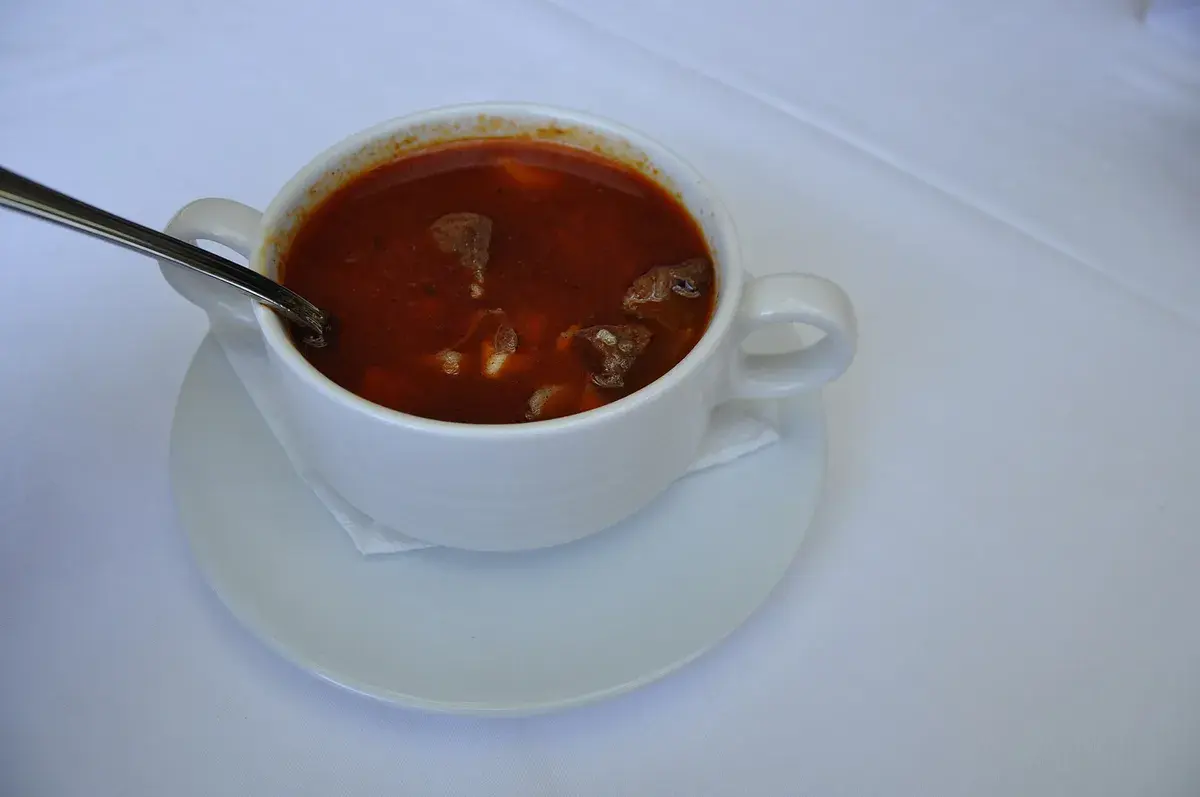
Outside Hungary, "goulash" means a thick beef stew. In Budapest, gulyásleves is a soup: beef, potato, carrot and paprika in a paprika-red broth, eaten as a starter or a light lunch. The stew has its own name, pörköltand when sour cream goes in it becomes paprikás. Ask for a goulash expecting a stew and you will get a bowl of soup, which is correct.
The dishes worth ordering once:
- 🍲 Gulyásleves: the soup, usually with bread. A fair test of any kitchen
- 🍗 Csirkepaprikás with nokedli: chicken in a creamy paprika sauce, with soft little dumplings instead of rice or pasta
- 🥞 Hortobágyi palacsinta: a savoury pancake filled with meat and covered in paprika sauce
- 🐟 Halászlé: a fiery paprika fish soup, built around river fish
- 🥬 Töltött káposzta: stuffed cabbage, a winter dish
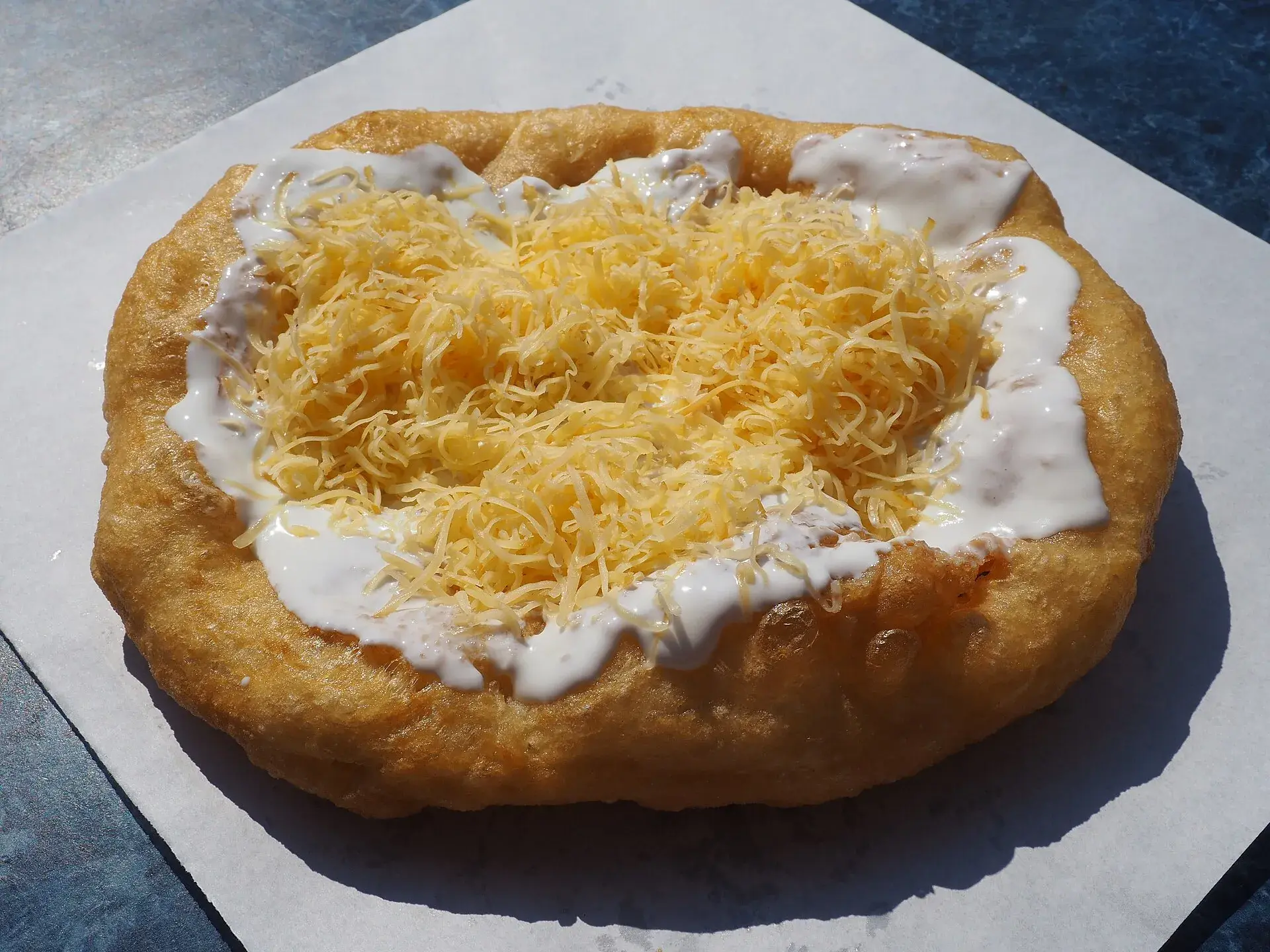
- 🫓 Lángos: deep-fried dough served hot. The classic topping is sour cream and grated cheese, with garlic if you ask
Hungarian menus sort themselves by words you can learn in a minute: leves is soup, főétel is main course, desszert is dessert. Gerbeaud's own menu uses the same headings.
🕐 Breakfast, lunch and dinner
Breakfast is light: a pastry or a sandwich, and a coffee. Hotels and cafés will do eggs and sausage, but the habit is a bakery stop.
Lunch is the main event for locals. Look for a chalkboard that says napi menüa set lunch of soup plus a main, often from a no-frills lunch canteen called an étkezde. It is where everyday Hungarian cooking, such as főzelék (a thick vegetable stew), is cheapest. Even Gerbeaud's menu has an "Üzleti Ebéd" business lunch section, so the idea runs from canteens to grand cafés. Menus change daily and prices vary by place, so read the board.
Dinner is a sit-down meal with wine. This is the meal where a service charge appears most often.
Late snack: lángos from a market stall or a street counter. Kürtőskalács, the chimney cake, is a hot spiral of dough rolled in sugar, sold at street stands. Eat it while it is warm, and take the plain sugar version first.
🏛️ Markets and standing counters
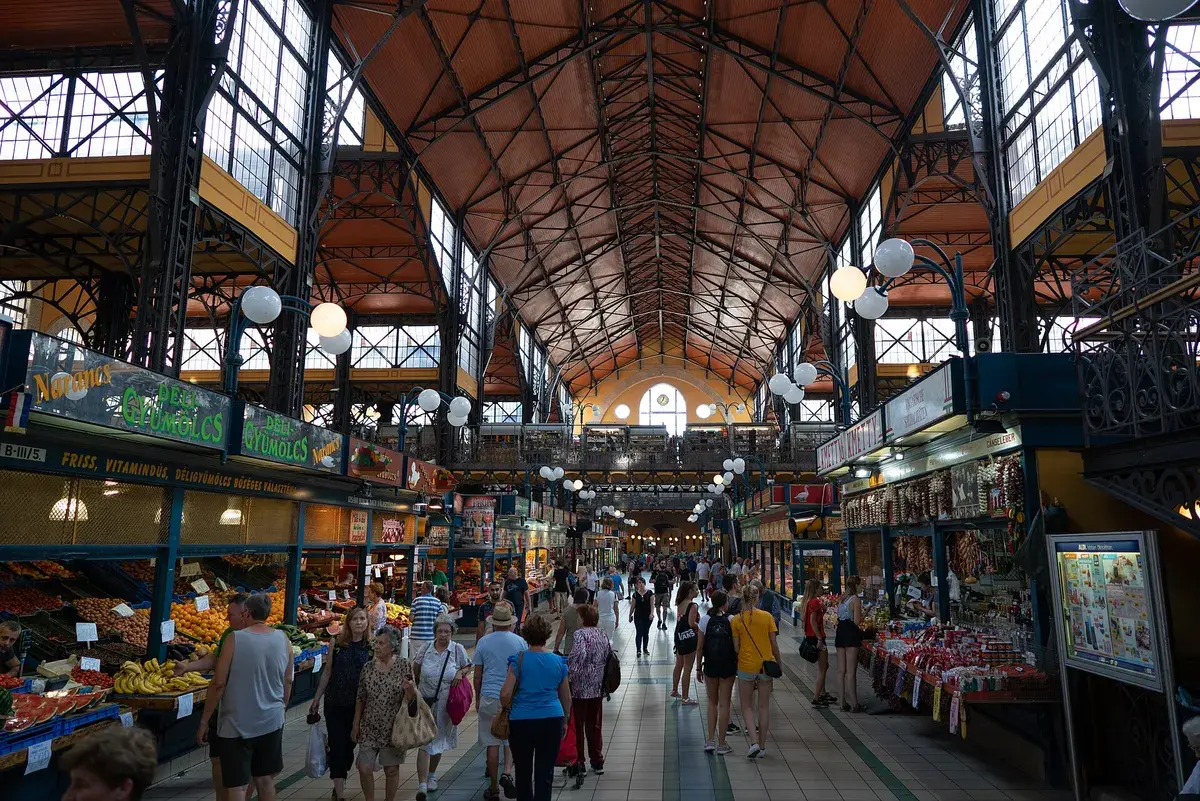
Great Market Hall (Nagycsarnok) 📍 Vámház körút 1-3, 1093 🕐 Monday to Friday 06:00 to 18:00, Saturday 06:00 to 16:00, Sunday 10:00 to 16:00. Closed on official holidays and public days off. Entry is free, and the hall's own page counts over 200 shops across several levels.
- 🥬 Ground floor: produce, meat, spices, paprika and sausages. Locals shop here
- 🐟 Basement: fishmongers and pickles
- 🍽️ Upper level: stalls selling lángos and plated Hungarian food. It is aimed at visitors, so read the price board before you order and compare two stalls
The souvenir rows by the main entrance cost more than the plainer aisles, so buy paprika and salami from the quieter stalls. Some printed and online guides still list the hall as closed on Sundays. The market's own pages show 10:00 to 16:00.
Rákóczi tér market hall 📍 Rákóczi tér, Józsefváros 🕐 Monday 06:00 to 16:00, Tuesday to Friday 06:00 to 18:00, Saturday 06:00 to 13:00. Closed on Sunday and on official holidays. It is a neighbourhood market with far fewer visitors than the Nagycsarnok.
For prices of a typical day's food, see Budapest on a Budget.
🍰 Cake and cafés
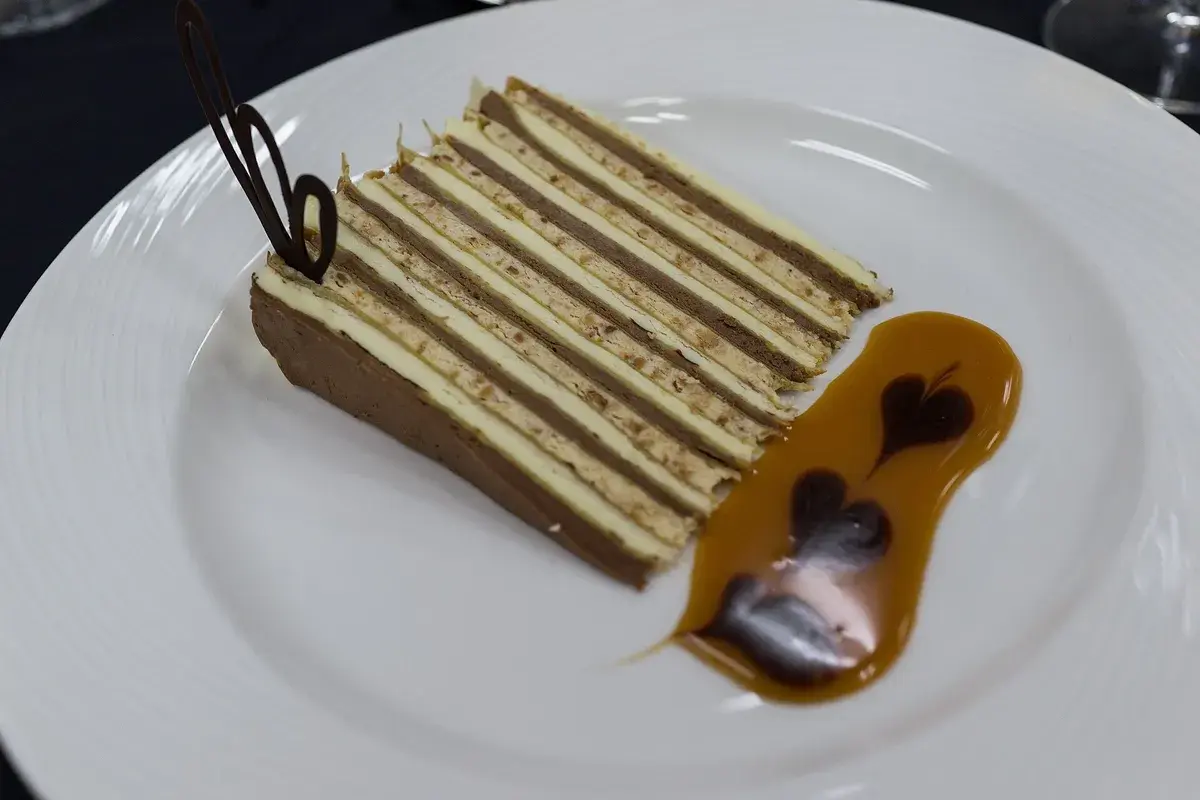
Budapest does cake properly, and Dobos torte is the one to try: thin sponge layers, chocolate buttercream and a hard caramel top.
Café Gerbeaud 📍 Vörösmarty tér 7-8, 1051 🕐 09:00 to 20:00 Monday to Thursday and Sunday, 09:00 to 21:00 Friday and Saturday. Open since 1858. There is no table booking, so it is first come, first served. Menu prices are in forints and include VAT, and a 15% service charge is added to all food and drink. It is the big, formal, high-ceilinged option. Come early, and do not expect a quiet corner at 15:00.
Ruszwurm 📍 Szentháromság utca 7, Castle District. Operating since 1827, but not at the moment. Hungarian news reports say the pastry shop was closed on 6 August 2025 after a long rent dispute with the district council, which owns the premises. The latest report found, from January 2026, said no new operator had been chosen and no reopening date had been announced. Nothing newer could be confirmed, so if you see it on a list of Budapest's best cake shops, check before you climb the hill for it.
🧾 Spotting tourist menus and reading the bill
The places that depend on passing trade, such as the Váci utca pedestrian street and the Danube-side terraces, are where to slow down and read.
- 🚩 No prices, or prices that stop at the starter. A forint price on every line, including drinks, is the minimum
- 🚩 A menu in six languages with photos of every dish. Locals' places are usually shorter and handwritten
- 🚩 Someone at the door inviting you in. Good restaurants rarely need it
- 💶 Service charge: Hungarian press reported in November 2024 that the economy ministry set the ceiling at 15% for private diners, with the rate shown on the menu. Applying it is optional for the restaurant, and many do. Before 2024 many places charged 10 to 12%, and a number have moved to 13 to 15%
- 🧮 If the bill shows a service charge, you do not need to tip on top. If it does not, most guides say 10 to 15% is normal for table service
- 🔍 Check each line. Ask the price of any drink not on the menu before it arrives
📍 Three neighbourhoods to eat in
- Erzsébetváros, the old Jewish Quarter (District VII): the most restaurants in the smallest space, from lunch canteens to wine bars around Klauzál tér. It is also where the ruin bars cluster, so choose a place that serves food at lunchtime
- Józsefváros around Rákóczi tér (District VIII): the market hall above, a daily-life feel, and prices a step below the centre
- Bartók Béla út, Buda side (District XI): a long street of cafés and restaurants running from Gellért tér towards Móricz Zsigmond körtér, mostly aimed at residents
☕ Coffee and what to drink
In a Budapest café, kávé is an espresso. A longer one is a hosszú kávé and coffee with milk is tejeskávé. In sit-down cafés such as Gerbeaud, a waiter brings the order and the service charge applies, so the price on the menu is not the final price.
For wine, Tokaji is the famous sweet one. The Tokaj wine region is a UNESCO World Heritage cultural landscape (inscribed 2002) in the north-east of the country. Egri Bikavér is the red blend from Eger. Pálinka is fruit brandy, usually served as a small drink after a meal, and Unicum is a bitter herbal liqueur you will either love or leave. Wine and spirits are priced per measure on most menus, so check the size.
🚫 What to skip
- Ruszwurm: closed at the last report, see above
- Menus that hide prices or a service lineanywhere
- Eating on the first sunny terrace you reach. Walk two streets back from the river or the main pedestrian street
- Buying paprika from the first stall at the market hall. Compare three
❓ FAQ
What is the national dish of Hungary?
Goulash, in the Hungarian sense: gulyásleves, a paprika-red beef soup. The thick stew you may know as goulash is called pörkölt.
Is the Central Market Hall open on Sunday?
Yes. The hall's own pages list Sunday 10:00 to 16:00, Saturday 06:00 to 16:00, and Monday to Friday 06:00 to 18:00. It is closed on official holidays.
Is a tip included in the bill in Budapest?
If the bill has a service charge (szervizdíj), usually 10 to 15%, you do not need to add a tip. Restaurants are meant to show the rate on the menu, and the reported ceiling is 15% for private diners.
✅ Before you go
Check the Central Market Hall's hours if you are going near a public holiday, and see whether any café you plan around is still operating. For the wider picture, start with Budapest Explained. To work off lunch, Ciceru's €7, 4 km Budapest walk takes about 3 hours and includes Café Gerbeaud as one of its quiz stops. See the Budapest page for the full tour listing, Getting Around Budapest for tickets and luggage, and Free Things to Do in Budapest for what costs nothing.