Doppelwendeltreppe: Graz's Gothic Double Spiral Staircase
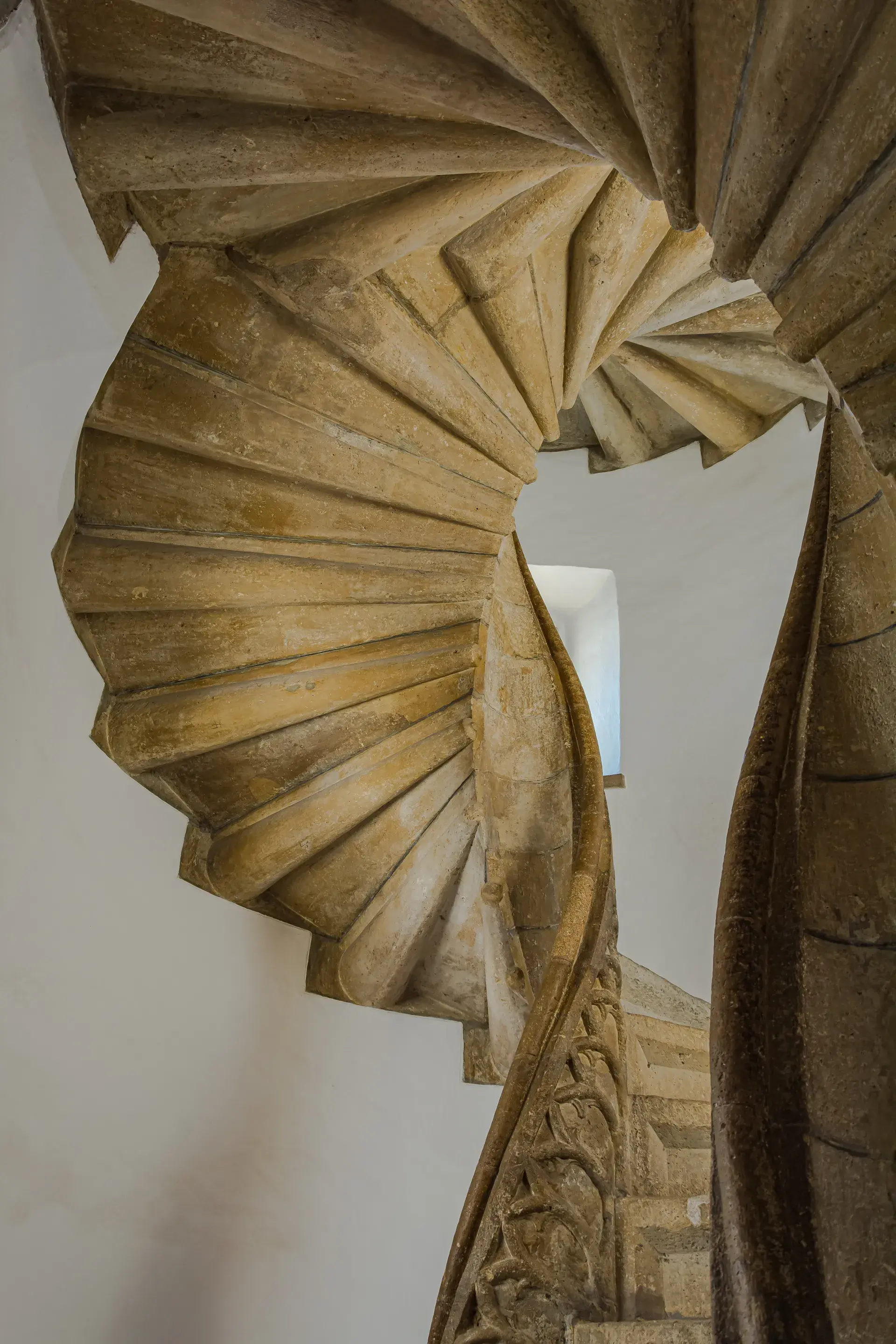
Located within the historic Graz Castle, the Doppelwendeltreppe is a celebrated architectural jewel. Officially known as a 'Zwillingswendeltreppe' (twin spiral staircase), this structure is one of the most significant examples of its kind in Central Europe, representing a high point of Late Gothic design.
A Masterpiece of Late Gothic Architecture
Constructed between 1499 and 1500, the staircase is a marvel of medieval engineering. Its sophisticated design features two opposing flights of stairs that merge on each floor, only to separate again as they ascend. This complex geometry, built with hollow spindles, showcases the experimental and artistic spirit at the transition from the Middle Ages to the Renaissance. The builder remains an anonymous master of a medieval stonemasons' guild, leaving behind a legacy of unparalleled craftsmanship.
Imperial Origins and History
The Doppelwendeltreppe was commissioned during the reign of Emperor Maximilian I, who significantly expanded the Graz Castle complex. The castle itself was initiated by his father, Emperor Frederick III, in 1438. Evidence of Frederick III's influence can be found in the enigmatic 'A.E.I.O.U.' inscription carved into some of the castle's facades. Adding to the site's layered history, two Roman tombstones from the ancient city of Flavia Solva were incorporated into the staircase's facades in 1506.
The "Stairs of Reconciliation"
Beyond its architectural acclaim, the Doppelwendeltreppe holds a special place in local culture. It is affectionately known by locals as the 'Versöhnungsstiege' (Stairs of Reconciliation) or 'Busserlstiege' (Kissing Stairs). These nicknames stem from a romantic tradition where couples walk up the separate staircases and reunite at the landings, a gesture symbolizing that kindred souls will always find their way back to each other.
Visiting the Doppelwendeltreppe
The staircase is situated inside the Graz Castle, which now serves as the seat of the Styrian State Government. Despite its official function, the Doppelwendeltreppe is freely accessible to the public daily. It is a popular destination for tourists, architecture enthusiasts, and photographers. Even during ongoing revitalization work in the castle complex, the staircase remains continuously open for visitors to experience.
FAQ
Is the Doppelwendeltreppe free to visit?
Yes, admission to the Doppelwendeltreppe is free. It is publicly accessible within the Graz Castle.
What are the opening hours for the Doppelwendeltreppe?
The staircase is open to the public daily from 7:30 AM to 8:00 PM.
Why is the Doppelwendeltreppe called the 'Kissing Stairs'?
It earned the nickname 'Busserlstiege' (Kissing Stairs) from a local tradition where couples ascend the separate flights of stairs and reunite at the top, symbolizing reconciliation and lasting love.
Who built the Doppelwendeltreppe?
The staircase was commissioned by Emperor Maximilian I around 1499-1500. The actual builder was an anonymous master stonemason from a medieval guild.