Hauptplatz Graz: Historic Heart of the City
Graz's Hauptplatz, the central square and undisputed heart of the city's UNESCO World Heritage Old Town, has been a focal point of urban life for centuries. Established around 1160 by Herzog Otakar III, it began as a central marketplace and has evolved through history, reflecting the city's changing fortunes and identities.
A Storied History
Originally designated 'auf dem Platz' (on the square), the Hauptplatz has a history stretching back to at least the 10th century, according to archaeological findings of early wooden structures. It served as the economic and political core of Graz, especially after the city became a Habsburg residence in 1379. The square's trapezoidal shape was nearly halved around 1550 with the construction of the Rathaus.
Its past is not without a dark side; until the late 18th century, it was a site for public punishments and executions. Higher-ranking individuals were sometimes given the 'privilege' of being decapitated inside the Rathaus itself. The square's name has changed over time, from 'Hauptwachplatz' in the 19th century to the grim 'Adolf-Hitler-Platz' during World War II. Russian soldiers occupied the square on May 9, 1945, marking the end of the war in Graz.
Architectural Grandeur
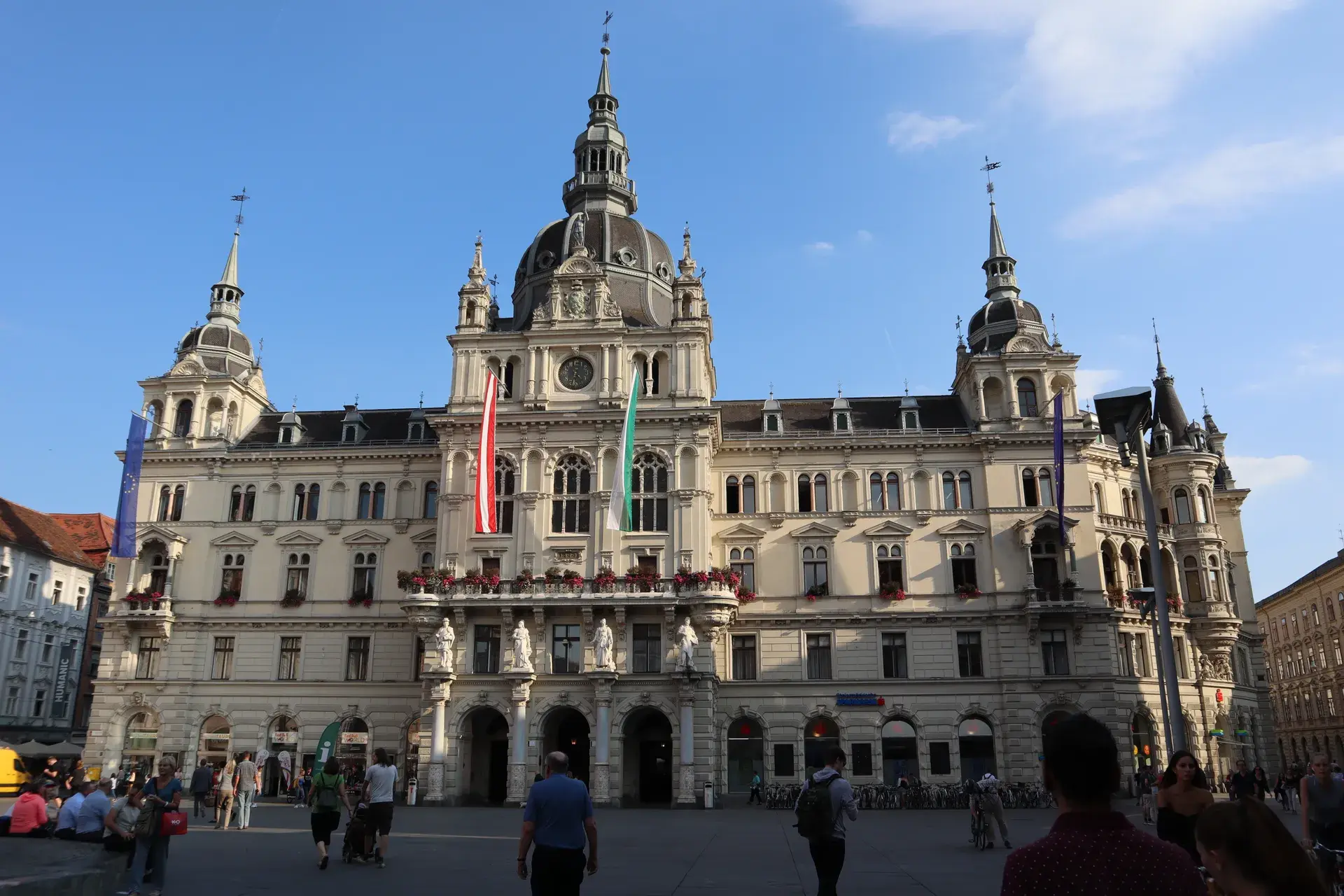
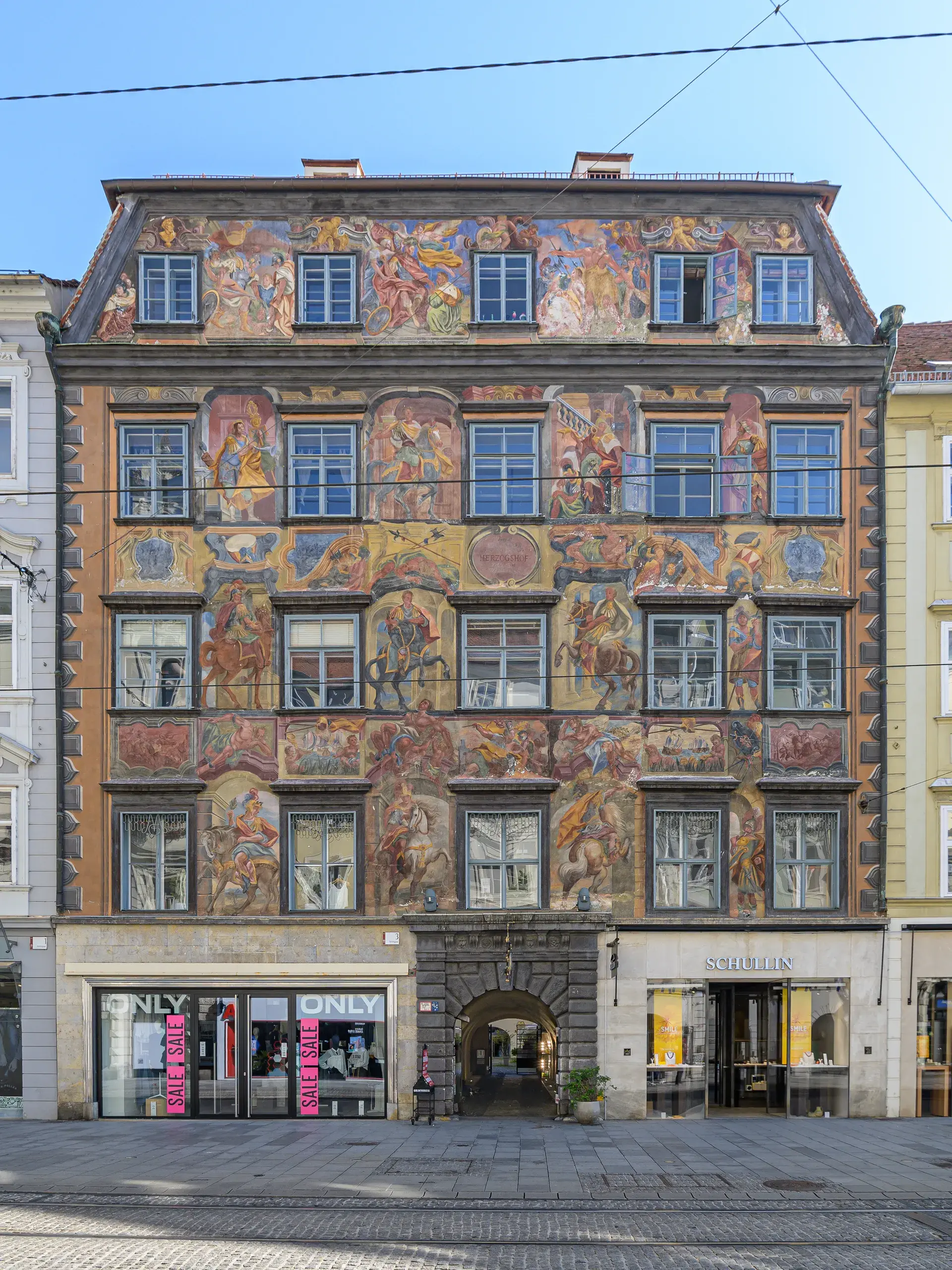
The southern side of the Hauptplatz is dominated by the impressive Graz Rathaus (City Hall). While parts of the building date to the 16th century, it was largely rebuilt and expanded between 1887 and 1893 by architects Wielemans and Reuter in a grand Late Historicist or Neobaroque style. The buildings framing the rest of the square showcase a diverse range of architectural styles, from medieval and late Gothic to Baroque, Biedermeier, and Late Historicist, creating a rich visual tapestry of the city's development.
The Archduke Johann Fountain
At the center of the square stands the Erzherzog-Johann-Brunnen (Archduke Johann Fountain). Unveiled on September 8, 1878, in the presence of Emperor Franz Joseph I, the monument honors Archduke Johann (1782-1859). Known as the 'Styrian Prince,' his initiatives greatly influenced the region's development. The fountain, designed by Franz Pönninger, features a bronze statue of the Archduke surrounded by four allegorical female figures representing the main rivers of Styria: the Mur, Enns, Drau, and Sann.
The Heart of Modern Graz
Today, the Hauptplatz remains a vibrant hub of activity. It serves as a crucial intersection for the city's tram lines, making it a popular meeting point for locals. The square continues its centuries-old tradition as a marketplace, with stalls offering local food, specialties, and souvenirs. It is also a primary venue for city events, including the annual Christmas market, street art festivals, and political gatherings. Surrounded by cafes, shops, and restaurants, the Hauptplatz is a lively center for commerce and social life.
FAQ
When was the Hauptplatz in Graz established?
The Hauptplatz was established as a central marketplace around 1160 by Herzog Otakar III, though archaeological evidence suggests activity on the site as early as the 10th century.
What is the statue in the center of Graz's Hauptplatz?
The statue is the centerpiece of the Erzherzog-Johann-Brunnen (Archduke Johann Fountain). It depicts Archduke Johann, the 'Styrian Prince,' and is surrounded by allegorical figures of the four Styrian rivers.
What is the large building on the south side of the Hauptplatz?
The dominant building on the southern side of the square is the Graz Rathaus (City Hall), which was largely rebuilt in a Late Historicist style between 1887 and 1893.
Has the Hauptplatz always had the same name?
No, its name has changed several times. It was known as 'auf dem Platz', 'Hauptwachplatz', and briefly during World War II, 'Adolf-Hitler-Platz'. In 2003, it was also temporarily renamed 'Am Johann' for five months as part of a cultural project.