Franziskanerplatz: Graz's Historic Square & Monastery
Franziskanerplatz is a picturesque square in the heart of Graz's historic city center, a designated UNESCO World Heritage site. The square is anchored by the Franciscan Monastery and Church, the oldest monastic institution in the city, offering a blend of architectural history, cultural significance, and modern-day charm with its lively cafes and shops.
A History Spanning Centuries
The Franciscan Monastery was founded in 1239 by the Minorites. Its long history is woven into the fabric of Graz. During the 16th century, the surrounding area was known as the 'Kälbernes Viertel' or 'calf district.' This name originated from the local practice of butchers herding cattle past the monastery walls to slaughterhouses on the Mur river, a situation that led to documented complaints from the monks about the noise and stench.
Architectural Marvels and Military Might
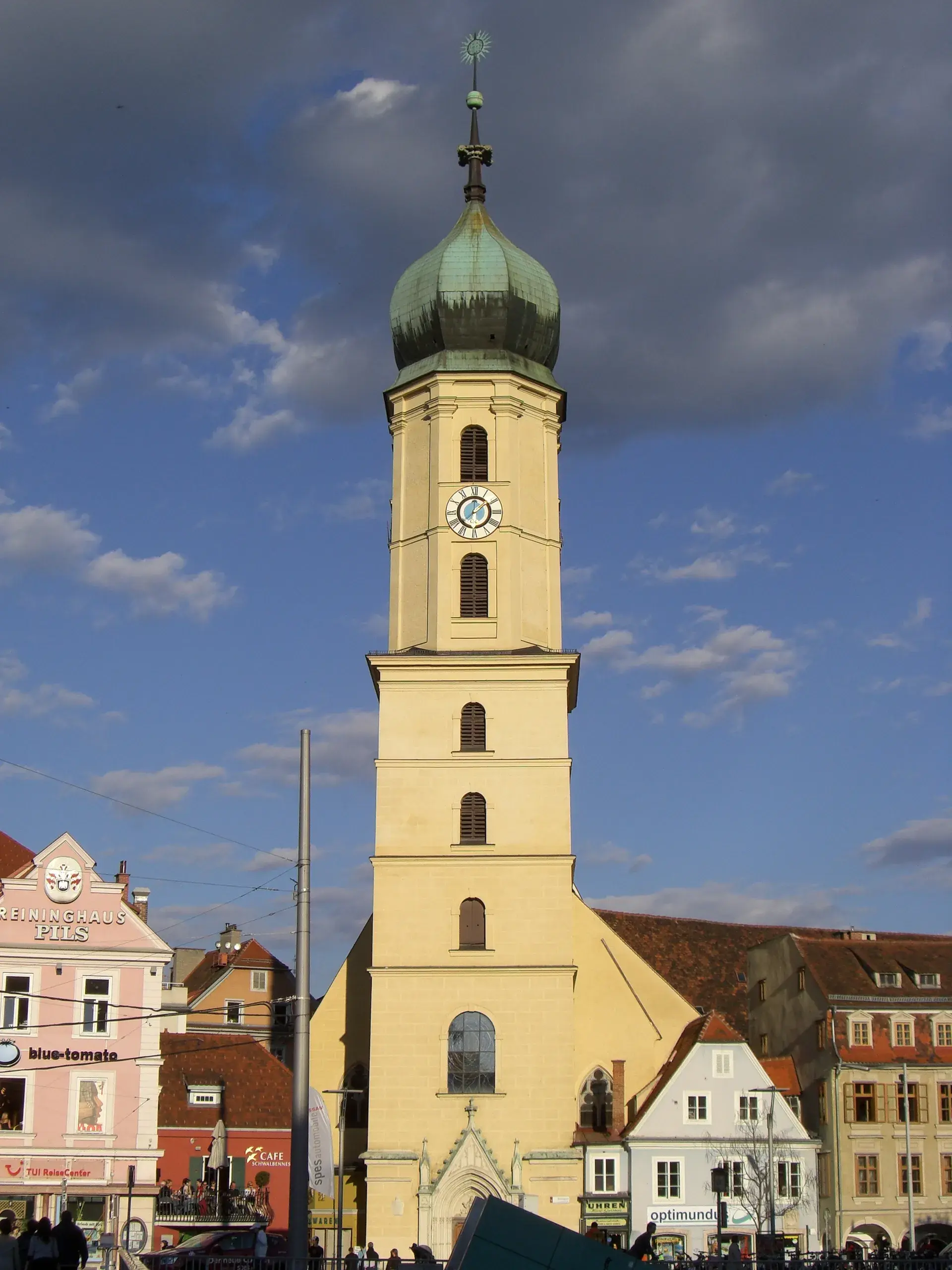
The Franciscan Church showcases Gothic architecture, most notably in its narrow 14th-century chancel and cloister. A defining and unusual feature is the church's imposing tower. Constructed in the 17th century, it was not built by the mendicant order for religious purposes but by city authorities as a fortified tower, owing to its strategic position next to the city walls. This defensive structure is topped with an octagonal upper part and a distinctive onion dome.
Resilience and Renewal
The church has endured significant events, including severe damage to its chancel from a bomb during World War II. This led to a complete reconstruction of the interior with a contemporary design. The restored chancel features works by Styrian artists, modern stained-glass windows, and a simple grey cast iron crucifix. A new organ, built by the Potsdam company Schuke, was installed in 2004, and a light wooden oratory with colored glass elements was added in 2003.
The Cloister: A Haven of Peace
Adjacent to the church is the Gothic cloister, which offers a tranquil, secluded courtyard that provides a stark contrast to the bustling nearby streets. The cloister walls are lined with epitaphs bearing the names and life details of distinguished burghers and noblemen who were buried there between the 15th and 18th centuries. This area is freely accessible and serves as a quiet space for reflection.
Franziskanerplatz Today
Today, Franziskanerplatz is a vibrant area characterized by small, historic shops, restaurants, and cafes. The Franciscan Monastery remains active, with the order continuing its pastoral care and the education of young Franciscans. The church and many areas of the monastery, including the cloister, are open to the public daily, welcoming visitors interested in its history, architecture, and peaceful atmosphere.
FAQ
What is the history of the tower at Franziskanerplatz?
The prominent tower of the Franciscan Church was built in the 17th century. Unusually, it was constructed by city authorities as a fortified defensive tower due to its strategic location near the city walls, rather than for purely religious purposes.
Is the Franciscan Monastery in Graz still active?
Yes, the Franciscan Monastery is still owned and managed by the Franciscan order. It remains an active center for pastoral care, the education of young Franciscans, and functions as a center for culture and history.
Why was the area around Franziskanerplatz once called the 'calf district'?
In the 16th century, the area was known as the 'Kälbernes Viertel' or 'calf district' because local butchers would drive cattle past the monastery to slaughterhouses by the Mur river, causing noise and smells that the monks complained about.
Can visitors enter the Franciscan Church and its cloister?
Yes, the Franciscan Church and many parts of the monastery, including the Gothic cloister with its tranquil courtyard, are freely accessible to the public daily.