Grazer Landhaus: A Renaissance Gem in Graz, Austria
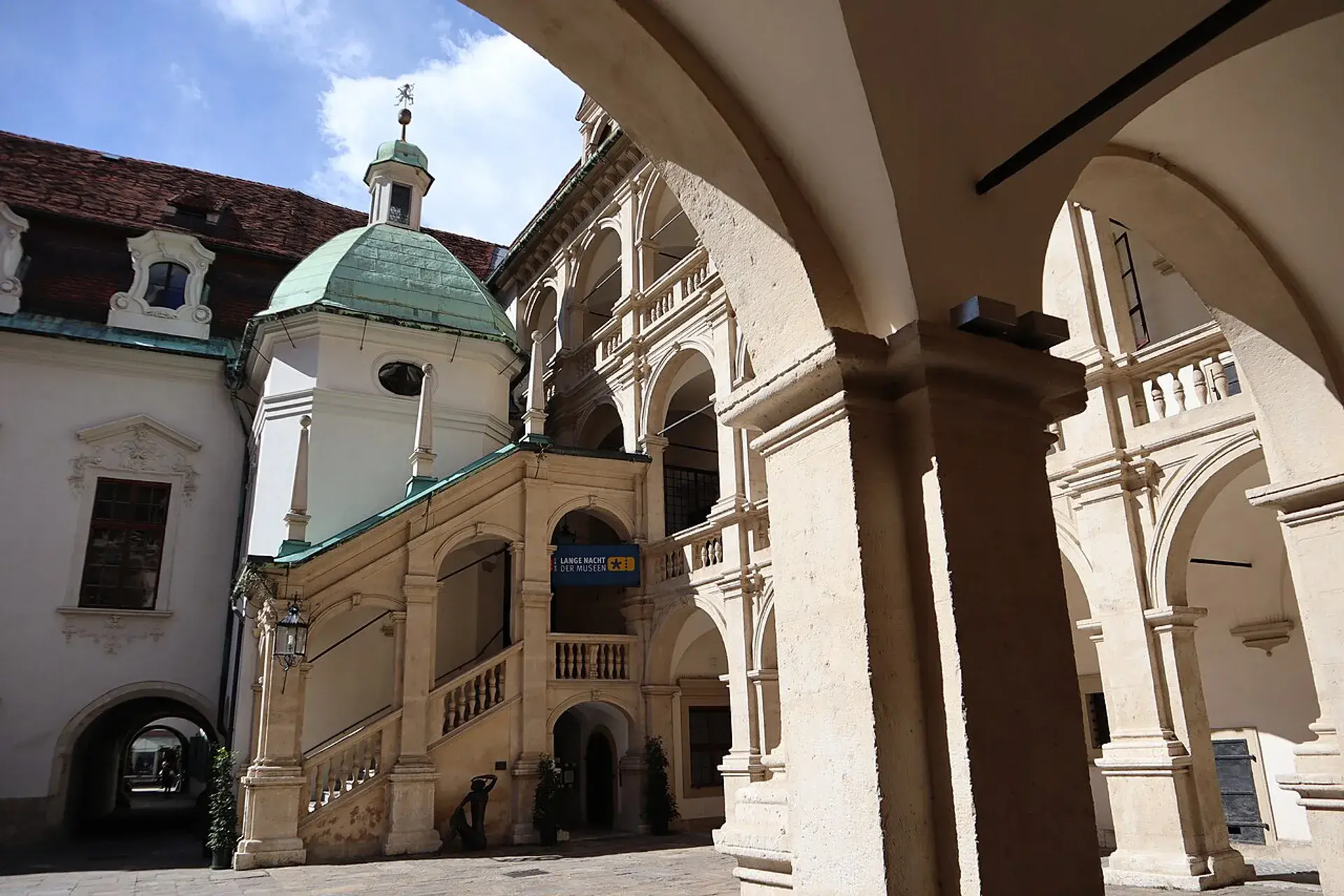
The Grazer Landhaus in Graz, Austria, is a magnificent Renaissance palace and a landmark of historical and architectural significance. Its elegant facade, distinctive arched windows, and a stunning arcaded courtyard visible from the entrance make it one of the city's most important structures. Since the 16th century, it has served as the political heart of the Styria region.
A Masterpiece of Renaissance Architecture
The building's journey began in 1494 when the Styrian Estates, the regional representative body, acquired a house on Herrengasse. The first Renaissance construction phase occurred between 1527 and 1531. However, the building's most celebrated features were created between 1557 and 1565 under the direction of Italian architect Domenico dell'Allio. He introduced a Northern Italian Renaissance style, often compared to Venetian palazzos, which transformed the city's architectural landscape.
The most iconic element is the grand arcaded courtyard. Its three-story arcades and elegant design established the Landhaus as a premier example of Renaissance architecture north of the Alps and a clear statement of the Estates' power and influence.
A Center of Styrian History
For centuries, the Landhaus has been the seat of the Styrian provincial parliament. The building was commissioned by the Styrian Estates to create a permanent and representative headquarters, often in deliberate architectural competition with the ruling Habsburgs. During the 16th century, it was a focal point for the predominantly Protestant Estates as they asserted their influence against Catholic rulers. After the expulsion of Protestant nobility in 1629, a chapel was added in 1630-31, symbolizing the re-establishment of Catholicism.
A curious historical feature is the presence of "Rumortafeln" or "rumbling boards" at the entrances. These plaques, dating from 1588, prohibit shouting, fighting, drawing weapons, and general scuffling within the building. These rules demanding modest behavior are still formally observed to this day.
Notable Interior and Courtyard Features
The Landhaus holds several artistic treasures. The courtyard features the Landhausbrunnen, a Mannerist bronze fountain from 1590. Designed by Jeremias Franck, it is adorned with intricate figures of satyrs and Nereids, topped by a warrior holding the Styrian Panther emblem.
Inside, the Rittersaal (Knight's Hall) on the first floor contains an ornate stucco ceiling created in the mid-17th century by Alessandro Sereni. This unique ceiling is decorated with signs of the zodiac and various natural motifs.
The Landhaus Today
The Grazer Landhaus continues its historic role as the seat of the Styrian provincial parliament (Landtag Steiermark). Its beautiful courtyard is accessible to the public 24/7 and serves as a vibrant venue for cultural events, concerts, film screenings, and the famous annual Ice Nativity Scene during Advent. The building also houses the Graz Region tourist information office, and guided tours of the interior are available.
FAQ
What is the Grazer Landhaus used for today?
The Grazer Landhaus continues to serve as the seat of the Styrian provincial parliament (Landtag Steiermark). Its courtyard is also a public space used for cultural events, concerts, and the annual Advent Ice Nativity Scene.
Can you visit the Grazer Landhaus?
Yes, the arcaded courtyard of the Grazer Landhaus is open to the public 24/7 for architectural appreciation. Guided tours of the building's interior are also offered.
What are the 'Rumortafeln' at the Grazer Landhaus?
The 'Rumortafeln' (rumbling boards) are plaques from 1588 at the entrances that prohibit quarrels, shouting, violence, and drawing weapons. These rules demanding modest behavior are formally observed to this day.
Who was the architect of the Grazer Landhaus?
The main Renaissance wing and the iconic arcaded courtyard were designed by the Italian architect Domenico dell'Allio between 1557 and 1565.