Graz Glockenspiel: History and Performance Times
In the heart of Graz's historic old town, a UNESCO World Heritage site, the Glockenspiel captivates onlookers with its daily musical performance. Located at Glockenspielplatz 4, this intricate carillon is a beloved attraction, drawing crowds to witness its charming display of dancing figures and melodic chimes.
A History of Commerce and Culture
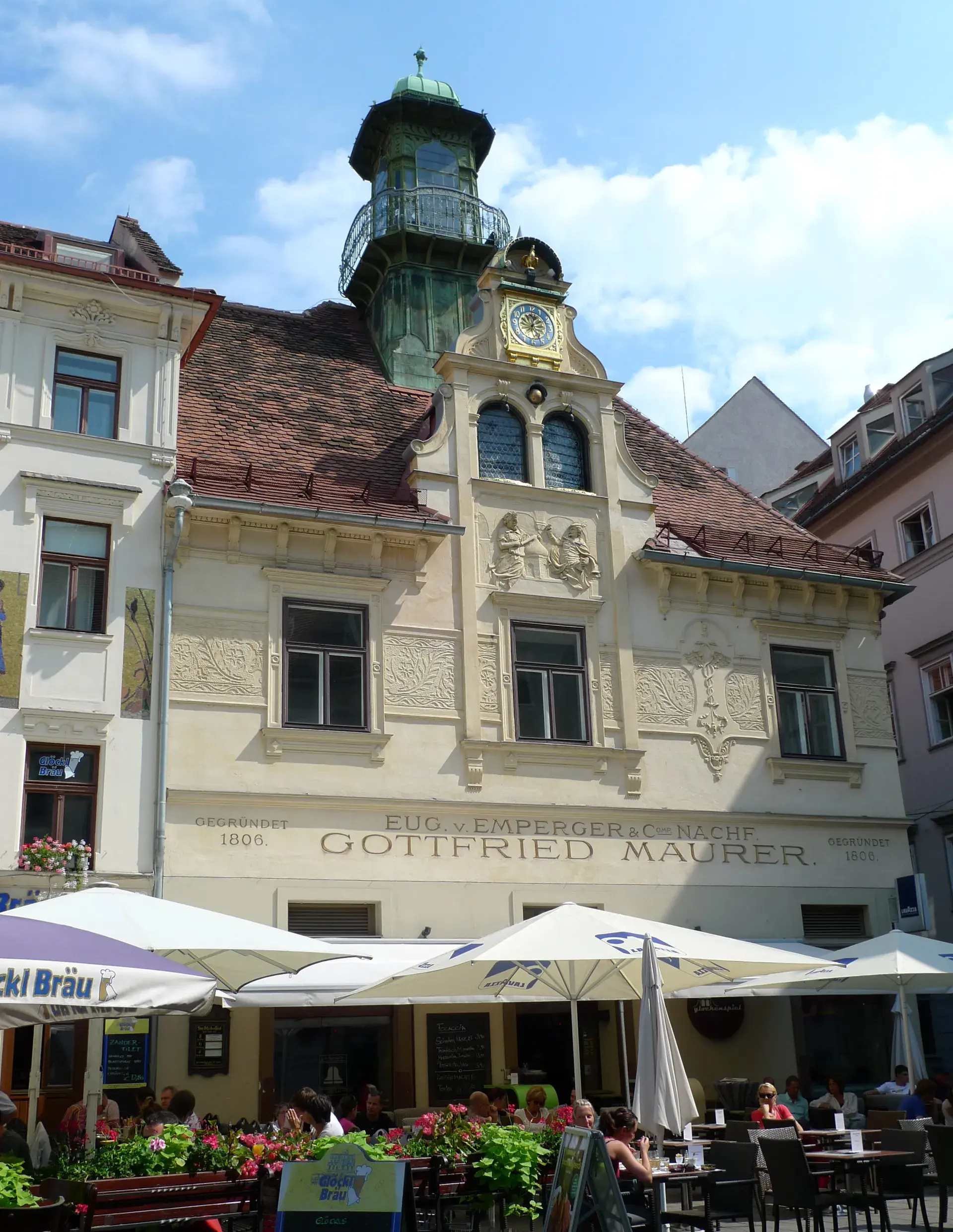
The Glockenspiel's origin is a fascinating story of savvy marketing. It was commissioned by spirits producer Gottfried Maurer, who purchased the building in 1884. Inspired by carillons he saw on business travels in Belgium and North Germany, Maurer decided to install one in his own property to attract customers to his wine and spirits shop. The project was approved by the city council in 1903.
The carillon first chimed on Christmas Eve, 1905. Its immediate popularity was so great that the square, formerly known as "Fliegenplatzl" (little fly square), was officially renamed Glockenspielplatz in 1908. Maurer, a clever advertising strategist, also designed the building's Art Nouveau facade with reliefs and mosaics intended to encourage wine consumption. The male dancing figure in the Glockenspiel even appears to toast the crowd, raising a glass of wine.
The Daily Performance
Three times a day, at 11:00 AM, 3:00 PM, and 6:00 PM, the Glockenspiel comes to life. For about eight minutes, two wooden figures in traditional Styrian costume, carved by sculptor Georg Winkler, emerge from the gable and dance to the music. The performance concludes with a golden rooster spreading its wings and crowing. This rooster was modeled after a similar figure on the Munich Town Hall.
The music is produced by 24 bells, with melodies programmed on a massive 800 kg mechanical drum. To keep the experience fresh, the repertoire is changed approximately five times a year by rearranging 800 steel pins on the drum. The selection includes around 70 different songs, from Alpine folk tunes and yodels to Christmas carols and contemporary pieces.
A Symbol of Resilience
The Glockenspiel's history also reflects the city's resilience. During World War II, its original 24 bells were removed and melted down for armaments, silencing the landmark. It wasn't until 1956 that the carillon was fully restored with new bells, allowing its music to once again echo through the square.
Gottfried Maurer bequeathed the Glockenspiel to the city of Graz in 1929, with the condition that it remain in operation. Today, it stands as a significant cultural landmark within the vibrant gastronomic area known as the 'Bermuda Triangle,' continuing to delight locals and tourists alike.
FAQ
What time does the Glockenspiel in Graz perform?
The Glockenspiel performs three times a day, at 11:00 AM, 3:00 PM, and 6:00 PM.
Why was the Graz Glockenspiel built?
It was originally built by spirits producer Gottfried Maurer as a clever advertising strategy for his wine and spirits business, which was located in the same building.
What happens during the Glockenspiel performance?
Two carved wooden figures in traditional Styrian costumes emerge and dance to music played by 24 bells. The performance ends with a golden rooster crowing.
Was the Graz Glockenspiel ever silent?
Yes, the Glockenspiel was silenced during World War II when its original bells were melted down for armaments. It was restored with new bells in 1956.