Graz Cathedral: Imperial Gothic History in Austria
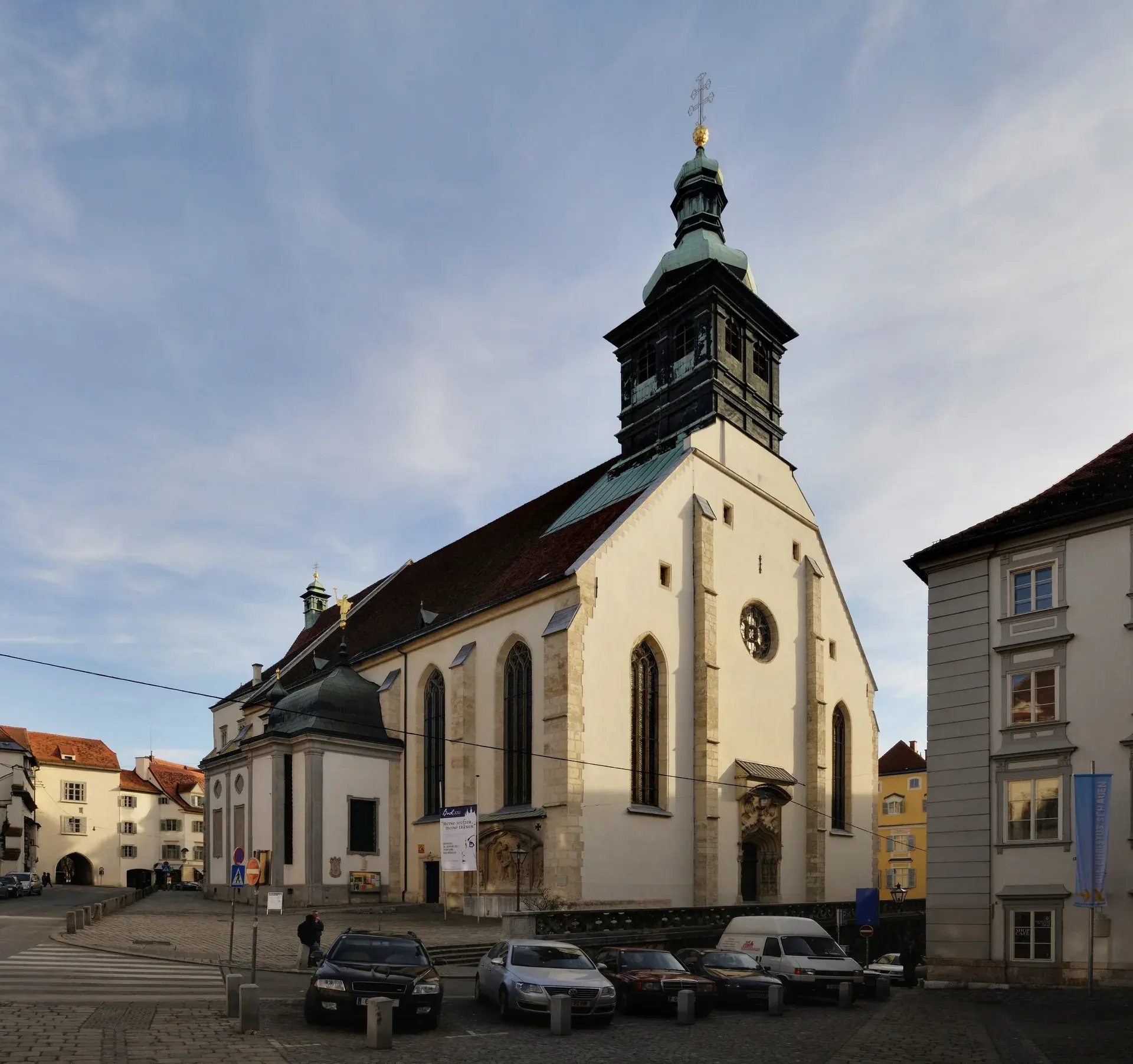
Graz Cathedral, also known as St. Giles' Cathedral (Dom St. Ägidius), is a commanding Roman Catholic structure that has been a spiritual and architectural cornerstone of Graz, Austria, for centuries. Originally a Gothic hall church, its history is deeply intertwined with imperial patronage and pivotal moments in the city's past.
Imperial Origins and Architectural Layers
The site of the cathedral has been a place of worship since at least the 12th century, with a church first mentioned in 1174. The current magnificent Gothic structure was built between 1438 and 1464 under the patronage of Holy Roman Emperor Frederick III, who ruled from Graz and intended it as his imperial court church. The design is attributed to architect Hans Niesenberger.
While its foundations are purely Gothic, the cathedral's interior was significantly altered between the 17th and 18th centuries. After Archduke Charles II of Inner Austria transferred the church to the Jesuits in 1577, it was enriched with lavish Baroque furnishings and altars, creating a unique blend of architectural styles.
The 'Gottesplagenbild': A Fresco of Affliction
One of the cathedral's most significant historical artifacts is located on its southern exterior wall. The 'Gottesplagenbild' (Plague Picture) is a well-preserved fresco dating to 1485, attributed to the painter Thomas von Villach. It vividly depicts the 'three plagues' that afflicted Graz in 1480: locusts, war (representing the Turkish threat), and pestilence. This powerful artwork served as a public plea for divine mercy and notably contains the oldest known visual representation of the city of Graz.
Unique Treasures and Imperial Marks
The cathedral houses several remarkable objects. Among its most precious are two 15th-century bridal chests, originally crafted for noblewoman Paola Gonzaga. The Jesuits later ingeniously repurposed these ornate secular chests into sacred reliquaries to hold the bones of Christian martyrs. The interior also features Conrad Laib's monumental 1457 painting, 'Crucifixion in a Crowd,' a major work of Late Gothic art.
Emperor Frederick III's direct involvement is marked by his enigmatic motto 'AEIOU,' which is inscribed in several locations. The meaning of the acrostic remains debated, with interpretations ranging from 'Austriae est imperare orbi universo' (It is Austria's destiny to rule the whole world) to 'Aller Ehren ist Österreich Untertan' (Austria is subject to all honor).
The Cathedral Today
In 1786, the church was elevated to its current status as the cathedral for the Diocese of Graz-Seckau. Today, it functions as an active parish church and the episcopal seat, hosting regular services and religious ceremonies. As a key component of the 'Grazer Stadtkrone' (Graz City Crown), it is part of the city's UNESCO World Heritage site.
The cathedral is also a vibrant cultural venue for concerts and organ recitals, especially following an extensive renovation between 2017 and 2023. This project included interior restoration and the rebuilding of its grand organ, which was consecrated in 2023.
FAQ
When was Graz Cathedral built?
The current Gothic structure of Graz Cathedral was primarily built between 1438 and 1464 under the patronage of Holy Roman Emperor Frederick III. The site itself has been sacred since at least the 12th century.
What is the 'Gottesplagenbild' on the Graz Cathedral?
The 'Gottesplagenbild' or 'Plague Picture' is a fresco on the cathedral's exterior from 1485. It depicts the three plagues that struck Graz in 1480: locusts, war, and pestilence. It is also the oldest known depiction of the city of Graz.
What is the significance of Graz Cathedral?
Graz Cathedral is significant as the cathedral of the Roman Catholic Diocese of Graz–Seckau, a major example of Gothic and Baroque architecture, and a key part of the 'Grazer Stadtkrone' (Graz City Crown), which belongs to the city's UNESCO World Heritage site.
What are the reliquaries in Graz Cathedral made from?
Uniquely, some of the cathedral's most precious reliquaries are repurposed 15th-century bridal chests. Originally belonging to the noblewoman Paola Gonzaga, these intricately carved chests were acquired by the Jesuits and transformed to hold the relics of Christian martyrs.