Styrian Armory: The World's Largest Historic Arsenal
The Styrian Armory (Landeszeughaus) in Graz, Austria, is the world's largest and most completely preserved historic armory. Its existence today is owed not to continued military relevance, but to a successful citizen-led campaign to preserve it as a monument when it was deemed obsolete.
A Fortress of History and Defense
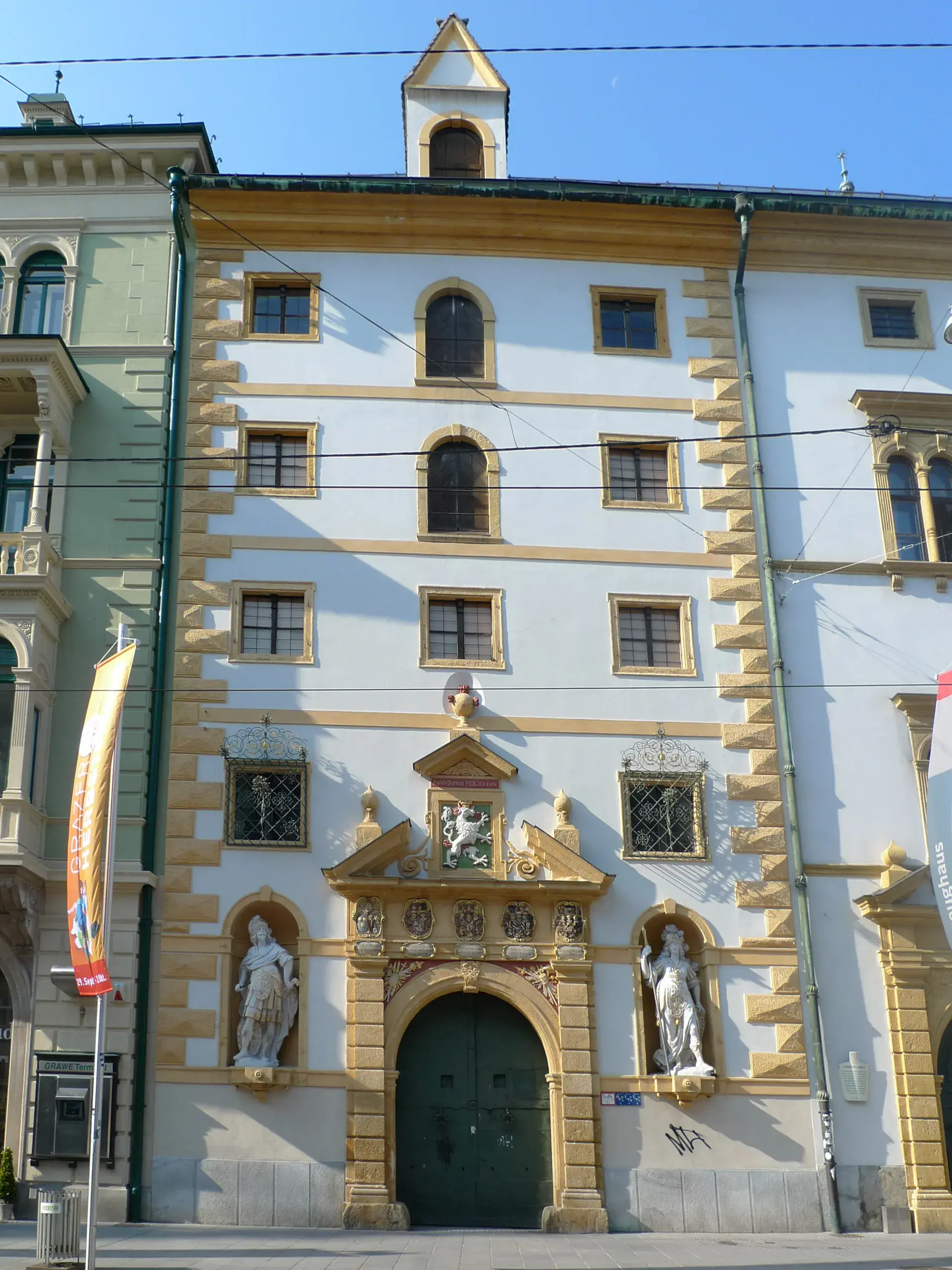
Constructed between 1642 and 1647 by architect Antonio Solar, the Styrian Armory is a masterpiece of early Baroque architecture. The five-story building was established out of a critical need for defense. For centuries, the region of Styria was on the front line of conflicts with the Ottoman Empire and Hungarian rebels. Graz, as the capital of Inner Austria, served as a central hub for the region's defense, and the armory was its vital depot, capable of equipping an army of 5,000 men.
From Military Necessity to Monument
By the 18th century, the armory's military importance had diminished. In 1749, as part of an effort to centralize Austria's military, Empress Maria Theresia proposed its closure. The Styrian estates successfully petitioned for its preservation, arguing for its cultural significance as a "testimony for the braveness of the Styrians." This pivotal moment transformed the armory from a functional military asset into a protected historical artifact. The weapons saw their last recorded use during the 1848 revolution. During World War II, the entire collection was moved to three remote castles for safety and was returned without any losses after the war.
An Arsenal Preserved in Time
Today, the armory houses approximately 32,000 specimens of arms and military equipment. The collection includes around 3,840 suits of armor, 2,414 swords, 5,395 polearms, and thousands of historic rifles and pistols, primarily from the 15th to 18th centuries. Among the collection are distinctive wheel-lock pistols with ball-shaped pommels known as 'puffers.' The interior, with its wooden floors, ceilings, and panels, has created a unique microclimate that has protected the iron artifacts from corrosion for centuries.
The Armory Today
As an institution of the Universalmuseum Joanneum since 1892, the Styrian Armory is one of Graz's most popular attractions. It intentionally preserves its authentic 'warehouse' appearance from 400 years ago, displaying weapons and armor in dense, original rows rather than modern glass cases. Visitors can explore four floors of this remarkable collection, which received the European Heritage Label. Guided tours are regularly available, offering an immersive look into the practicalities of early modern warfare.
FAQ
Why was the Styrian Armory built?
The Styrian Armory was built in the mid-17th century as a central military depot to equip local militias and defend the region of Styria, which was on the front line of conflicts with the Ottoman Empire and Hungarian rebels.
How many weapons are in the Styrian Armory?
The collection contains approximately 32,000 items, including about 3,840 suits of armor, 5,395 polearms, 2,414 swords, 3,867 rifles, and 4,259 pistols, mostly dating from the 15th to the 18th centuries.
How did the Styrian Armory survive to the present day?
After its military use declined, Empress Maria Theresia attempted to close it in 1749. However, the Styrian estates successfully petitioned to preserve it as a historical monument, saving it from being dismantled. Its entire collection was also safely hidden during WWII and returned intact.
Is the Styrian Armory still a functioning military site?
No, it is no longer a military site. It officially opened to the public as a museum in 1882 and is now part of the Universalmuseum Joanneum, serving as a major cultural and historical attraction in Graz.