Uhrturm: Graz's Historic Clock Tower on the Schlossberg
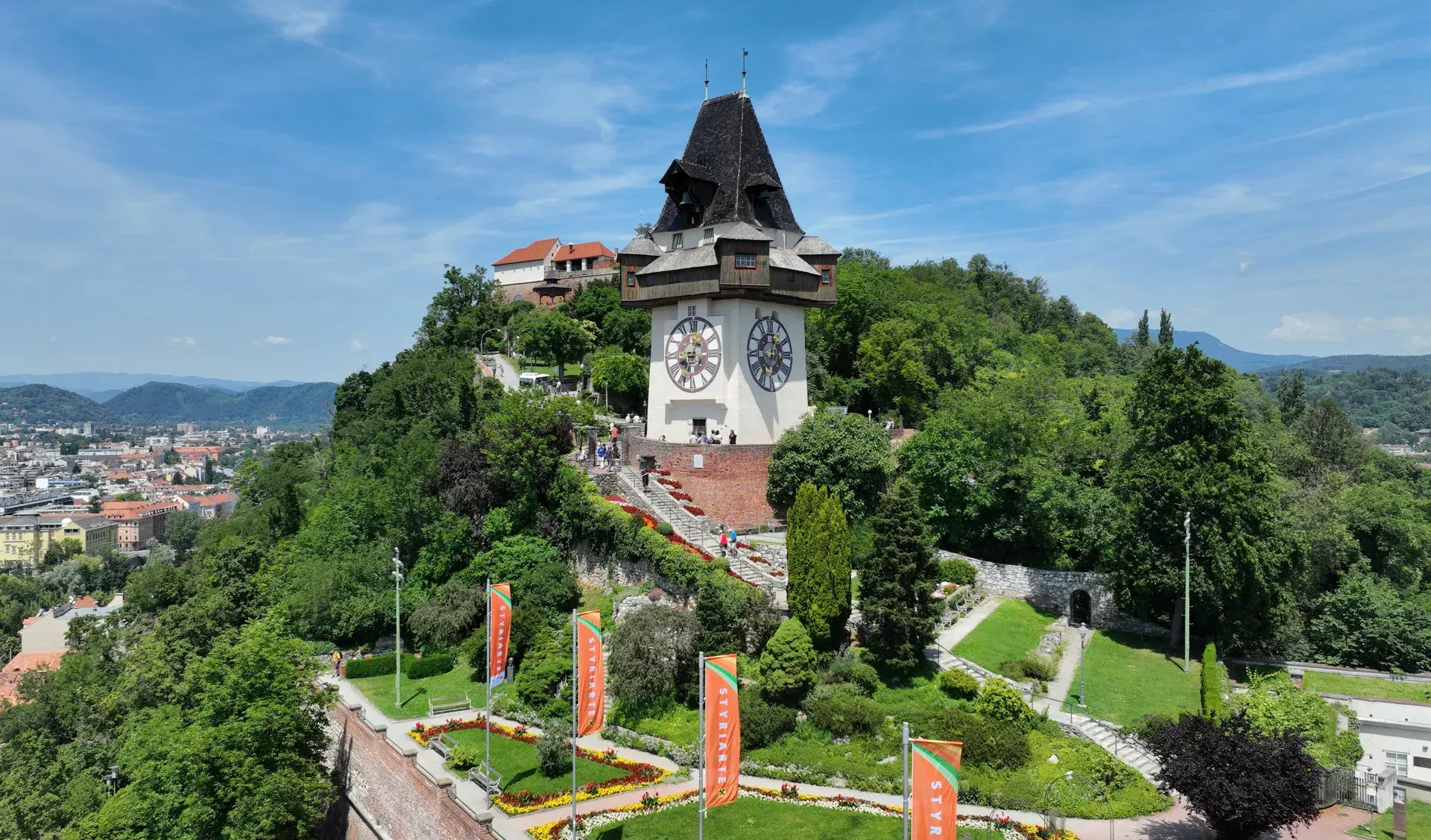
Perched high on the Schlossberg hill, the Uhrturm, or Graz Clock Tower, stands as the city's most enduring and recognizable symbol. Part of the UNESCO-listed Old Town, this medieval tower offers panoramic views and a direct connection to Graz's resilient history. One of its most peculiar features is immediately noticeable: the clock's large hand indicates the hours, while the smaller hand marks the minutes.
A History of Defense and Resilience
The Uhrturm's origins trace back to the 13th century, when it was first mentioned in 1265 as a defensive watchtower within the formidable Schlossberg fortress. The tower took on its current form around 1560-1569, and in 1569, it received its first clock with three large dials. A wooden gallery provided a vantage point for fire watchmen to monitor the city below.
A significant upgrade occurred in 1712 when clockmaker Michael Sylvester Funck installed a new, more precise clock mechanism. The tower's most dramatic moment came in 1809 during the Napoleonic Wars. As French forces demolished the fortress, the citizens of Graz collectively paid a substantial ransom to save their beloved Uhrturm and the nearby Glockenturm (Bell Tower) from destruction, cementing its place in the heart of the community.
The Curious Clock and Historic Bells
The tower's unconventional clock face is a result of its history. Originally, the clock featured only a single, large hand to make the hour easily readable from a great distance across the city. The smaller minute hand was a later addition, resulting in the unique reversed arrangement seen today.
The Uhrturm also houses three historic bells, each with a distinct story. The oldest bell in Graz, the hour bell from 1382, chimes on the hour. A fire bell cast in 1645 was once used to alert the city to fires. The third, the 'Armesünderglocke' (Poor Sinner's Bell) from around 1450, originally tolled to announce executions and later signaled the city's curfew.
Heraldry and Modern Significance
Adorning the tower's corners are three coats of arms, remnants from the former fortress walls. These include the Styrian panther with the ducal crown (c. 1570), the single eagle of Emperor Ferdinand I (1552), and the double eagle with the initials of Maria Theresa from the mid-to-late 18th century.
Today, the Uhrturm is a major attraction for both locals and tourists. The surrounding Schlossberg is a public park, offering a peaceful recreational space for walks and relaxation, with a café situated near the tower. While the exterior is freely accessible, the tower's interior can be visited for a fee during the summer. The landmark also provides a historic backdrop for various cultural events throughout the year.
FAQ
Why are the hands on the Graz Clock Tower reversed?
The large hand shows the hours and the small hand shows the minutes. This is because the clock originally had only one large hand so the hour could be easily seen from a distance. The smaller minute hand was added later.
Can you go inside the Uhrturm?
Yes, the interior of the tower, including its historical clockwork, can be visited for an admission fee during specific opening hours in the summer or as part of a guided tour.
How old is the Graz Clock Tower?
The Uhrturm's origins date to the 13th century, with a first mention in 1265. Its current form was primarily established around 1560.
What are the bells inside the Uhrturm?
It houses three historic bells: an hour bell from 1382 (the oldest in Graz), a fire bell from 1645, and the 'Armesünderglocke' (Poor Sinner's Bell) from c. 1450, which once announced executions and curfew.