Court Church Innsbruck: Emperor Maximilian's Empty Tomb
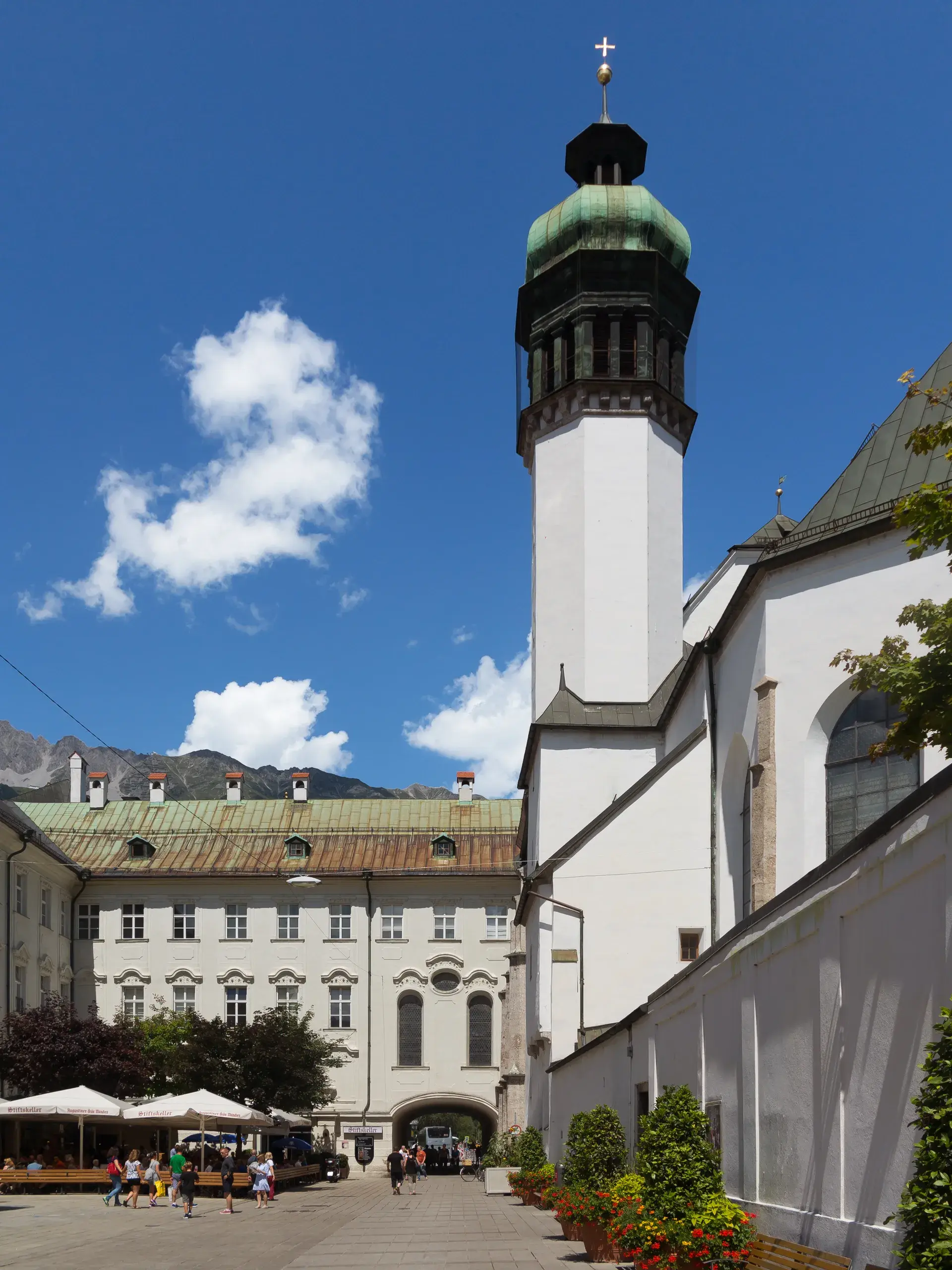
The Court Church (Hofkirche) in Innsbruck is a remarkable Gothic and Renaissance monument, built primarily to house one of the most elaborate imperial tombs in Europe. However, the grand cenotaph at its heart, dedicated to Emperor Maximilian I, is entirely empty. This fascinating contradiction is central to the church's history as a powerful symbol of Habsburg ambition and legacy.
An Emperor's Unfulfilled Vision
Emperor Maximilian I initiated plans for his own magnificent tomb in 1502, envisioning it as a lasting testament to his reign and the legitimacy of the Habsburg dynasty. Despite his detailed planning, the project was unfinished at the time of his death in 1519. Following his deathbed wish, Maximilian was buried in Wiener Neustadt. Recognizing the artistic and political importance of the memorial, his grandson, Emperor Ferdinand I, commissioned the construction of the Court Church between 1553 and 1563 specifically to house the grand, yet empty, tomb. The project was finally completed in 1584 under Archduke Ferdinand II, who oversaw the addition of the kneeling statue of Maximilian atop the cenotaph.
The 'Schwarzmander' Guardians
Flanking the cenotaph is a procession of 28 larger-than-life bronze statues, known colloquially as the 'Schwarzmander' or 'Black Men'. These figures represent Emperor Maximilian's real and legendary ancestors and heroes, intended to visually cement the Habsburg lineage. The collection includes historical figures and even King Arthur, whose statue was designed by the famous artist Albrecht Dürer. Interestingly, the name 'Black Men' is a misnomer, as eight of the statues are women, including Maximilian's two wives, Mary of Burgundy and Bianca Maria Sforza.
Architectural and Artistic Highlights
The church itself is an architectural masterpiece, blending late Gothic forms with Renaissance elements. The design, attributed to Andrea Crivelli, features layered buttresses and a distinct Renaissance portal carved by Hieronymus de Longhi and Anton de Bol. Within the church, the Silver Chapel (Silberne Kapelle), consecrated in 1578, is another significant feature. It was added by Archduke Ferdinand II as a burial place for himself and his wife, Philippine Welser, whose commoner status made their marriage a notable event of the time.
Other Notable Figures and Events
Beyond its connection to the Habsburgs, the Court Church holds the tomb of Andreas Hofer, a Tyrolean national hero. The freedom fighter's remains were moved from Mantua and interred here in 1823, solidifying the church's importance to regional identity. The church was also the site of a significant historical event on November 3, 1655, when Queen Christina of Sweden publicly converted to Catholicism after her abdication.
The Court Church Today
Today, the Court Church is managed as part of the Tyrolean State Museums, with visitor entry typically through the adjacent Tyrolean Folk Art Museum. While it functions as a historical museum, it remains an active place of worship, with daily services conducted by Capuchin friars. The historic Ebert organ, dating to 1561, is still playable and featured in occasional concerts. Visitors can also engage with the 'Maximilian Rooms,' which offer a multimedia audio-visual experience detailing the emperor's life.
FAQ
Why is Emperor Maximilian's tomb in the Court Church empty?
The tomb of Emperor Maximilian I is a cenotaph, or an empty monument. Despite planning this elaborate tomb, his deathbed wish was to be buried in St. George's Chapel in Wiener Neustadt, where his remains lie today.
Who are the 'Schwarzmander' or 'Black Men'?
The 'Schwarzmander' are 28 larger-than-life bronze statues that flank Maximilian's cenotaph. They represent his ancestors and heroic figures, both real and legendary, such as King Arthur. The name is a misnomer, as eight of the figures are women.
Who else is buried in the Court Church in Innsbruck?
The church contains the tomb of Tyrolean national hero Andreas Hofer. Additionally, the Silver Chapel within the church serves as the burial site for Archduke Ferdinand II and his wife, Philippine Welser.
Is the Court Church still an active church?
Yes, while it is primarily a museum, the Court Church continues to host daily religious services conducted by Capuchin friars.