Innsbruck's Triumphal Arch: A Monument of Joy and Sorrow
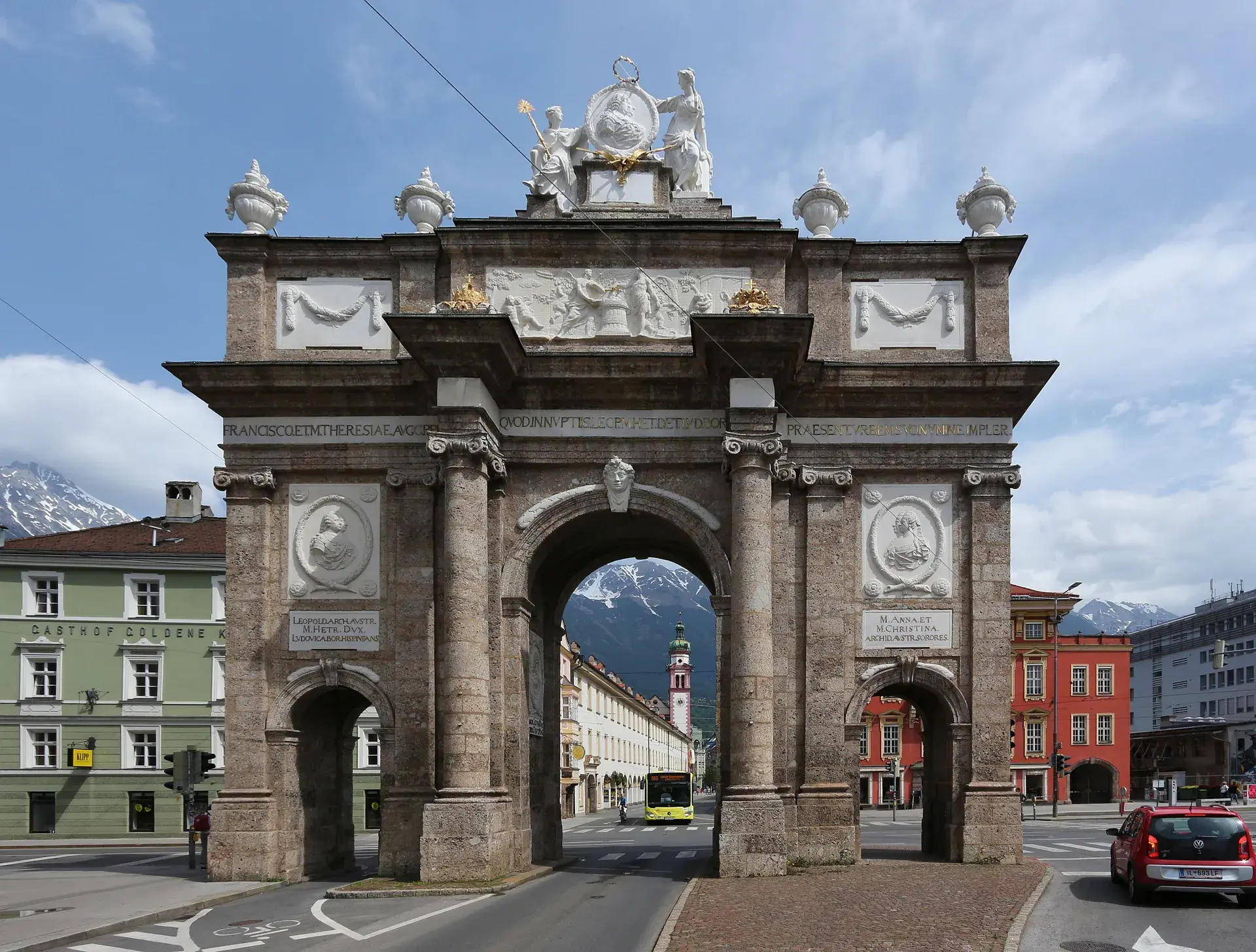
Standing as a grand entrance to Innsbruck's bustling Maria-Theresien-Straße, the Triumphal Arch is a unique monument that tells a story of both celebration and sorrow. Commissioned by Empress Maria Theresa in 1765, this landmark captures a pivotal moment in Habsburg dynastic history, immortalizing two profound and opposing events in stone.
A Tale of Two Facades
The arch was originally conceived to celebrate the marriage of Maria Theresa's son, Archduke Leopold (the future Emperor Leopold II), to Spanish Princess Maria Luisa on August 5, 1765. However, the festivities were cut short by tragedy when the Empress's husband, Emperor Francis I Stephen of Lorraine, died unexpectedly in Innsbruck on August 18. In her grief, Maria Theresa decreed that the arch be redesigned. As a result, the monument has a dual personality: its southern facade depicts motifs of joy for the royal wedding, while its northern facade expresses deep sorrow and serves as a memorial to the late emperor.
Imperial Design and Construction
Designed under the supervision of Constantin Walter, the Triumphal Arch blends Baroque grandeur with the clarity of classicism, drawing inspiration from ancient Roman triumphal arches like the Arch of Constantine. In a surprising act of recycling, the structure was not built with new materials but with ashlar blocks salvaged from the old city gate, which was demolished on the very same site. This decision repurposed a piece of Innsbruck's past to create a new imperial symbol.
From Plaster to Marble
The arch's sculptural decorations also evolved over time. The initial reliefs, created by Johann Baptist Hagenauer, were hastily made from wood and plaster to be ready for the wedding celebrations. Recognizing the need for a more permanent tribute, these temporary works were replaced in 1774. The renowned sculptor Balthasar Moll was tasked with crafting the durable and intricate marble sculptures that adorn the arch today, securing its artistic and historical legacy.
The Arch Today
Currently, the Triumphal Arch is a freely accessible public monument at the southern end of Maria-Theresien-Straße. It serves as a prominent city landmark and a popular spot for photography, especially when illuminated at night or glowing in the light of sunrise and sunset. Visitors can view the arch at any time of day, making it a constant and powerful reminder of Innsbruck's rich imperial heritage.
FAQ
Why was the Triumphal Arch in Innsbruck built?
The Triumphal Arch was commissioned in 1765 by Empress Maria Theresa primarily to celebrate the wedding of her son, Archduke Leopold. Its purpose was expanded to also mourn the death of her husband, Emperor Francis I Stephen, who passed away during the festivities.
What is unique about the Triumphal Arch's design?
The arch is unique for its dual symbolism. The southern facade is dedicated to the joyous wedding of Archduke Leopold and Princess Maria Luisa, while the northern facade serves as a somber memorial to Emperor Francis I Stephen.
What materials were used to build the Triumphal Arch?
The main structure was built using stone blocks salvaged from the old city gate that previously stood on the same site. The original temporary plaster reliefs were later replaced with permanent marble sculptures in 1774.
Do you need tickets to see the Triumphal Arch?
No, the Triumphal Arch is a public outdoor monument in Innsbruck. It is located on Maria-Theresien-Straße and can be viewed at any time of day or year without tickets or special registration.