Dom St. Jakob: Innsbruck's Baroque Cathedral
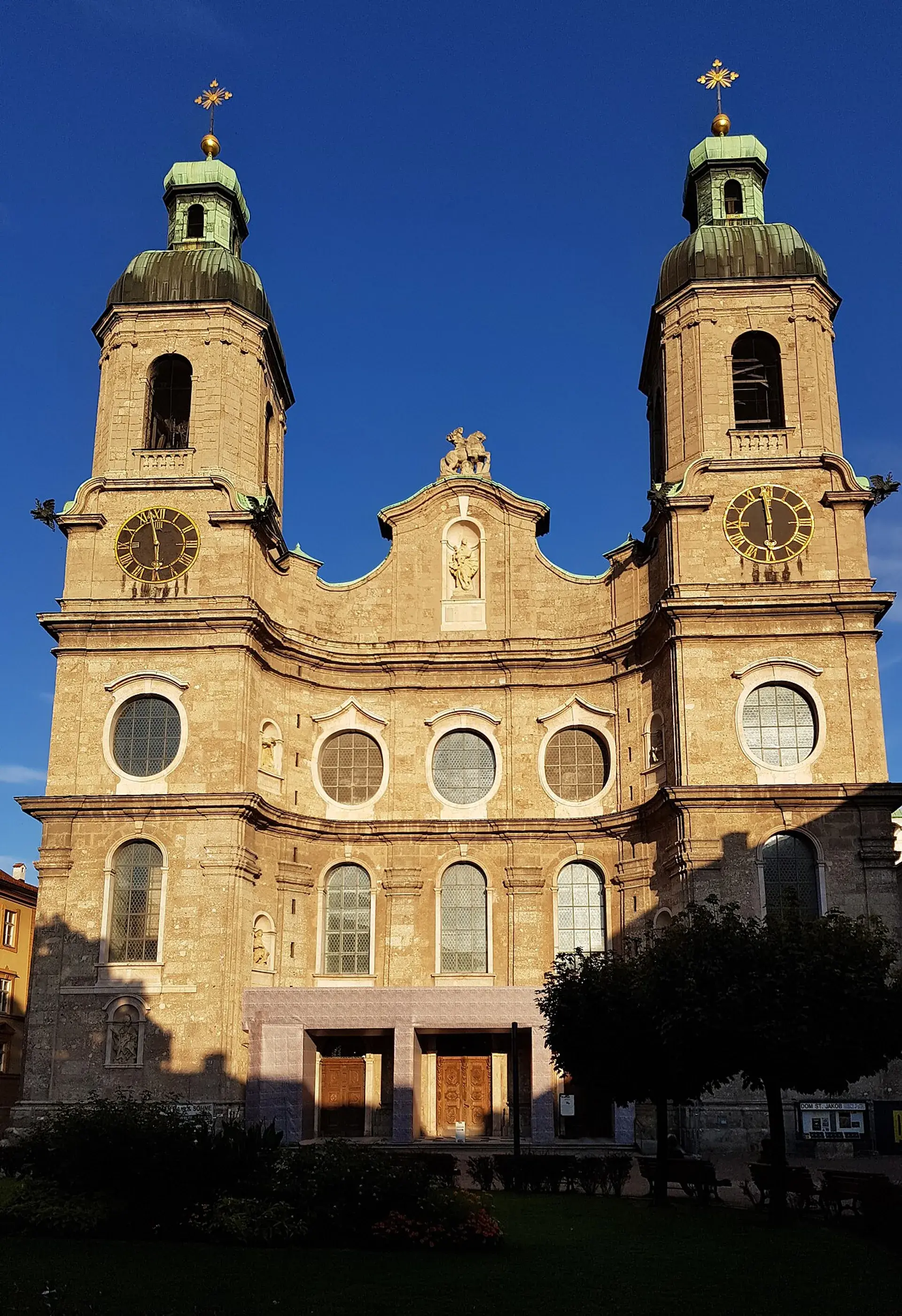
Dom St. Jakob, also known as the Cathedral of St. James, stands in Innsbruck as an imposing 18th-century Baroque masterpiece, its grand exterior hinting at the imperial reverence held within. With a history stretching back long before its current form, the cathedral is a testament to faith, artistic patronage, and resilience.
A History of Resilience
The site's religious significance predates the city of Innsbruck itself, with the first mention of a Romanesque church dedicated to Saint James the Greater in 1180. This early church served as a key stop on the Way of St. James pilgrimage route. Over the centuries, it endured fires and earthquakes, most notably a major quake in 1689. This event prompted the decision to completely rebuild the structure. The pre-Baroque church was admired by artist Albrecht Dürer, who captured its likeness in a watercolor in 1495.
The Baroque Masterpiece
The current cathedral was constructed between 1717 and 1724, with its interior finalized by 1732. The project was initiated by architect Johann Jakob Herkomer and completed by his nephew, Johann Georg Fischer, after Herkomer's death. Uniquely, the reconstruction was funded in part by a special tax on tobacco and income from a brewery and tavern established in the former Lion House of Ferdinand II.
The interior is a showcase of Baroque artistry, featuring ceiling frescoes by Cosmas Damian Asam and intricate stucco work by his brother, Egid Quirin Asam. In an unusual design choice, Herkomer placed the main dome over the choir instead of the crossing, drawing focus to the high altar.
Imperial and Artistic Treasures
Dom St. Jakob houses one of the most venerated Marian images in Christendom, 'Maria Hilf' (Mary of Succor). Painted by Lucas Cranach the Elder around 1530, it graces the main altar. The cathedral also reflects the patronage of the Habsburg dynasty. Empress Maria Theresa donated a silver sculpture and festive vestments. An elaborate canopied tomb commemorates Archduke Maximilian III, Grand Master of the Teutonic Knights. Originally a single piece, the tomb was divided during the 18th-century reconstruction to frame the sacristy doors.
Destruction and Rebirth
The cathedral suffered severe damage during a World War II air raid on December 16, 1944, which caused the collapse of its vault and the loss of artworks. A meticulous restoration process took place between 1946 and 1950, returning the building to its former glory. In 1964, its status was elevated, and it officially became the Cathedral of the Diocese of Innsbruck.
The Cathedral Today
Located in Innsbruck's Old Town, Dom St. Jakob remains an active center of religious life, hosting services, concerts, and community events. It is a major tourist attraction and pilgrimage site, drawing visitors to its historical and architectural splendor. The cathedral's twin towers, crowned with distinctive green copper domes from natural oxidation, are a landmark. The sound of its bells, especially the seven-ton Marian bell cast at the local Grassmayr foundry, often fills the air.
FAQ
Is there an entrance fee for Dom St. Jakob?
Admission to Dom St. Jakob is free, but a nominal fee is charged for photography permits.
What is the famous painting in Innsbruck Cathedral?
The most famous painting is 'Maria Hilf' (Mary of Succor) by Lucas Cranach the Elder, located on the main altar. It is one of the most revered Marian images in Christianity.
When was the current Dom St. Jakob built?
The current Baroque structure was rebuilt between 1717 and 1724, with the interior being finalized in 1732.
Why are the cathedral's domes green?
The domes are topped with copper, which has developed a green patina over time through a natural oxidation process.