Helbling Haus: Innsbruck's Rococo Masterpiece
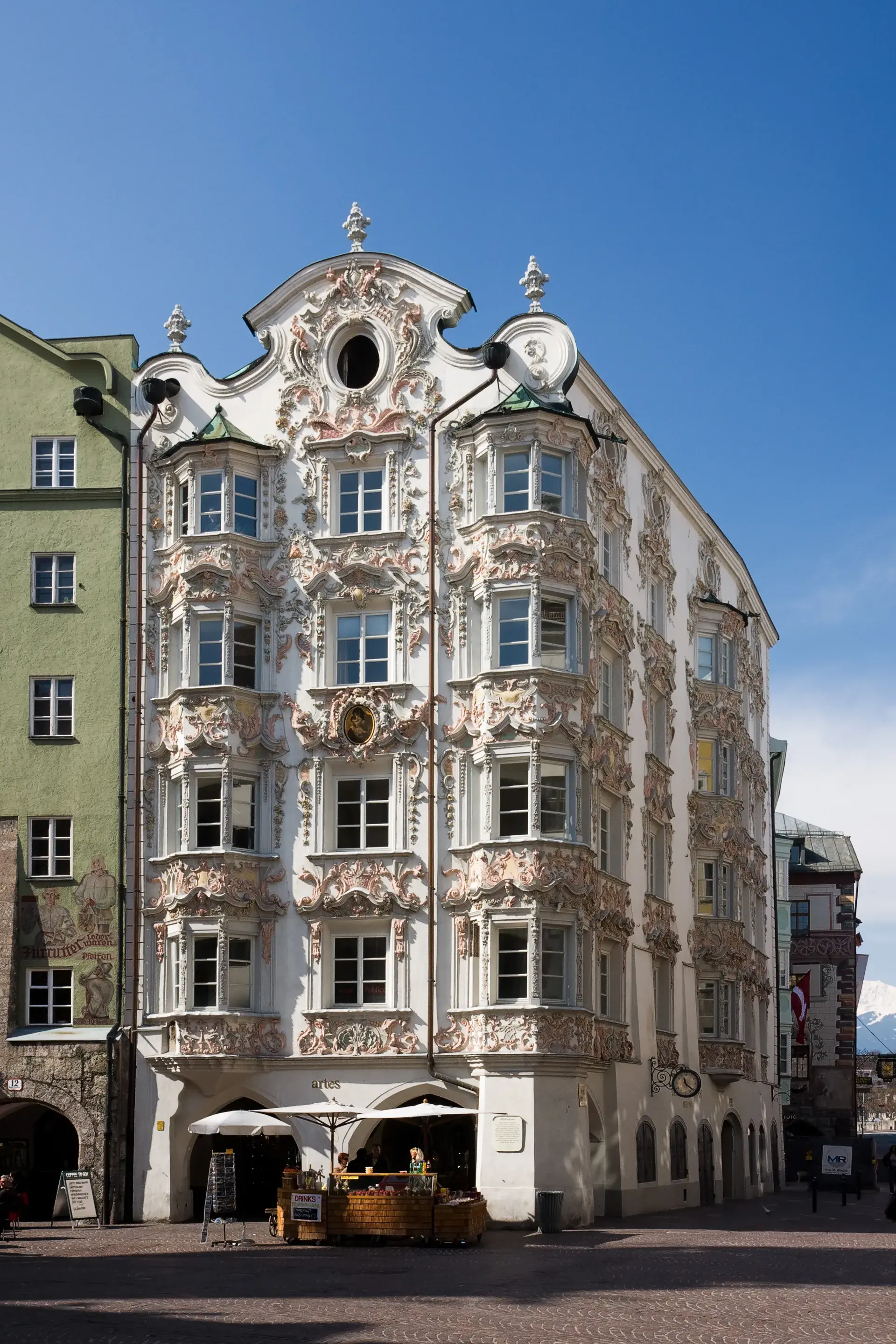
In the heart of Innsbruck's Old Town stands the Helbling Haus, a dazzling example of the artistic flair that defined the city's prosperity. Its glittering Rococo stucco facade captures the eye, showcasing an architectural evolution that spans centuries.
From Gothic to Rococo
The building's origins trace back to the 15th century as a typical Gothic townhouse. Its most dramatic transformation occurred between 1725 and 1732. Johann Fischer, the cashier of the mint in Hall, purchased the building in 1725 and commissioned stucco mason Anton Gigl to overhaul its exterior. Gigl, a representative of the Wessobrunn School, enveloped the original structure in a lavish Baroque and Rococo facade, reflecting the desire of affluent citizens to emulate the grandeur of the Habsburg nobility.
A Layered History
Despite its opulent 18th-century appearance, the building's Gothic past is not entirely erased. A restoration in 1932 uncovered remnants of late-Gothic ornamentation on the southern bay windows, revealing its multi-layered architectural history. The Rococo facade itself contains surprising details, including a depiction of a bare-breasted female figure—an unusually forward-thinking element for public art in Tyrol during that era.
A Tale of Coffee and Politics
The building acquired its name not from its architect or patron, but from a 19th-century proprietor. From 1800 to 1827, Sebastian Helbling owned the house and operated one of Innsbruck's first coffee houses on the premises, establishing the name that endures today. Later, in the early 20th century, the Helbling Haus served as the meeting place for the 'Catholic Casino,' a conservative political faction of academics and clerics who opposed the liberal and social democratic movements of the time.
The Helbling Haus Today
Currently, the Helbling Haus continues to be a part of Innsbruck's daily life. The street-level floor contains shops that are open to visitors. The upper floors consist of private apartments and offices, and as a result, the interior of the building is generally not accessible for public tours.
FAQ
Why is it called the Helbling Haus?
The building is named after Sebastian Helbling, who owned it from 1800 to 1827. He operated one of Innsbruck's first coffee houses within the building, and his name became permanently associated with it.
Can you go inside the Helbling Haus?
The interior of the Helbling Haus is generally not open to the public. While there are shops on the ground floor, the upper levels are used as private apartments and offices.
What is the architectural style of the Helbling Haus?
The Helbling Haus originally began as a 15th-century Gothic townhouse. Its famous exterior was transformed between 1725 and 1732 with a lavish Baroque and Rococo stucco facade.
Who designed the facade of the Helbling Haus?
The intricate stucco facade was designed and executed by mason Anton Gigl, a member of the Wessobrunn School of stuccoists, between 1725 and 1730.