Hofburg Innsbruck: A Habsburg Imperial Palace in Tyrol
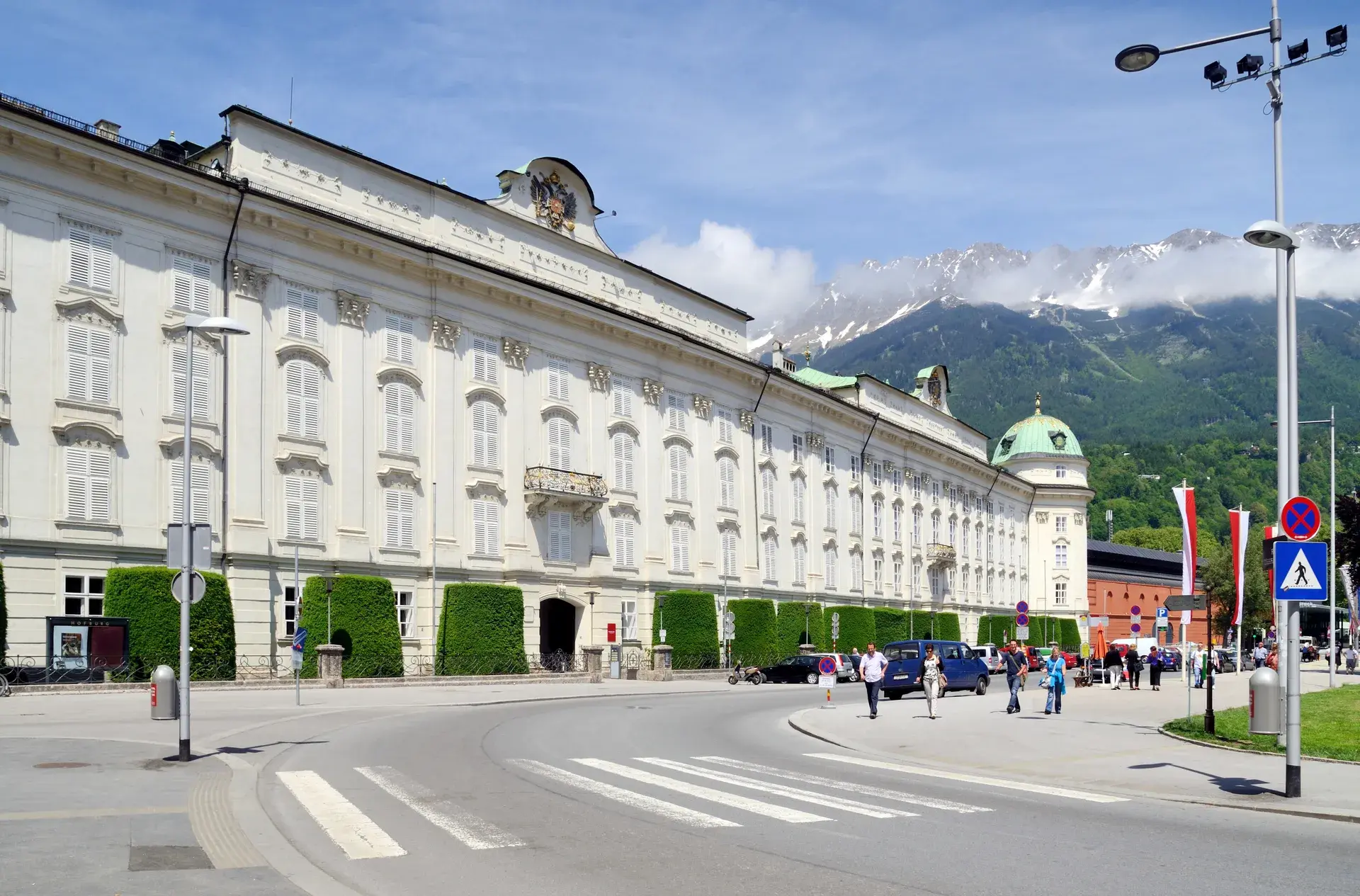
From Rennweg, the imposing Baroque facade of Hofburg Innsbruck stands as a testament to centuries of Habsburg imperial power. Once the court of emperors and empresses, it is one of Austria's three most significant cultural palaces, alongside Vienna's Hofburg and Schönbrunn Palace, embodying the grandeur of the dynasty in the Tyrolean region.
A History of Imperial Transformation
The palace's origins trace back to the 15th century, with construction beginning around 1460 under Archduke Sigismund 'the Rich in Coin'. Built upon former city fortifications, the initial expansion required clearing the graveyard of St. James' Parish Church to achieve its 5,000-square-meter footprint. By 1500, Emperor Maximilian I had significantly enlarged the residence in the late Gothic style, and in 1497, he relocated the Habsburg treasury to the Hofburg, elevating Innsbruck to a vital financial center of the Holy Roman Empire.
In the 16th century, Archduke Ferdinand II transformed the palace into a Renaissance castle, establishing Innsbruck as a key center for courtly culture north of the Alps. However, the palace's current opulent appearance is primarily the result of extensive Baroque and Rococo renovations commissioned by Empress Maria Theresa between 1754 and 1776. Architects like Johann Martin Gumpp the Younger and Niccolò Pacassi oversaw the redesign, which included magnificent ceiling frescoes by Franz Anton Maulbertsch in the Giants' Hall. Remarkably, the Empress, who so profoundly shaped the palace, only visited Innsbruck twice in her life.
Significant Events and Residents
The Hofburg was the setting for a pivotal moment in Habsburg history in 1765. During the wedding celebrations for his son Leopold II, Emperor Francis I, husband of Maria Theresa, died suddenly within the palace. Deeply affected, the Empress ordered the room of his death to be converted into a memorial chapel.
Over the centuries, the palace saw other notable occupants. In 1809, during the uprising against Bavarian and Napoleonic forces, Tyrolean rebel leader Andreas Hofer briefly used the Hofburg as his headquarters. The 19th-century apartments of Empress Elisabeth (Sisi), though she was rarely present, are also preserved within the palace. The Hofburg was transferred to the Austrian state in 1918 and underwent comprehensive refurbishments in the late 20th and early 21st centuries.
The Palace Today: A Museum Complex
Today, the Hofburg Innsbruck operates as a public museum, offering access to its lavish state rooms and imperial apartments. The museum is divided into five distinct areas: Maria Theresa's Rooms, Empress Elisabeth's Apartment, a Furniture Museum, an Ancestral Gallery, and a Painting Gallery. A permanent exhibition uses multimedia technology to explore the life of Emperor Maximilian I.
The historic Hofburg Chapel remains an integral part of the visitor experience. Additionally, the palace's Gothic and Baroque cellars have been repurposed as unique venues for special events. Within the building's structure, parts of the original medieval fortifications, including old city walls and defensive towers like the Rumer Gate, are still visible, offering a glimpse into the palace's layered past.
FAQ
Who commissioned the Hofburg Innsbruck's famous Baroque facade?
The palace's current Baroque and Rococo appearance was commissioned by Empress Maria Theresa between 1754 and 1776. Despite overseeing this grand transformation, she only visited the palace twice in her lifetime.
What is the Hofburg Innsbruck used for today?
Today, the Hofburg is a museum complex open to the public. It features five main areas: Maria Theresa's Rooms, Empress Elisabeth's Apartment, a Furniture Museum, an Ancestral Gallery, and a Painting Gallery. It also hosts exhibitions and events.
Why is there a chapel inside the Hofburg?
The Hofburg Chapel was created as a memorial. After her husband, Emperor Francis I, died suddenly in the palace in 1765, Empress Maria Theresa had the room converted into a chapel in his memory.
Are there any medieval parts left in the Hofburg?
Yes, parts of the original medieval fortifications, including sections of the old city walls and defensive towers like the Rumer Gate, are still integrated into the current palace structure and remain visible.