Innsbrucker Hofgarten: A Royal Garden's History
The Innsbrucker Hofgarten, or Court Garden, is a 10-hectare protected park on the edge of Innsbruck's Old Town. With a history spanning over 600 years, this public recreational area was once the private garden of the Habsburg dynasty, reflecting centuries of shifting imperial tastes in landscape design.
A Garden Through the Centuries
The garden's origins date to the early 15th century, with land acquisitions by Duke Leopold IV and his son Duke Friedrich IV. By the time of Emperor Maximilian I, the area served as sovereign meadows and hunting grounds, with landscape culture first documented in his Fishery Book of 1504.
Between 1564 and 1582, Archduke Ferdinand II, a highly educated and art-loving prince, transformed the grounds into an elaborate Renaissance pleasure garden. This period marked one of the garden's most extravagant phases, as the Archduke established a dedicated pheasant garden that functioned as a royal menagerie, housing 3,000 pheasants alongside exotic animals like bears, lions, tigers, and guenons.
A dramatic event occurred on April 14, 1636, when an explosion at a nearby powder mill caused a fire that destroyed the pheasant house and a summer residence. Tragically, two of the imperial lions perished in the blaze. Later, in 1651, Archduke Ferdinand Karl, who had a greater interest in opera than gardening, ordered most of the grounds to be converted into meadows for fodder production.
Empress Maria Theresa initiated a Baroque redesign of the Hofgarten in the 18th century, in conjunction with renovations of the adjacent Hofburg palace. The garden's final major transformation occurred around 1858, when it was redesigned into an English landscape garden based on concepts by the renowned architect Friedrich Ludwig von Sckell. The garden was formally opened to the public in 1793, with its accessibility broadening significantly after 1848.
The Hofgarten Today
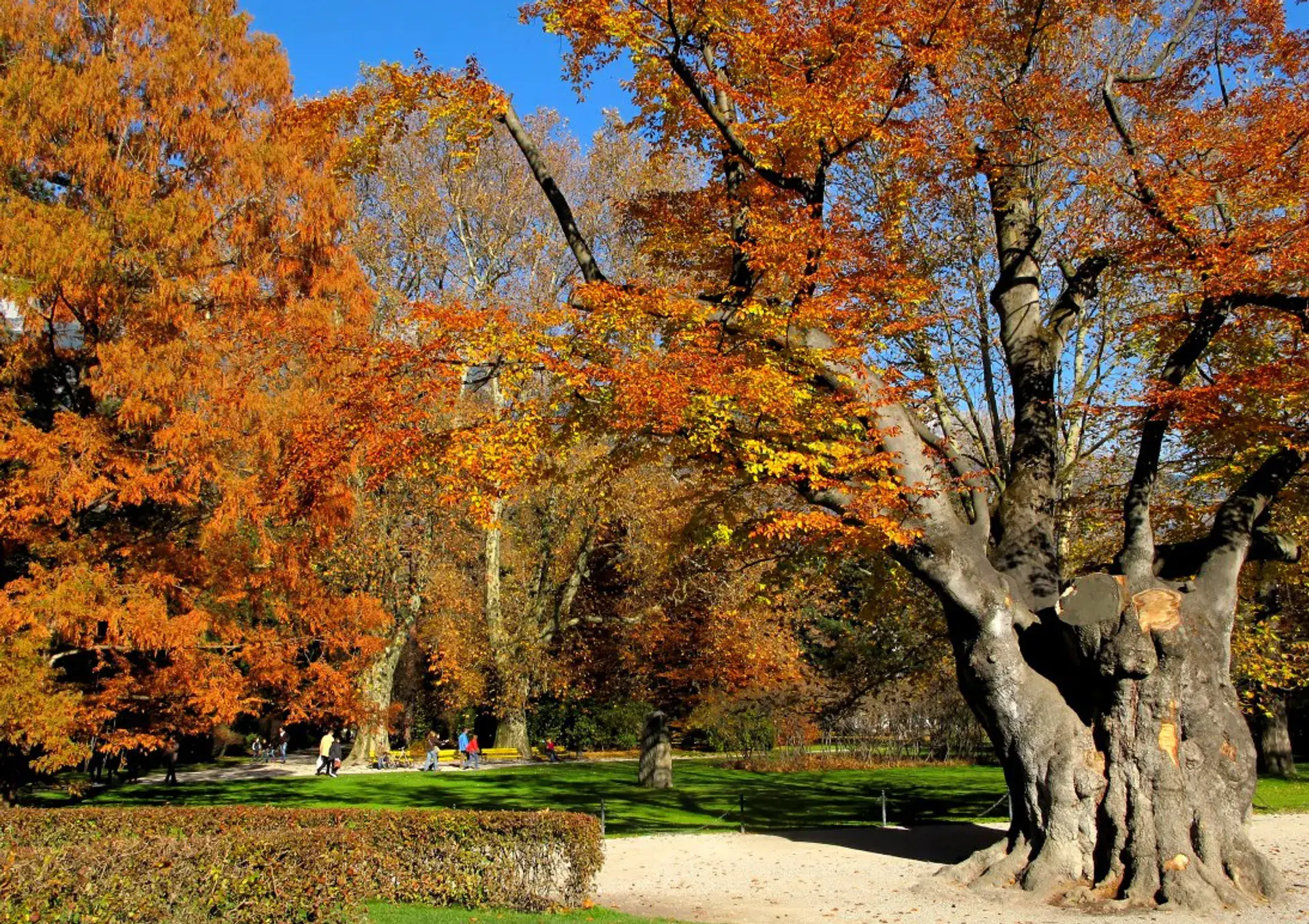
Today, the Hofgarten is a popular public park for residents and visitors, featuring extensive walking paths, mature trees, manicured lawns, and ponds. It serves as a tranquil green space offering benches, a children's playpark, and large outdoor chess boards for public use.
The Music Pavilion, which dates back to 1733, continues to be a central feature, hosting regular free concerts and performances, including events for the Innsbruck Festival of Early Music. While walking on ornate lawns was once restricted, designated areas have been open for picnicking since 2014.
Another point of interest is the Palm House, which contains a collection of over 5,000 tropical plant species and is generally accessible on weekdays. The park is managed by the Austrian Federal Gardens, though the absence of a permanent café since the old one burned down in 2019 remains a topic of public discussion.
FAQ
When did the Innsbrucker Hofgarten open to the public?
The Hofgarten was formally opened to the public in 1793. Its social accessibility expanded further after 1848, reflecting a shift from an exclusive aristocratic domain to a public urban green space.
What is the history of the Innsbrucker Hofgarten?
With a history of over 600 years, the Hofgarten evolved from 15th-century hunting grounds to a Renaissance garden with a menagerie, a Baroque park under Maria Theresa, and finally its current form as an English landscape garden, established around 1858.
Were there ever animals in the Hofgarten?
Yes, in the 16th century, Archduke Ferdinand II established a royal menagerie in the Hofgarten that housed bears, lions, tigers, monkeys, and 3,000 pheasants. Two of the lions died in a fire in 1636.
What can you do at the Hofgarten today?
The Hofgarten is a 10-hectare recreational park with walking paths, lawns for picnicking, ponds, and a children's playpark. It features a Music Pavilion for free concerts, outdoor chess boards, and a Palm House with over 5,000 tropical plants.