Palais Claudiana: Innsbruck's Imperial Landmark
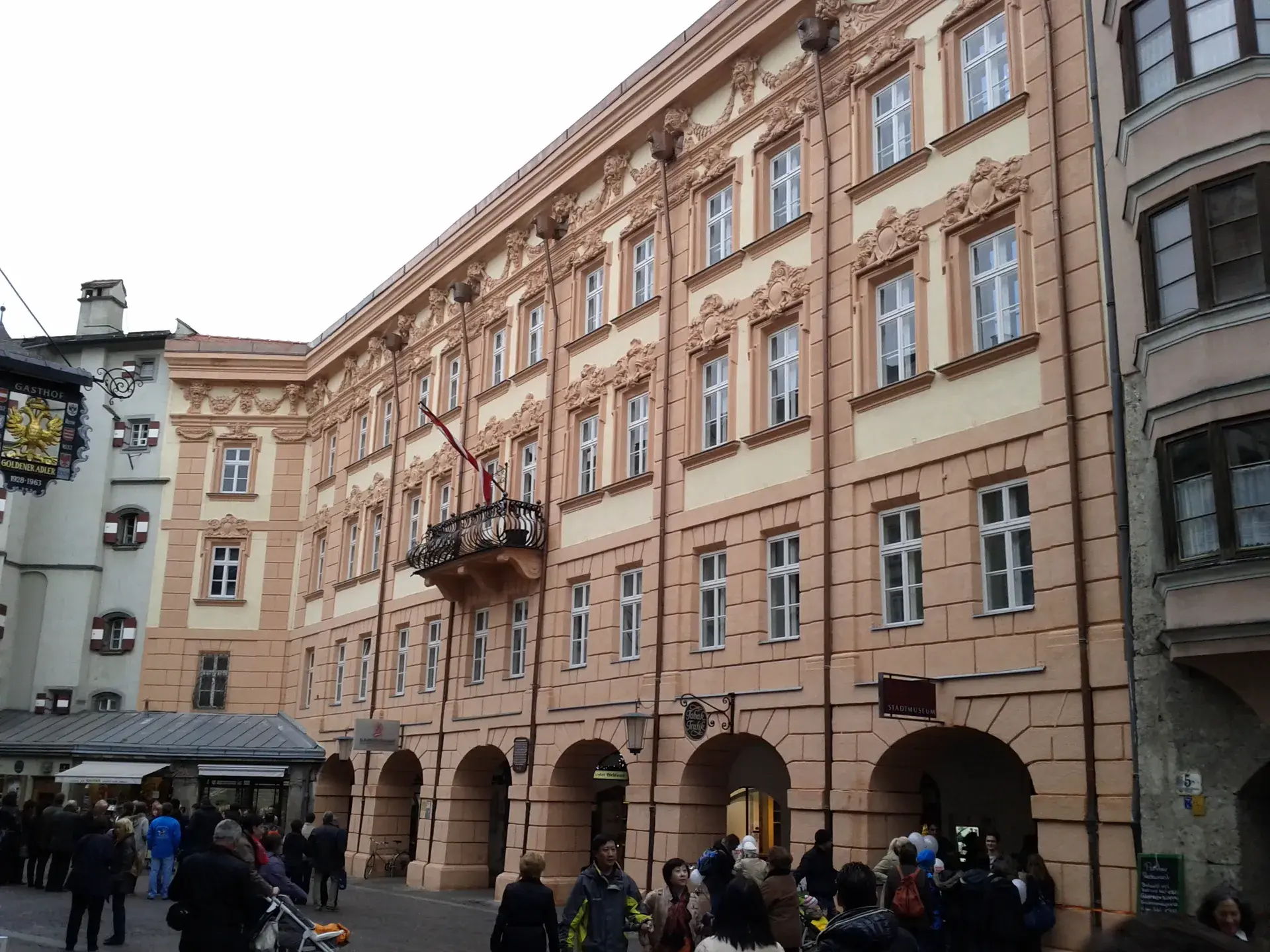
In the heart of Innsbruck's Old Town, adjacent to the Goldenes Dachl, stands the stately Palais Claudiana. This historic landmark, also known as the Old Government Building, speaks volumes of imperial prestige woven into the city's urban fabric. Its history reflects the dynastic influences and architectural shifts that shaped Innsbruck over centuries.
From Residence to Government Seat
The building's story begins in the mid-16th century when it was known as the 'Zerrenmantelhaus'. Archduke Ferdinand II acquired the residential building and initiated its conversion into the administrative headquarters for the region of Tyrol. From 1569, it served as a crucial administrative and judicial hub, housing the Tyrolean state government and the Landtag (regional parliament). Ferdinand II, a Renaissance prince, established this center as part of his governance strategy, which involved consulting with the Tyrolean estates.
The Influence of Claudia de' Medici
A significant transformation occurred in the 17th century under the patronage of Archduchess Claudia de' Medici. After water damage in 1641 necessitated major work, the influential regent of Tyrol and wife of Landesfürst Leopold V initiated a substantial rebuilding in 1645. Hailing from the wealthy Florentine Medici family, she brought a strong artistic sense to the project, redesigning the council rooms in an elaborate style reminiscent of her native Florence. The palace was subsequently named in her honor.
One of the most significant contributions from this era is the opulent Renaissance wooden ceiling in the grand hall, the Claudianasaal. This masterpiece of craftsmanship still bears the Medici family's coat of arms, a lasting symbol of the Archduchess's cultural and political influence on Tyrol.
Architectural Evolution
The Palais Claudiana showcases a blend of architectural styles. While its core is Renaissance, with some Gothic elements still visible in the inner courtyard, its most prominent facade was shaped by a later event. Following the devastating Innsbruck earthquake of 1689, the building's exterior was remodeled in a Baroque style by the architect Johann Martin Gumpp the Elder. This redesign gave the palace a distinctive appearance that made it stand out. A simpler renewal of the facade facing the Inn river was completed in 1732.
The Palace Today
Presently, the Palais Claudiana serves a new purpose as part of the University of Innsbruck. It houses several university departments and offices, including the Public Relations Office ('Büro für Öffentlichkeitsarbeit') and numerous seminar rooms. While the building's exterior can be admired by the public, access to its historic interiors is limited. The famed Claudianasaal, with its remarkable wooden ceiling, is not open for general viewing and can typically only be accessed by those attending specific ticketed events. Visitors can, however, enjoy the atmosphere of the inner courtyard, which features a public café and restaurant.
FAQ
What is the Palais Claudiana used for today?
Today, the Palais Claudiana houses several departments and offices for the University of Innsbruck, including seminar rooms and the Public Relations Office. Its inner courtyard also contains a public café and restaurant.
Can the public visit the inside of Palais Claudiana?
Public access to the interior of Palais Claudiana is restricted. The most famous room, the Claudianasaal with its Renaissance wooden ceiling, can only be seen with a ticket to a specific event held there.
Who is the Palais Claudiana named after?
The palace is named after Claudia de' Medici, an influential Archduchess from Florence who was the regent of Tyrol. She initiated a major renovation of the building in the 17th century.
What is the architectural style of Palais Claudiana?
The Palais Claudiana features a mix of styles. It has a Renaissance core with some remaining Gothic elements, but its main facade was redesigned in the Baroque style by architect Johann Martin Gumpp the Elder after the 1689 earthquake.