Boniface Bridge in Bruges: History & Architecture
The 20th-Century Origin of a Medieval Illusion
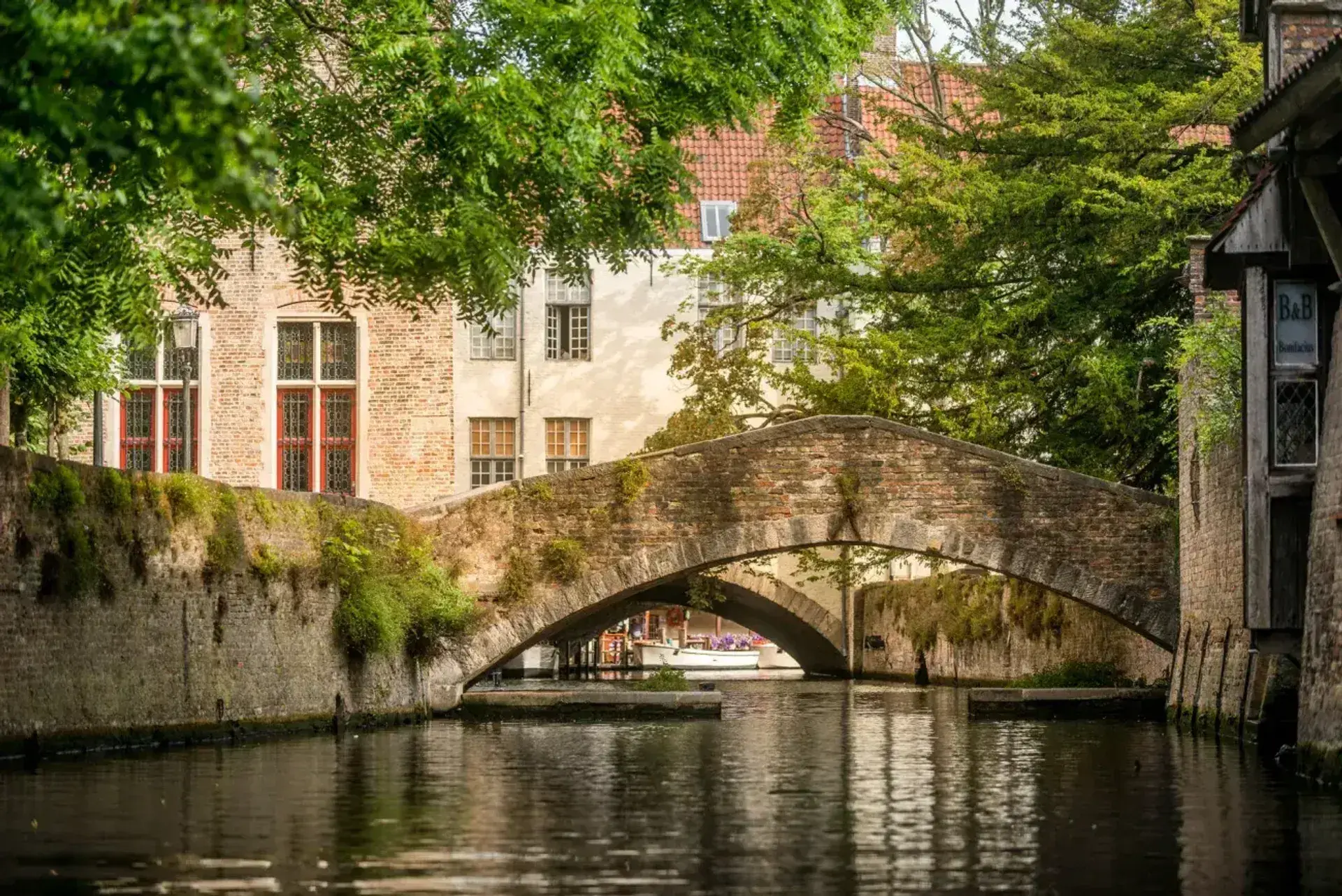
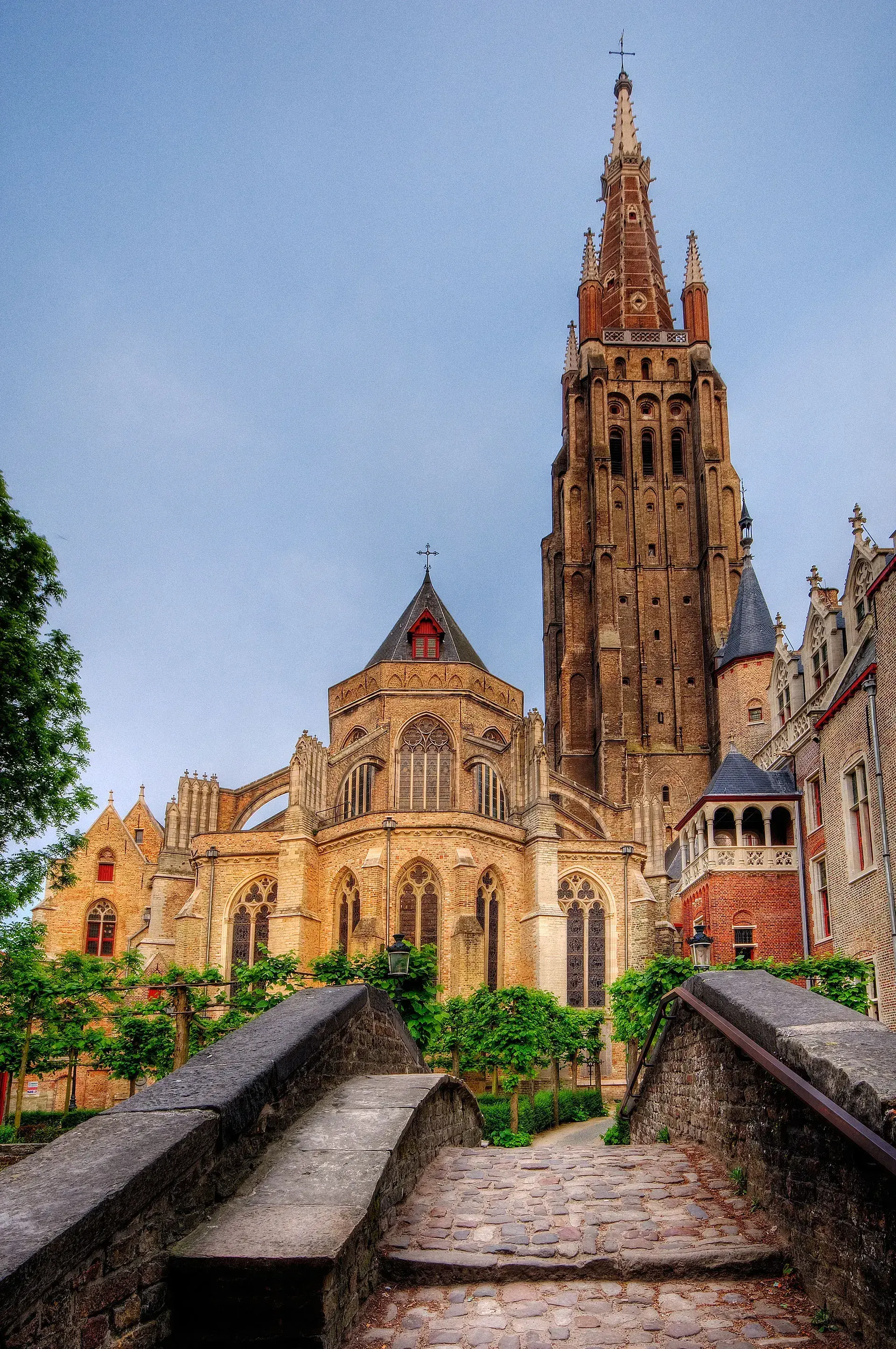
Bonifaciusbrug, commonly known as the Boniface Bridge, spans a tranquil branch of the canalized Reie in Bruges. While its weathered stone railings and traditional brick masonry suggest an origin in the Middle Ages, the bridge was actually constructed in 1910, making it one of the youngest bridges in the city.
Following a period of nineteenth-century economic stagnation that inadvertently preserved Bruges' historical urban layout, the city witnessed a tourism-driven revival at the turn of the century. Rather than adopting contemporary industrial materials such as cast iron or reinforced concrete, municipal planners selected a historicist Neo-Gothic design. Built from traditional brick and stone, the bridge was specifically engineered to harmonize with surrounding medieval landmarks. It was named after Saint Boniface, an eighth-century English-born Benedictine missionary and bishop.
Bruges walking tour with audio and quizzes: Belfry, canals and beer
2 hours10 stopsAudio guideStart any day, at your own paceTicket on your phone · 30-day refundArchitectural Setting and Vistas
The construction of the bridge was timed to coincide with urban developments in the early twentieth century. It was installed to provide a direct pedestrian connection between the quiet courtyards of the Gruuthuse estate and the Church of Our Lady (Onze-Lieve-Vrouwekerk) and the adjacent Hof Arents, which opened to the public around 1911–1912 after being acquired by the city.
The bridge provides one of the most celebrated viewpoints in Bruges. From its narrow deck, water laps against ancient foundations beneath overhanging facades. Looking upward from this low canal crossing, the sightline is dominated by the soaring 115.5-metre brick spire of the Church of Our Lady. Today, the bridge functions as a free public pedestrian route connecting the Dijver canal area with the Groeninge and Begijnhof quarters.
Surrounding Landmarks and Lore
Beyond its architectural composition, the Boniface Bridge is enveloped in local lore and artistic heritage. It is popularly nicknamed the "Kissing Bridge" due to a romantic local legend asserting that anyone who crosses it will marry the first person they lay eyes upon afterward.
Several significant monuments border the crossing. On the nearby canal bank, a stone pedestal bears a 1957 bronze bust of Juan Luis Vives, the Spanish Renaissance humanist scholar who lived and taught in Bruges during the sixteenth century. Just steps away, the Gruuthuse Bridge with the whitewashed Arentshuis stands out as the only bridge structure in Bruges topped by a freestanding building. At the bridge's exit into the Arentshof park, visitors encounter two salvaged stone columns from the demolished medieval Waterhalle market hall, installed alongside the dramatic modern bronze sculptures of the Four Horsemen of the Apocalypse by Rik Poot.
FAQ
When was the Boniface Bridge built?
The bridge was constructed in 1910 using brick and stone masonry in a Neo-Gothic style, making it one of the youngest bridges in Bruges despite its antique appearance.
Why is the bridge nicknamed the 'Kissing Bridge'?
According to local tradition, anyone who crosses the bridge will marry the first person they see immediately after crossing.
Who is the Boniface Bridge named after?
The bridge is named in honor of Saint Boniface, an eighth-century English-born Benedictine bishop and missionary.
What historical artworks stand near the bridge exit?
Beside the bridge exit in the Arentshof park stand two preserved columns from the lost medieval Waterhalle alongside bronze sculptures of the Four Horsemen of the Apocalypse by Rik Poot. A 1957 bronze bust of humanist Juan Luis Vives is also located along the canal bank.