
Grote Markt Bruges: History, Belfry & Architecture
The Commercial Heart of Bruges
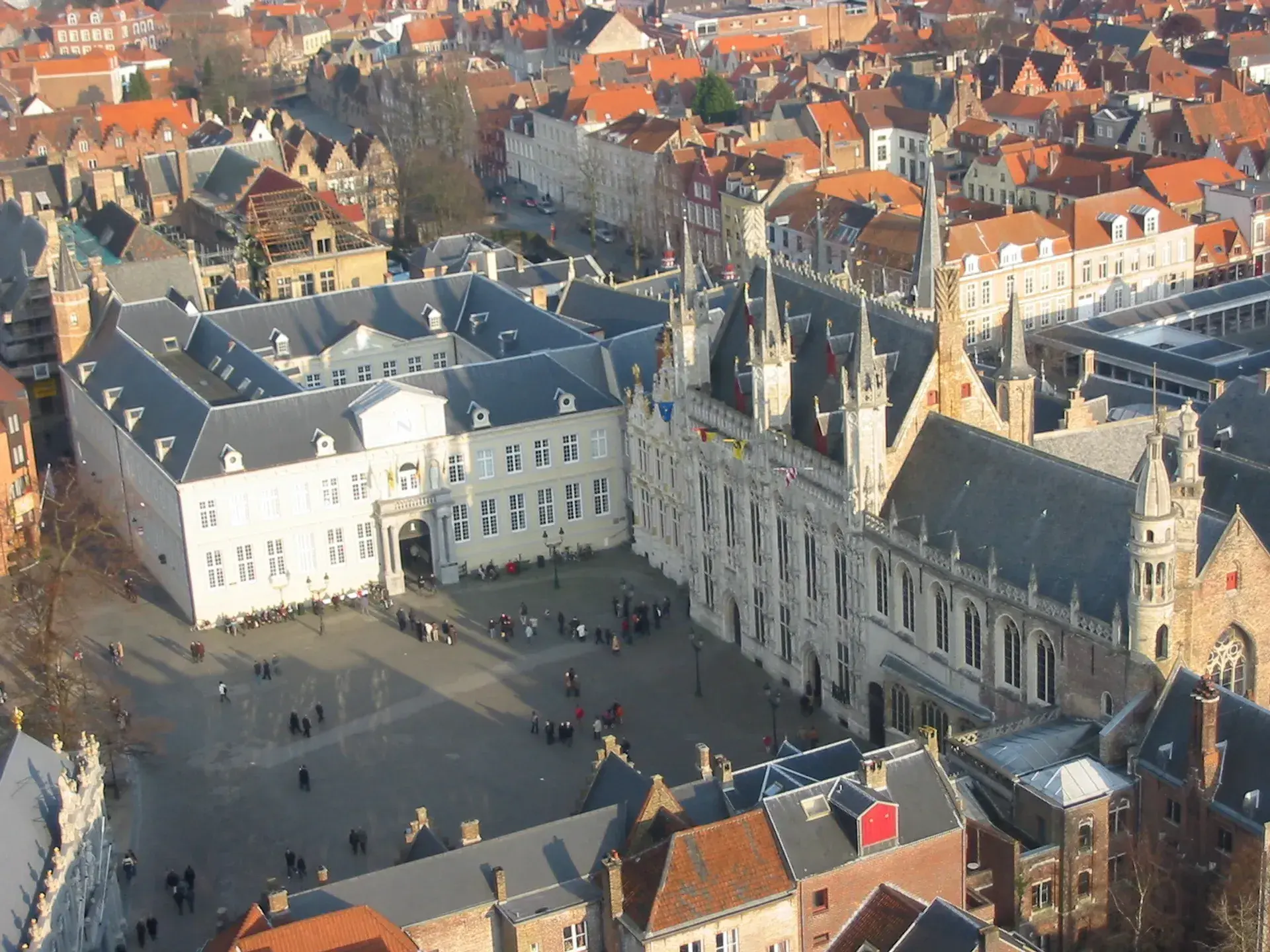
Covering approximately one hectare in the historic centre of Bruges, the Grote Markt—known simply as the Markt—has served as the city's commercial and mercantile hub for over a millennium. While the nearby Burg functioned as the seat of legal, judicial, and countal power, the Markt developed as the civic domain of independent guilds and international merchants. The two complementary civic squares remain linked today by the shop-lined Breidelstraat.
Trading on the square traces back to the 10th century, and the city held its first documented international trade fair here around 1200. Early wooden trade halls constructed around 1220 were destroyed by an 1280 fire, prompting the city to rebuild its trading infrastructure in stone alongside a monumental bell tower between 1291 and 1296. Over the centuries, the open plaza accommodated massive civic spectacles, guild assemblies, public executions, and grand festivities, including the 1430 wedding celebrations of Philip the Good.
Bruges walking tour with audio and quizzes: Belfry, canals and beer
2 hours10 stopsAudio guideStart any day, at your own paceTicket on your phone · 30-day refundSurrounding Architecture and the Belfry
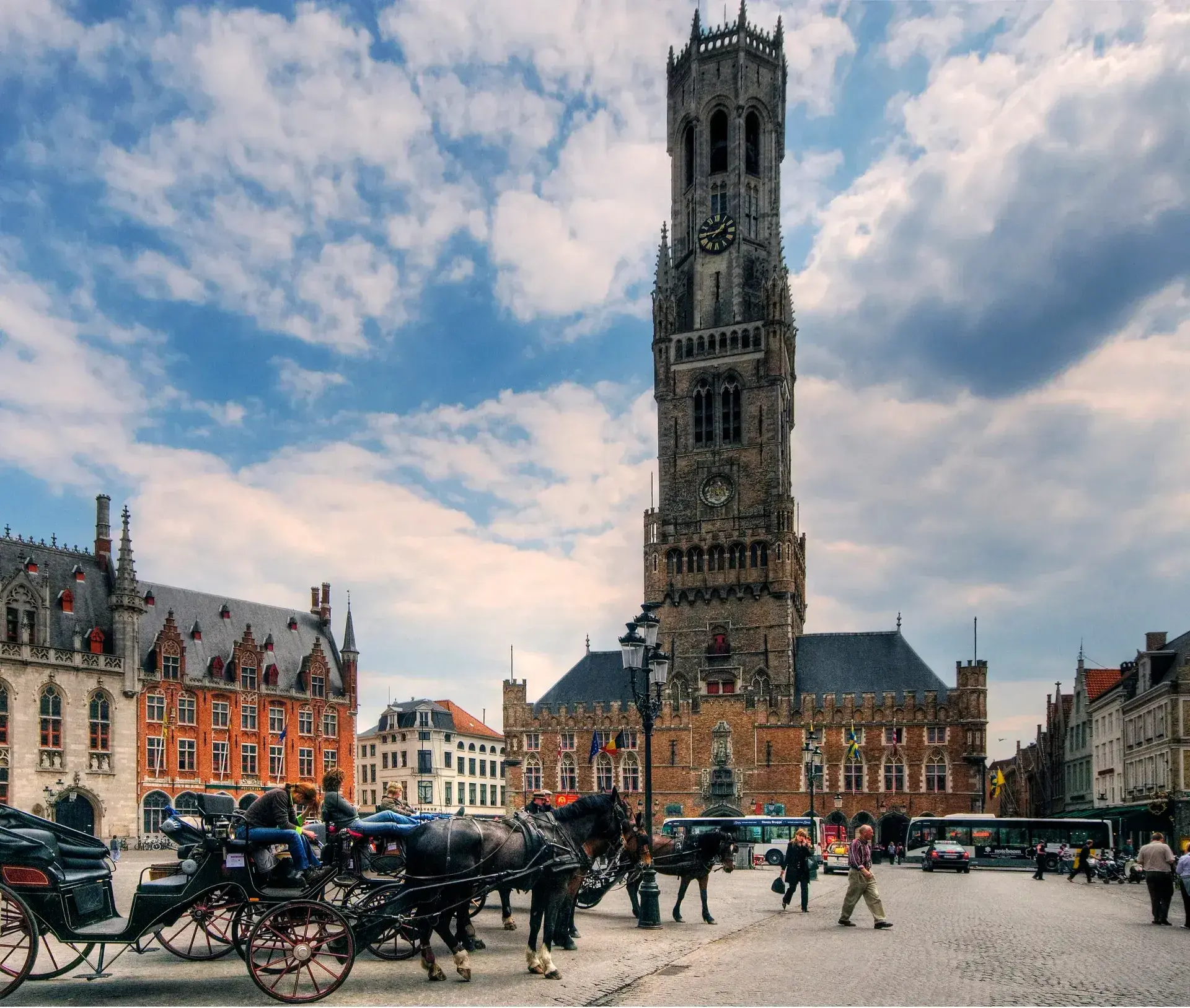
The architectural perimeter of the Markt presents an array of historic Flemish building styles. Anchoring the southern boundary is the 83-metre-tall, 13th-century Belfry and its integrated Cloth Halls. Inside the tower, a carillon chimes every fifteen minutes, driven by a massive 9,000-kilogram rotating copper drum.
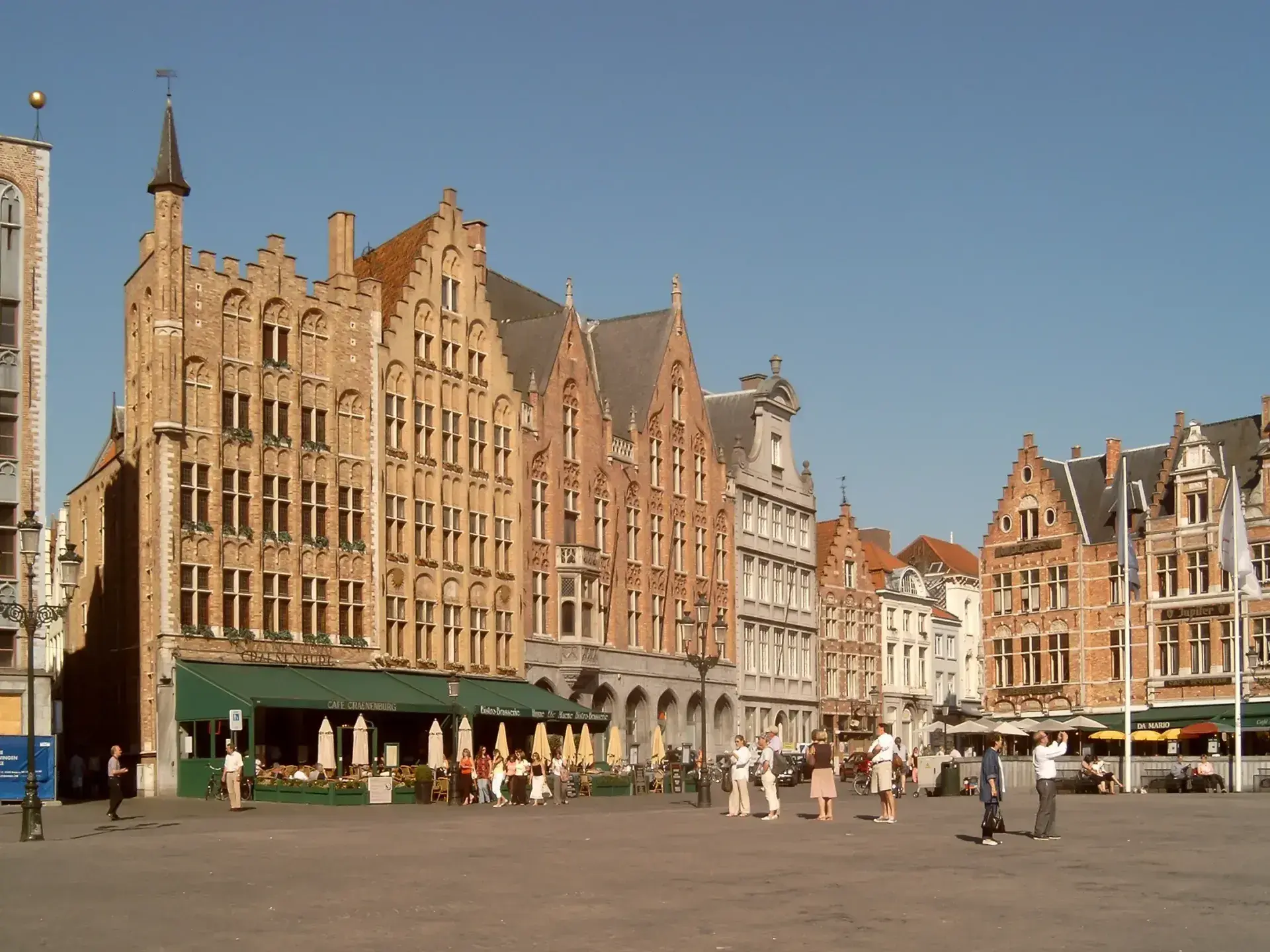
The eastern border is defined by the neo-Gothic Provinciaal Hof, built between 1887 and 1920 to replace an 1850 neoclassical court building destroyed by fire in 1878. The Provinciaal Hof no longer serves as an active provincial government seat; instead, it hosts public cultural exhibitions and ceremonial gatherings. The northern and western flanks are framed by classic stepped- and bell-gabled merchant residences and guildhalls, now occupied on their ground floors by cafés and brasseries.
At the square's centre stands an 1887 bronze monument sculpted by Paul de Vigne. It depicts folk figures Jan Breydel and Pieter de Coninck. The monument experienced an unusual double inauguration in 1887 due to political tensions between Flemish nationalists and French-speaking civic leaders.
The Subterranean Port: The Lost Waterhalle
Beneath the dry paving stones of the square lies a forgotten maritime history. Between 1284 and 1294, builders erected the Waterhalle along the eastern flank, bridging the Kraanrei river. Stretching roughly 95 to 100 metres in length, this massive covered canal port allowed river barges arriving from downstream outposts to sail completely indoors. Merchants could unload wool, textiles, and bulk goods directly inside the hall, protected from rain and storms.
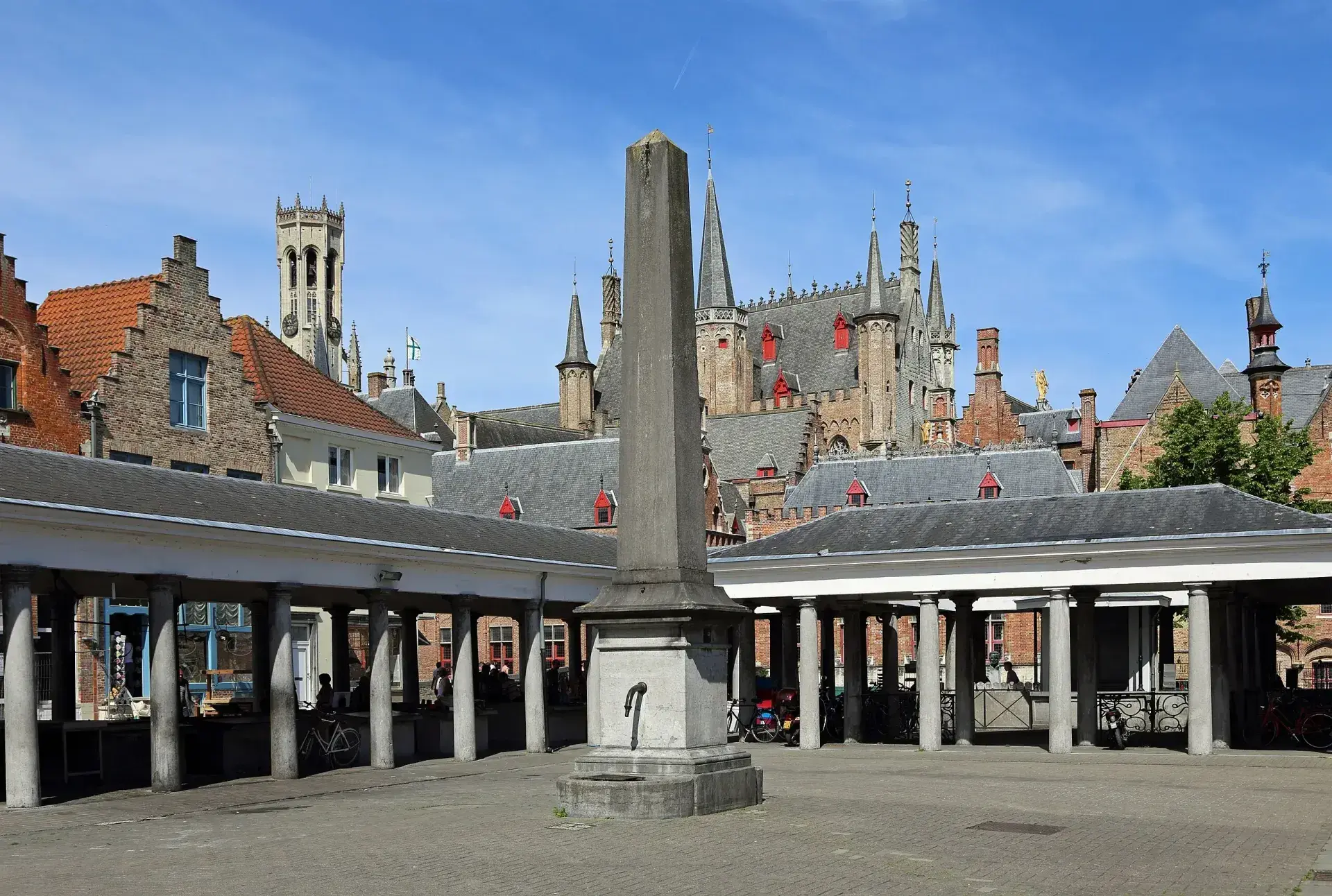
By the late 18th century, waterways had silted and trade routes shifted. The Waterhalle fell into disuse and was demolished between 1787 and 1789. The Kraanrei canal was subsequently vaulted underground, leaving the dry open plaza that stands today. Other shifts also changed the square's character; fishmongers, who had operated on the Markt since 1396, were permanently moved to the Braamberg in 1745.
Historical Curiosities on the Square
Several landmark properties bordering the square witnessed critical moments in Belgian history:
- Huis Craenenburg: In 1488, rebellious burghers of Bruges detained Archduke Maximilian of Austria inside this building during a revolt against Habsburg rule, extracting concessions regarding local civic privileges before his release.
- Huis Bouchoute: Atop this 15th-century facade sits a gilded copper sphere installed in 1839 by astronomer Adolphe Quetelet. Functioning as a solar meridian gnomon, it helped coordinate Belgian railway timetables during the expansion of the national train network.
The Square Today
A comprehensive redesign in 1995–1996 removed vehicular traffic and surface parking, establishing the Markt as a fully pedestrianized civic space. The square serves as the primary departure hub for horse-drawn carriage tours through the city's old quarter. It also preserves its historical mercantile function by hosting a weekly food and flower market every Wednesday morning between 08:00 and 14:00.
FAQ
When does the weekly market take place on the Markt?
A weekly open-air food and flower market is held on the Markt every Wednesday morning from 08:00 to 14:00.
What was the Waterhalle that once occupied the square?
The Waterhalle was a 95- to 100-metre covered canal harbour built between 1284 and 1294 on the eastern side of the Markt. It allowed cargo barges to sail indoors to unload wool and goods sheltered from the weather before being demolished in the late 18th century.
Why was Archduke Maximilian imprisoned on the square?
In 1488, the citizens of Bruges rebelled against Habsburg authority and confined Archduke Maximilian inside Huis Craenenburg to force him to grant concessions regarding civic rights.