Church of Our Lady, Bruges: Tower, Art, and History
The World's Second-Tallest Brick Spire
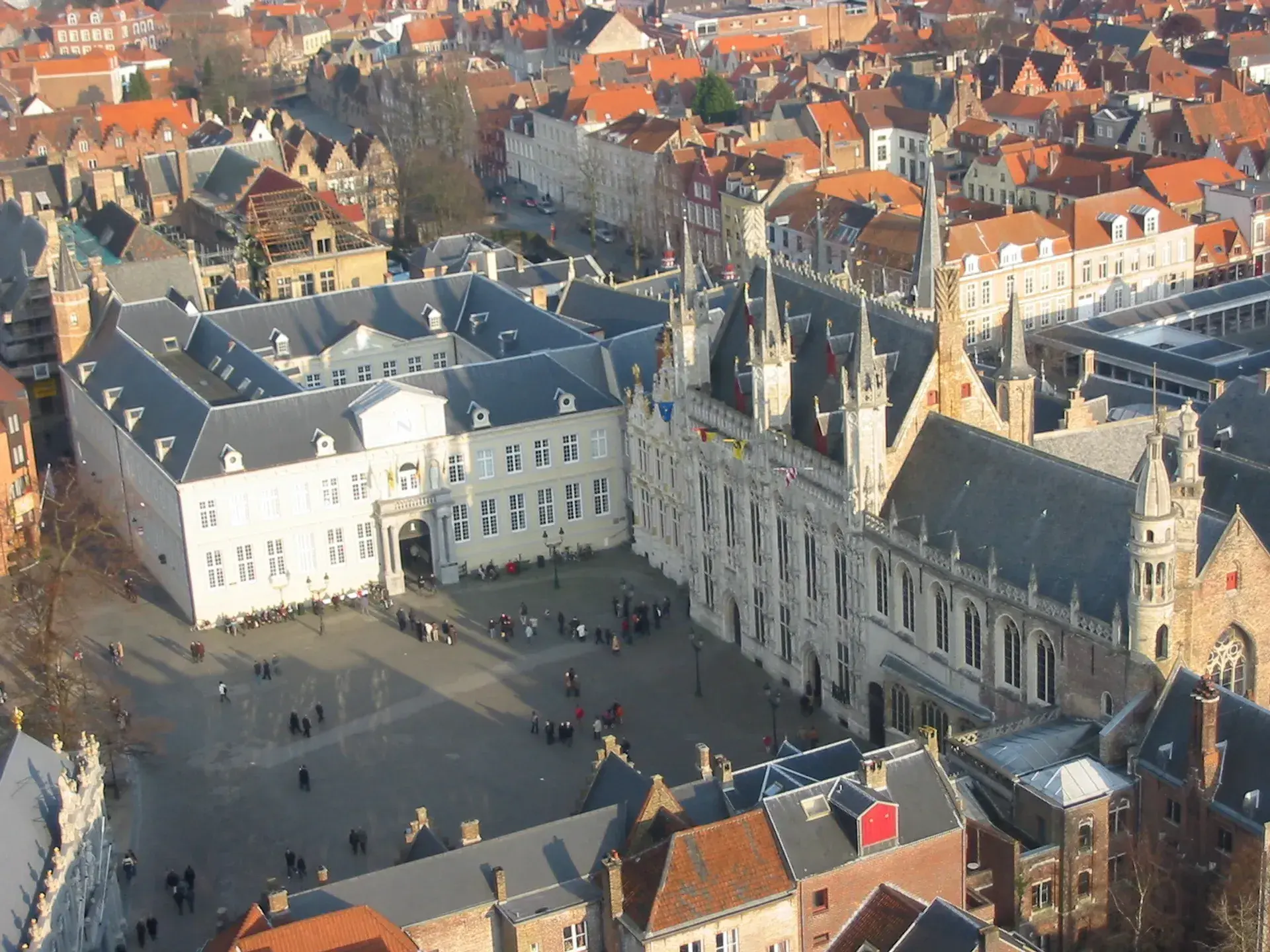
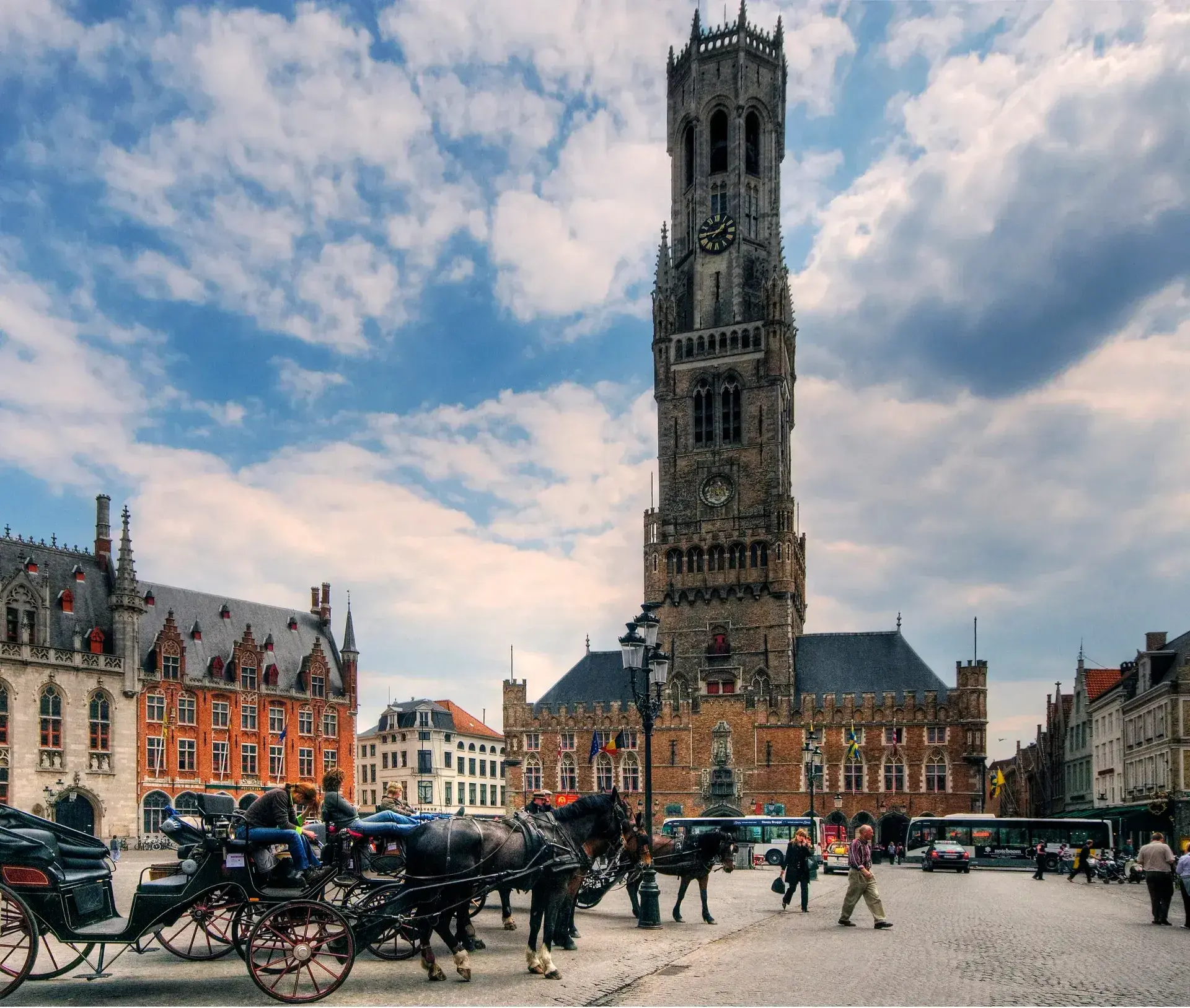
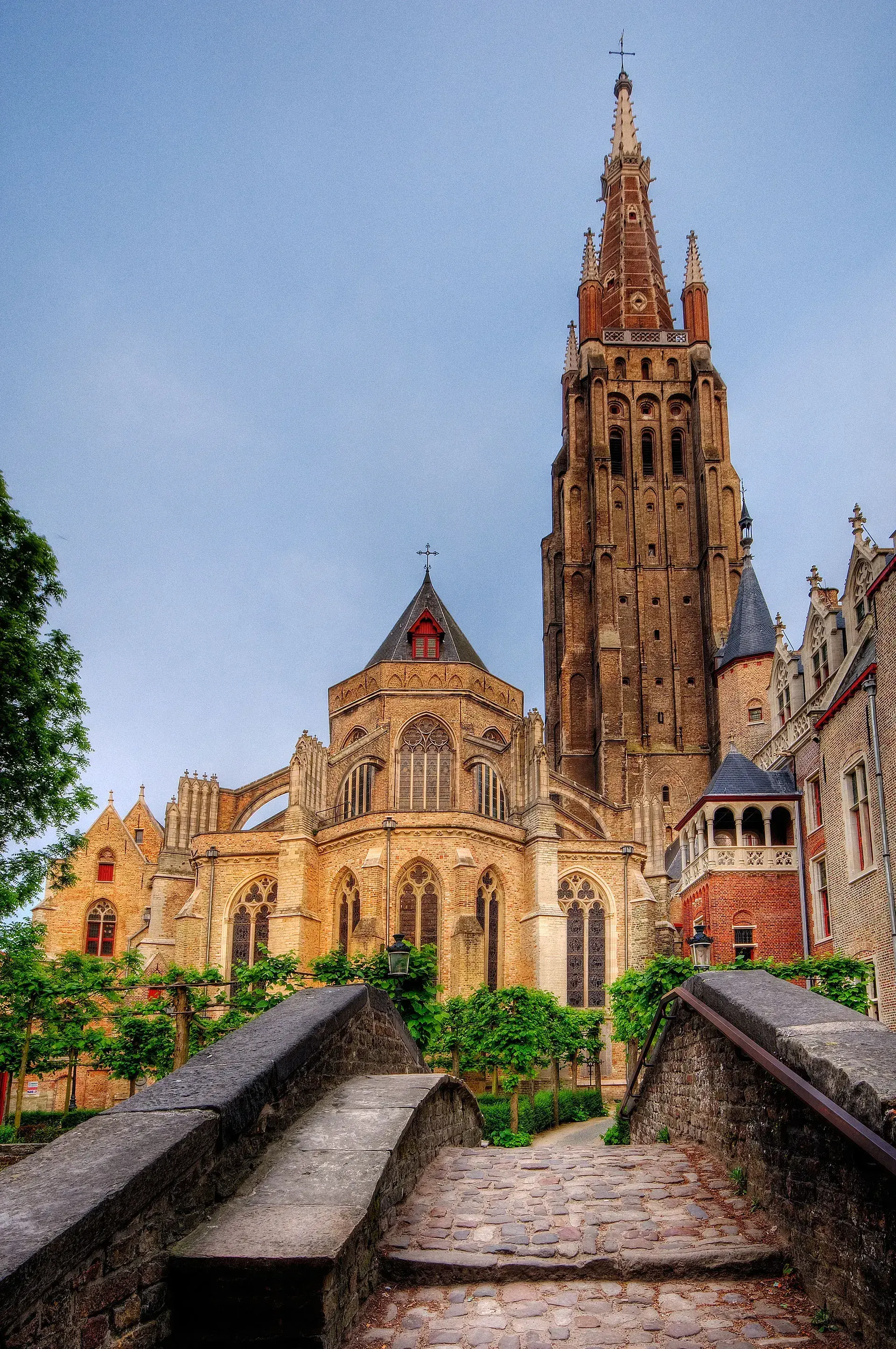
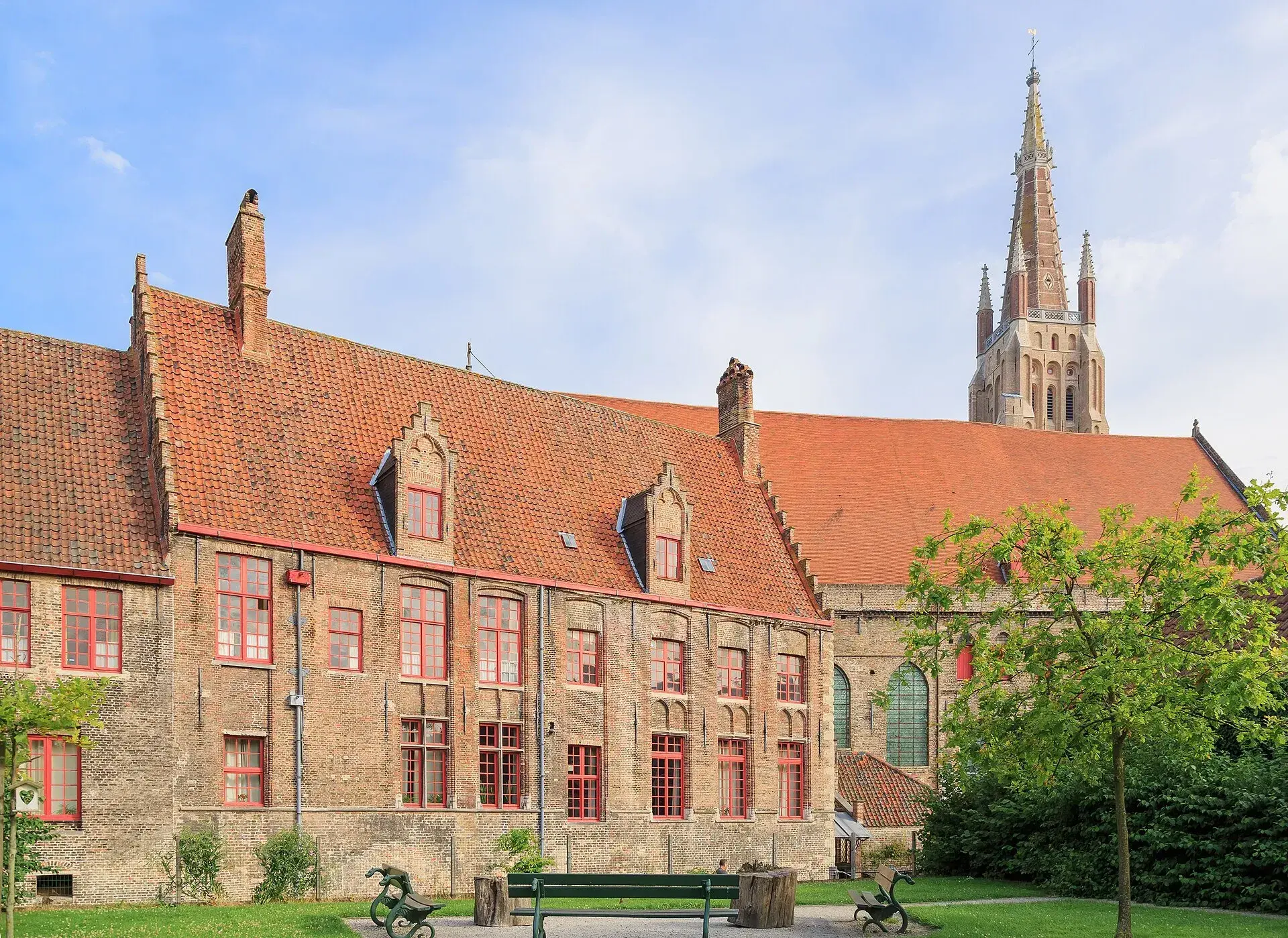
Dominating the skyline of Bruges from Mariastraat, the Church of Our Lady (Onze-Lieve-Vrouwekerk) is one of Belgium's most prominent architectural landmarks. Its central brick spire reaches approximately 115.5 metres (379 feet), making it the tallest building in Bruges and the second-tallest brickwork church tower in the world. Alongside the Belfry of Bruges and Saint Salvator's Cathedral, it forms the iconic "Three Towers" that define the medieval city's panorama.
The exterior of the church reflects a layered architectural evolution. The 13th-century nave and west front showcase Scheldt Gothic style constructed from Tournai stone, while the choir and apse transition into French Gothic built in local brick. In the 15th century, builders added the Brabant Gothic Paradise Portal (Paradijsportaal), complementing the exterior's eight flying buttresses that stabilize the soaring tower.
Bruges walking tour with audio and quizzes: Belfry, canals and beer
2 hours10 stopsAudio guideStart any day, at your own paceTicket on your phone · 30-day refundMichelangelo’s Madonna and Child
Inside the church's side chapel rests one of Northern Europe's most celebrated Renaissance treasures: Michelangelo's marble sculpture Madonna and Child (completed c. 1504–1506). Carved from pale white Carrara marble, it stands out against a dark architectural setting. It is the only sculpture by Michelangelo to have left Italy during the artist's lifetime.
Originally commissioned for the Piccolomini altar in Siena Cathedral, the statue was acquired after a dispute by Bruges cloth merchants Jan and Alexander Mouscron. Shipped to Flanders and donated to the church in 1514, the masterpiece subsequently survived two wartime lootings. In 1794, French Revolutionary troops removed it to Paris, where it remained until its return following Napoleon's defeat in 1815. In 1944, retreating Nazi forces smuggled the sculpture away concealed in mattresses inside a Red Cross truck. It was discovered in 1945 inside an Austrian salt mine at Altaussee by the Allied "Monuments Men" and restored to the church.
Royal Tombs and Medieval Treasures
The church choir preserves the monumental tombs of Mary of Burgundy (died 1482) and her father Charles the Bold (died 1477), the last Valois Duke of Burgundy. These elaborate mausoleums are crafted from black stone and decorated with gilded bronze effigies. Directly beneath the mausoleum in the museum area, visitors can view Mary of Burgundy's lead coffin through a glass floor panel.
The church's collection also encompasses other notable European artworks. These include the 16th-century Passion Triptych by Bernard van Orley and Marcus Gheeraerts, paintings by Flemish masters Pieter Pourbus and Anthony van Dyck, and preserved painted crypts dating to the 13th and 14th centuries.
From a 9th-Century Chapel to a Civic Landmark
The site of the Church of Our Lady originally accommodated a modest wooden chapel in the second half of the 9th century, serving as an auxiliary outpost for the parish of Sijsele. Following a devastating fire in 1116, Our Lady was reconstituted as an independent parish. Construction on the current Gothic edifice began between 1210 and 1230, followed by the erection of the brick choir and apse between 1270 and 1280.
The massive tower was constructed between 1270 and 1340 to replace a predecessor that had collapsed in 1163, with its towering spire completed in the 15th century. In 1472, a private two-story wooden oratory was built directly into the choir, linking the church to the adjacent Gruuthuse Palace. This allowed the noble patron Louis of Gruuthuse to hear Mass without stepping outdoors or mingling with the public. Over the centuries, the structure survived the Protestant Iconoclasm (Beeldenstorm) of the 16th century, an auction of church property during the French Revolution, and modern military conflicts.
Planning a Visit
The Church of Our Lady functions both as an active Roman Catholic parish and as a municipal museum site managed by Musea Brugge. Situated directly next to the Gruuthusemuseum, Saint John's Hospital (Sint-Janshospitaal), and the Dijver canal, the church is centrally located along the historic center's walking routes.
General entry to the church's five-aisled nave is free. Access to the enclosed museum section—which houses Michelangelo’s Madonna and Child, the choir, and the ducal mausoleums—requires a paid ticket. Visiting hours run from 9:30 AM to 5:00 PM Monday through Saturday, and from 1:30 PM to 5:00 PM on Sundays and religious holidays. Tourist entry pauses during religious services, weddings, and funerals.
FAQ
How tall is the tower of the Church of Our Lady in Bruges?
The church's brick spire reaches approximately 115.5 metres (379 feet), making it the tallest building in Bruges and the second-tallest brickwork church tower in the world.
What is significant about Michelangelo's Madonna and Child in the church?
Carved from Carrara marble around 1504–1506, it is the only sculpture by Michelangelo to have left Italy during his lifetime. It was donated to the church by Bruges merchants in 1514 and was recovered twice after being looted during the French Revolution and World War II.
Do visitors need tickets to enter the Church of Our Lady?
Entry to the main nave of the church is free of charge. However, accessing the municipal museum area, which houses the choir, the Burgundian ducal tombs, and Michelangelo's sculpture, requires a paid admission ticket.