
De Halve Maan: Bruges' Historic Working Brewery
A Living Heritage in Historic Bruges
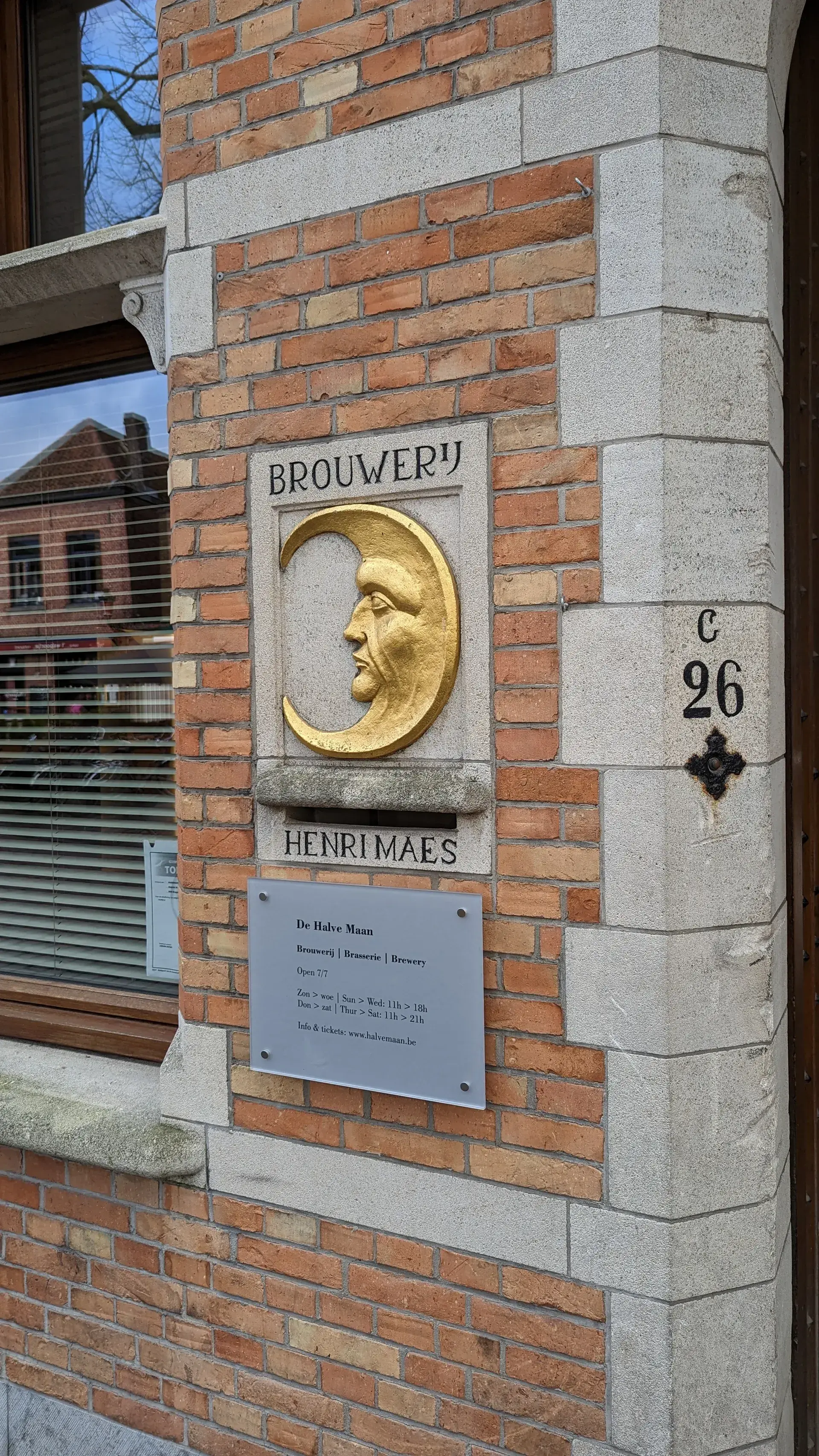
Situated at Walplein 26 in the southern portion of Bruges' historic city center, De Halve Maan holds a unique distinction: it is the only historic, family-owned brewery that continues to brew beer actively inside the medieval urban core. While documented brewing records on the site date back approximately 500 years, the current enterprise was founded in 1856 by Leon Maes, also known as Henri I. Across six generations of the Maes and Vanneste families, the brewery has maintained operations in the heart of the city.
Positioned on the tree-shaded, cobblestone square of Walplein, the brewery sits along the pedestrian path connecting the Church of Our Lady to the north with the Begijnhof and Minnewater park to the south.
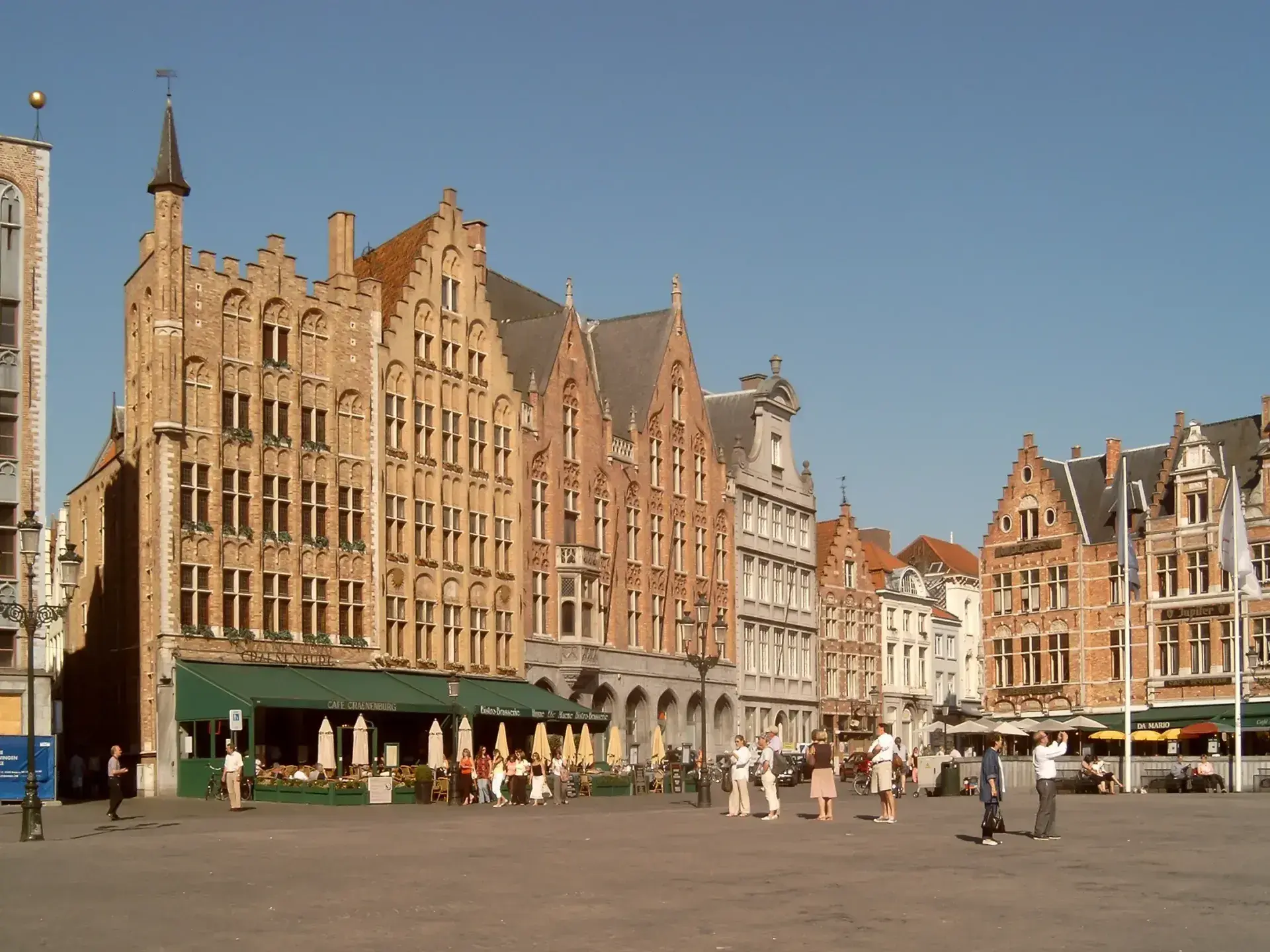
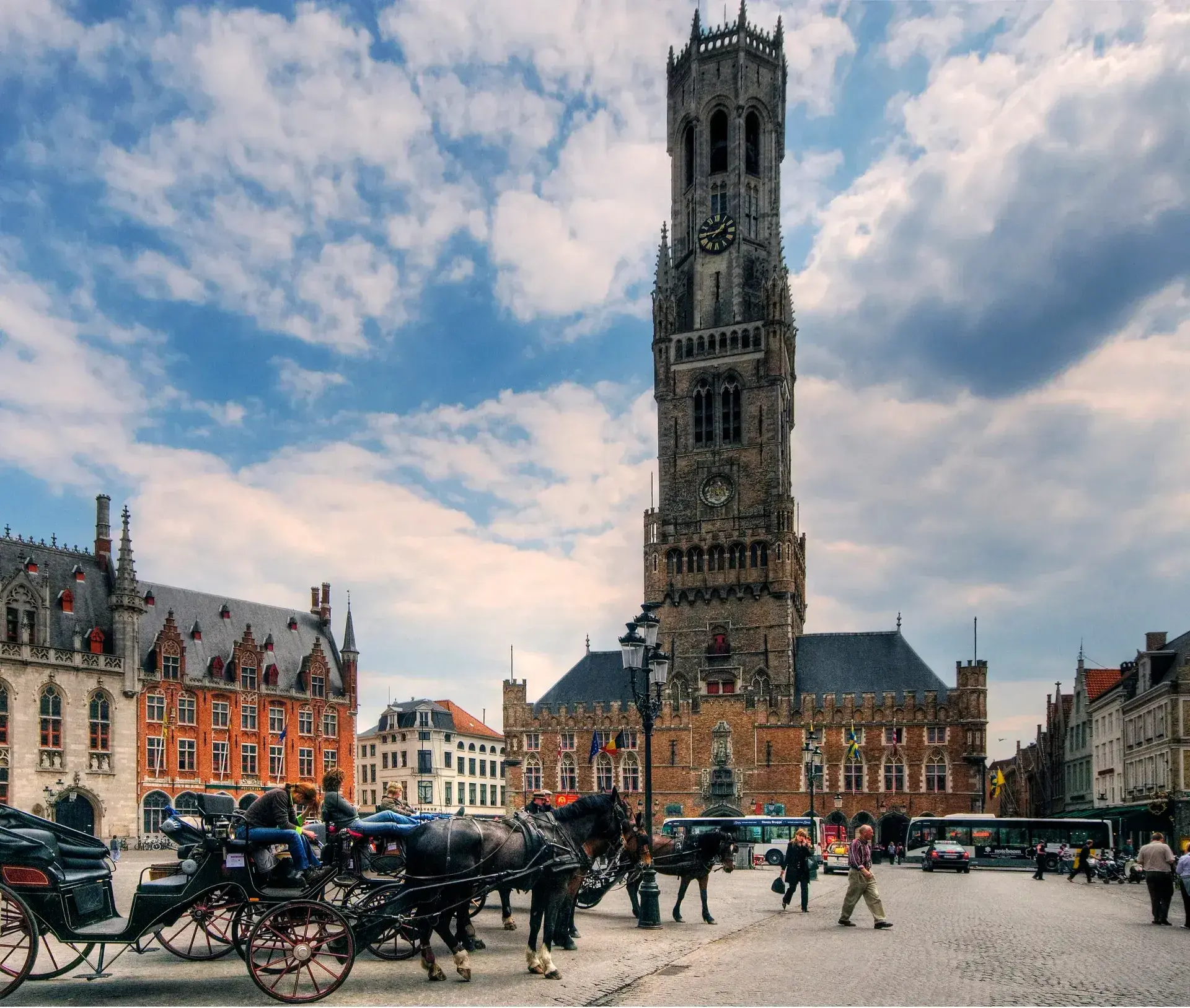
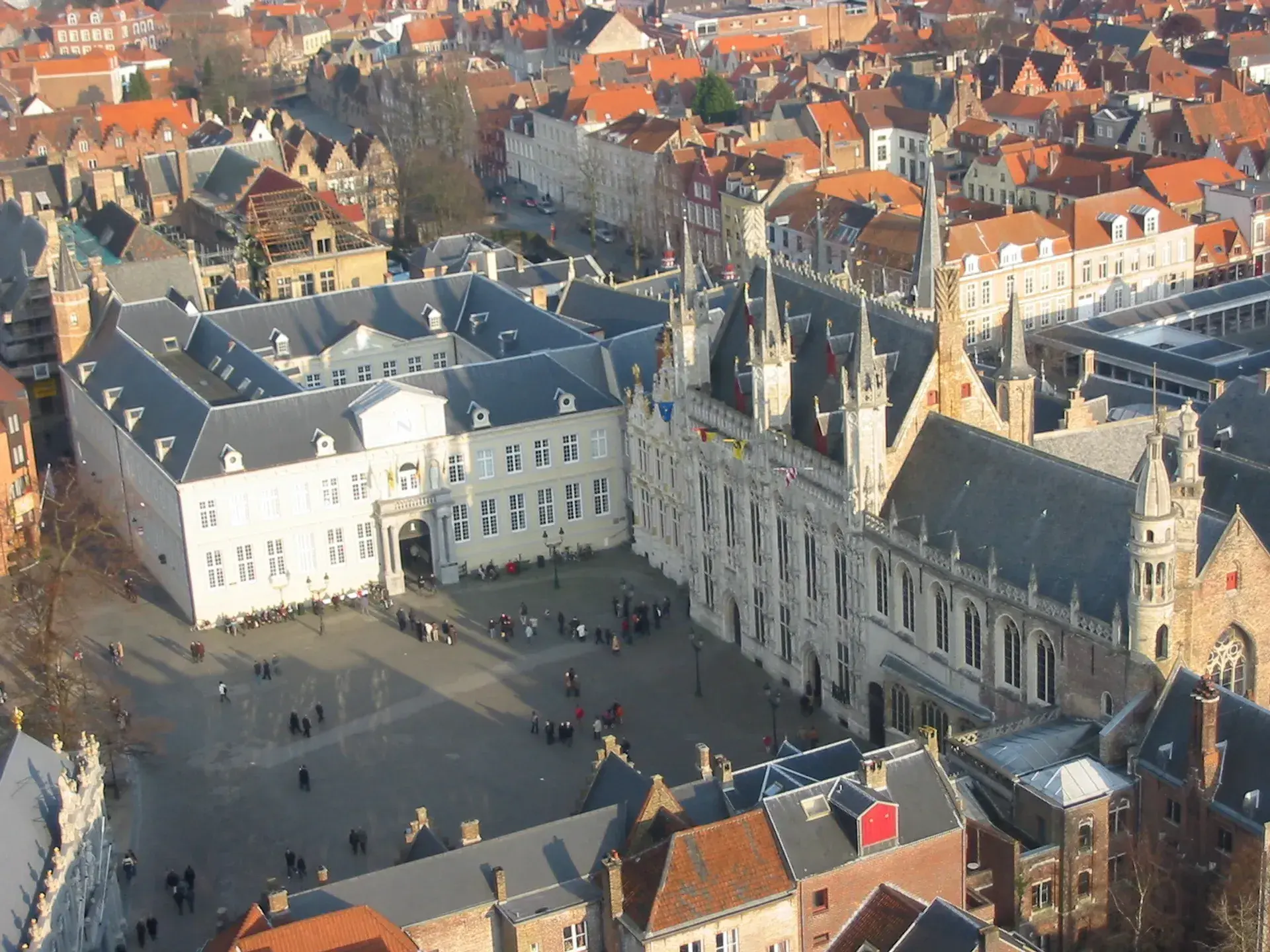
Bruges walking tour with audio and quizzes: Belfry, canals and beer
2 hours10 stopsAudio guideStart any day, at your own paceTicket on your phone · 30-day refundModernization, Revival, and Signature Beers
Following its 1856 founding, the brewery evolved alongside shifting European brewing practices. Leon Maes' sons, Henri II and Achère, modernized the facility after studying brewing techniques in England. During the 1930s, Henri III introduced bottom-fermenting equipment to produce modern lagers and bock beers. Following World War II, the business expanded into distributing table water and soft drinks using horse-drawn carts.
Changing market conditions and supermarket competition led to a halt in brewing during the late 1970s. Production resumed in 1981 when Véronique Maes launched the specialty ale Straffe Hendrik ("Strong Henri"). Although brewing was later leased and the brand temporarily sold, sixth-generation descendant Xavier Vanneste reestablished brewing at Walplein in 2005 by introducing Brugse Zot ("Bruges Fool"). The family successfully reacquired the Straffe Hendrik label in 2008, bringing both signature city brands under one roof.
The Engineering Feat: An Underground Beer Pipeline
As production volumes expanded, the brewery faced the challenge of transporting beer through Bruges' compact, historic street grid. In 2016, De Halve Maan completed a four-million-euro infrastructure project: an underground polyethylene pipeline running 3.2 to 3.3 kilometers from the brewhouse on Walplein to a suburban bottling and filtration plant in Waggelwater.
The pipeline was specifically designed to prevent heavy tanker trucks from traversing and damaging the city's fragile medieval cobblestones. To help fund the project, the brewery turned to crowdfunding, offering top financial contributors a perk of free Brugse Zot every day for life.
The Legend of the "Bruges Fools"
The brewery's flagship beer, Brugse Zot, draws its name and jester iconography from local lore dating back to 1488. During a revolt, the citizens of Bruges held Archduke Maximilian of Austria captive. Following his release, the archduke punished the rebellious town by banning fairs and public festivities.
In an attempt to regain favor, the town hosted an extravagant pageant and formally petitioned Maximilian for permission to establish a new asylum (zothuis). Maximilian reportedly dismissed the request, declaring: "Close all the gates of Bruges, and you already have a madhouse!" The inhabitants ultimately embraced the moniker Brugse Zotten ("Bruges Fools"), inspiring the brand that defines the brewery today.
The Brewhouse Today
Today, De Halve Maan brews all its base beer volumes on site, utilizing modern equipment integrated directly into its historic townhouse complex. Multi-story brick brewing halls feature warm, yeasty fermentation aromas and humid air surrounding gleaming copper kettles. Guided routes through the brewhouse include a climb of roughly 220 narrow, steep steps leading to the rooftop, which provides 360-degree panoramic views of Bruges' red-tiled gables, winding waterways, and the distant Belfry tower.
Welcoming more than 100,000 visitors each year, the complex houses an on-site museum, a tavern and restaurant, and an outdoor courtyard terrace on Walplein. Its taproom remains the only location where visitors can sample fresh, unfiltered versions of Brugse Zot and Straffe Hendrik drawn directly from the storage tanks.
FAQ
What beers are produced at De Halve Maan?
The brewery produces Bruges' signature ales, including Brugse Zot and Straffe Hendrik, both of which are served fresh and unfiltered directly from the tanks in the on-site taproom.
Why did De Halve Maan build an underground pipeline?
Completed in 2016, the 3.2- to 3.3-kilometer underground pipeline transports beer from the historic Walplein brewery to a suburban bottling plant in Waggelwater, preventing heavy tanker trucks from damaging Bruges' medieval cobblestones.
What is the origin of the beer name Brugse Zot?
The name references a 1488 legend involving Archduke Maximilian of Austria. After being held captive by the citizens of Bruges, Maximilian rejected their petition for a new asylum, stating that closing the city gates would create an asylum on its own. The locals embraced the resulting nickname, 'Brugse Zotten' (Bruges Fools).