Vismarkt Bruges: The Historic Fish Market Guide
The Origins of the Vismarkt
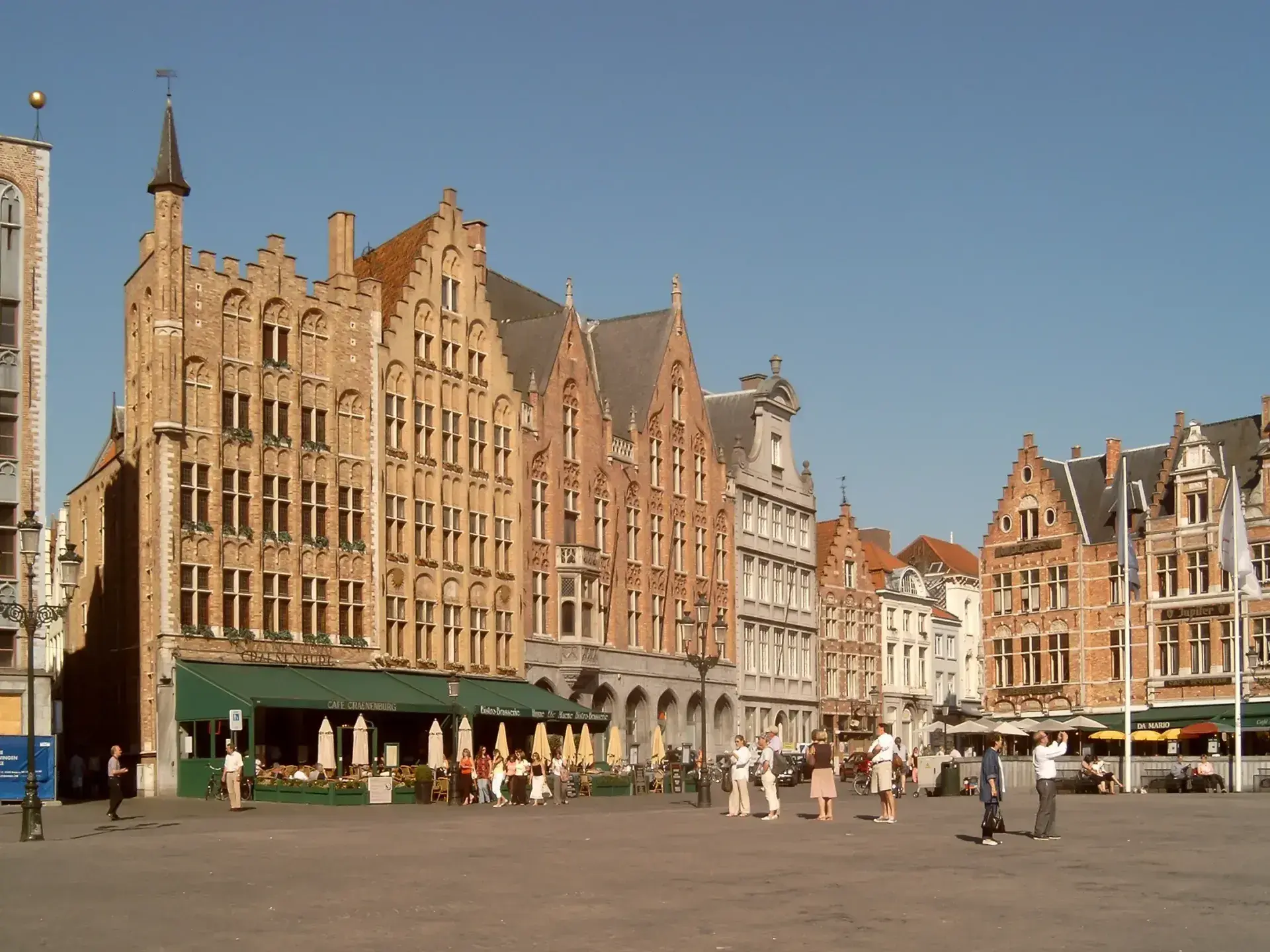
For centuries during the Middle Ages, seafood trading in Bruges was concentrated on the northern side of the Grote Markt near St. Christopher's Church. Conducted by the guild of Free Fishmongers, the trade supplied the city with fresh North Sea catches. However, the odor produced by gutting and selling fish on the primary civic square provoked recurring complaints from local residents and officials.
In 1745, during the French occupation of the city under King Louis XV, French administrators formally mandated the banishment of fishmongers from the grand square. The municipal government relocated the trade to the Braamberg, a nearby open space that had historically functioned as a corn and grain market and held the medieval East Meat Hall (Oostvleeshuis). For decades following the eviction, fish vendors conducted business outdoors on temporary wooden trestles and makeshift stalls.
Bruges walking tour with audio and quizzes: Belfry, canals and beer
2 hours10 stopsAudio guideStart any day, at your own paceTicket on your phone · 30-day refundNeoclassical Architecture of Jean-Robert Calloigne
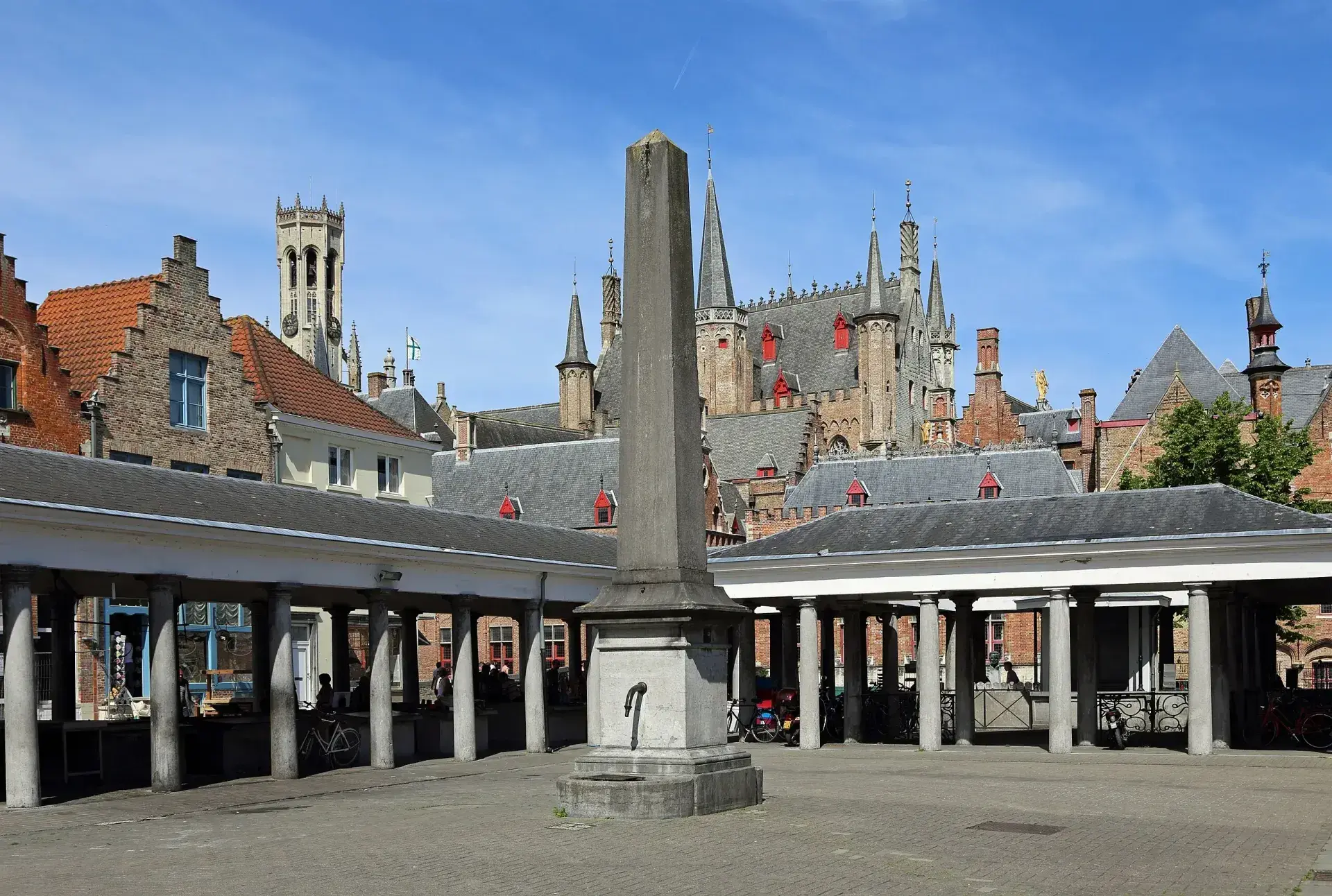
Following the conclusion of the Napoleonic era, Bruges officials sought a dignified, permanent structure for the seafood trade. In 1820, city architect Jean-Robert Calloigne drafted plans for a monumental covered market, with construction completed in 1821. Today, the complex is recognized as Belgium's oldest preserved covered fish market.
Calloigne conceived the Vismarkt in the Neoclassical style, creating a sharp visual contrast with the predominantly Gothic and neo-Gothic urban surroundings of central Bruges. The layout consists of a rectangular covered colonnade upheld by 126 Tuscan columns surrounding a central open courtyard. To enhance hygiene and durability, heavy stone slabs were installed in 1852, replacing the original wooden display counters.
Daily Transformation and Modern Use
The Vismarkt maintains an active commercial rhythm that alters with the time of day. From Wednesday through Saturday mornings, vendors occupy the historic stone slabs to sell fresh North Sea fish, fillets, grey shrimp, and seasonal shellfish. During these early hours, the arcade fills with the scents of saltwater, crushed ice, and cold stone, set against the sound of scraping fish scales.
By the afternoon and throughout the weekends, the colonnade transitions into an open-air marketplace for art, local crafts, and bric-a-brac. The perimeter of the square is lined with traditional taverns, cafés, and seafood restaurants that keep the area lively beyond morning market operations.
Civic Connection and Urban Context
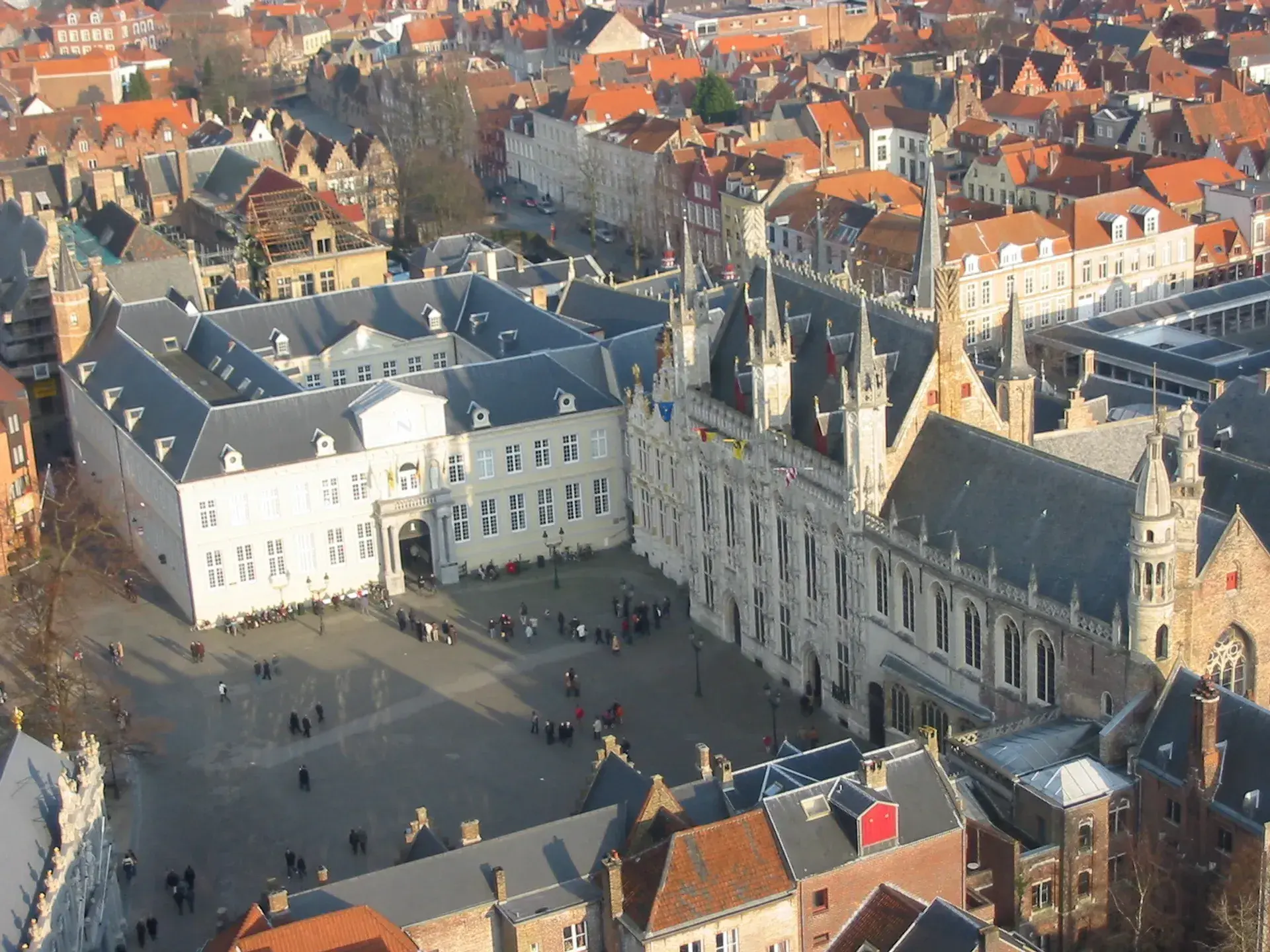
Beyond its commercial role, the Vismarkt serves as an architectural bridge within Bruges. Located between Braambergstraat and Steenhouwersdijk, it links the city's administrative core with historic waterfront docks.
A pedestrian passageway leads directly from the seat of municipal power at the Burg to the fish market via Blinde-Ezelstraat (Blind Donkey Street). This route passes beneath an ornate Renaissance archway and crosses the Groenerei canal before opening into the market colonnade, connecting the civic center with surrounding areas such as Huidenvettersplein and the Rozenhoedkaai.
FAQ
When is the fish market active at the Vismarkt?
The seafood market operates from Wednesday through Saturday mornings, roughly between 08:00 and 13:30, presenting fresh North Sea fish, grey shrimp, and shellfish on stone slabs.
Why was the fish market relocated to the Braamberg in 1745?
The trade was relocated from the Grote Markt due to ongoing complaints regarding odor, culminating in an eviction mandated by French administrators during the occupation of Bruges under King Louis XV.
Who designed the covered colonnade of the Vismarkt?
Bruges city architect Jean-Robert Calloigne designed the Neoclassical colonnade in 1820, and construction was completed in 1821.
What happens at the market outside of seafood trading hours?
During afternoons and on weekends, the colonnade shifts identity to host vendors selling artisan wares, paintings, crafts, and bric-a-brac.