Huidenvettersplein: Bruges' Historic Tanners' Square
Origins of Huidenvettersplein
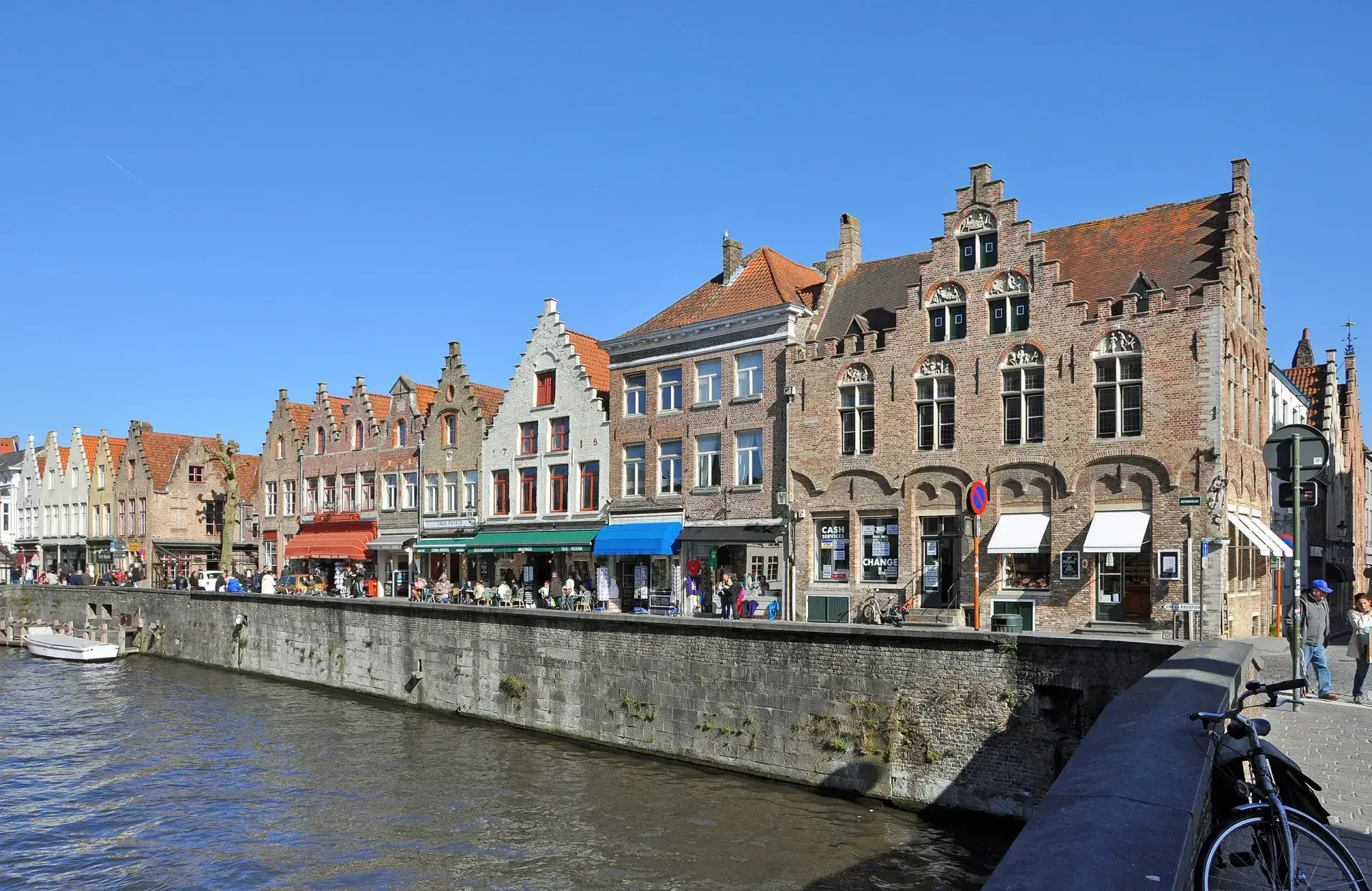
Huidenvettersplein, or Tanners' Square, is an enclosed cobblestone courtyard situated in central Bruges between the Vismarkt and the Rozenhoedkaai. The site first appears in historical records in 1302 as Huidenvettersdam, named after a dike along the waterway allocated by the municipal council to the guild of tanners (huidenvetters or leerlooiers).
The parcel served as a guild seat, meeting place, and active workshop. A 1562 city map by cartographer Marcus Gerards illustrates the courtyard's historical enclosure, showing access gates installed at either end.
Bruges walking tour with audio and quizzes: Belfry, canals and beer
2 hours10 stopsAudio guideStart any day, at your own paceTicket on your phone · 30-day refundMedieval Tanning and Civic Relocation
Direct canal frontage was vital for medieval leather tanners, who required flowing water to soak, scrape, and treat raw hides. However, the tanning process relied on soaking animal skins in stagnant canal water with stale urine, dog feces, wood ash, and decomposing matter.
By the 15th century, the resulting stench and heavy canal pollution prompted the city government to evict physical tanning workshops from the square. The craft was banished toward the perimeter of Bruges to protect public health, though the tanners' guild retained ownership and administrative control over the property.
Guild Architecture and Monuments
The former guildhouse, known as the Huidenvettershuis, stands directly along the waterfront. Its northern wing was rebuilt in 1630 by master builder Jan De Smet and underwent historical restoration in 1912 under architect Etienne Timmery.
In 1925, a central stone column was erected in the middle of the square. At the top of the column, a sculpture depicts two lions holding a shield displaying the emblem of the tanners' guild.
The "Little Fish Market" and Building No. 13
From the 19th century until roughly 1920, the space took on a new commercial function as the Kleine Vismarkt (Little Fish Market). Operating in contrast to the neighboring neoclassical Vismarkt colonnade, where wealthy burghers purchased expensive North Sea fish, Huidenvettersplein supplied affordable freshwater fish and dried stockfish (stokvis) to working-class residents.
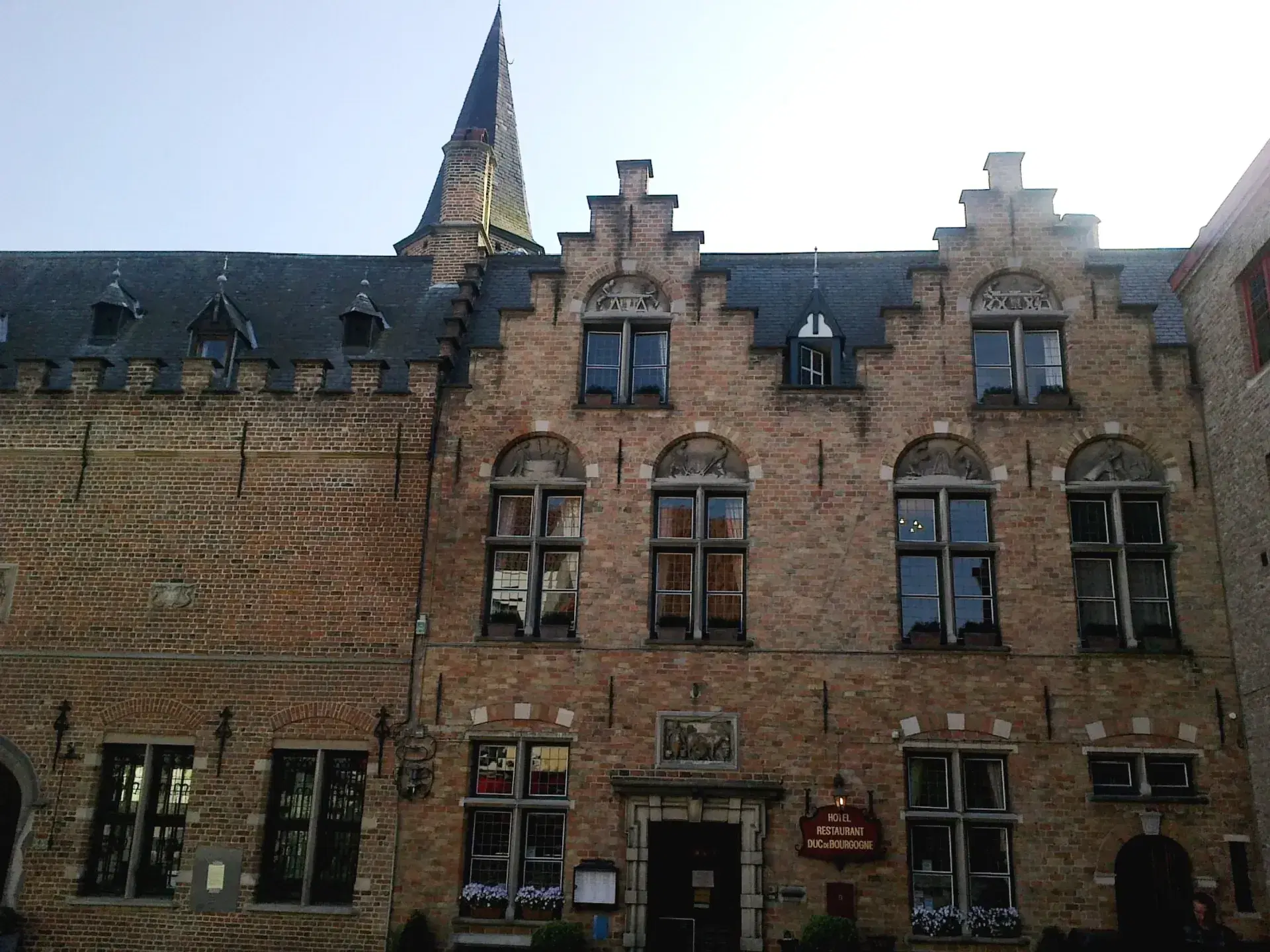
Building No. 13 on the square originally operated as a municipal excise office (stadsassyse), collecting taxes on imported goods and beer. Around 1870, the property was purchased by stockfish merchant August Vanden Berghe. Vanden Berghe installed a decorative stone crest on the facade featuring two crossed and crowned golden fish set against an azure shield. Following World War II, the building was converted into the Duc de Bourgogne hotel-restaurant, overlooking the junction of the Dijver and Groenerei canals.
Modern Thoroughfare
Today, Huidenvettersplein functions as a public gathering area and pedestrian link connecting the administrative center at the Burg to the Rozenhoedkaai and the Dijver museum district. The historic 17th-century premises and former guild buildings house hospitality businesses, with outdoor café and restaurant terraces occupying the cobblestones near the canal boat tour embarkation docks.
FAQ
Why was active tanning banished from Huidenvettersplein?
During the 15th century, the city expelled active tanning workshops due to severe canal water pollution and the unbearable stench caused by treating hides with urine, animal feces, and decomposing matter.
What is the history behind the column in the center of the square?
The stone column was installed in 1925 and features a carved sculpture of two lions holding a shield that bears the official emblem of the tanners' guild.
Why was the square called the 'Little Fish Market' in the 19th century?
From the 19th century until around 1920, Huidenvettersplein served as a market selling cheap freshwater fish and dried stockfish to working-class buyers, while premium sea catches were sold under the colonnade of the adjacent Vismarkt.